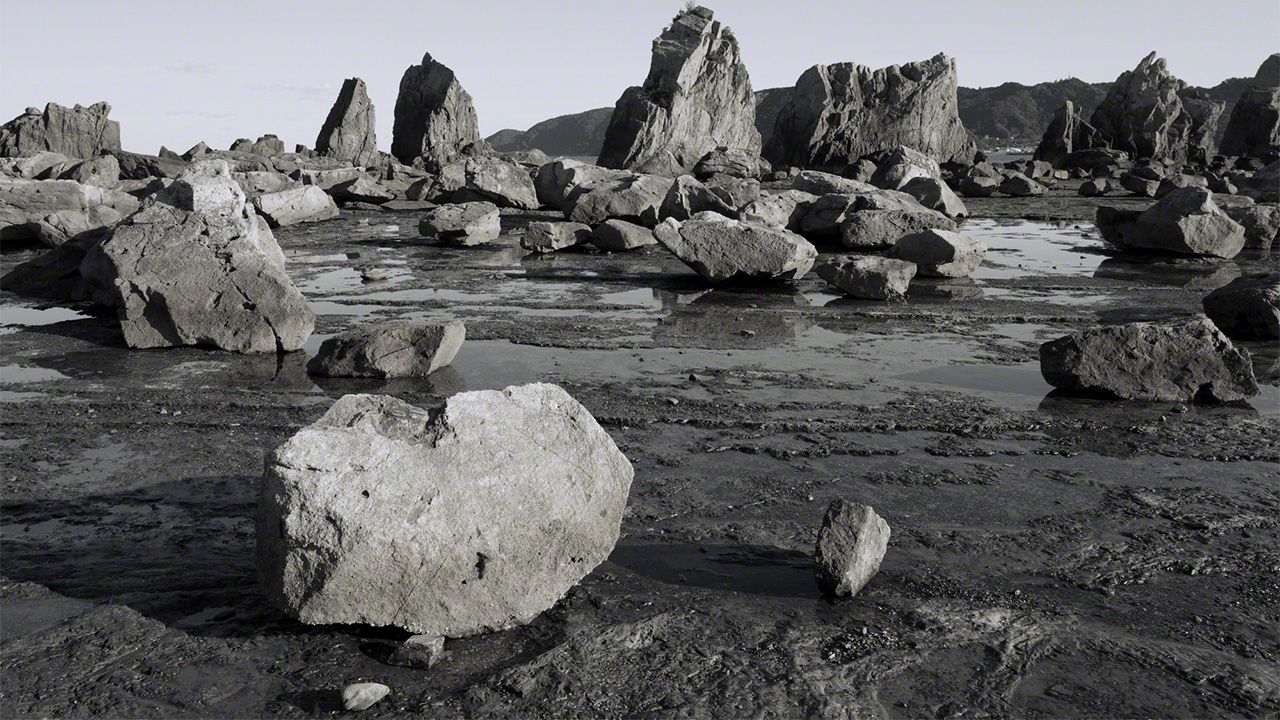
A Pilgrimage in Black and White
Hashigui-iwa: Wakayama’s Stone Pillars and the Legend of a Bridge Built in a Single Night
Guideto Japan
Images Culture- English
- 日本語
- 简体字
- 繁體字
- Français
- Español
- العربية
- Русский
Massive Rocks Rising from the Sea
On the coast of Kushimoto in Wakayama Prefecture stands a chain of rock formations known as Hashigui-iwa. Roughly 40 monoliths—large and small—are aligned in a straight line toward the island of Kii Ōshima, extending some 850 meters out from the shore. Their appearance evokes the piers of a bridge (hashigui) whose horizontal deck has collapsed, a resemblance that gave rise to the name. Today the site is designated nationally both as a place of scenic beauty and a natural monument, forming part of the Yoshino-Kumano National Park.
This distinctive chain of rocks was created by volcanic activity some 15 million years ago. Magma rising from deep underground intruded into a long, straight fissure in the surrounding mudstone and solidified. Waves eroded the softer mudstone over time, leaving only the resistant igneous rock standing in a single row.
Many massive, oddly shaped boulders and rock formations have long been objects of devotion in Japan. People sensed a sacred presence in such natural forms and revered them as yorishiro—vessels for the divine. Standing before Hashigui-iwa, too, residents in ancient times likely prayed for safe passage on the sea and for bountiful catches. As practices evolved, small sanctuaries were built: a torii and miniature shrine now stand on Bentenjima midway along the chain, and an Inari shrine was established on Motoshima, the islet closest to shore.
The site is also associated with folklore. One tale recounts a wager between the Buddhist sage Kūkai and a mischievous demon: could the master build a bridge to Ōshima in a single night? Kūkai set one stone pier after another in place with supernatural speed, but the imp, panicking at his progress, imitated the cry of a rooster to trick him into thinking daybreak had come. Kūkai abandoned the work, the story goes, leaving only the stone bridge piers behind.
The appearance of Hashigui-iwa shifts with the hour, the tide, and the weather. Its uncanny beauty—striking enough to lend credence to old legends—never fails to astonish.
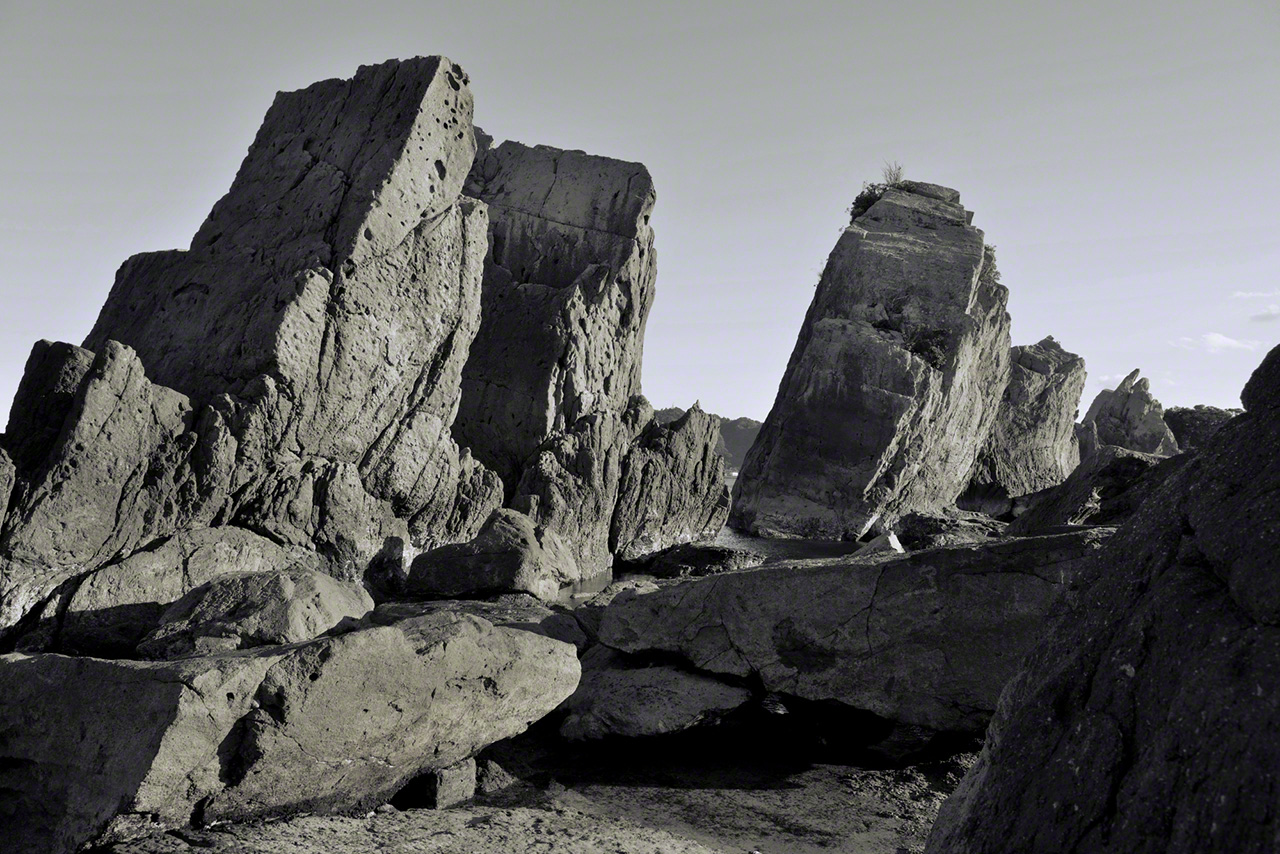
A row of massive stones rising 10 meters high. (© Ōsaka Hiroshi)
Hashigui-iwa
- Address: Kujinogawa, Kushimoto-chō, Wakayama Prefecture
Located at the southernmost tip of Honshū, Hashigui-iwa is a straight row of rocks stretching from the coast toward the sea. The roughly 40 formations are igneous intrusions created by ancient volcanic activity. Originally a single slab of rock, they were sculpted into their present shapes by relentless wave erosion. More than a thousand detached stones lie scattered across the tidal zone on the landward side—believed to have been carried there by a massive tsunami.
The scenery changes moment by moment. At low tide, visitors can walk to Bentenjima, the small island near the center of the chain. Standing before the stones large and small, one feels the power of the natural processes that shaped them. The site is especially beautiful at sunrise: the row of pillars forms a striking silhouette against the dawning sun. Night views are also popular; on several evenings each fall, the rocks are illuminated after sunset, enveloping the coast in a mysterious glow. This rare geosite continues to captivate visitors with its striking coastal landscape.
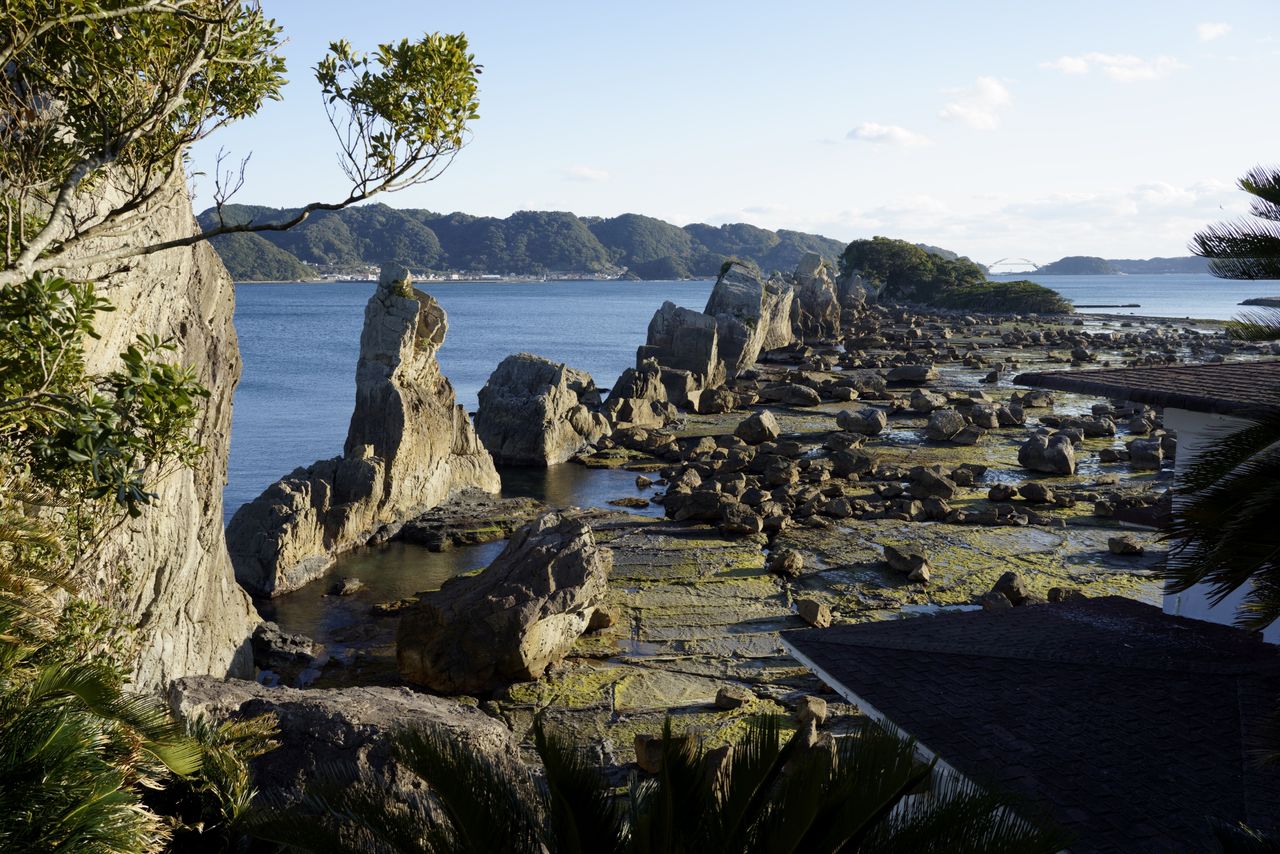
Beyond the row of rocks stands Bentenjima, covered in greenery, with a torii and small shrine. (© Ōsaka Hiroshi)
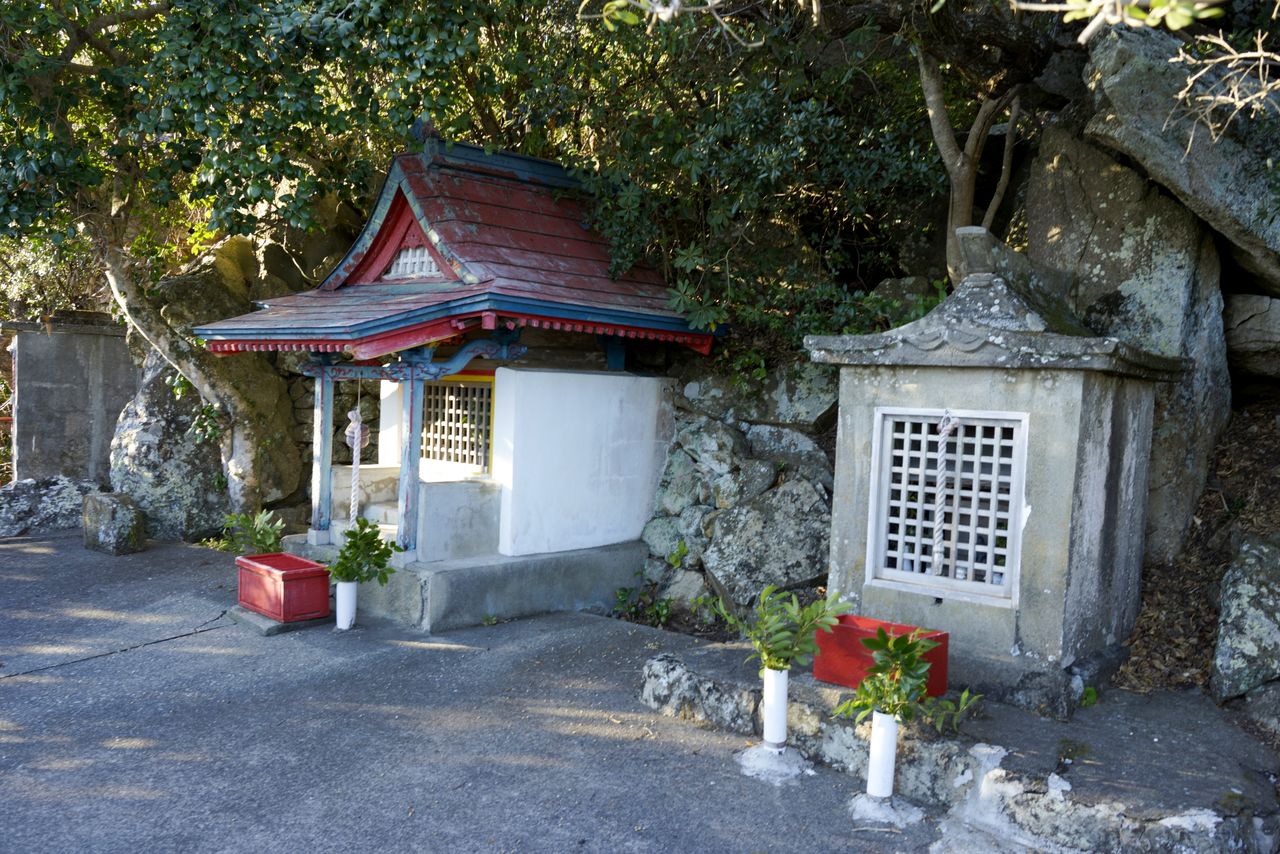
Motoshima houses three small sanctuaries—Inari, Ebisu, and Jizō—and offers a vantage point overlooking Hashigui-iwa. (© Ōsaka Hiroshi)
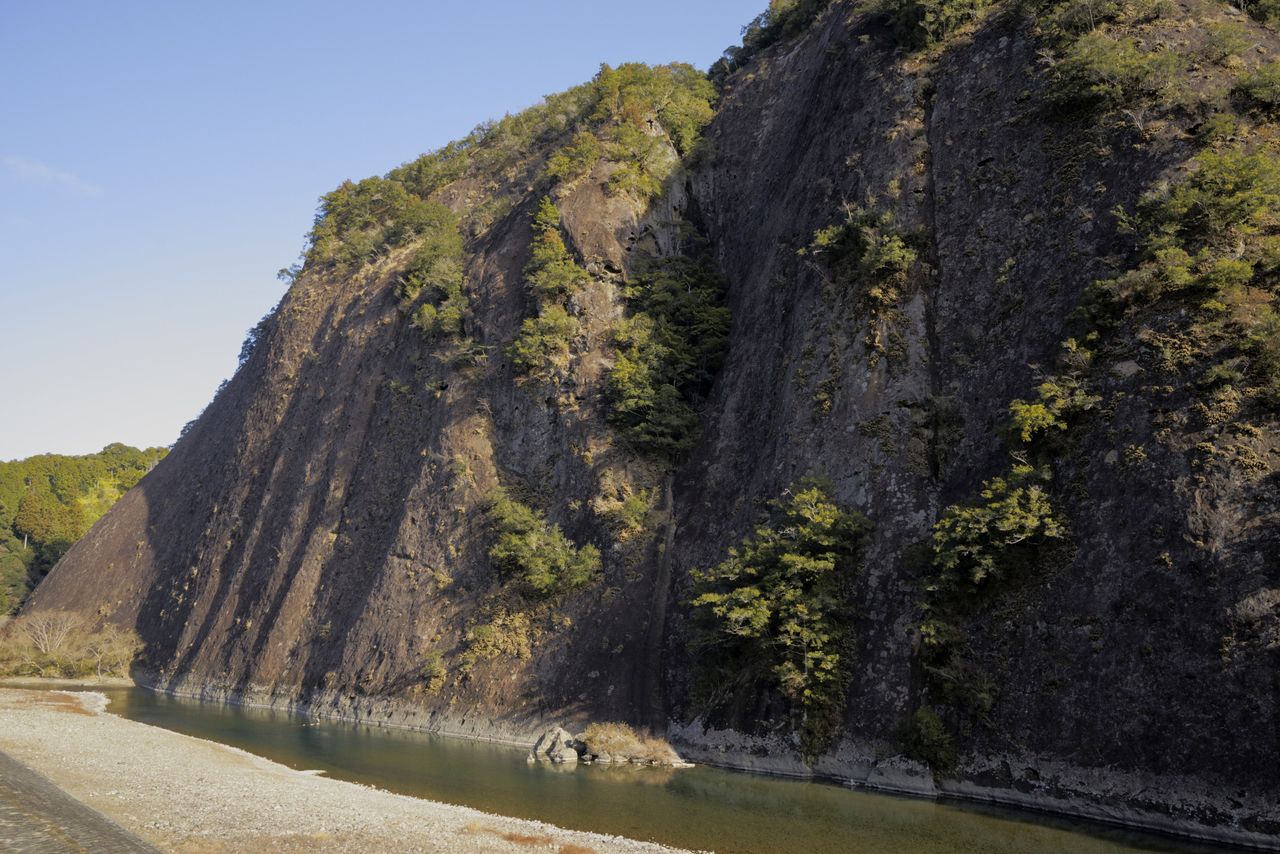
Ichimai-iwa in the nearby town of Kozagawa is another product of volcanic activity 15 million years ago. Measuring 100 meters high and 500 meters across, the towering monolith is designated a national natural monument. (© Ōsaka Hiroshi)
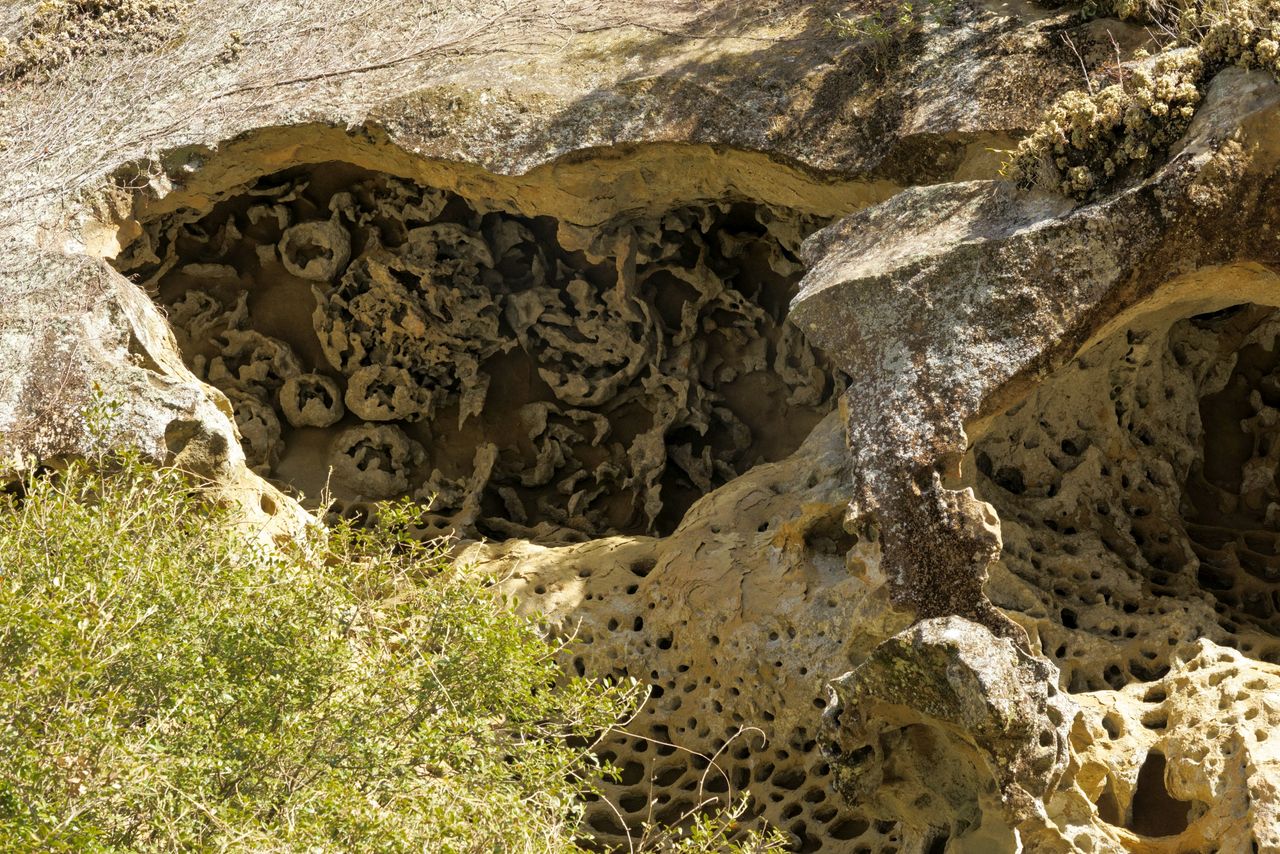
Kozagawa’s Botan-iwa, where wind erosion has carved peony-like hollows into a 10-meter rock wall. (© Ōsaka Hiroshi)
(Originally published in Japanese. Text and editing by Kitazaki Jirō. Banner photo: Hashigui-iwa at the southern tip of the Kii Peninsula. © Ōsaka Hiroshi.)