The Flip-Flop as Traditional Japanese Design: The Surprising Origins of a Beach Classic
Fashion- English
- 日本語
- 简体字
- 繁體字
- Français
- Español
- العربية
- Русский
A Story of a Postwar Collaboration
The invention of modern flip-flops—in Japan commonly called bīchi sandaru, or the contracted bīsan, from the English “beach sandals”—traces back to the meeting of two men in the years following the 1945 end of the war between Japan and the United States.
The first was Ray Pastine, an American industrial designer specializing in footwear. After the war, he went to Japan to work on the reconstruction projects of the General Headquarters of the Supreme Commander for the Allied Powers, or GHQ. There, he encountered Japan’s traditional geta and zōri footwear, which left a lasting impression on him. Both of these use thong straps, a design that didn’t exist in the United States. Captivated by their simplicity and the ease with which they could be slipped on and off, Pastine was moved by the idea of developing them into a product that could be sold back home.
The other man is Ikuta Shōtarō. He was the third-generation chief engineer of Naigai Rubber Industry, a Kobe-based company. Kobe’s rubber-processing industry flourished thanks to the city’s port, which served as a major hub for importing natural rubber. When Naigai Rubber Industry was founded in 1913, it began by manufacturing tires and inner tubes. During World War II, the company supplied products to Japan’s military. Today, it produces industrial rubber products, acceleration sensors, and baseballs and softballs, among other goods.
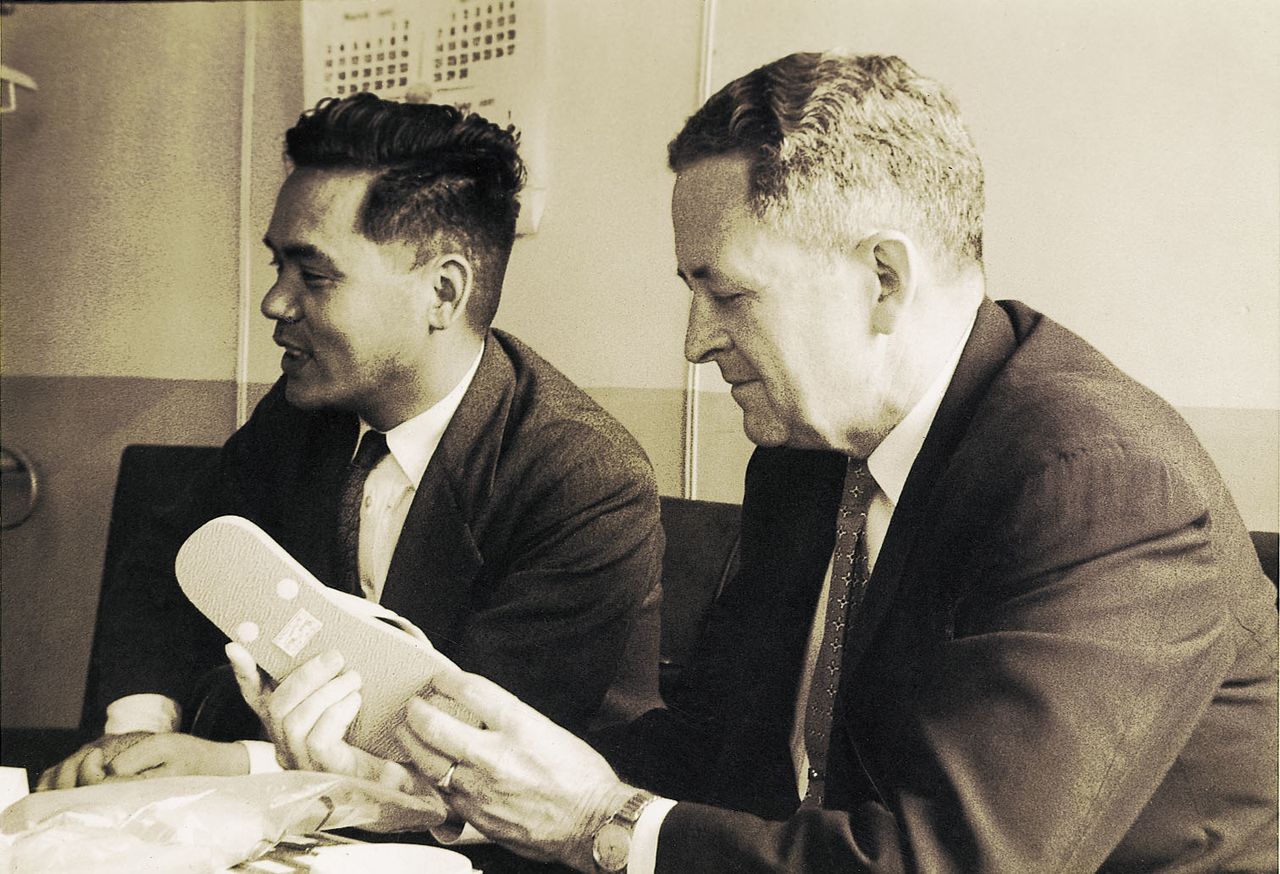
Ikuta Shōtarō (left) and Ray Pastine. (Courtesy Naigai Rubber Industry)
After the war, Ikuta became involved in the development of civilian goods. Among his inventions was a method for producing closed-cell sponge rubber.
“Just before the war ended in 1945, Ikuta had received a request from the military to reproduce the rubber used in the fuel tanks of American military bombers,” explains Uzawa Yasuhiro, who is in charge of the beach sandals business at Naigai Rubber Industry’s Tokyo sports goods department. “This particular rubber was lightweight, elastic, and non-absorbent. After an extensive development process, Ikuta succeeded in creating a new type of highly waterproof, closed-cell sponge rubber.” Having created this new material for military purposes, Ikuta began considering how it could be applied to everyday products.
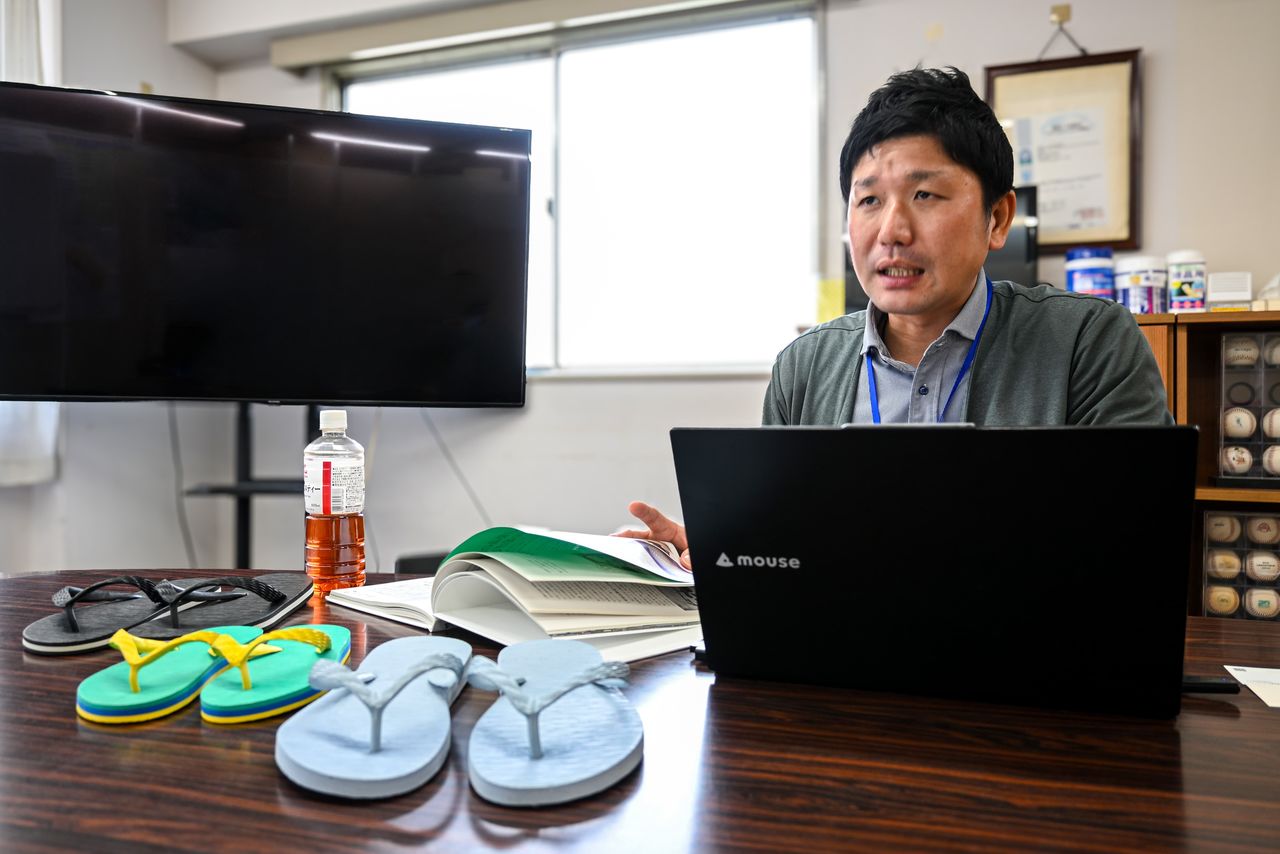
Uzawa Yasuhiro of Naigai Rubber Industry. (© Yoshino Taichirō)
In 1951, Pastine went to Japan for the second time. Convinced that the footwear he had seen in Japan could be developed into products for a broader market, he approached manufacturers of geta and zōri to explore the possibility. However, with the war still fresh in people’s minds and resentment toward Americans lingering, his negotiations with various prospective partners failed to make progress.
Pastine then learned through an acquaintance about a rubber company in Kobe that possessed technology worth looking into, and was eager to take on new challenges. He visited Naigai Rubber Industry in Kobe, where he met Ikuta.
“Ikuta wanted to demonstrate that Japan had excellent technology even though it lost the war, and so he decided to accept Pastine’s request to produce a prototype. He also felt that the closed-cell sponge rubber he had worked so hard to develop could be put to use in this new product,” says Uzawa.
Rubber Sandals That Grow on You
However, developing a prototype was not without its challenges. The toe post would rub against the toes, causing discomfort, and the cushioning material beneath the feet gave off an ammonia-like odor that people disliked. The design also had to account for differences in the shape and proportions of Japanese and Western feet, and so refinements were made using wooden foot molds.
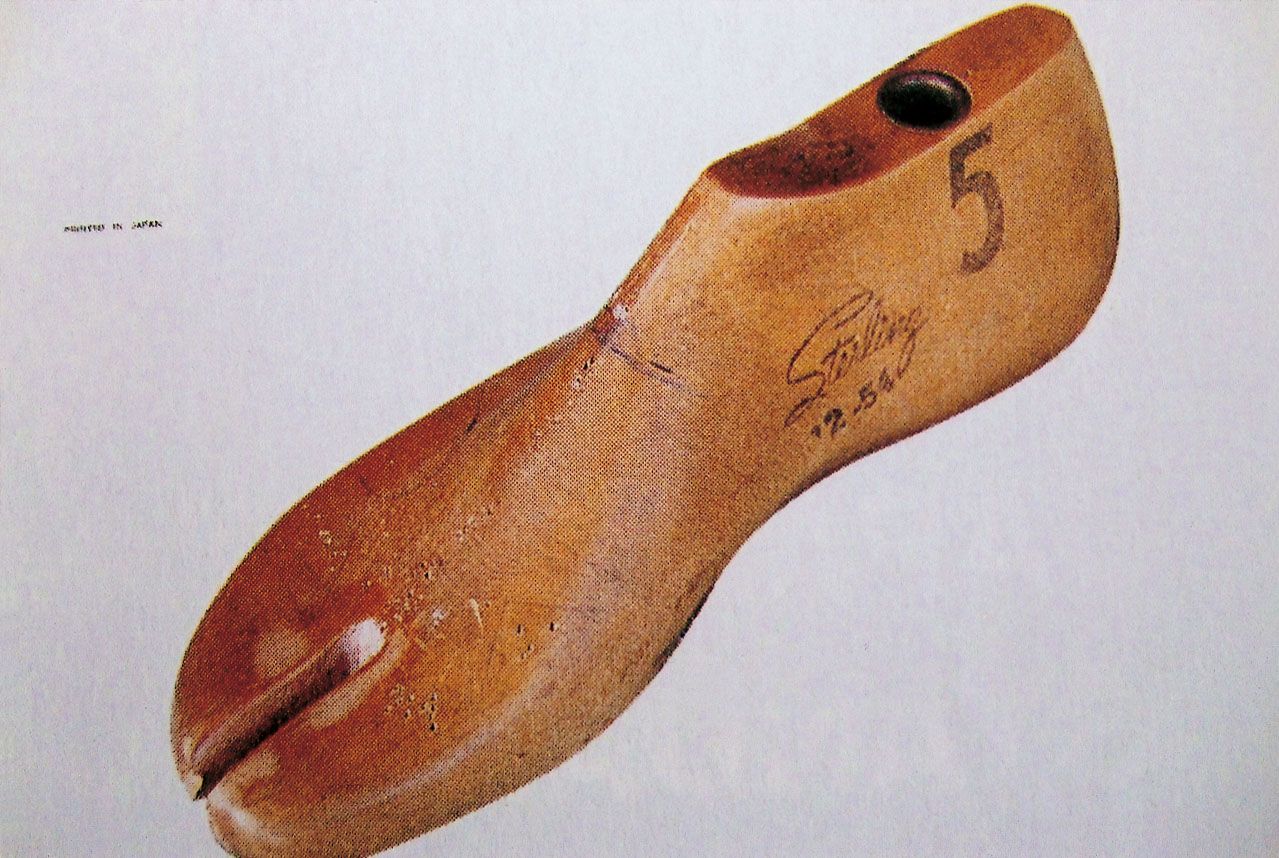
A wooden foot mold created by Pastine with a notch in the area where the toe post would be positioned. (Courtesy Naigai Rubber Industry)
“He found that thinner, longer straps were more comfortable for Americans. In addition, while the toe posts of zōri tend to stand up from the base of the footwear at a right angle, Ikuta modified the design for an angled toe post presenting a snug fit on the foot from the toes to the instep. Also, he made the heel section two to three millimeters thicker to create an incline for a better walking experience, and shaped the left and right sandals to match the contours of each foot.”
By 1952, the world’s first pair of rubber flip-flops had been created. Pastine named the product “Beach Walk.” Exports began in 1955, and it quickly became a hit. The following year, 100,000 pairs were sold in Hawaii in a single month. This success thrilled Pastine, notes Uzawa, who says that the American “took to sending our company Christmas cards each year, building up a friendly relationship that has stood the test of time.”
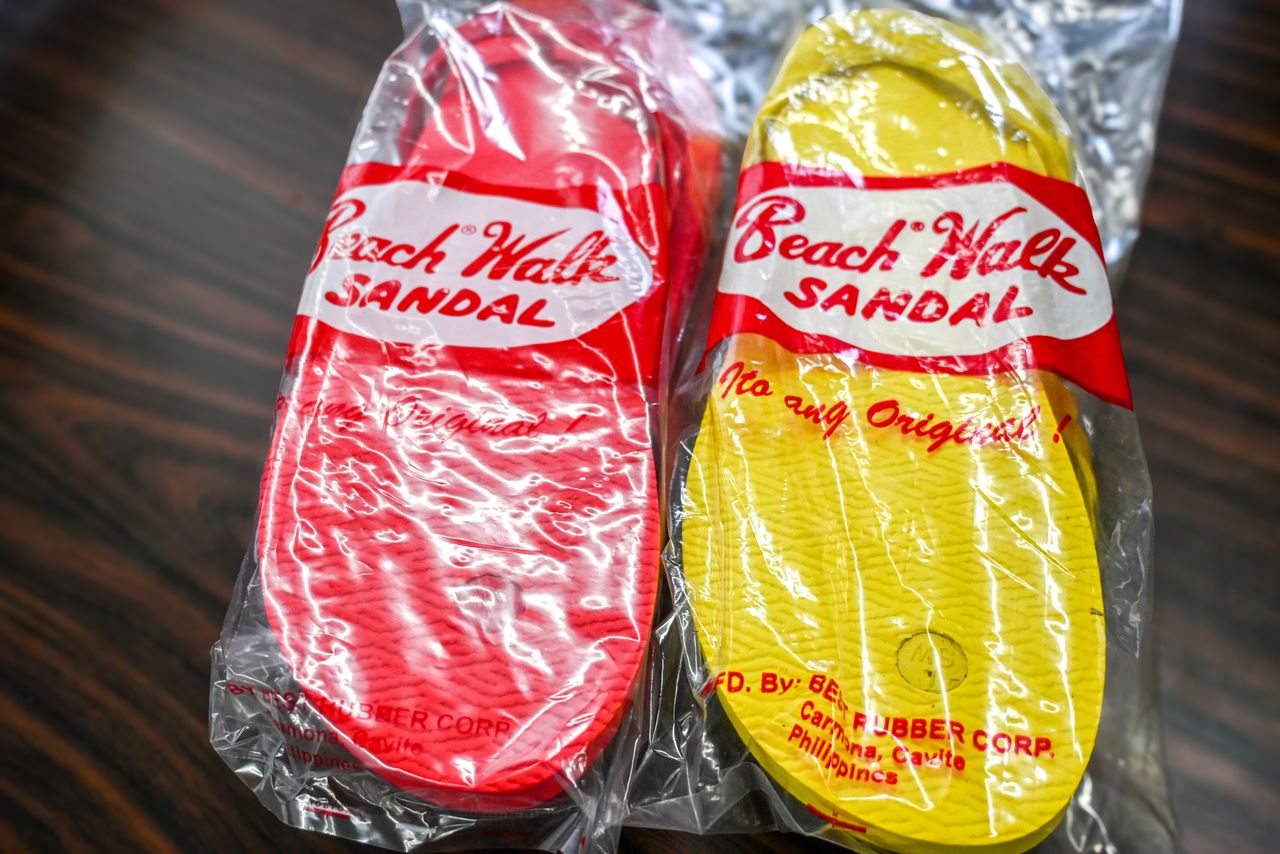
Naigai Rubber Industry’s “Beach Walk” flip-flops. The logo is based on the original design used when the product was first launched. (© Yoshino Taichirō)
Following the product’s success overseas, Naigai Rubber Industry introduced the flip-flops to the Japanese market under the name “Blue Dia.” Improvements were made for Japanese users, such as thicker toe posts for longer-lasting performance.
“The retailer Genbei in Hayama, a beach town in Kanagawa, was among the first to carry them,” says Uzawa. “The product is still sold in Japan under the original Beach Walk name, and Genbei still carries them, having since become a store specializing in flip-flops. Naigai’s ‘beach sandals’ are the oldest in the world, and yet we have changed little about our manufacturing methods and materials used. That shows just how perfected they were from the start.”
Today, the market is filled with flip-flops of all kinds, including many inexpensive options. So what sets Beach Walk apart from these cheap alternatives? Uzawa believes the material used makes a big difference.
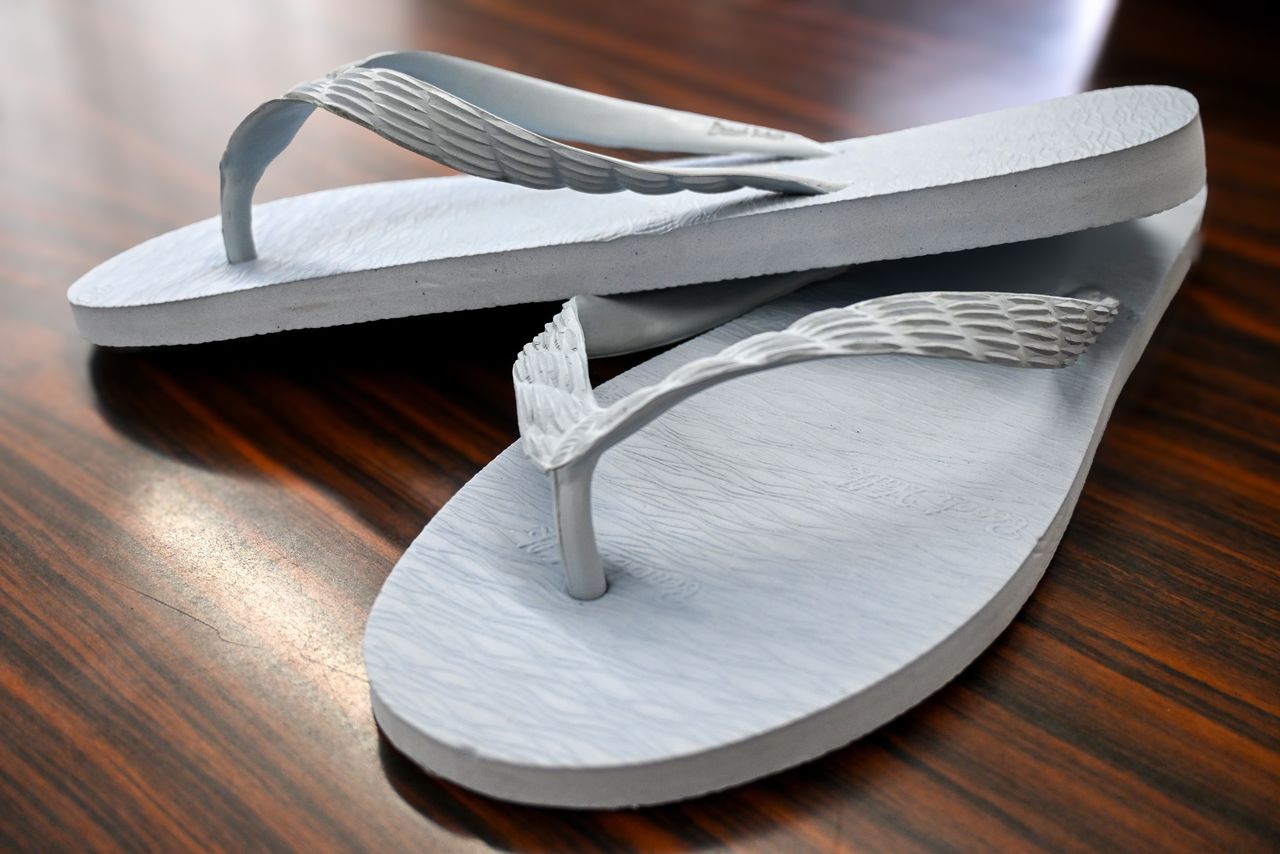
Flip-flops often have soles that are thicker toward the heel. (© Yoshino Taichirō)
“Most flip-flops today are made of polyurethane or other synthetic resin materials, but Beach Walks are made from natural rubber. This makes them comfortable on the skin. You may feel they’re a bit stiff when new, but the more you wear them, the more they conform to the shape of your feet. That’s why they’re considered flip-flops that ‘grow on you.’”
Hardly designed to be worn for just one summer only to be discarded, the Beach Walk is a product that becomes more comfortable with use. That has earned it a loyal following. Some customers wear the same pair for years, while others buy new pairs—making sure they have enough for use as clean indoor footwear along with their outside shoes, or rotating several pairs so they always have a comfortable set ready.
Today Beach Walk flip-flops are manufactured in a factory in the Philippines and sold throughout Asia and beyond. The lineup includes the Beach Walk Regular, which has a white footbed and a brown outsole, and the Multicolor, which has a three-layer sole. In all, 31 color variations are available, with 5 options having been added just two years ago.
“It’s a flagship product for our company,” says Uzawa. “We believe it’s a great shoe, and we want to further enhance its brand value through social media and other means.”
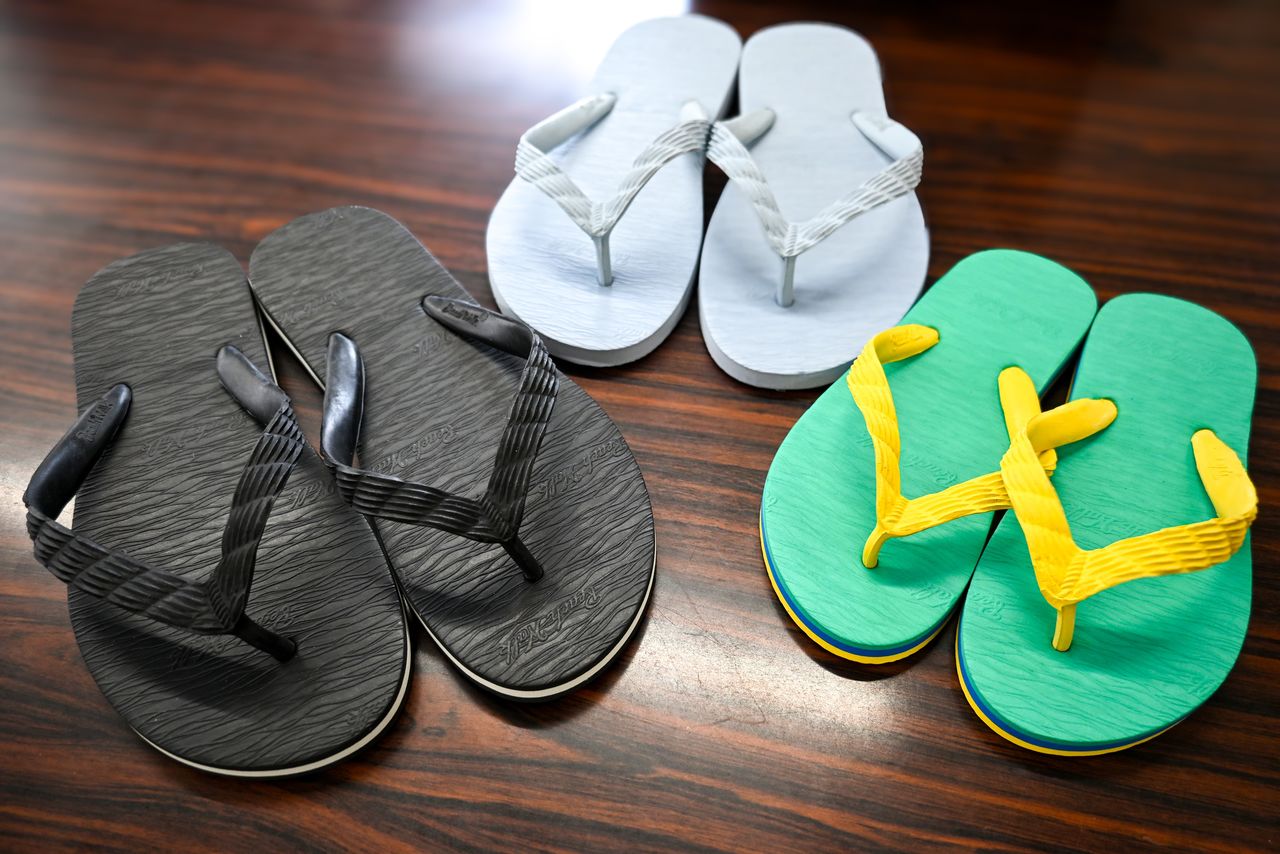
Some of the flip-flops manufactured by Naigai Rubber Industry. (© Yoshino Taichirō)
Helping People Reclaim Their Natural Walking Power
Flip-flops can help wearers strengthen the muscles in their toes and soles of the feet through the need to grip the toe post and upper side of the sole, which promotes the foot’s natural gripping and balancing functions. “In recent years, there has been renewed appreciation for the benefits of wearing zōri, which encourages the natural grasping function of the toes,” Uzawa explains.
“Beach Walk flip-flops make walking easy, with slightly thicker soles toward the heels. Also, by prompting wearers to grip the ground with their feet as they stride, they help them move closer to the way humans walk most naturally. We’re studying these aspects and hope to eventually be able to develop something akin to recovery footwear.”
The modern flip-flop emerged shortly after World War II through an unlikely collaboration between an American designer and a Japanese engineer. More than 70 years later, its basic design has changed remarkably little, and it continues to be worn all around the world. Today, flip-flops are such an everyday item that we seldom give them second thought. But every so often—perhaps while standing on a beach—we might pause to remember the story of two men whose passion came together across an ocean to give rise to this global classic.
(Originally published in Japanese. Banner photo © Photo AC.)