What Drives the Dragon? Japan Takes Aim at the VNL Top
Sports- English
- 日本語
- 简体字
- 繁體字
- Français
- Español
- العربية
- Русский
Twelve Straight for a Maturing Ryūjin Nippon
In the three weeks of pool play in the 2026 Volleyball Nations League tournament, the Japanese men’s national team—known as Ryūjin Nippon, named after the “dragon god” of legend—became the first team in the event’s history to go undefeated in all 12 matches. The squad took the top position and was the first tapped to go on to the final knockout round of play, held this year in China from July 29 to August 2.
This has unquestionably been a strong performance for the Japanese men, but should not have been a surprising one. In the 2023 tournament they won 10 straight matches in the opening rounds and went on to take bronze; in the 2024 gathering they upgraded this to silver. The team crashed out in the quarterfinals of the Paris Olympics that year, but it is clear that its members are ready to play—and aim for the podium—at the top levels of global competition.
Looking at this performance in recent years, the 2025 season comes across as an outlier. French volleyballer Philippe Blain coached the squad for eight years through the 2024 Paris Games, first as assistant coach and from 2022 on as head coach. After the Olympics, he made way for fellow Frenchman Laurent Tillie. This transition year saw the team change everything from its practice methods to its game scheduling and strategies, leaving the players unsure about how to move ahead in this new system.

A number of key players from the 2024 Olympic squad chose to take a break during the 2025 season, and less-experienced athletes were tapped to fill the roster. This was all needed for Tillie to engineer a changing of the guard on the national team, but there were mixed results at first: While Ryūjin Nippon did make it to the final round of eight in last year’s Nations League play, it was unable to capitalize on its promising new players at the September Men’s Volleyball World Championship, and the team was eliminated in the preliminary rounds.
Today, though, Tillie is in his second year as Japan’s skipper, and the players are clearly more comfortable with his approach to the game. The coach, too, is more comfortable with his players taking their suggestions into consideration as he smoothly adjusts the Japanese strategy in each match.
Another key to the team’s 2026 success has been the return of stars from the Paris Games like Nishida Yūji and Yamauchi Akihiro to the fold. In 2025, Miyaura Kento went through a rough time both physically and mentally as effectively Japan’s sole option in the opposite position, but now that Nishida is back, the two of them are sharing the role, and Miyaura has said that his newfound ease of mind is a key reason for his strong outings this season.
Strength and Depth Across the Roster
The individual performances of Japan’s players show that they have taken serious strides forward since the Paris Olympics two years ago. Ace Takahashi Ran, for instance, has dropped his body fat ratio from 12% to 8% over the last year, supercharging his explosive leaps and dynamic movement on the court. Across the three weeks of VNL preliminary matches, he racked up 208 points, placing him fifth among all players in the tournament and propelling Japan to its wins.
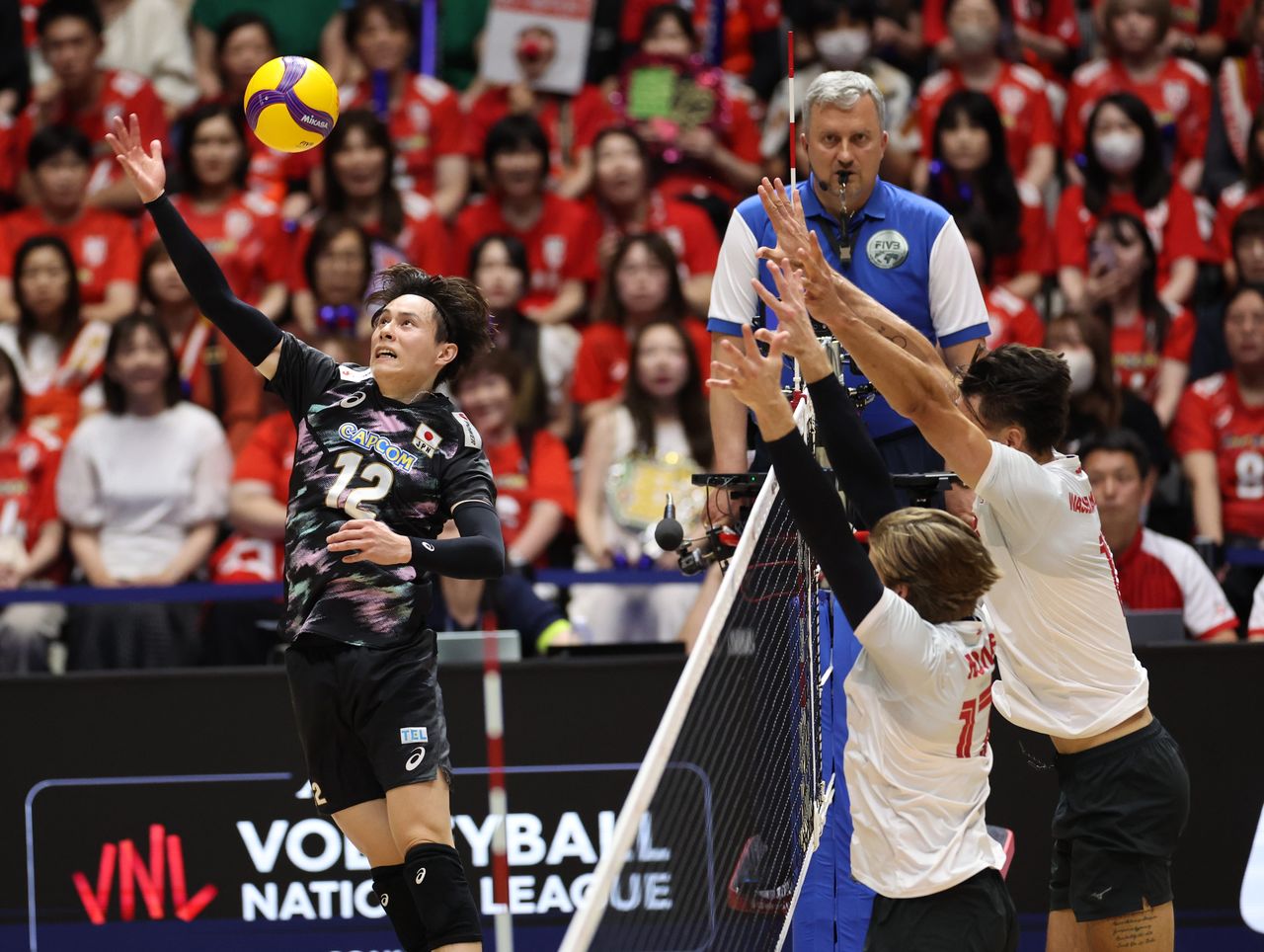
Takahashi Ran, at left, knocks in a spinning spike for one of his points against Canada on July 16, 2026, in Osaka. (© Sankei Shimbun/Taidō Kōji)
Compared with the Ryūjin squad of two years ago, there is also less of a skill gap between the regular starters and the reserve team members. In this year’s preliminary round matches against the United States and Canada, both of which went to full sets, the substitutes brought onto the floor later in the games successfully changed the momentum of play and brought Japan its victories.
Among the outside hitters on the team, Ōtsuka Tatsunori followed his Paris Games appearance with a move to the team Powervolley Milano in Italy’s elite Serie A league, further refining his game. Tomita Shōma (Osaka Bluteon) has achieved significant improvements to both the reliability of his defense and his attacking power, equipping him to make a mark whenever he is on the floor. And the team’s youngest member, the 22-year-old Kai Masato, has taken full advantage of his 200-centimeter frame, earning top scorer accolades in the July 17 match against Belgium during his first start.
Turning next to the middle blockers, we have Larry Ik Evbade-Dan playing a key role for Ryūjin, alongside Nishimoto Keigo, who is proving to be a game-changing fresh force for the team. And in the Libero position, Japan boasts the world-class players Yamamoto Tomohiro and Ogawa Tomohiro. Competition among the players at each position on the squad has heated up in recent years, and it is clear that Japan today enjoys considerable depth across its entire organization.
Above all, we have seen the return of setter Fukatsu Hideomi to the team after some time away. His high-level play and reliable presence on the court make him a key to Japan’s success. During his previous stint at Japan’s starting setter, his accurate tosses created space for stars like Ishikawa Yūki—the current captain of the Japanese side, who made his national debut in 2014—to shine in their attacking positions. Fukatsu set for the Japanese squad through the 2018 Nations League tournament, after which he left the team; now the 36-year-old veteran has returned after a seven-year blank.
Fukatsu has noted his own maturity as a key factor in this year’s play: “At this level, you can’t win with just mental toughness. You’ve got to have a solid technical foundation, first and foremost. When I was on the team previously, I tried too hard to do everything with just intensity. Today, though, when our spikers are so strong, both in their play and on the mental side, I’m really trying to bring the skills that I’ve polished over the years and match them to the team’s needs.”
What, specifically, are those skills? Fukatsu mentions the footwork and physical positioning that get him ready ahead of each toss. He says he spent considerable time studying the play of world-class setters like Micah Christenson (USA), Luciano De Cecco (Argentina), Sekita Masahiro (Japan), and Takeshita Yoshie, who set for Japan’s national women’s team. These were his ideal teachers, he says, as he pored over video of them in action and put the lessons to work in his own game. This tireless dedication to his own craft has clearly made him a force for stability and reliability on the court, benefiting the teammates around him.
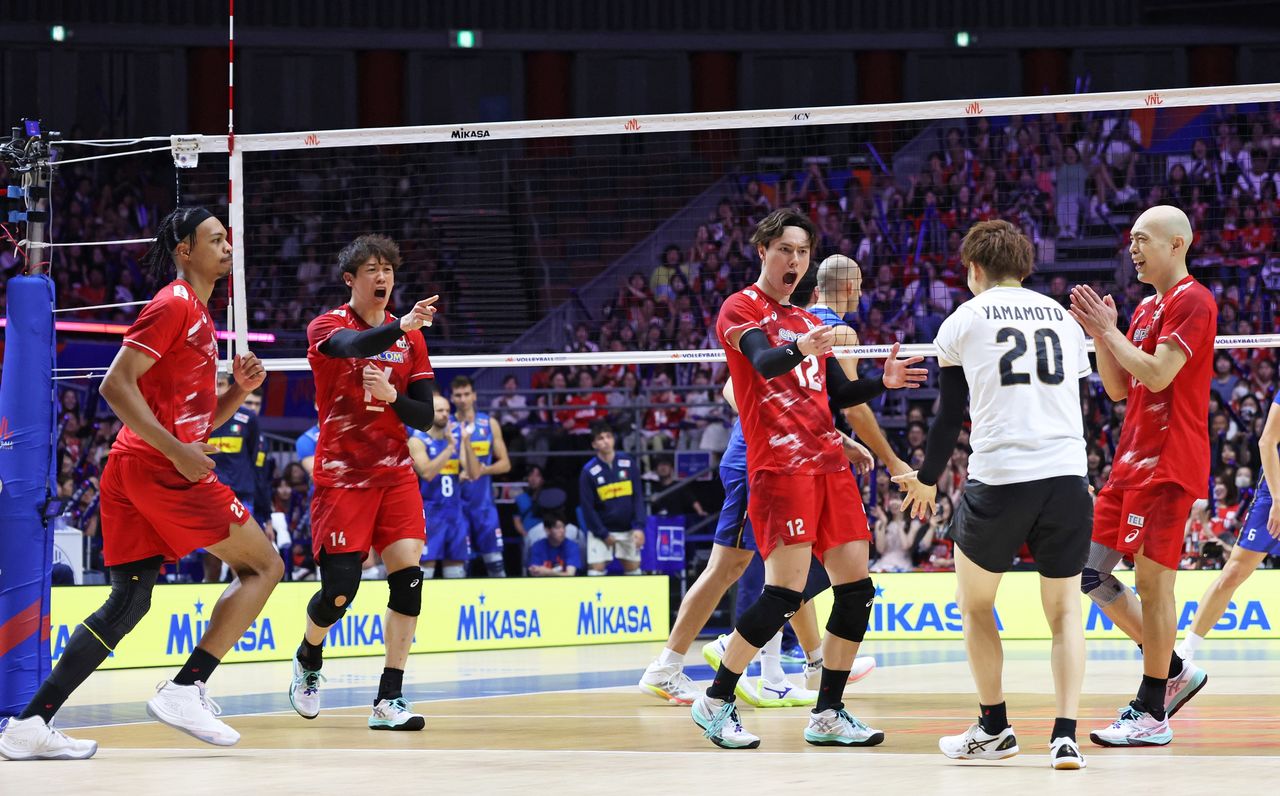
Japan’s players celebrate after scoring against powerhouse Italy in Osaka on July 15, 2026. Setter Fukatsu Hideomi is at far right. (© Sankei Shimbun/Taidō Kōji)
An Eye on Los Angeles
Despite their stellar 12–0 record in the VNL preliminary rounds, Ryūjin Nippon’s members are not resting on their laurels. They are already looking ahead to this fall’s AVC Men’s Volleyball Continental Championship; the winner of this Asia/Oceania tournament automatically secures a berth at the 2028 Los Angeles Olympics. These qualifying tournaments take place across five continents, and the teams taking part in the Nations League games have their eyes on their respective competitions ahead.
Indeed, some teams that Japan went up against in preliminary play were not fielding their top rosters. In the finals beginning on July 29, though, we can expect to see all sides bringing their very best to the court and elevating the level of competition still more.
The same is true of Japan. As captain, Ishikawa Yūki has consistently said that the team’s top goal this year is to punch its ticket to the Olympics at the continental tournament. Ishikawa injured his right knee during his season with the Turkish club Ziraat Bankkart Ankara; he is finally back in form and accelerating to full speed as we come into the home stretch of the Nations League matches. I am thrilled to see how Japan takes its play to the next level, along with the other seven teams in Ningbo, China.
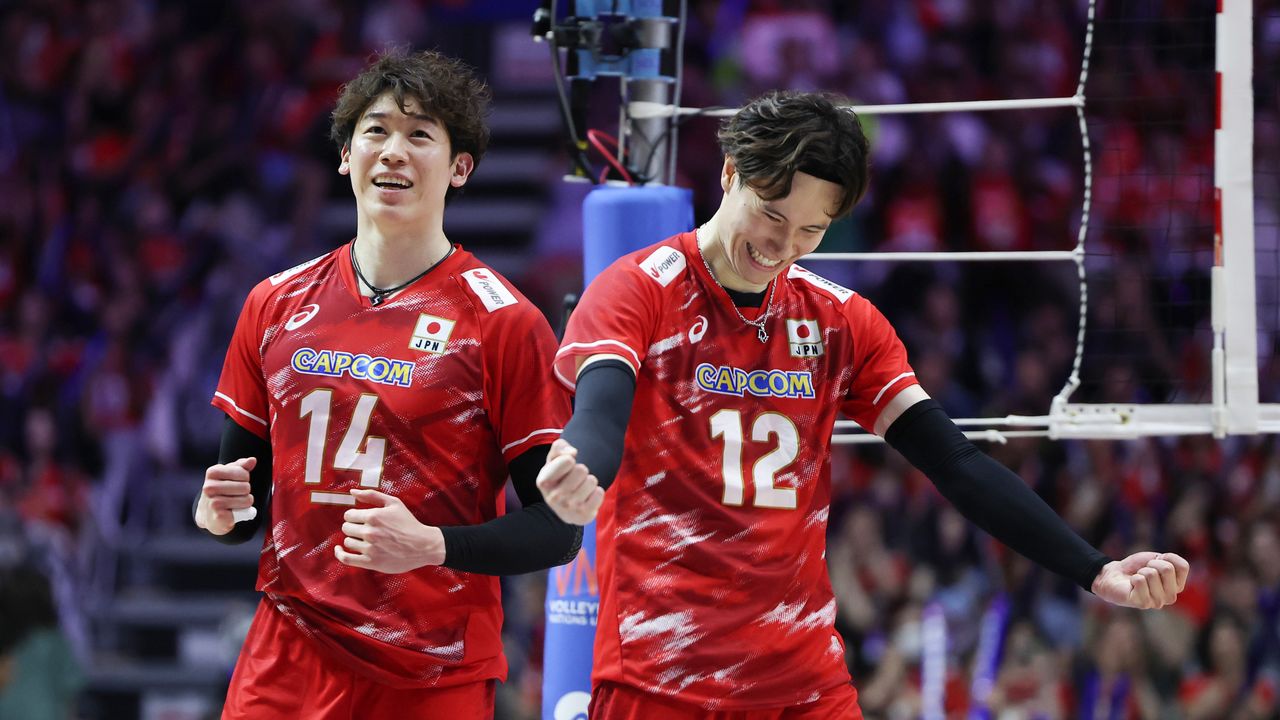
(Originally written in Japanese on July 27, 2026. Banner photo: Team captain Ishikawa Yūki, at left, and ace Takahashi Ran celebrate a point against Italy in the third set of the July 15, 2026, match in Osaka. © Jiji.)