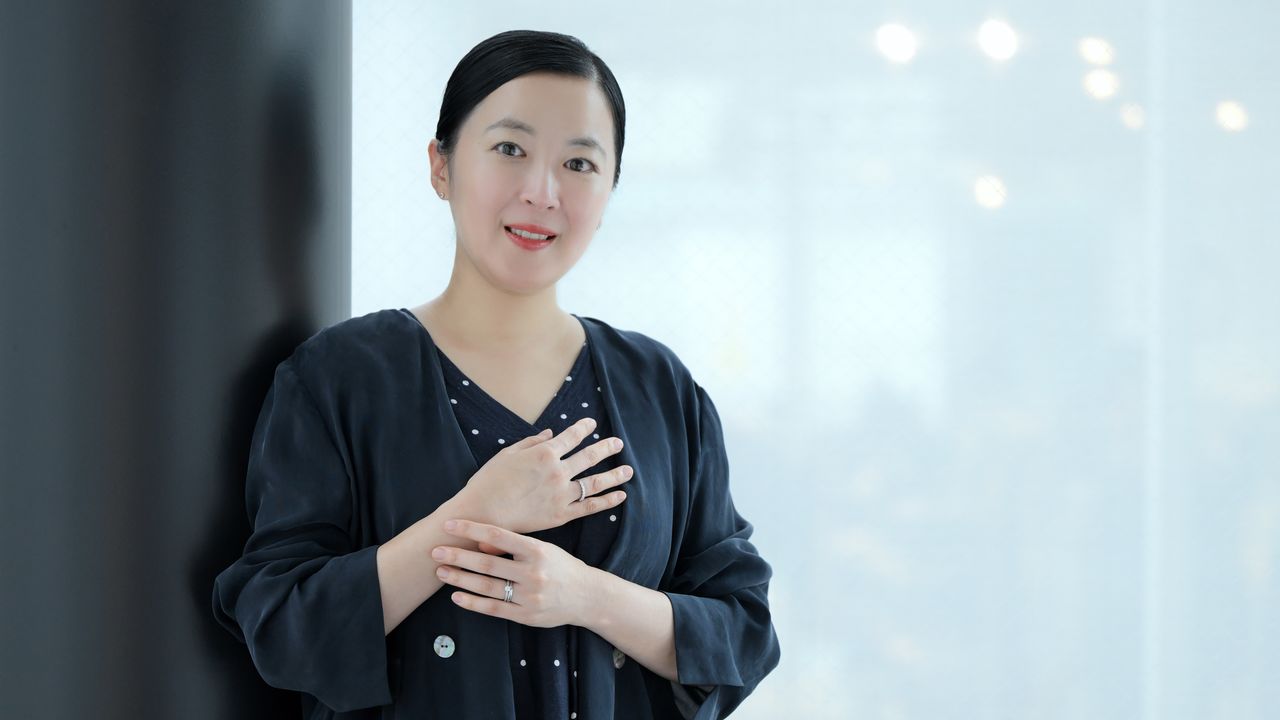
Kang Han-na: A South Korean Poet Finds Her Voice in Japan’s Tanka
Culture Books- English
- 日本語
- 简体字
- 繁體字
- Français
- Español
- العربية
- Русский
An Unforgettable Experience
Kang Han-na is a poet from South Korea who writes tanka in Japanese. The 31-syllable tanka, which is said to have over 1,500 years of tradition, is a little longer than the internationally famous haiku, with a five lines of 5, 7, 5, 7, and 7 syllables.
Kang moved to Japan in 2011, having previously worked in South Korea as a news anchor. While she had visited Japan several times before then, an unforgettable experience at Itsukushima Shrine in Hiroshima was a key factor in her decision to relocate.
“I remember thinking how beautiful it was there,” Kang recalls. “Everyone takes such care of the gods and the island’s history. Even if hard work doesn’t pay off straight away, with time you can grow something really special. I could sense the appreciation for the kind of depth that comes from long perseverance, and this was a way of living that I greatly admired. I trusted my intuition that this country might suit me and made the move.”
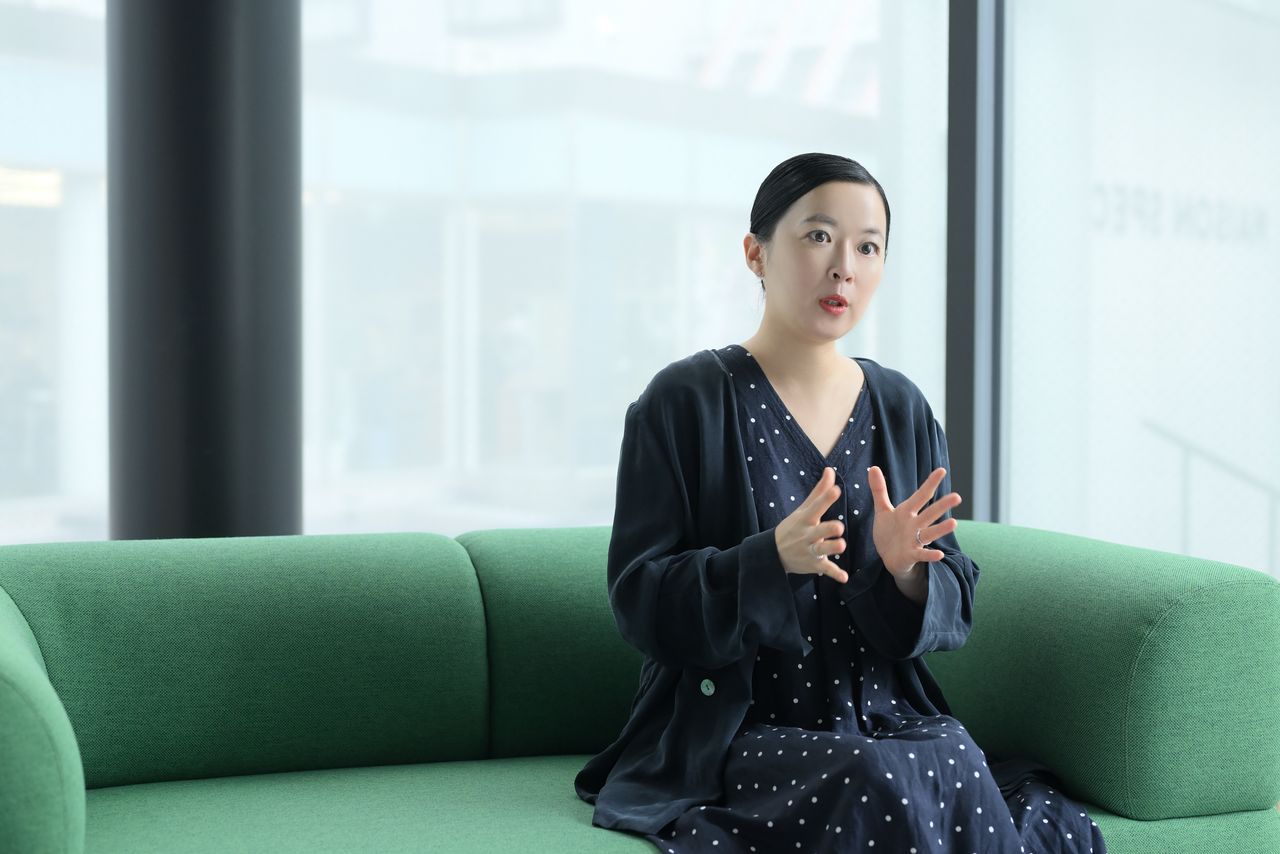
“With time you can grow something really special.” (© Shinotsuka Yōko)
It seemed like a totally different way of thinking about time and value, compared with the high-pressure environment of South Korea, where everyone sprinted at top speed along the shortest path to their goals. In 2013, while she was teaching herself Japanese and slowly building her career, she saw Shinkai Makoto’s anime The Garden of Words, and was captivated by a poem from the ancient Man’yōshū collection that plays a part in this delicate story of emotional connection.
Naru kami no / sukoshi toyomite / sashi kumori / ame mo furanu ka / kimi o todomen
A faint rumble
of thunder and
the sky darkens.I wish it would rain,
so you’d stay here with me(Poem by Kakinomoto no Hitomaro, from the Man’yōshū.)
“I was astonished how just thirty-one syllables could convey such rich imagery, expressing love, anxiety, and loneliness without ever stating them directly,” Kang says. “Despite my limited Japanese then, the next day I rushed to the bookshop to buy a copy of the Man’yōshū. I didn’t have the linguistic ability to understand it, but as I read slowly through, the desire grew in me to one day write tanka.”
Learning a New Rhythm
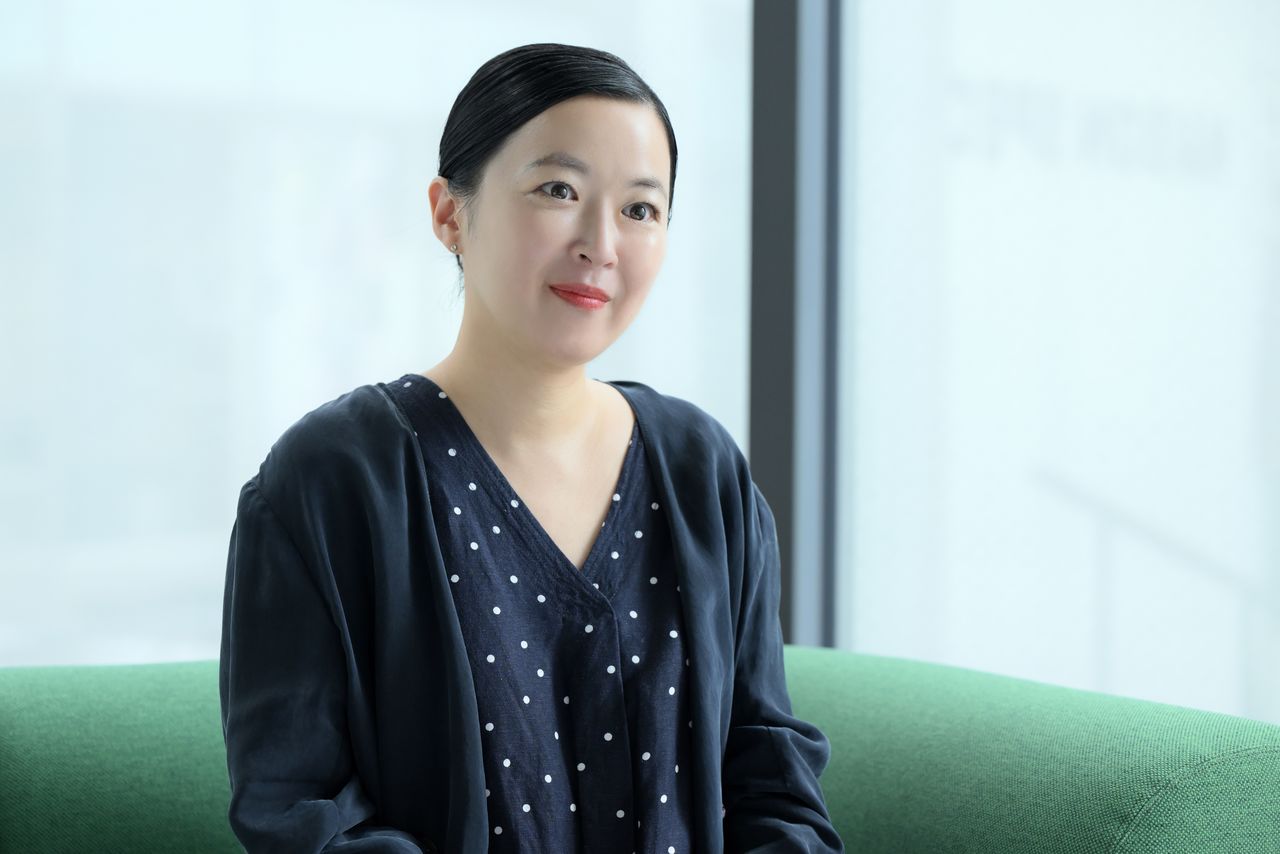
“The desire grew in me to one day write tanka.” (© Shinotsuka Yōko)
Her wish came true, as she appeared regularly on tanka programs on NHK from the following year. Her days of writing tanka as a career had begun, although she remembers feeling some hesitancy at first.
“The 7-5 rhythm is deeply ingrained in Japanese people, but the traditional Korean sijo form is based around sections of four and three sounds. Writing tanka felt like I was stretching out and slowing down words inside me. And unlike modern Korean poetry, which tends to express emotions directly, tanka are not so straightforward. At first, I wasn’t particularly comfortable with the form.”
Kakkoku to / Kankoku no oto ga / dōshite mo / kikiwakerarenu / chōshi no warui hi
Off days when
I just can’t hear
the difference between
kakkoku and
Kankoku(Poem by Kang Han-na, from Mada mada desu [A Long Way to Go]. Kakkoku means “various countries” and Kankoku means “South Korea.”)
While learning from poetic predecessors who built 1,500 years of tanka history, Kang tried to find her own unique voice. She channeled her authentic feelings, honed by her experience of living overseas, touching on topics like culture shock, volatile relations between Japan and South Korea, and thoughts of her mother, living far away. These poems drew wide interest, leading to her being selected as a finalist for the Kadokawa Tanka Prize for three consecutive years from 2016 to 2018. Her debut collection Mada mada desu (A Long Way to Go) won the Modern Tanka Award for New Writers in 2020. The Japanese title is a typical modest expression used by students to say that they still have a lot to learn.
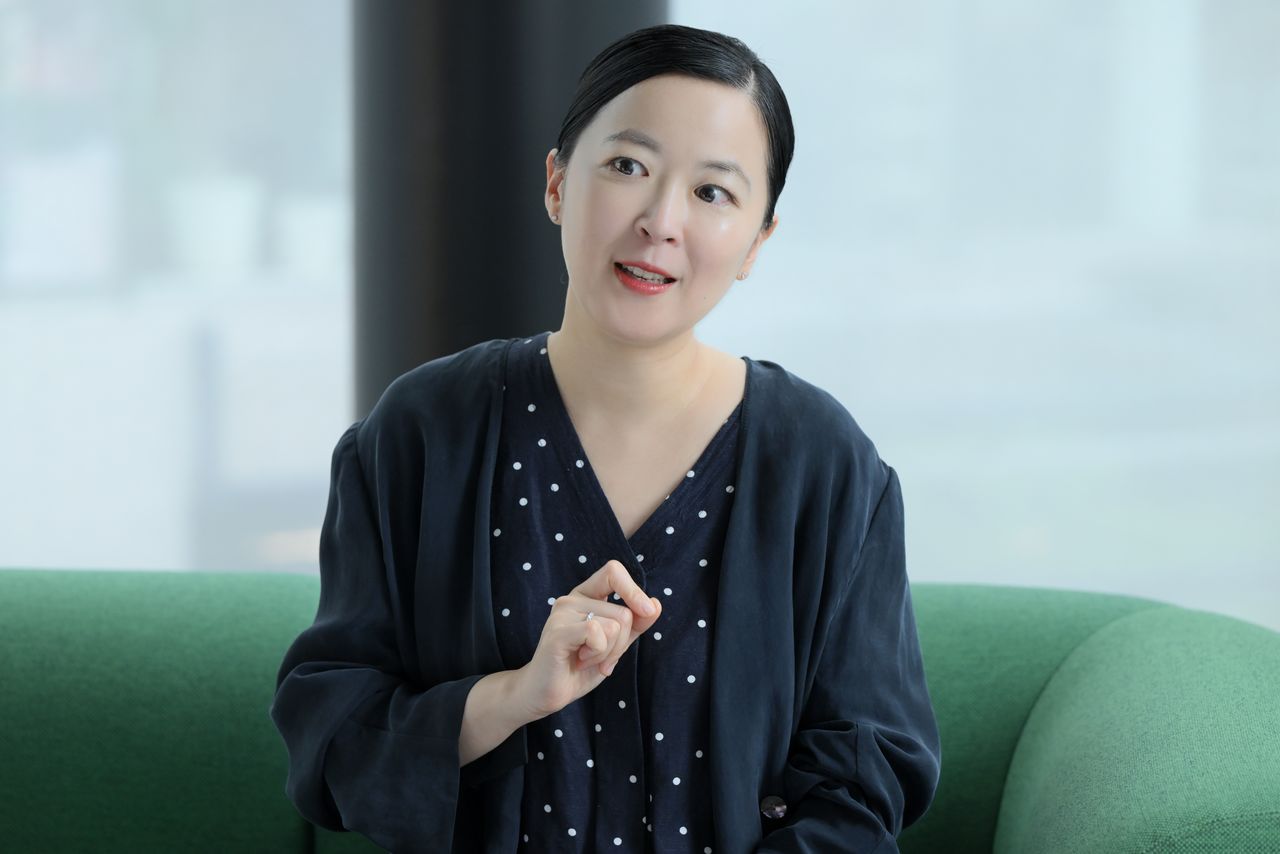
“Writing tanka felt like I was stretching out and slowing down words inside me.” (© Shinotsuka Yōko)
Nihon to / Kankoku dotchi ga / suki desu ka / kikikuru anata ga / suki da to kotaeru
When you ask
which I like,
Japan or South Korea,
I reply that,
“I like you”(Poem by Kang Han-na, from Mada mada desu [A Long Way to Go].)
“Because the 7-5 rhythm is natural to Japanese people, when my works were selected as prize finalists, and the judges praised me for using the rhythm, I felt that my unseen efforts were being recognized. Looking back now, it seems like I spent enjoyable days adapting to another country’s culture, language, food, and so on, but perhaps every one of those experiences was the result of tremendous effort.”
A Literature of Subtraction
For Kang, who was once selected for South Korea’s International Mathematical Olympiad team, tanka can be described as a “literature of subtraction,” and it connects to a sense of mindfulness.
Ikita hito / ikiteiru hito / umareru hito / umarenakatta / hito sae kazoku
Those who lived,
those living now,
those to be born,
and even those never born
are all family(Poem by Kang Han-na, from Kajoku no uta [Family Poems].)
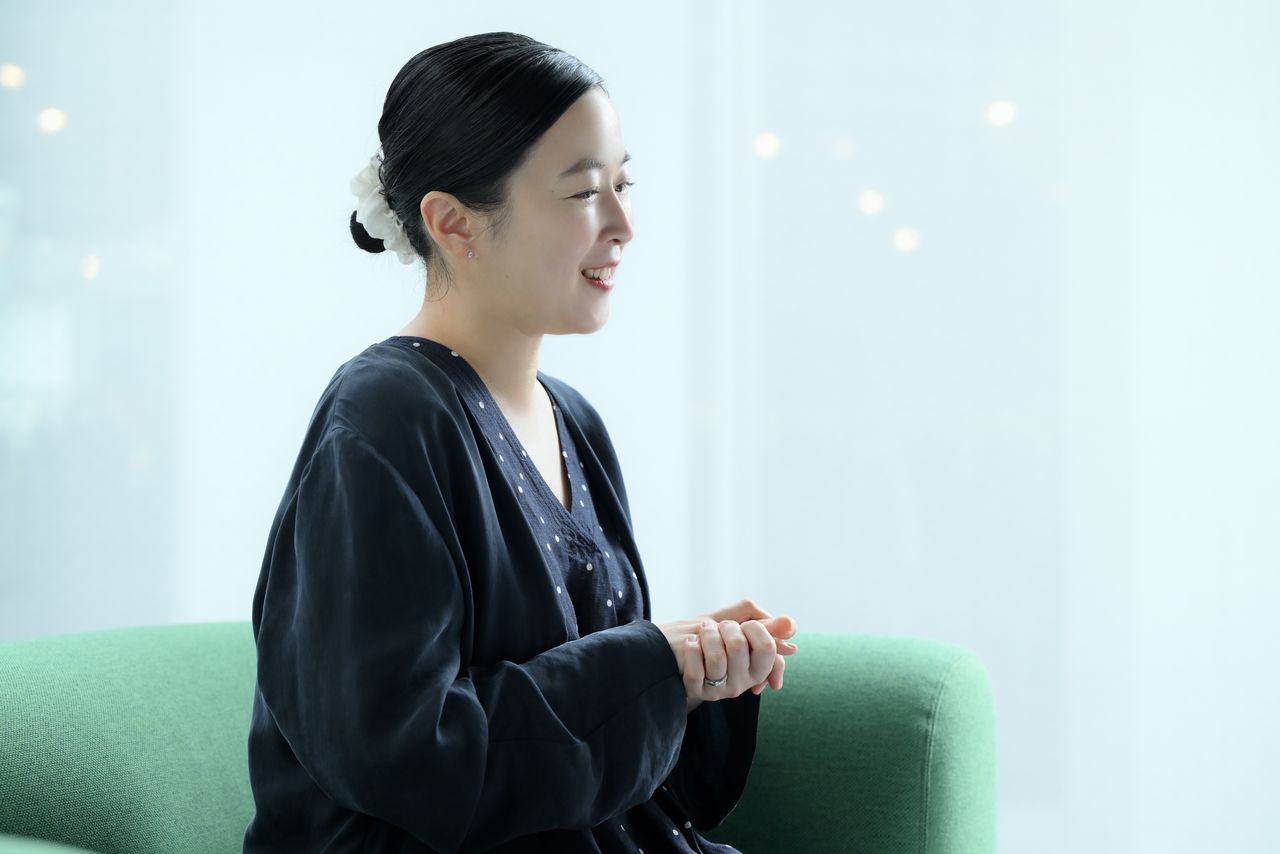
“I break down my complex, tangled feelings one by one and question them.” (© Shinotsuka Yōko)
“When I feel emotions that I can’t put into words or I’m having a hard time, I break down my complex, tangled feelings one by one and question them. Expressing each of these emotions in a thirty-one-sound poem makes me feel I’m being true to myself—that it’s OK to say only this much,” Kang says.
For her, the tanka is what is left when complications are stripped away, or “subtracted.” “People’s emotions are complex, but if you face your core feelings, the answers can be surprisingly simple. Because it’s a literature of subtraction, it’s like keeping a journal where you take a look at yourself, cleanse your heart and mind, and refine yourself into something beautiful.”
Having lived in Japan for more than 15 years, Kang now runs a company and works as a university professor. In her latest tanka and essay collection Kajoku no uta (Family Poems), she writes about life with her Japanese husband and her unchanging feelings about her mother living far away. In Japanese, “family” is kazoku, but in the book title, Kang uses kajoku based on the Korean pronunciation of the word.
Mamoru koto / fueru natsuhikage / furimukeba / Meiji Jingū no / rōboku to haha
More to protect in
the shade of a summer day—
I turn to see
Meiji Shrine’s ancient trees
and my mother(Poem by Kang Han-na, from Kajoku no uta [Family Poems].)
Kang says, “When I try to express myself in Japanese in poetry about my mother, something beyond words emerges. Whatever language I use, people from different cultures and backgrounds are moved to tears. It makes me realize that ‘mother’ is a universal constant in language.”
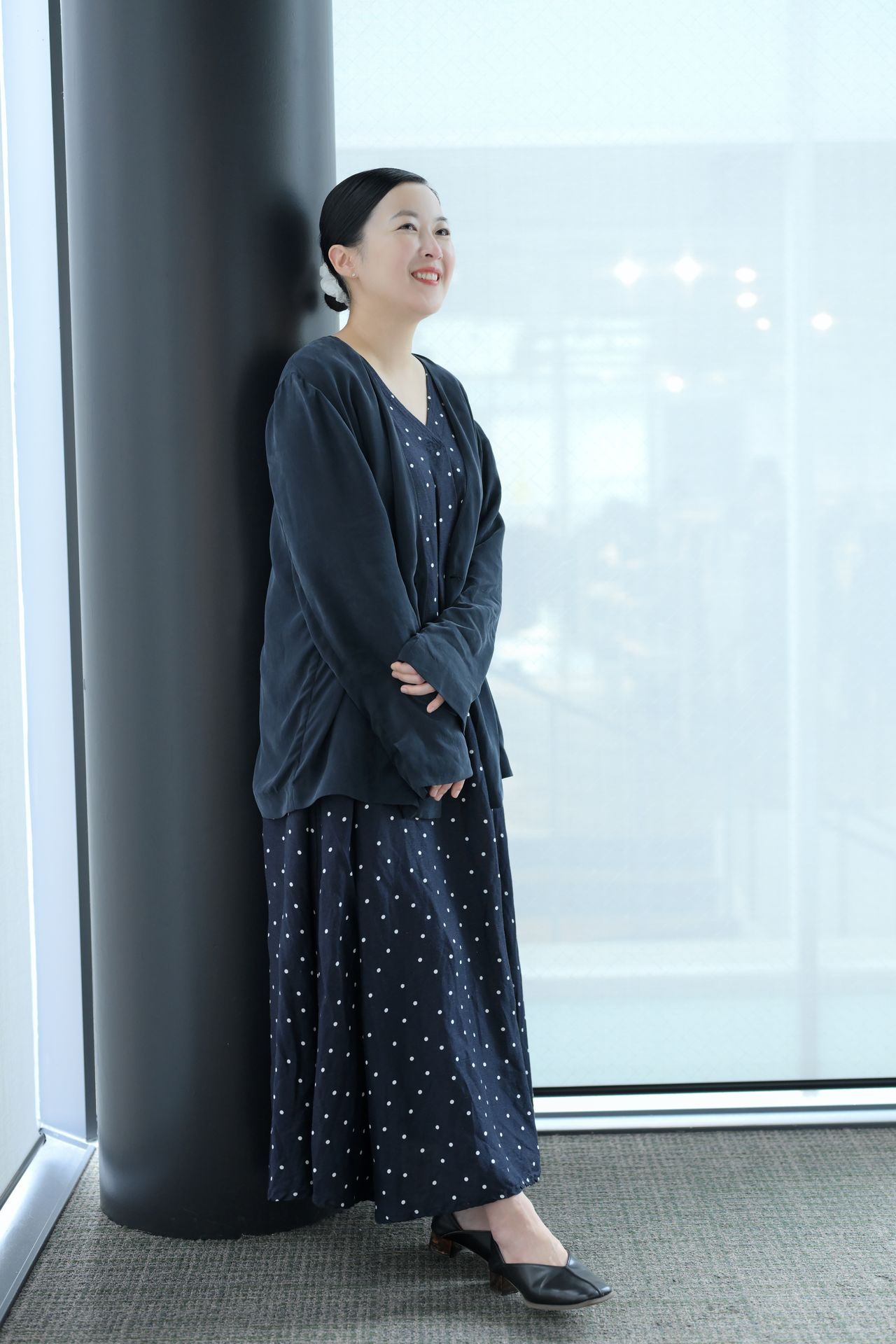
“’Mother’ is a universal constant in language.” (© Shinotsuka Yōko)
Recently other non-Japanese people have approached her, asking her to teach them tanka. She feels like she wants to give something back to this poetic form that nurtured her when she could not express herself smoothly in Japanese. As the only “foreign tanka poet” to have received an award, she says she feels the pressure of conveying the essence of tanka to people who do not know Japanese.
“Through the refined expression of tanka, I’ve come to learn about Japanese people’s way of thinking, their connection to others, feelings, life wisdom, and philosophy—in other words, what they hold dear as human beings. Even if you translate a tanka simply, you break the 7-5 rhythm and it’s difficult to convey the poem’s characteristic quality, which is frustrating, but I think that like Zen philosophy, tanka can become fascinating to people in other countries.”
(Originally published in Japanese on August 3, 2026. Banner photo: The poet Kang Han-na in July 2026. © Shinotsuka Yōko.)