


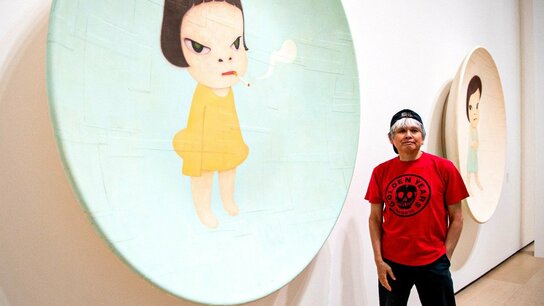
代表作誕生的德國留學時期
初抵德國的前六年,他於國立杜塞道夫藝術學院(Kunstakademie Düsseldorf),受教活躍於第一線的藝術家,像是米夏埃爾.布特(Michael Buthe)與A.R.彭克(A.R. Penck)等人。某次,彭克建議奈良可以像是素描那般,自在地在畫布上創作,這才讓他驚覺,自己把畫布創作過度視為「高級藝術」,反而綁住了手腳。
意識到這點之後,他便頻繁地使用大膽的黑色線條勾勒主體。《The Girl with the Knife in Her Hand》(1991)便是誕生於這個階段。紫色、宛如水波微漾的背景中,一位手持小刀、仰首而立的少女,整體輪廓以黑線強調。此作也確立了他日後的風格。
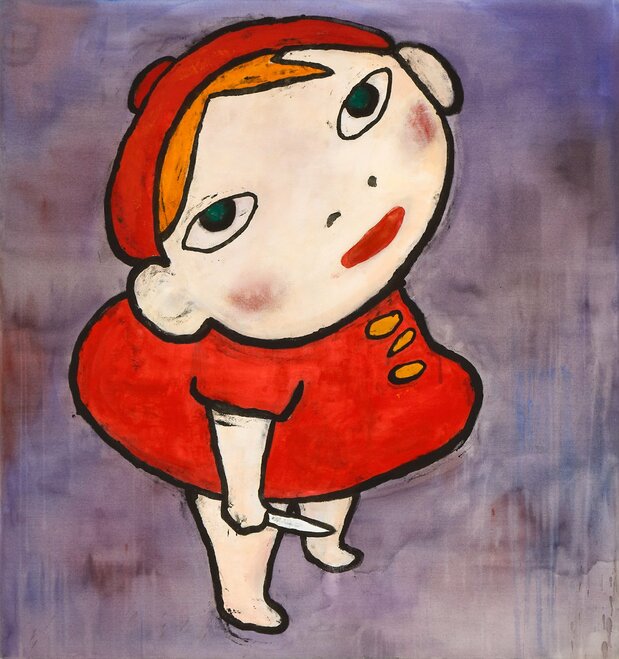
 《The Girl with the Knife in Her Hand》(c)Yoshitomo Nara/image courtesy of Yoshitomo Nara Foundation/San Francisco Museum of Modern Art. Collection of Vicki and Kent Logan, fractional and promised gift to the San Francisco Museum of Modern Art.
發覺這套獨特的語彙之後,他便接連創作出堪稱代表作的經典。其中《Mumps》(1996)即是德國時期的傑作之一。
正如標題「腮腺炎」所示,畫中描繪的大頭「女孩」,以布纏住因發炎腫脹的雙頰,乃至頭部,目光銳利地直視著觀者,嘴唇微啟,像是有話想說。她一邊忍受疼痛,一邊對眼前那些未能察覺其痛楚或者冷漠以對的旁觀者,投以壓抑而憤怒的情緒。
畫布上,裁成長方形的白色棉布,以拼接的方式黏貼其上;這種易於讓人聯想到補丁或繃帶的樸質紋理,亦隱約地暗示了「女孩」所承受的身體及精神上的苦痛。
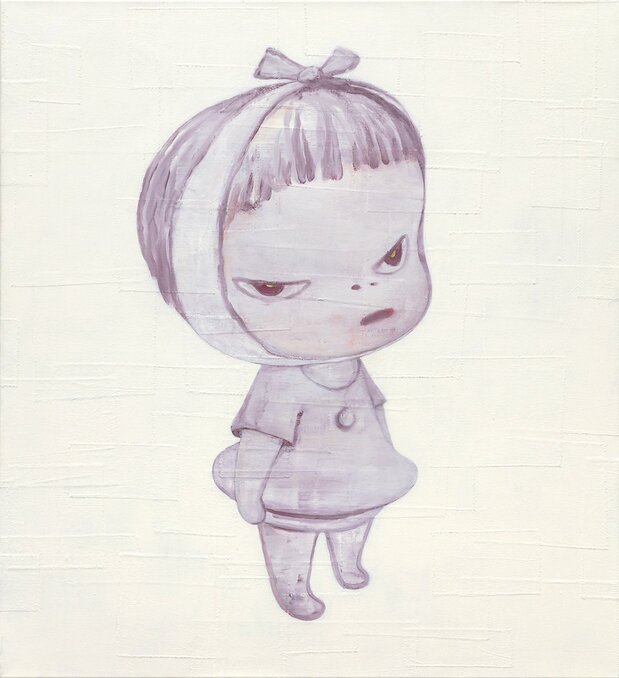 《Mumps》(c)Yoshitomo Nara/image courtesy of Yoshitomo Nara Foundation/青森縣立美術館館藏













 其他語言閱讀