


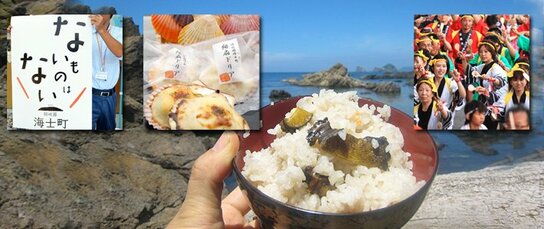
Rejecting the Easy Path
The future did not always appear bright for Ama, for like many other outlying areas in Japan, it too struggled to meet the challenges of depopulation and a falling birthrate during the many years that its economy was dependent on public works. Public debt continued to swell during those years, and by 2003 the amount allocated for the repayment of municipal bonds reached one-third of total annual expenditures. An additional blow was the “trinity reforms” of 2003, which resulted in a drastic reduction of state subsidies. Ama was just a step away from requiring national oversight to recover from its debts.
One option it had was to merge with neighboring municipalities, as many others around the country were doing to streamline administrative costs. But for Ama—separated from its closest neighbors by the sea—the likelihood of achieving greater efficiency through consolidation appeared slim. So Mayor Yamauchi Michio organized community meetings in each of Ama’s 14 districts to ask residents directly whether they wished to merge with other municipalities. Their conclusion was that Ama should seek revitalization on its own; by choosing what they knew would be a difficult path, residents braced themselves for the challenges ahead.
Town hall took the first step toward fiscal consolidation. Mayor Yamauchi cut his own pay, and other municipal officers, including the rank and file, followed suit. Slashing the budget was not enough to revitalize the community, though; of greater importance was what to do with the amount saved. The decision Ama took was to invest the unspent expenditures on a new freezing technology called the Cells Alive System that did not destroy cell tissue and thus enabled the preservation of seafood with greater freshness. The system was a big outlay for a small town like Ama, but it has paid off, as vacuum-packed Ama seafood products soon found new markets around the country.
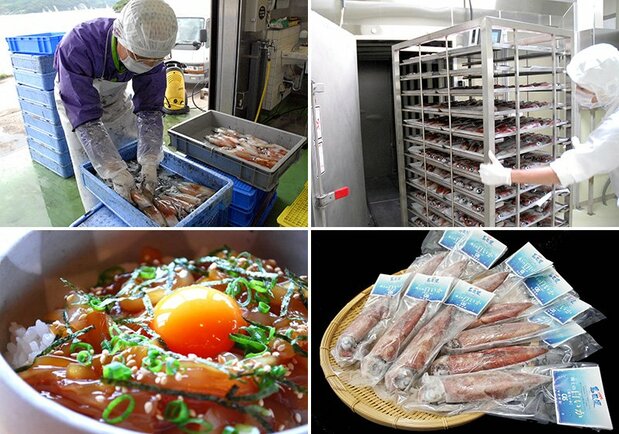
 Just-caught swordtip squid is vacuum-packed (bottom row, right) using CAS freezing technology to lock in freshness (top row). Strips of marinated squid sashimi, laid on a bowl of rice, is a popular dish at the Ritō Kitchen restaurant in Asakusa, Tokyo (bottom row, left).
Sazae Curry and Oki Beef
This initial success led to a series of other hit products, including curry with sazae (horned turban), a type of mollusk—a dish also mentioned by Prime Minister Abe in his policy speech. It had long been standard fare in Ama, but it struck a chord with consumers nationwide when marketed in a ready-to-eat retort pouch. Another popular item was fresh Japanese oysters, developed by studying the various types grown all around Japan; only the highest quality oysters were marketed after being harvested in early spring, a strategy that led to a boost in demand from new markets.
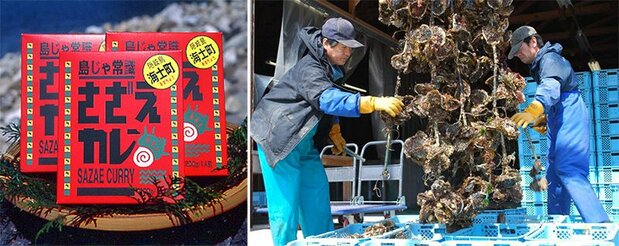 Boxes of sazae pouch curry (left) and Haruka-brand Ama oysters.
Ama-grown beef also became a hit. Cows in the Oki Islands have traditionally been allowed to graze freely and are known for their sturdy legs and loins. To avoid the high cost of shipping from remote islands, though, they were generally sold to other regions while still young calves. This trend was reversed when the very best mature cows that could win over discriminating consumers in Tokyo were branded as Oki beef and launched on the market. Although shipment volume is still limited, Oki-brand beef has earned accolades from epicureans all over the country. Other new products include handmade sea salt and natural fukugi tea made from locally grown ingredients. What were the factors behind Ama’s turnaround?
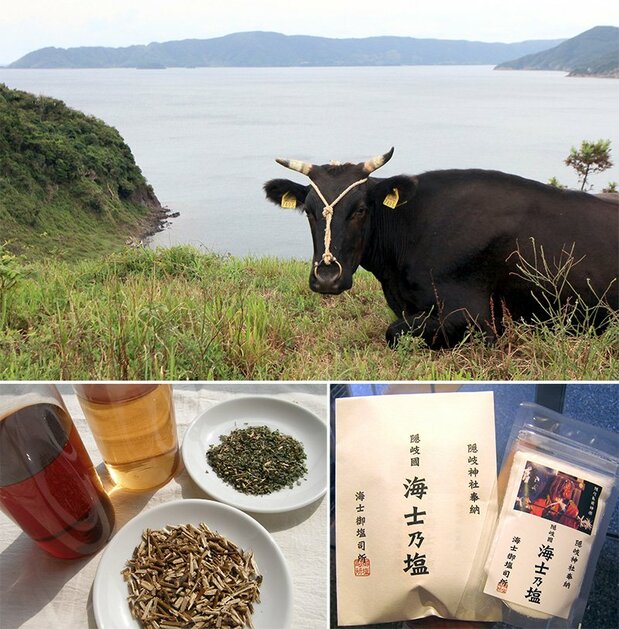 Oki-brand cows (top), born and raised on the island, are allowed to graze in Ama’s rich natural environment. Fukugi tea has a refreshing fragrance (above left). Ama salt (above right) is handmade using traditional methods from the waters of Hobomi Bay.








 Read in other languages