


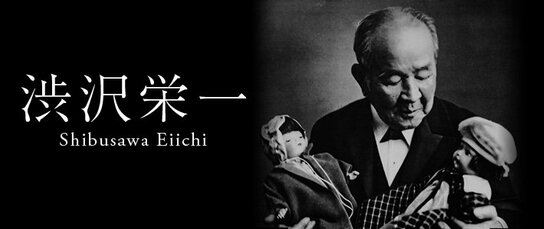
Unwavering Determination
Shibusawa lived in a time of turbulent change. He began as an advocate of anti-foreign sentiment, but recognizing the momentum of history he came to embrace Western ideas. He joined the new government that overthrew the feudal regime he had once served. Although his switching of allegiance may seem to some as an unprincipled move, Shibusawa was in fact a man of firm convictions. Throughout his life he held an unwavering dedication to serve the public interest, bowing as needed to prevailing circumstances and putting the welfare of society firmly before personal gain.
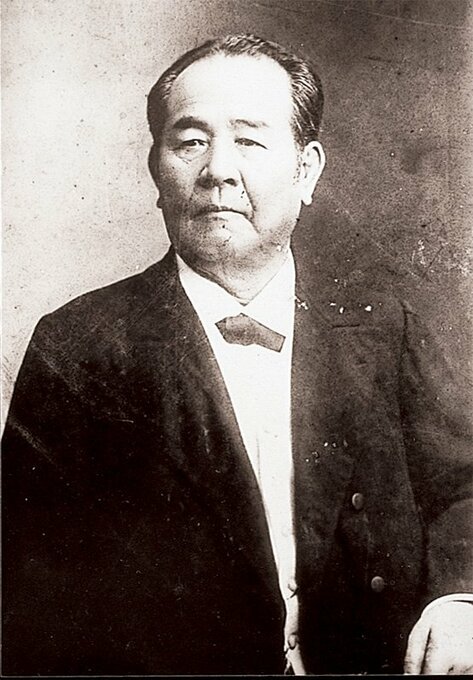
 Shibusawa Eiichi when he was 70 years old. (Photo courtesy of the Shibusawa Eiichi Memorial Museum)
There are countless episodes that illustrate his resolve, but his dedication to his one-time master Yoshinobu in particular stands out. Shibusawa believed that even as the nation moved in a new direction, it was vital to keep a clear record of the past. At personal expense he compiled the biography of the former shōgun, publishing it in 1918 after a quarter century of work. In addition, he tirelessly fought to restore Yoshinobu’s prestige, and at Shibusawa’s urging the Meiji government in 1902 beckoned Yoshinobu from exile and made him a duke.
Inoue describes the significance of Shibusawa’s biography: “The work was not only a story of Yoshinobu, but of the tumultuous period leading up to and directly following the Meiji Restoration. Shibusawa was not immune to the changes that were taking place at the time, but he remained loyal at heart. I think the vast time and resources he spent collecting and sifting through mountains of documents is testament to the firmness of his thoughts and convictions.”
 The museum’s rest area looks out onto the Seienbunko library on the grounds of Shibusawa’s former garden.
Shibusawa’s legacy of promoting public welfare is best showcased by his involvement at Tokyo Yōikuin, a facility that supported orphans, elderly, and the disabled. He first became involved with the institute in 1874, helping improve operations before taking over as director in 1876. He went on to hold the post for more than half a century until his death.
“His long tenure as director of Tokyo Yōikuin greatly influenced Shibusawa,” says Inoue. “Early in his career he believed that a strengthened Japanese economy would raise all boats. But in reality it had the opposite effect. Disparity increased, and as more people were left behind the need for social welfare projects grew. Shibusawa saw the darker side of private enterprise firsthand, and it stirred him to support social initiatives. While he is known for promoting capitalism, he didn’t call it that, preferring to use the term collectivism.”
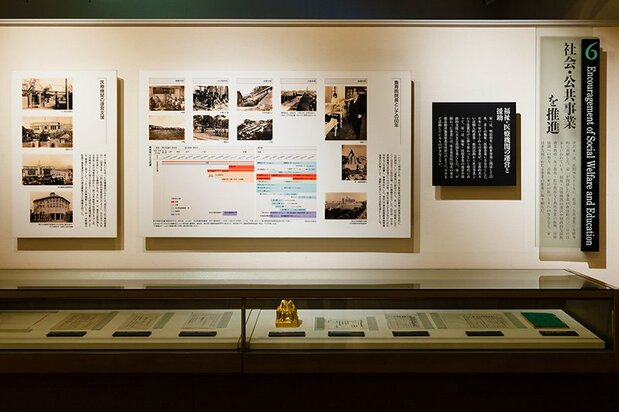 A display detailing Shibusawa’s broad health and social welfare activities, centering on his involvement with the Tokyo Yōikuin.
Shibusawa’s Humanism
Along with Tokyo Yōikuin, Shibusawa was involved with a variety of other health and welfare institutions, including Hakuaisha, the forerunner of the Japanese Red Cross. In the wake of the Great Kantō Earthquake in 1923 he helped establish and run an organization to involve private citizens in relief and recovery efforts. Undaunted by age, he remained active in different projects late into his life.
Shibusawa had a great interest in promoting business and women’s education. He set up Japan’s first trade school, which later became the prestigious Hitotsubashi University. He also served in such positions as head the Tokyo Jogakkan School for Women and Japan Women’s University.
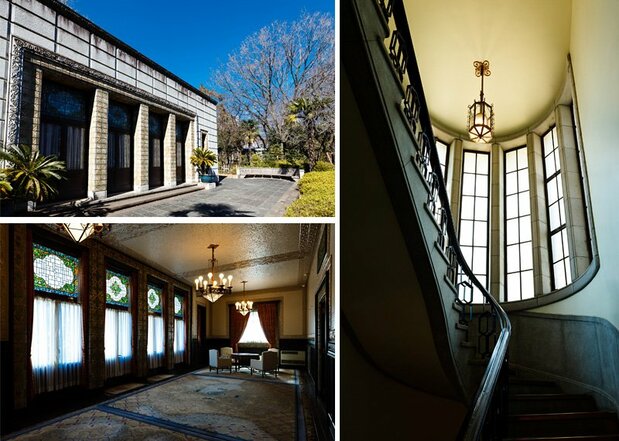 The interior of the Seienbunko library. Shibusawa used his position in the private sector for diplomacy, frequently hosting such dignitaries as Chiang Kai-shek at his Tokyo residence.
Private sector diplomacy is another aspect of Shibusawa’s legacy. Shibusawa was especially influential in mending relationships between Japan and the United States following a rift opened by the Russo-Japanese War of 1904–5. Alarmed by the growing discrimination directed at Japanese immigrants to the United States, the US Committee on World Friendship Among Children in 1927 sent some 12,000 “friendship dolls” collected from around the country to Japan. As chairman of the Japanese chapter of the organization, Shibusawa accepted the gifts and sent 58 Japanese dolls in return.
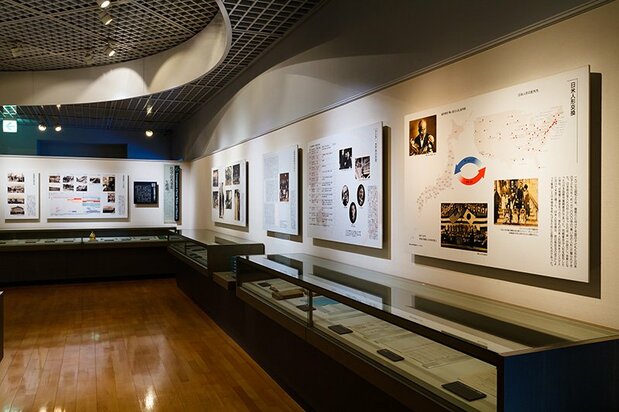 The museum’s section detailing Shibusawa’s private-sector diplomacy. Shibusawa continued to travel to the United States into his eighties.
Inoue explains that Shibusawa’s greatest appeal is not his business accomplishment, but his humanism: “He is known first and foremost as the father of Japanese capitalism, and naturally people admire his economic accomplishments most. But Shibusawa’s heart overflowed with kindness. I hope that visitors to the museum learn about other aspects of his life, like his childhood and social welfare activities. The goal of the museum is to help people understand that Shibusawa was a man who cared deeply about the welfare of those around him.”
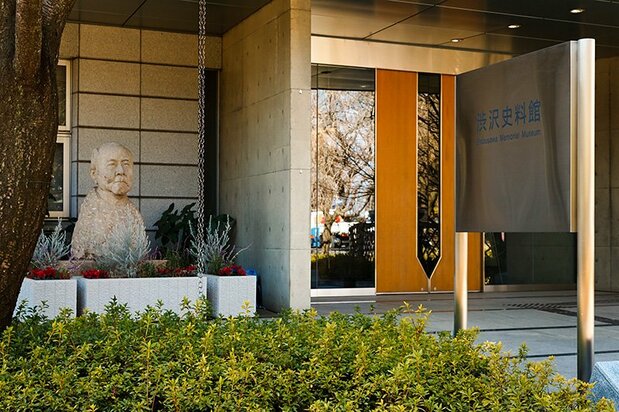 A bronze bust of Shibusawa greets visitors at the entrance of the museum.
Shibusawa Eiichi Memorial Museum
- Address: 2-16-1 Nishigahara, Kita, Tokyo Google Maps
- Access: 5-minute walk from JR Ōji Station, 7-minute walk from Nishigahara Station (Tokyo Metro Namboku Line), and 4-minute walk from Asukayama Station (Toden Arakawa Line).
-
Hours: Shibusawa Eiichi Memorial Museum, 10:00 am to 5:00 pm (ticket counter closed at 4:30 pm); Bankōro tea room and Seienbunko library, 10:00 am to 3:45 pm.
Closed Monday (or Tuesday following a national holiday) and for New Year (Dec. 28–Jan. 4). -
Admission: Adults: ¥300
School children up to high school: ¥100



 Read in other languages