


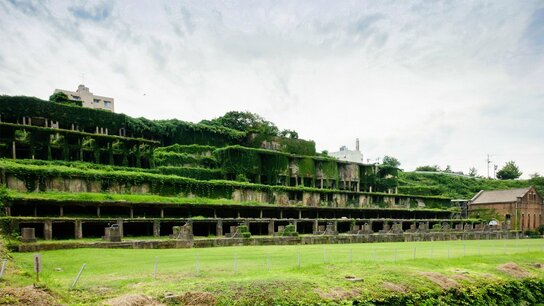
A Wealth of Gold and Silver
The kinzan mine was a self-contained operation. Each stage, from ore processing to the minting of coins, was conducted onsite. The riches that flowed from the mine during the Edo period helped finance the Tokugawa shogunate and kept the regime self-sufficient in gold and silver.
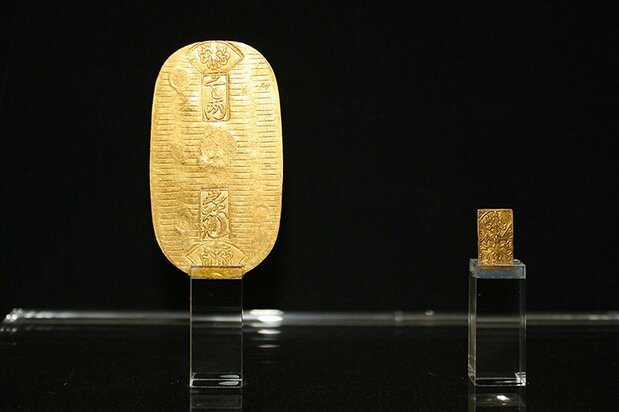
 A gold koban coin (left) and ichibu ingot. (Photo courtesy of Golden Sado)
After the Tokugawa regime fell, the new Meiji government took over mine operations. It brought in foreign engineers and adopted Western technologies in a bid to boost flagging productivity. In 1896 it sold the mine to the Mitsubishi conglomerate, which continued to mechanize the extraction process. Production reached a pinnacle around 1940, helping fund Japan’s wartime ambitions. The mine was finally closed in 1989 after 388 years.
 The mine’s 50-meter-wide thickener was built in 1940 to separate tailings and water.
The vein of gold running through the kinzan measures a mere 3 kilometers east to west and 600 meters north to south, reaching a depth of 800 meters. Over nearly four centuries miners bore more than 400 kilometers of tunnels into the mountain, about twice the circumference of Sado, and extracted an impressive 15 million tons, equivalent to a cube 180 meters on each side, of stone.
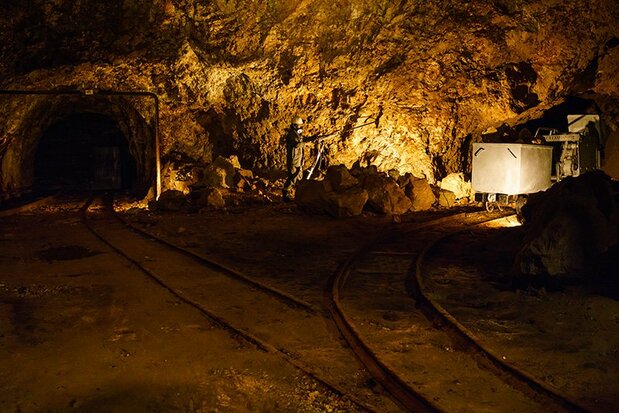 The Dōyū tunnel was excavated from the end of the Meiji era (1868–1912) until the mine was closed.
According to Nabata it took an average of 1 ton of ore to produce 5 grams of gold, and that around 78 tons of gold and 2,330 tons of silver were extracted over the lifetime of the mine. In 1997 the Hishikari mine in Kagoshima Prefecture surpassed Sado’s kinzan in terms of gold production, but the mountain retains its title as Japan’s richest silver mine.
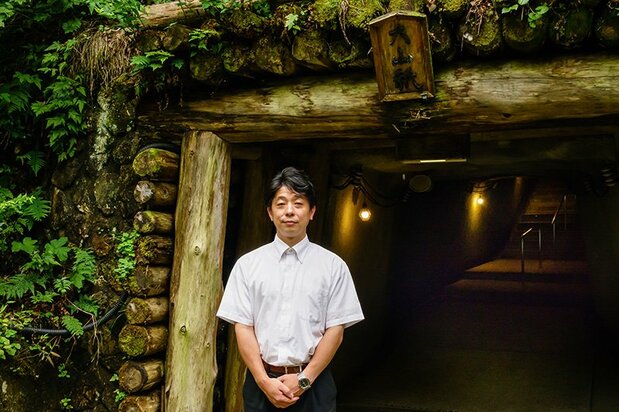 Golden Sado employee Nabata Shō stands at the entrance of an old mining tunnel.
Campaign for Heritage Status
The Sado kinzan mine holds a unique place in Japanese history for its pivotal role in helping finance the government from feudal times all the way to the modern age. In recognition of its historical importance, there is now a campaign underway to have it registered as a UNESCO World Heritage Site.
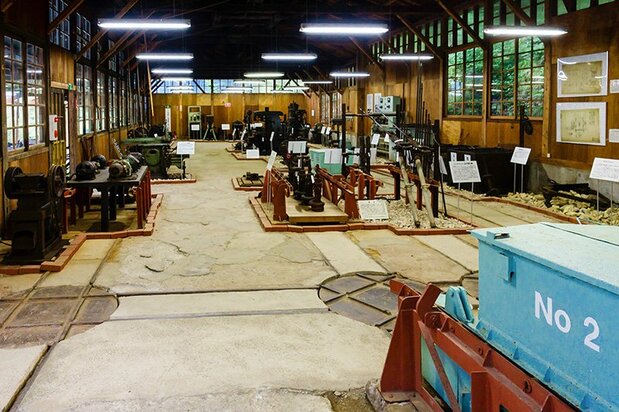 The Sado Kinzan Museum preserves mining machinery used from the Meiji era onward.
The petition includes the Sado kinzan, the Nishimikawa gold mine, and the Tsurushi silver mine. These sites provide an important historical and cultural record of Japan’s mining history stretching back more than five centuries that includes advances in operation and excavation techniques and the lifestyles of people who depended on the mines for their livelihood.
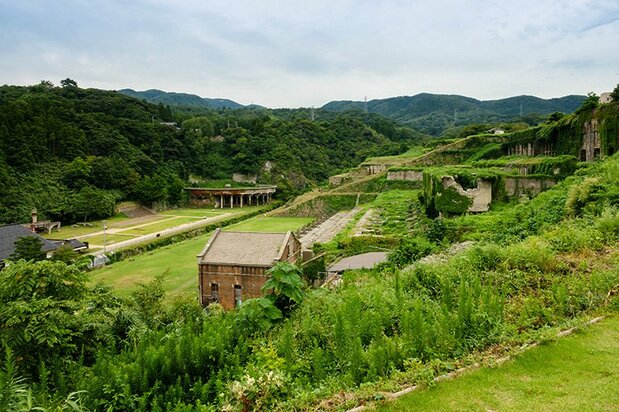 Operating from the nineteenth century to the early twentieth century, the Kitazawa floatation plant—a facility for separating precious metal from raw ore—boasted the largest capacity in East Asia.
Sado Kinzan Gold Mine
- Location: Shimoaikawa 1305, Sado, Niigata Prefecture
- Tel: 0259-74-2389 (Japanese)
- Hours: 8:00–17:30 (April–October), 8:30–17:00 (November–March), open year round
- Admission: Edo course (Sōdayū tunnel) and Meiji course (Dōyū tunnel), ¥900 for either or ¥1,400 for both (half price for children; group prices available)
- Website: http://www.sado-kinzan.com/en/
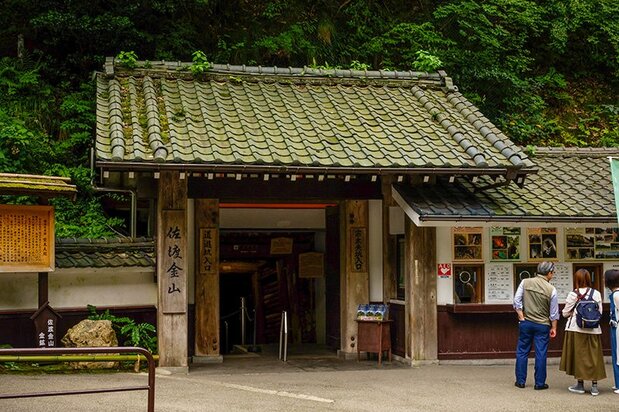 Entrance to the Sado Kinzan Gold Mine.
(Originally written in Japanese by Aoki Yasuhiro and published on December 22, 2017. Banner photo: The Kitazawa floatation plant. Photos by Miwa Noriaki except where noted.)



 Read in other languages