


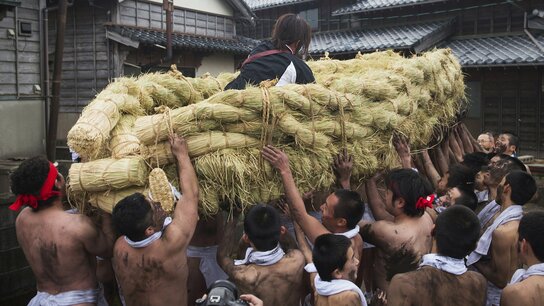
Midsummer Obon Dances and Continental Influences
Each season in the Gotō Islands has its own appeal, but summer is a particularly attractive time of year. The islands boast many beautiful beaches, including the clear waters and gently sloping shallows of Takahama on Fukue Island. The islands are ablaze with color: the beautiful white of the beaches, the dense green of the mountains, and the subtle gradations of the ocean’s blue. All these come together at the beaches of the Gotō Islands, and the wonders of pristine nature experienced close up delight the senses. Away from the coast, the islands also offer numerous places to enjoy the fresh air and solitude of shady forests and secluded woods, including the famous Dondon-buchi waterfall.
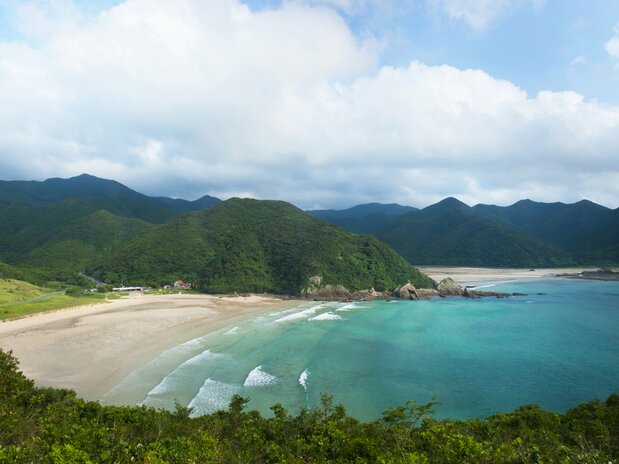
 Surrounded by green mountains, the beautiful waters of Takahama beach have been voted among the best in Japan.
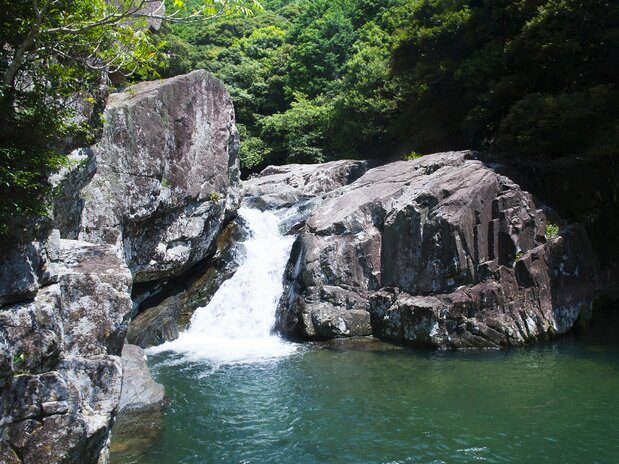 During the hot summer months, the Dondon-buchi waterfall is a favorite swimming hole for the local children.
The islands’ best-known summer festivity is the nenbutsu-odori during Obon, the midsummer festival of the dead. Although each district has its own particular name for the dances—chankoko on Fukue, ōmondē on Sagano, oneonde on Tomie, and kake-odori on Tamanoura—all feature a combination of shō bells and taiko drums. Locals dress up in distinctive traditional costumes sing and sway in time to the rhythm of these instruments. It makes for a thrilling, exotic sight, a vivid reminder of the islands’ long history as a conduit for cultural influences from the continent.
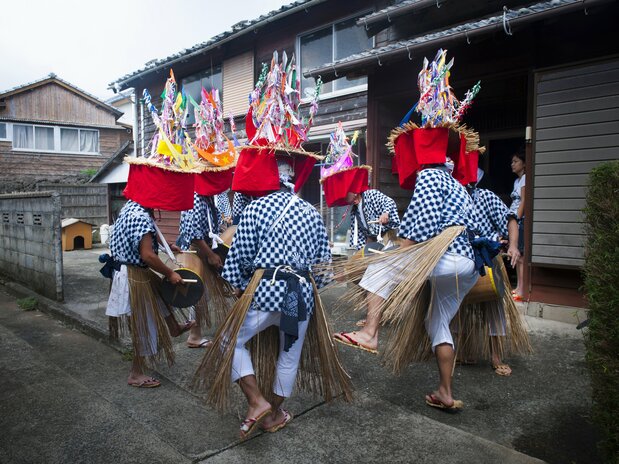 Performing the chankoko dance during Obon to pacify the spirits of the dead.
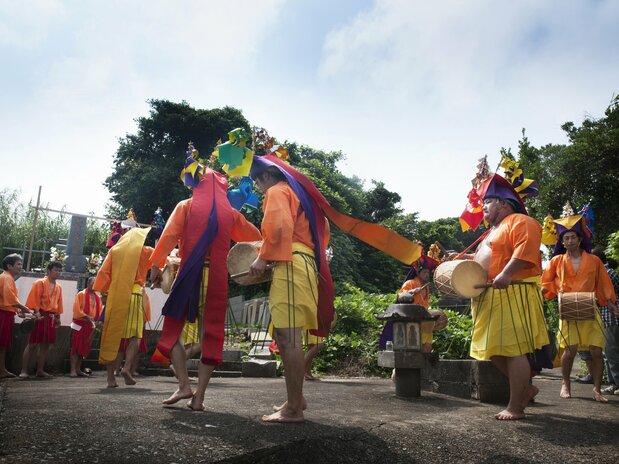 Colorful costumes and vibrant drumming are among the attractions of the ōmondē dances.
The Gotō Islands offer a rich array of experiences, from natural beauty to unique festivals. Every time I visit I am reminded of how deep and special a place it is, and on the ferry back to the mainland I always find myself making plans to return.
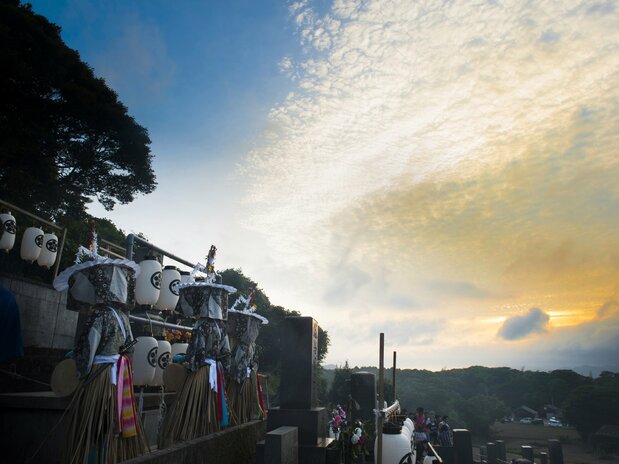 Oneonde is another Obon dance performed in memory of the dead.
(Originally published in Japanese on April 19, 2018. Photographs and text by Kuroiwa Masakazu of 96Box.)


 Read in other languages