


The Need for Combined Reform of Taxes and Social Security
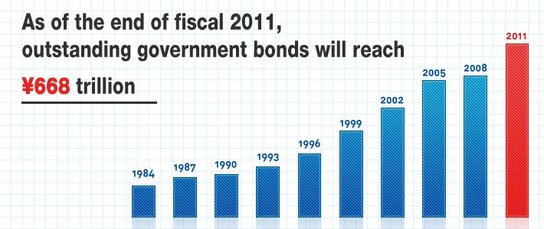
According to the set of projections released by the Cabinet Office on January 21, before the earthquake, based on a conservative growth rate assumption of about 1.5%, as of 2020 the deficit in the primary balance of the central and local governments will be ¥23.2 trillion (about 4.2% of GDP). (*6) If the primary balance is to be brought into equilibrium by then, taxes will have to be hiked. The projection found that the goal could be reached by raising the 5% consumption tax, of which each percentage point brings in about ¥2.5 trillion in revenue, by at least 9.3 points. Otherwise, the only choice would be to make drastic cuts in government spending.
If instead a 3% growth rate is assumed until 2020 and the consumption tax is left unchanged, the primary balance deficit will be ¥16.2 trillion (about 2.5% of GDP). The deficit would shrink in this case because tax revenue would grow faster than expenditures. This scenario, however, is wishful thinking, because it posits an unrealistic level of growth and ignores the possibility of revisions in the tax code such as a cut in the corporate tax rate.
A more sensible approach is to seek improvement through a combined reform of taxes and social security. A joint panel of the administration and ruling parties formed to consider social security reform unveiled just such a proposal on June 30. (*7)Its centerpiece is a gradual hike in the consumption tax to 10% by the middle of the current decade. Evidently the DPJ has been forced to accept that taxes will have to be increased. The DPJ government is even finding it hard to maintain 50% government funding for basic pensions as stipulated under the current law, not to mention realizing the goal stated in its election manifesto of securing a “minimum guaranteed pension” fully funded by the government. Another reason that a tax hike is unavoidable is that the government is trying reform the long-term care system and the remuneration medical institutions receive for the treatment they provide.
The problem is that even if the consumption tax is raised to 10%, the prospects will still be bleak for the period from 2015 on. People have also been complaining about the administration because nobody can tell how its current plans relate to the promises the DPJ made in its election manifesto. The recently released reform proposal amounts basically to continuing the policy course set by the previous administration, which was a coalition of the LDP and the New Kōmeitō. It would appear that the current political leadership is thinking about hiking the consumption tax merely as a means to keep the framework of the social security system intact.
The DPJ has yet to get its act together on what to do about the consumption tax. It has been revealed, for instance, that the party members have not even begun discussions on the division of the revenue from a higher tax rate between the central government and local governments. Another issue is the regressive nature of the tax, which bears down most heavily on people in low-income brackets. If the rate is to be hiked, surely thought should be given to making the application of the tax less regressive, but the question has not been raised. The DPJ government is ducking the problems that a higher rate presents, and it is also holding back from making a formal commitment to hiking the tax. By postponing action on such basic questions, the administration has exposed how weak it has become and how little ability it has to formulate policies.





 Read in other languages