


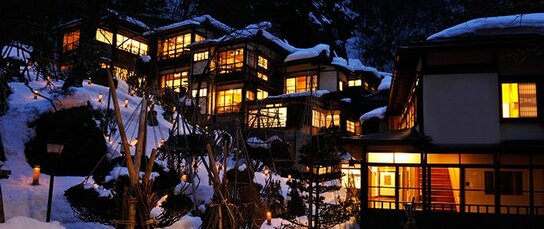
Living Traditions
Mukaitaki is not alone in its timeless appeal. Almost uniquely, the Higashiyama Onsen area still supports a thriving group of geisha, a significant number of whom are still in their twenties. Veteran geisha pass their skills down to the next generation, and traditional performing arts dating back to the Meiji era can still be enjoyed today. The repertoire is expansive, ranging from classical standards, called hauta, to local folk songs and dance performances depicting the tragic end of the doomed Byakkotai (White Tiger Battalion) a group of teenaged samurai from the Aizu domain who took their own lives in defeat during the Boshin War (1868–69), in which Aizu sided with the shogun’s forces against the new imperial government.
Higashiyama geisha Mikiko (right) accompanies Tsukino as she performs the hauta “Ume wa saita ka” (Are the Plum Blossoms in Bloom?).
A renowned singer and shamisen player, Mikiko is a veteran geisha with many years’ experience (though she demurs from saying precisely how many), greatly respected by younger performers. Mikiko believes the distinctive charms of the Higashiyama geisha traditions are intimately bound up with the culture and topography of the region.
“Aizu is close to Niigata on the Japan Sea coast. The cultural traditions of Kyoto arrived in this area from that coast. The performing arts have been popular in this region for centuries. At the height, there were more than 100 of us geisha working here. Compared to that, things are a little lonely these days, but considering the poor economic climate, I think we’re doing remarkably well. I don’t think you’ll find as many young geisha in any other hot springs in Japan. Things were a bit subdued for a while after the disaster. At first people maybe didn’t feel it was appropriate for them to enjoy themselves. But local business leaders invited us to perform. They said it was more important now than ever to let people forget about their troubles for a few hours and maybe lift their spirits a little. I’m confident that we’ll be able to pass on our traditions to the next generation.”
People often think of geisha and their traditional entertainments as being far beyond ordinary people’s budgets. But in Higashiyama you can be entertained by a geisha for 90 minutes for just over ¥14,000. Mikiko says that many of her clients today are families and groups of women travelling together. “With women customers, it’s a kind of Girls’ Night Out. Things can get quite lively! We also enjoy entertaining foreign guests. Despite the language barrier, they have a good time and communicate with the girls through gestures and so on. It’s too bad that foreign guests have stopped coming since the earthquake. Please come back again!”
Tsukino is 22 years old. Originally from neighboring Kitakata, she has been a geisha for just four years. Passionately devoted to traditional Japanese culture since childhood, she says she realized she wanted to be a geisha when she entered high school. “I’m so happy that I can wear a beautiful kimono and a traditional Japanese hairstyle. But I’m still learning. Every day is a learning experience.”
Doing What Is Right
Along with the warmth of the local people, the “Ten Rules” that have been instilled in the children of the town since the Edo period are another aspect of Aizu’s timeless charms. The commandments lay out the rudiments of etiquette for daily life: respect your elders, always tell the truth, and so on. The last of the rules is a kind of summary: Naranu mono wa naranu mono desu, “What shouldn’t be done shouldn’t be done.”
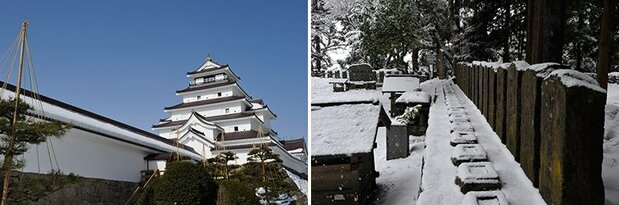
 The symbols of Aizu: Tsurugajō Castle (left) and the graves of the White Tiger Battalion
Hirata Yūichi explains: “I think the spirit of Aizu is encapsulated in the idea that you should do the right thing even if you know that you will lose. The expression Naranu mono wa naranu mono desu is a reminder to oneself. If we lose sight of these values, Aizu will no longer be itself. It’s up to us to make sure that doesn’t happen.”
(Originally written in Japanese. Photographs by Uzawa Akihiko)
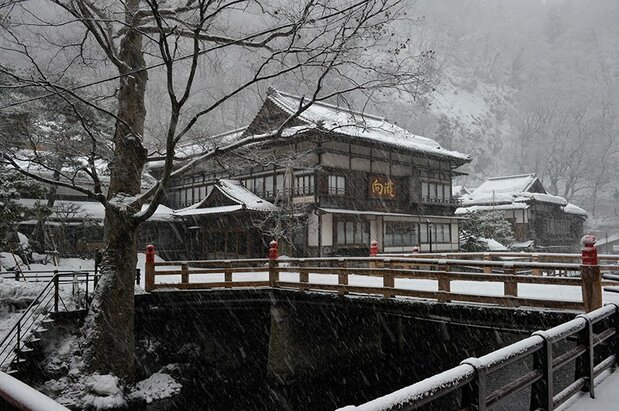 Mukaitaki in winter
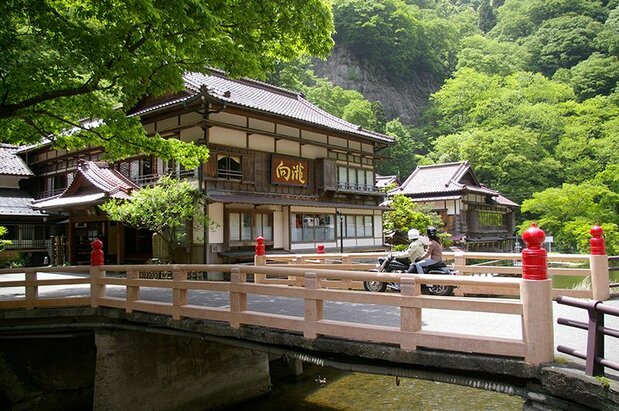 Mukaitaki in early summer
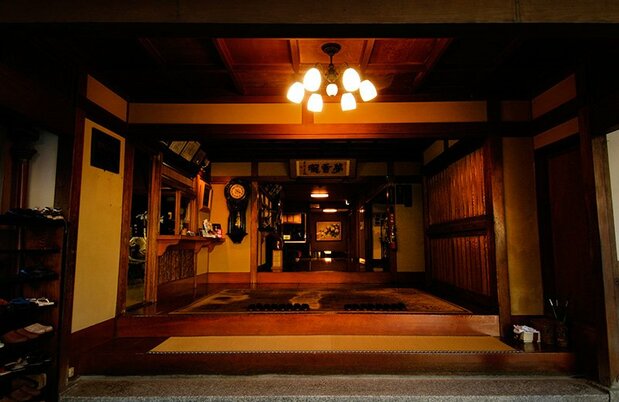 The entrance hallway, redolent with 140 years of history
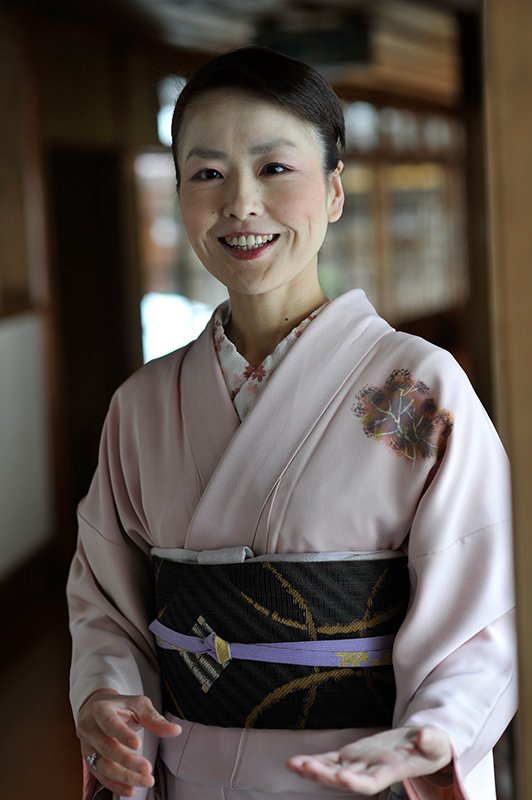 The mistress of the inn, Hirata Machiko
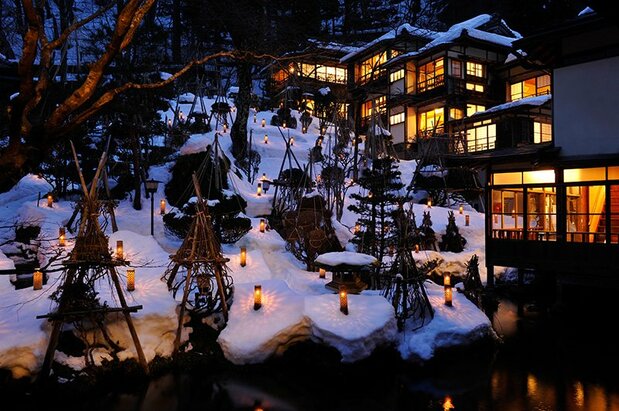 The inner courtyard lit with candles for snow viewing. Hirata introduced the idea in 2001 as a way for guests to enjoy the Aizu snowscape. The bamboo casings are all handmade.
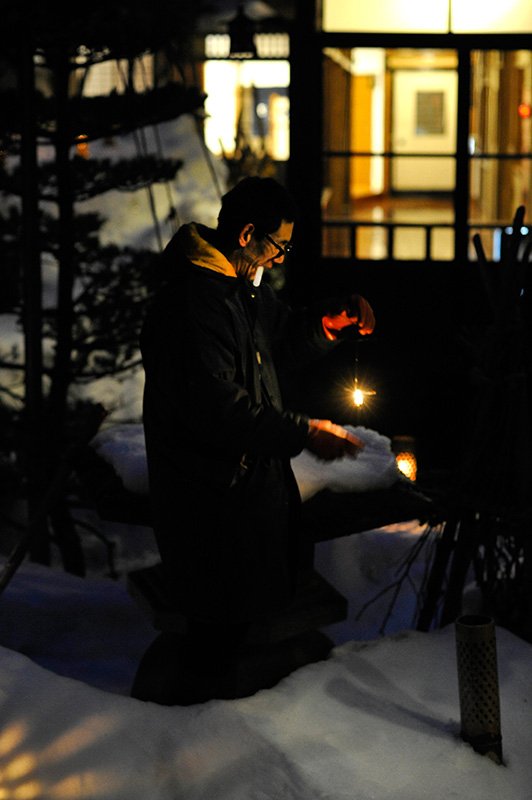 An employee replaces burnt-out candles in the sub-zero temperatures.
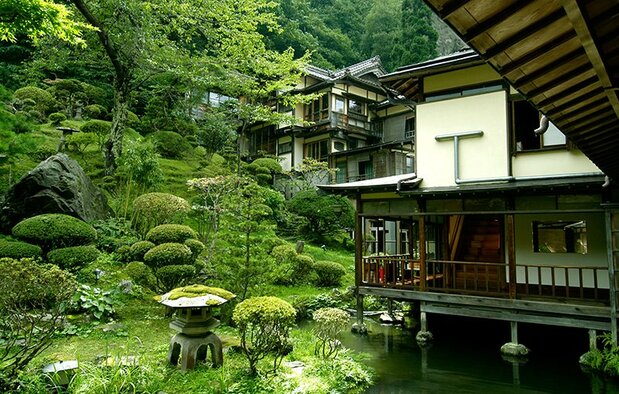 The inner courtyard in summer
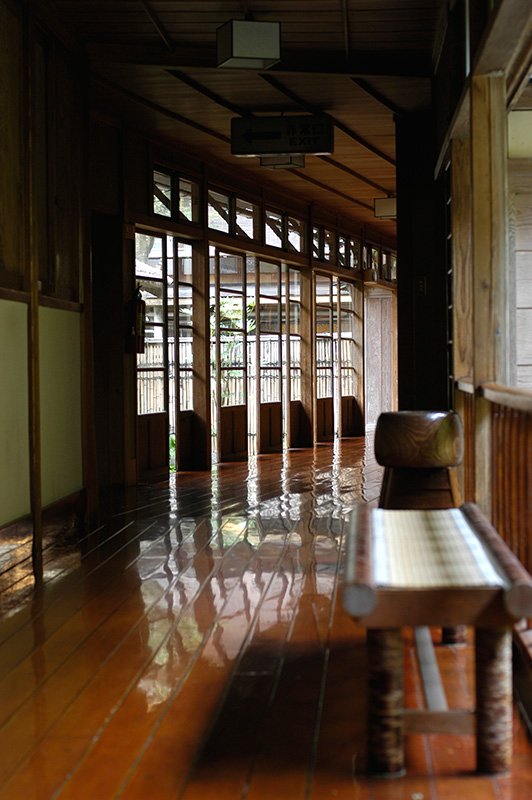 The freshly polished hallway
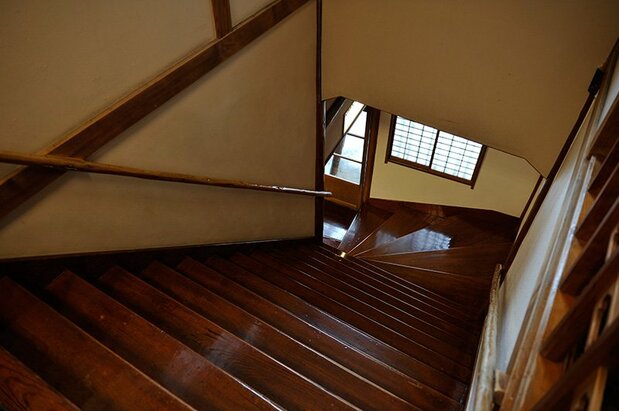 The gleaming stairs
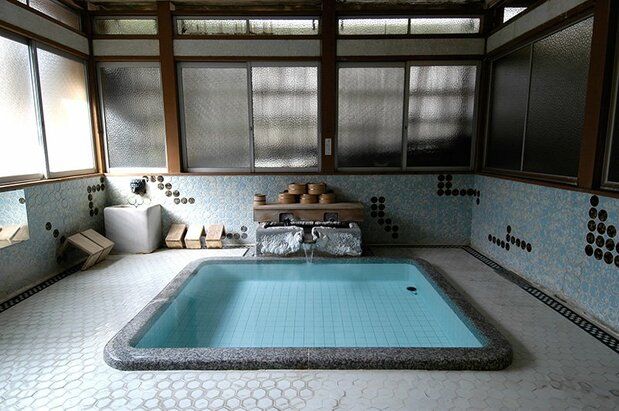 Kitsuneyu, Mukaitaki’s oldest bath
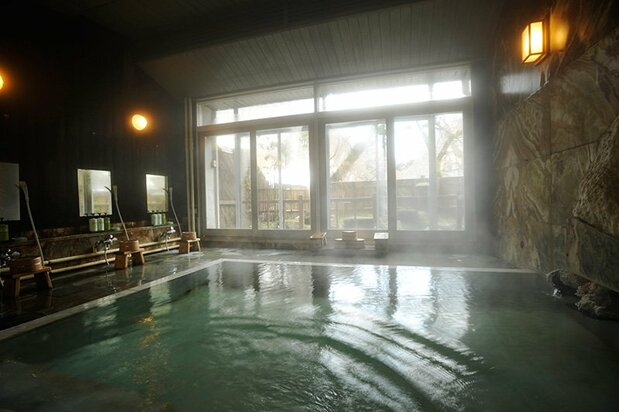 Sarunoyu, the communal bath
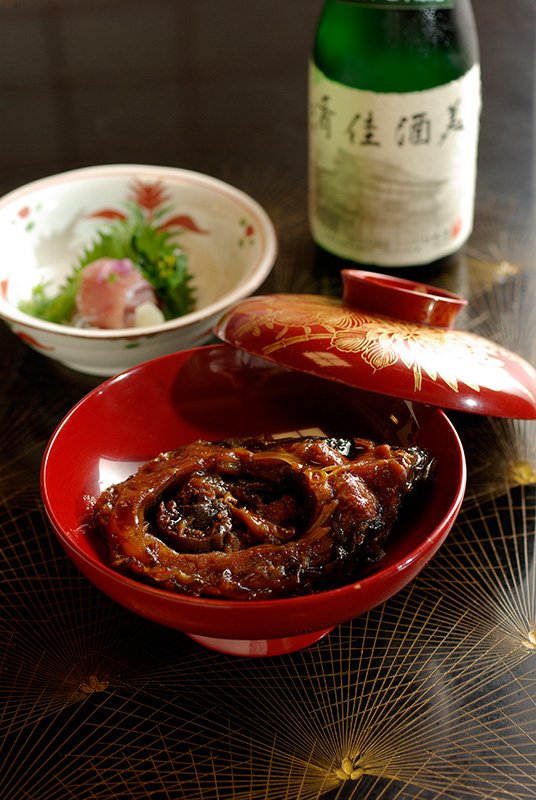 Sweet steamed carp—a local delicacy—served with a bottle of the inn’s own sake, named after the message in Noguchi Hideyo’s calligraphy.








 Read in other languages