


Passing on the Heart of Ninjutsu
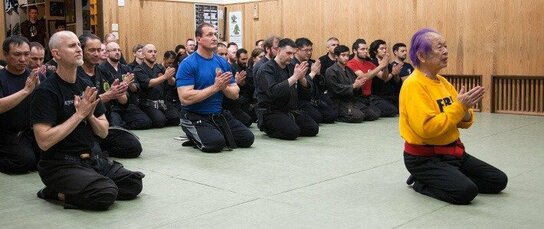
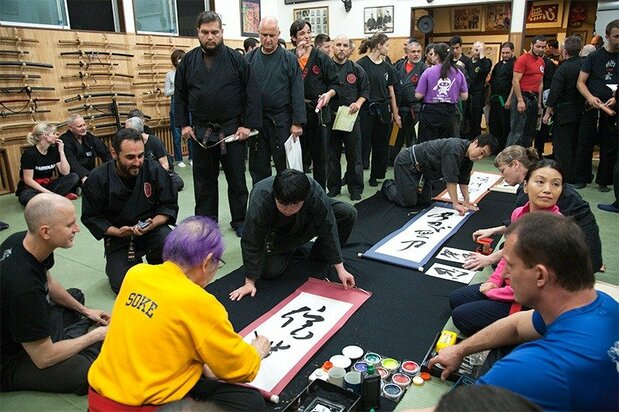
During a break in the training, the deshi begin to form a line in front of Hatsumi. Everyone seems in great humor. Once all are ready, Hatsumi speaks to each of them in turn as he writes calligraphy on their proffered scrolls and shikishi autograph boards in a smooth, practiced hand. Each student holds the calligraphy like a precious gift as they leave the dōjō for the day.

The fifteenth dan is the highest rank one can attain at Bujinkan. On the day that we visit, Hatsumi is conducting proficiency tests for promotion to fifth dan. The deshi kneel in formal seiza position with their backs turned to the examiner as he passes behind them with a training weapon called a bōken, a cushioned bamboo staff covered in leather. No one knows when or on whom the bōken will fall, and the test is to see if the deshi can avoid the blow relying on their senses alone. If they can, they pass.
Upon promotion to fifth dan, the deshi receive certificates that permit them to open their own dōjō. The faces of the qualifying students beam with delight and satisfaction.
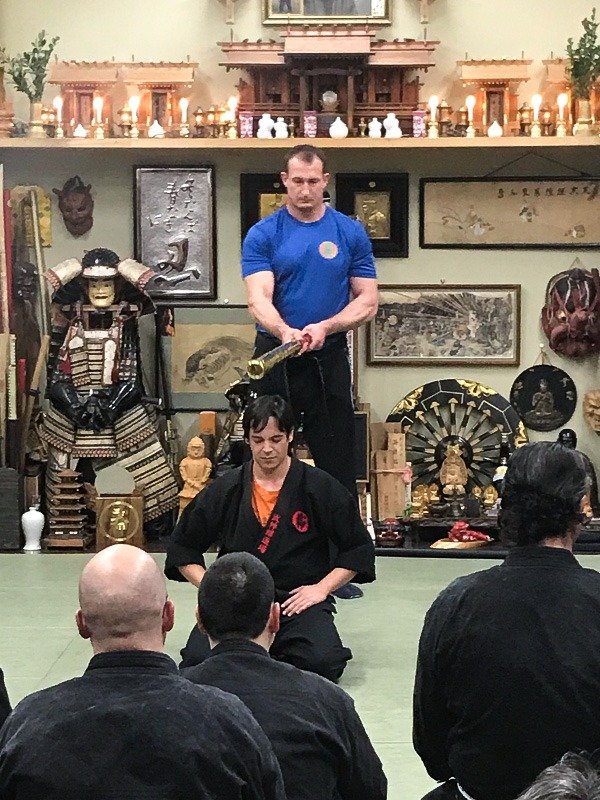 The test for promotion to fifth dan. You pass if you can avoid the descending bōken using your senses alone
“Perfecting a martial art is not an easy path,” says Hatsumi, casting his mind back over his own long journey. “I have come as far as I have in this life out of my one great desire, to help lead other people to know the true ninjutsu, to know the true martial arts. It’s been fifty years since I first opened this dōjō, and at last I’ve been able to train and raise successors from all over the world. I’m just content that I have been able to pass on the true essence of martial arts. All I want now is for my deshi around the world to continue to learn and grow into outstanding people who can earn the respect of all.”









 Read in other languages