


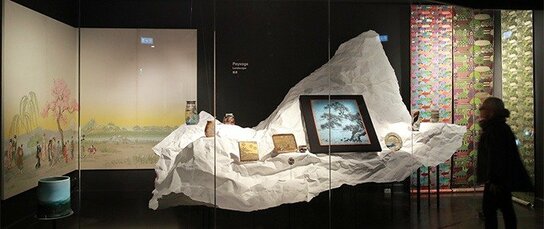
A major exhibition celebrating the long-standing influence of Japanese aesthetics on French artists is currently being held at le Musée des Arts Décoratifs in Paris. The bold innovative style of display, juxtaposing objects from differing times and places, is inspiring a new generation of visitors.
A wide variety of events have been held throughout France from 2018, to commemorate 160 years of diplomatic ties with Japan.
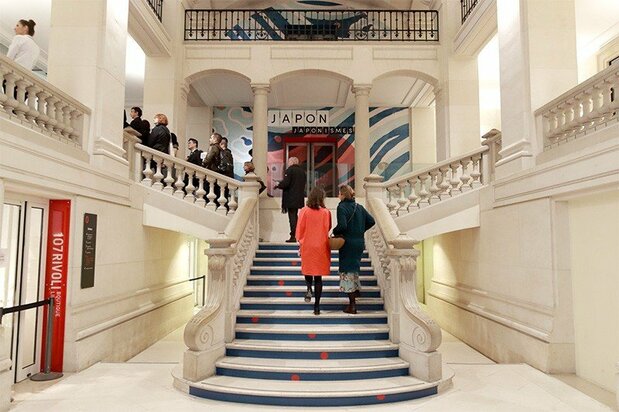
 The entrance to the exhibit on Japonism at the Musée des Arts Décoratifs, Paris.
One of the central events in this calendar is the exhibition Japon-Japonismes, 1867–2018, which looks at how Japanese art has been received in France, and the influence it has had on French artists and art history. Founded in 1905, the Musée des Arts Décoratifs has played a leading role in exhibiting the work of artists from Japan. The current exhibition draws on a collection with few parallels anywhere in the world. Although some of the items on display were on loan from Japan, over 90 percent of the exhibits were drawn from the museum’s own unmatched collection.
 Béatrice Quette, curator at the Musée des Arts Décoratifs
Encounters Beyond Time and Place
Béatrice Quette, who curated the exhibition, is a specialist on the museum’s Asian collections. She describes the objectives behind the show as follows: “One of the characteristics of our museum is that we not only have a rich and broad collection, but for many years have also functioned as a venue for encounters, a place of exchange between the art of east and west. In this exhibition, we consciously tried to bring about encounters between Japanese and French art, between ancient objects and contemporary art. We deliberately chose to juxtapose objects from different times and places. We wanted to inspire visitors through the relationships, commonalities, and contrasts between them—to give people the freedom to imagine their own narratives. Rather than providing conclusions, we wanted to create an exhibition that would be more open and stimulate the imaginations of the people who came to see it.”
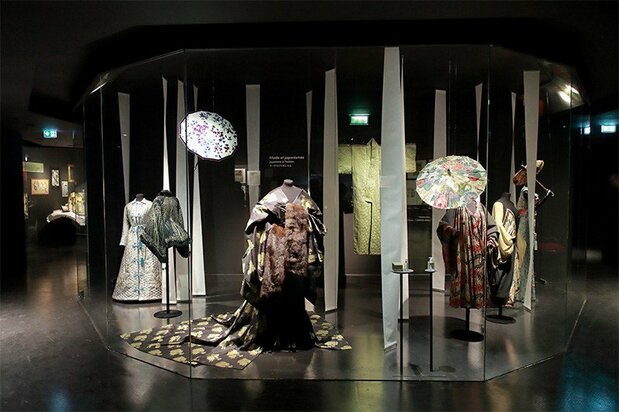 Clothing and umbrellas produced when Japonism was at its height, shown alongside a contemporary collection by John Galliano (center).
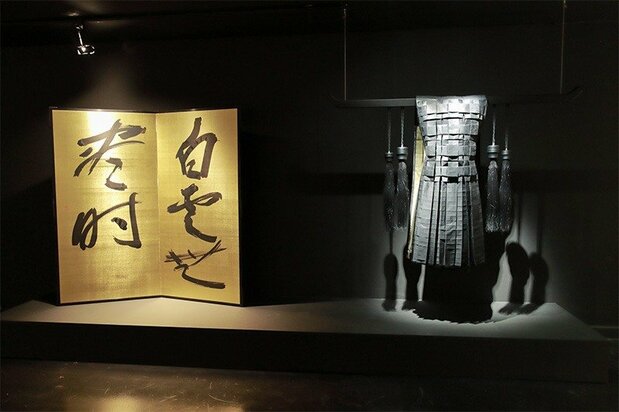 Calligraphy by Machi Shunsō (1922–1995) together with armor by a contemporary French artist.
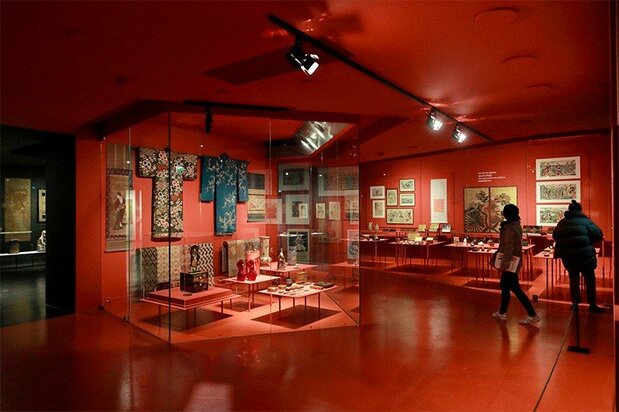 Antique Japanese clothing and calligraphy scrolls are mixed with craft items and an eye-catching pair of pink geta (clogs) in the style that would have been worn by a high-ranking courtesan in the pleasure quarters.
Instead of being organized by period, the displays are arranged into five thematically arranged sections: nature, time, movement, and innovation (which Quette describes as “important elements of Japanese arts”) plus a fifth category arranged from a French perspective: “les acteurs de la découverte,” focusing on the French discovery of Japanese art during the nineteenth century.
The “discoverers” section contains interior decorations and craft arts that once belonged to the passionate collectors who encountered Japanese arts from the second half of the nineteenth century into the twentieth century. This section reveals how the exquisite detail of Japanese art captured the imaginations of French collectors following the pioneering exhibition at the Paris International Exposition of 1867.
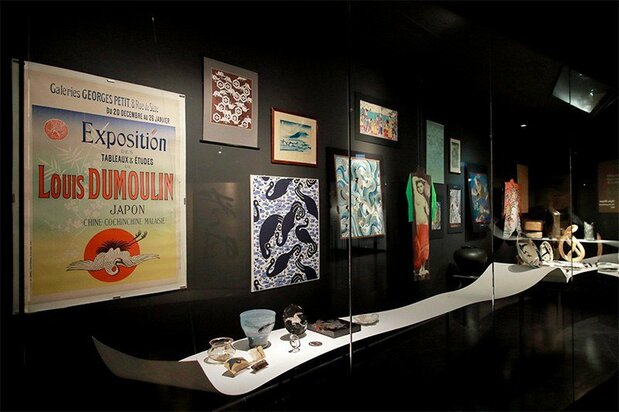 The poster on the left is for an exhibition of paintings in 1889 by the artist Louis Dumoulin inspired by his travels in Japan. The motif of the crane is an obvious “borrowing” from Japanese motifs such as those seen on the small plates in the front of this display (thought to be the works of Ogata Kenzan, 1663–1743).
The section devoted to nature displays Japanese works treating scenery and items associated with the four seasons alongside works by French artists who have adapted them. There are striking examples of Japonism works using motifs like sweet flags, chrysanthemums, water lilies, butterflies, and swallows. This section contains a rich range of art deco posters featuring plant motifs, brocaded clothing and umbrellas, and intricately detailed and finely wrought craftworks, offering an enjoyable opportunity to compare the design sensibilities of east and west. In addition to posters from companies like Shiseido and Hanae Mori, the section also includes numerous other materials, including advertising posters from department stores.
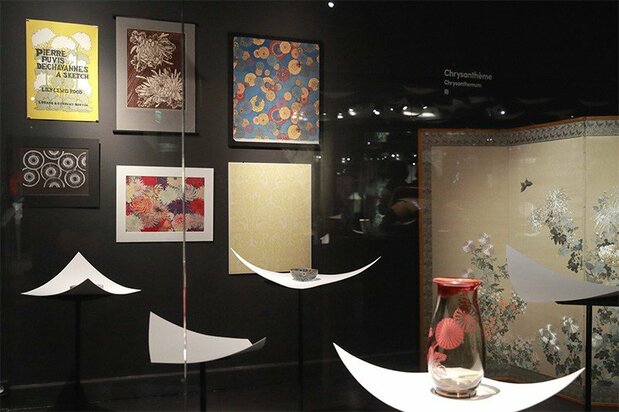 This corner brings together works featuring a chrysanthemum theme.
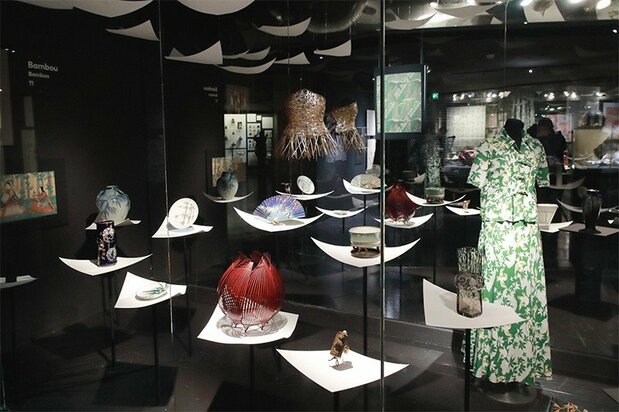 Bamboo motifs feature on clothing, ceramics, crafts, and paintings.








 Read in other languages