


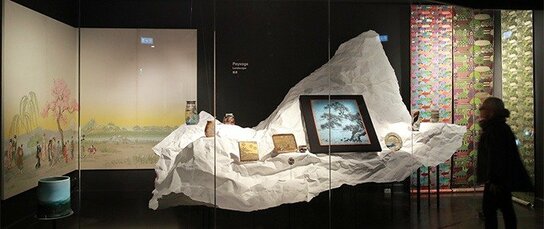
The Shared Pursuit of Beauty
The section on time looks at the important role that time plays in the rhythms of our daily lives, through the seasons, important festivals and other commemorative events, and traditions such as the tea ceremony. This section mostly highlights Japanese arts, including tea ceremony utensils and robes used in ceremonies. It also touches on Japanese religious beliefs, and includes exhibits of Buddhist images and guardian lions found in front of Shinto shrines.
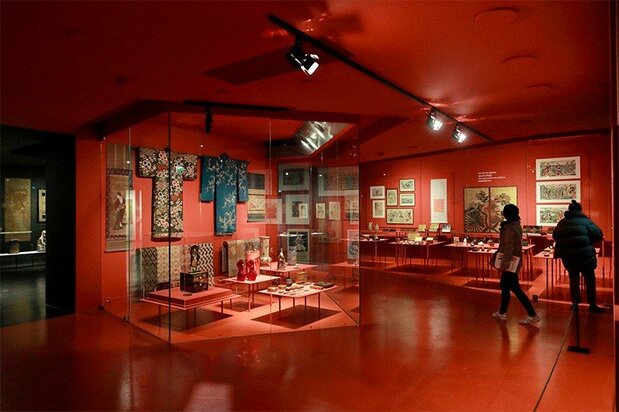
 The section on time inspires people in the present by stimulating the imagination with an image of the seasonal events and daily lives of people in olden times.
The “movement” section covers palanquins and other modes of transport, as well as the clothing and masks from cultural practices relating to physical movement, including sumō, theatre, and dance. The exhibition also presents Japanese paintings that skillfully capture these moments of sudden activity and calligraphy imbued with strong flowing movements of the brush, bringing together works that captivated western audiences alongside western works as well. For example a poster of the clown George Foottit wearing thick kabuki-style makeup shows the extent of the influence of Japonism at the time.
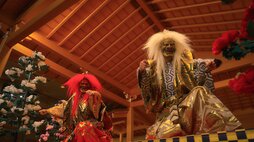
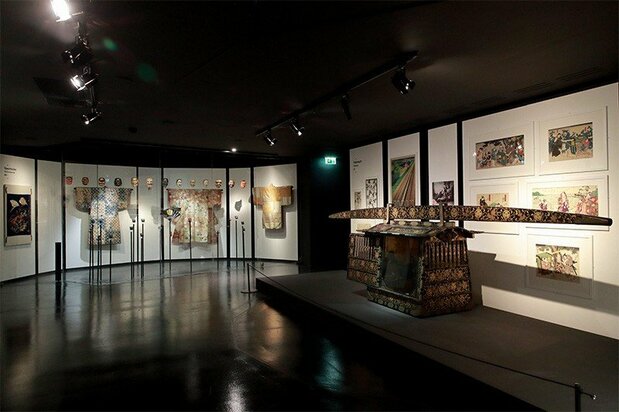 The section on movement features nō masks and robes, as well as a nineteenth-century palanquin decorated with foliage work gold-leafed lacquer that once belonged to the Tokugawa family.
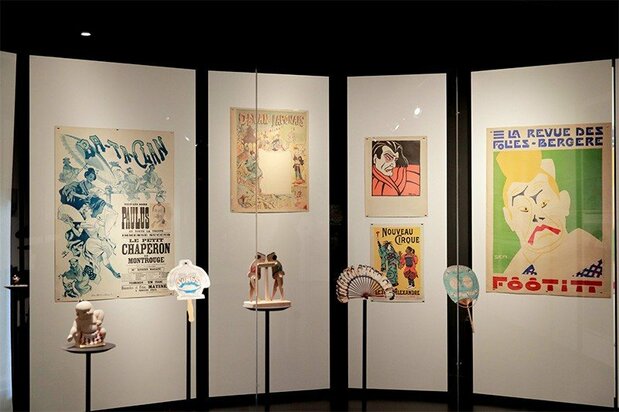 This section is inspired by the shows and events that took place in Paris during the Belle Epoque period from the end of the nineteenth century until the outbreak of World War I. On the right is a poster for an appearance by Foottit created by Georges Goursat, known as Sem, one of the most famous cartoonists in France at the time (1863–1934).
Bringing the exhibition to a conclusion is the section on innovations, which places the focus on contemporary arts and crafts and fashion. The fashion section introduces the work of Japanese designers who revolutionized the European world of haute couture with their Japanese eye for beauty and aesthetics, including Yohji Yamamoto, Comme des Garçons, and Issey Miyake. Issey Miyake in particular has created products skillfully combining Japanese aesthetics with cutting-edge technology, including the Nihon Buyō Pleats Please series in collaboration with Tanaka Ikkō and the Bokugi Linen series, a homage to traditional calligraphy and inkwash painting using recycled polyester.
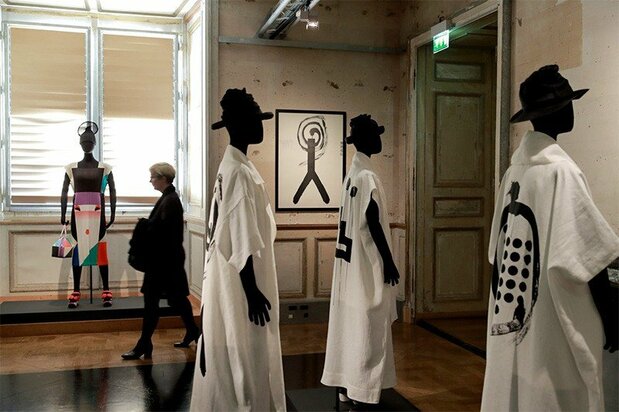 Issey Miyake’s Bokugi Linen series
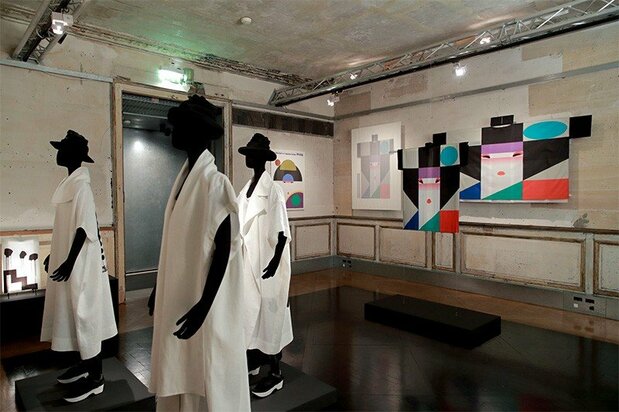 The Nihon Buyō series (right) uses motifs developed by Tanaka Kōichi (1930–2002) for the Nihon Buyō dance performance at UCLA in 1981.
The section on contemporary arts and crafts introduces the ongoing technological development in the fields of traditional arts like ceramics and lacquerware, and highlights examples of French artists who have adapted these techniques. Also on display are works by Charlotte Perriand, who had close connections with Japan, showcasing the cultural exchanges between Japanese and French artists. In an age of globalization, the unstinting efforts of old family firms with proud traditions of Japanese techniques of craftsmanship to develop new technologies and find new collaborators is a constant source of inspiration.
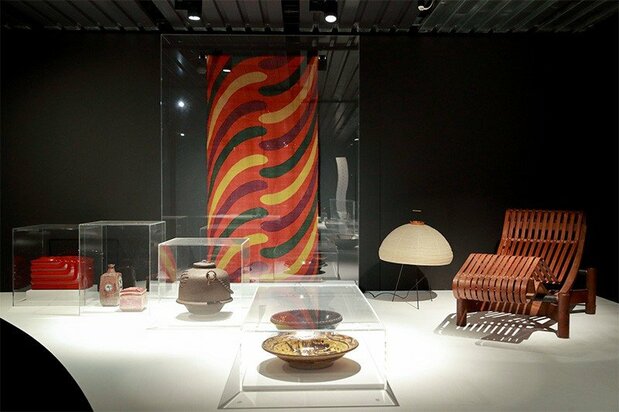 The chaise longue basculante on the right is a 1940 work by the French architect and designer Charlotte Perriand, who spent more than two years as a member of the mingei folk arts movement in Japan where she became friends with Yanagi Sōri (1915¬-2011) and other Japanese designers.
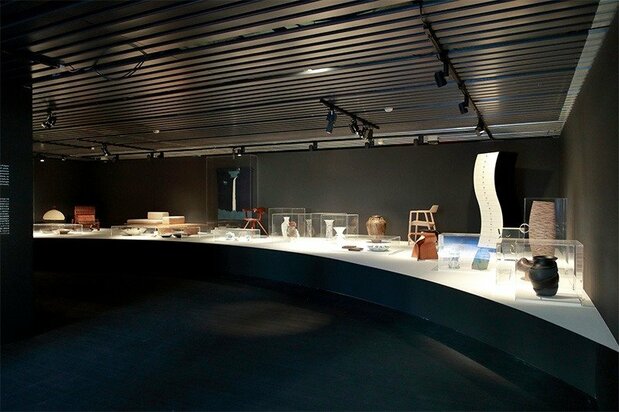
The exhibition also shows original works created specially by seven French artists, inspired by the curation of the exhibition The Living Treasures of France, held at the Tokyo National Museum in 2017.
Quette sums up the points of commonality shared between Japan and France in this exhibition as follows. “I think there is a common sense of the aesthetics of daily life, and a shared appreciation for the beauty of simple things in art, for example. Probably the Japanese have a more refined and subtle sense for this than the French. The readiness to use new technologies to develop artistic innovations is another part of the reason why so many Western artists continued to be inspired by Japan.”
This latest dialogue between the Japanese aesthetic sensibility and the works of Japonism will surely open the eyes of visitors to new discoveries. The exhibition runs at the Musée des Arts Décoratifs, 107, rue de Rivoli 75001, Paris, until March 3, 2019.
(Originally published in Japanese on December 14, 2018. Interview and text by Satō Kuriko. Photos by Sawada Hiroyuki.)









 Read in other languages