


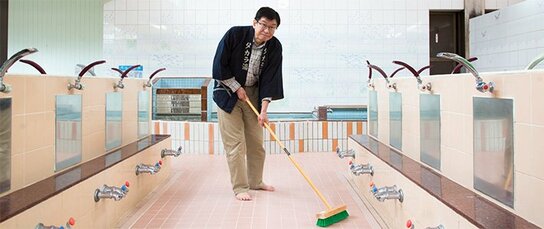
Our look at two bathhouses in northern Tokyo: Takarayu preserves a classic atmosphere from when it was founded 90 years ago, while Taiheiyu was a pioneer in a new wave of modern sentō.
Old-Style Bathing
Bathhouse lovers in Tokyo should head for the northern municipality of Adachi, where there are more than 30 sentō in operation. In this area, long home to many traditional bathhouses, many locals still enjoy going out to use them, even now that almost all homes have their own bathrooms. Adachi has also boosted their popularity by being first among central Tokyo’s 23 municipalities to introduce such innovations as student discounts.
The venerable Takarayu, built in 1927, is a particular recommendation. It provides a quintessential old-style sentō experience, and some fans come a long way to visit. It has the distinctive curves that carpenters of the era applied to bathhouses, making them look like shrines or temples. On the roof, there is a chimney used to let out the smoke from burning firewood to heat the water.
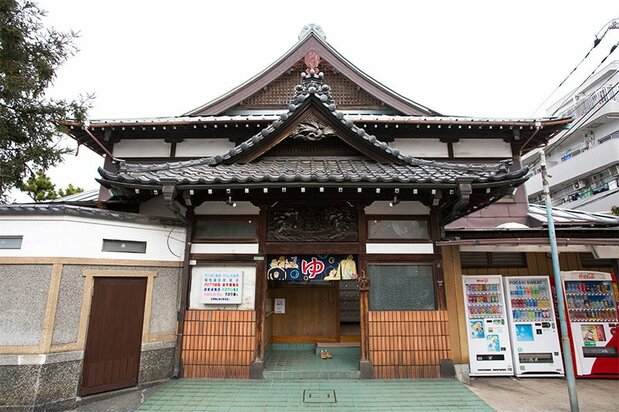
 The distinctive curved gables of bathhouses in the Tokyo area.
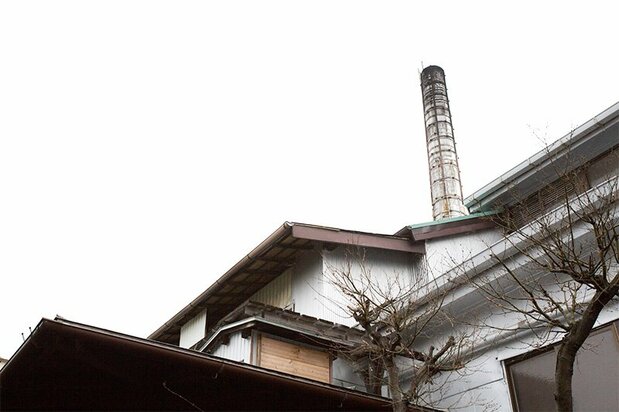 Bathhouse chimneys were traditionally required by regulation to be 75 shaku, or 23 meters, high; many still are to this day.
“When my grandfather first dug a well and got our bathhouse going, the area was just fields,” says owner Matsumoto Kōichi. Many sentō were destroyed by air raids, but Takarayu was fortunate enough to survive. “Each time an air raid began, they turned out the electric lights, and customers bathed by candlelight.” This is how much a part of everyday life the bathhouse was.
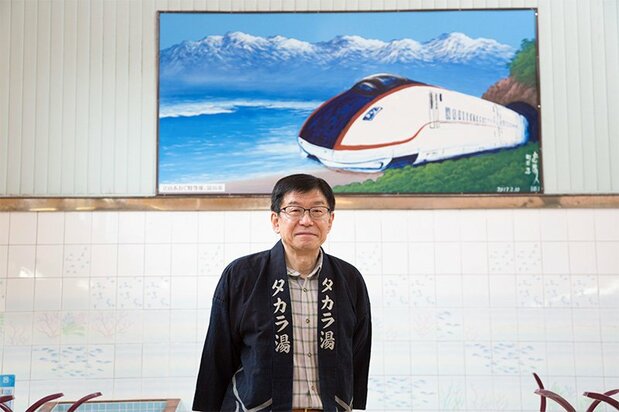 Matsumoto says he found his hanten coat with the bathhouse’s name (タカラ湯) in an old tea chest.
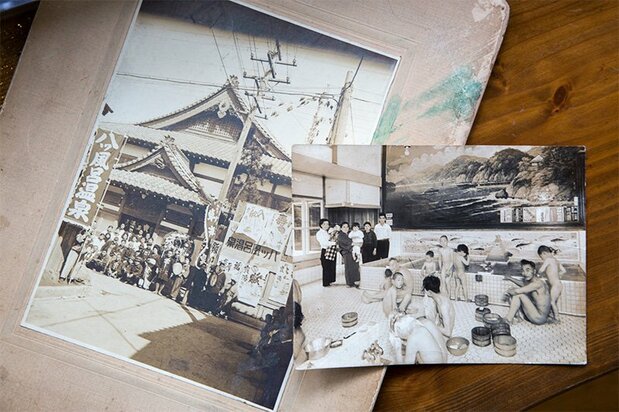 Photographs of the bathhouse in 1938.
Today’s customers are mainly older locals, who prefer the bathhouse to bathing at home. “When someone elderly lives alone, it is more cost-effective to visit the sentō, when you consider the cost of the water, gas, and cleaning,” says Matsumoto. Communal bathing is also safer, as there are other people to prevent accidents like drowning or quickly call an ambulance if someone has heart problems. Foreign tourists staying at a nearby guesthouse drop in to the bathhouse as well.
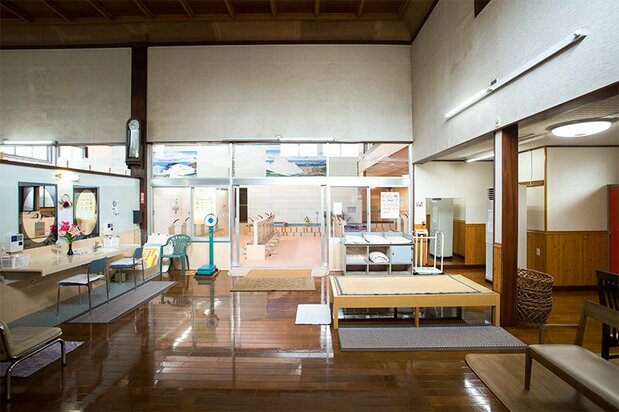 A spacious, high-ceilinged changing room. The women’s room includes a baby bed.
The large garden is a place to appreciate Japanese aesthetics. It was constructed by Matsumoto’s grandfather, who had a grounding in gardening, and is still maintained. “Older bathhouses had gardens, but many of them have become converted into coin-operated laundries,” Matsumoto explains. Another common feature of past sentō was the bandai platform, from which attendants could observe both the male and female bathing areas. This meant they could watch over customers’ items and prevent any rule-breaking. Recently, however, many customers feel uncomfortable with attendants seeing them naked, so bandai platforms are becoming rarer. Takarayu converted its platform to a modern reception desk during refurbishment in 1988.
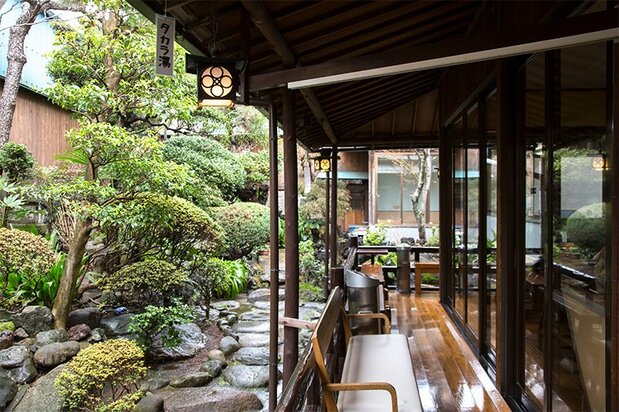 The veranda beside the men’s changing room.
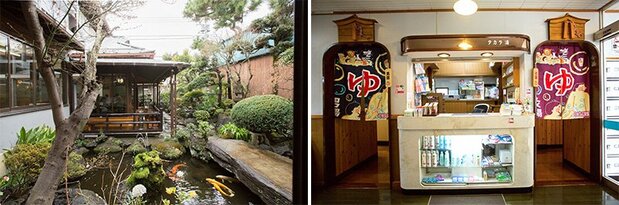 The bathhouse garden (left) offers a perfect place to relax. At the entrance, men enter through the left noren curtain and women through the right.
The paintings in the bathroom were created in a collaboration between painter Maruyama Kiyoto and top sentō researcher Machida Shinobu. They are two-sided and can be turned over to show pictures by Nakajima Morio.
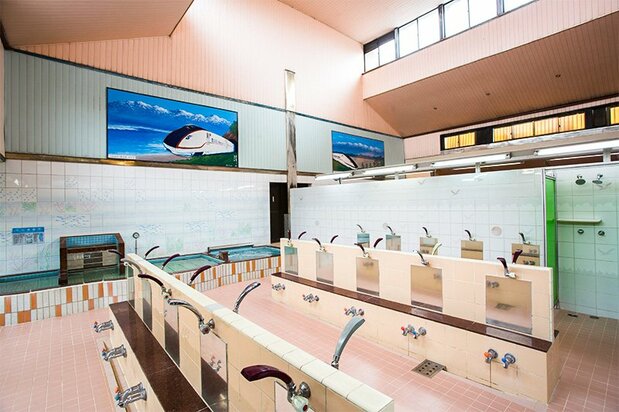 High windows let out steam.
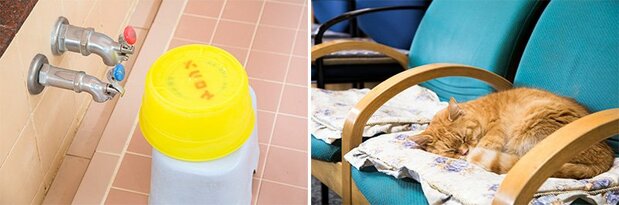 Yellow basins marked ケロリン (Kerorin), advertising a brand of aspirin, are commonly associated with bathhouses. At right, sentō mascot Bobby the cat takes a nap.
Behind the Scenes at the Bathhouse
A day at the sentō begins and ends with cleaning. Staff clean up for two to three hours each morning from nine. Then they add firewood to the stove and heat the water for around an hour and a half. The bathhouse opens at three in the afternoon and closes at half past eleven at night. After that, three to four staff members scrub up again. High-up windows used to release steam can be opened from the outside and are left open through the summer months.
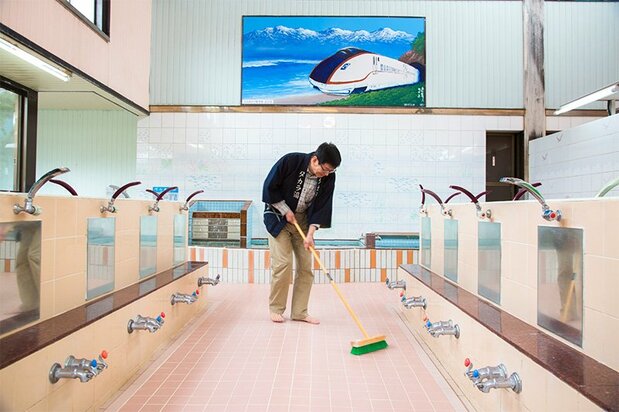 Keeping the baths spick-and-span.
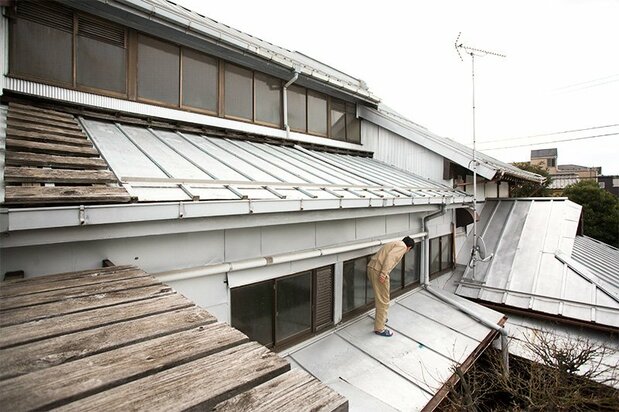 Outside the steam windows.
Takarayu’s water is mainly heated with firewood. In the old days, the wood was transported by raft from lumberyards along the nearby Sumida River. More recently, it comes by truck in the form of shavings, chips, and bark from Adachi’s many carpentry shops and pencil and plywood makers.
However, these businesses are not so common today as they once were, and the bathhouse often sources its wood in the form of pillars and lumber from demolition firms. Sometimes, however, wood is not available, so the Takarayu stove can also be powered by gas. This is much more expensive though, which is a real worry for Matsumoto.
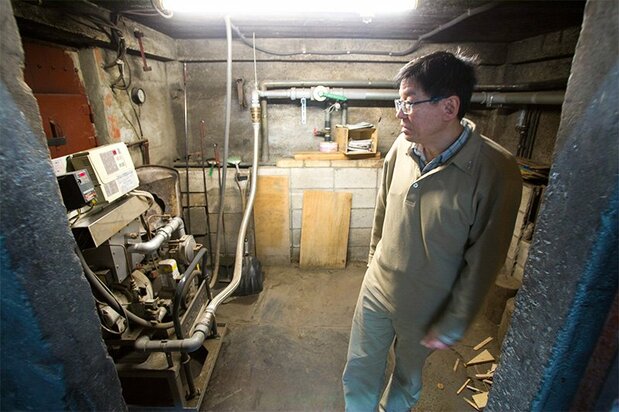 Gas power can be used instead of firewood.
It’s a lot harder than one might imagine to run a bathhouse. So long as he can meet the needs of regulars and sentō fans, however, Matsumoto wants to keep Takarayu going.





 Read in other languages