


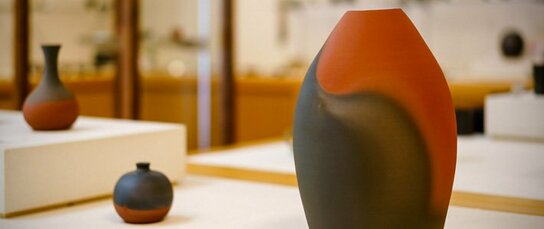
Itō Sekisui V is carrying on a family business in ceramics that has been going for centuries on the island of Sado. He uses the same local mumyōi clay—rich in iron oxide, which gives it a gorgeous red color—as have generations of his predecessors. Yet his innovative techniques have given the art fresh life.
The ceramic artist Itō Sekisui V was born and raised on the island of Sado. How does he feel about his home? “To put it briefly, I take this land very seriously,” he says.
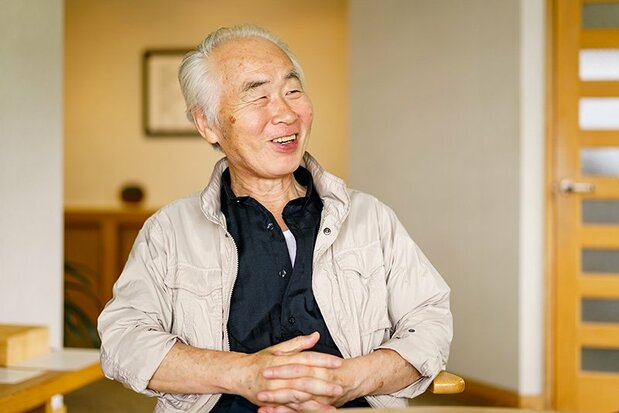
 Itō Sekisui V was designated a living national treasure in 2003.
Itō Ihei, an ancestor of the “living national treasure” Sekisui, moved to Sado from the mainland around the time of the 1640 gold rush, when the island’s gold and silver mine was flourishing. His son Jinbei built a kiln and started making the bellows and tuyère pipes used in gold smelting, as well as unglazed ceramic items for everyday use. Through the generations, the family came to produce more sophisticated tea bowls and plates. In the nineteenth century, a kind of red clay called mumyōi was discovered in the gold mine. Itō Tomitarō, the ninth generation of the family that started with Ihei, fired the clay at high temperatures to create the ceramic style known as mumyōi-yaki. Shortly after the Meiji Restoration in 1868, Tomitarō took the name Sekisui, which has now been passed down for five consecutive generations.
Today’s Sekisui V has deep roots in Sado, and the family has produced ceramics for centuries.
“It’s continued for so long—thirteen generations—that I can’t quit today. Both mumyōi-yaki and Sado are heavy presences for me.”
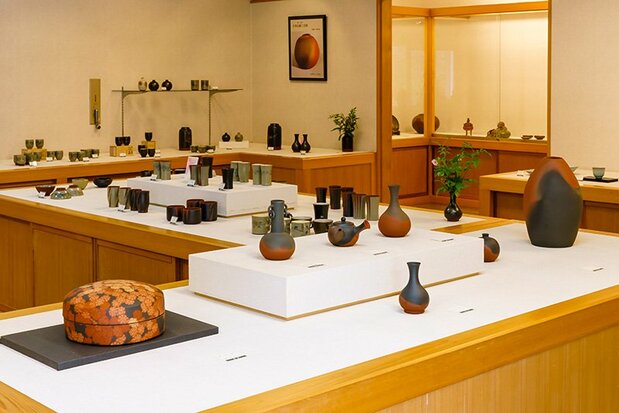 A room with works by Sekisui V in the Itō Sekisui Museum, which displays art by all five generations sharing the name.
Beautiful “Failures”
Mumyōi, red clay taken from near the veins of the mine, is rich in iron oxide. It has long been used in China as a traditional medicine for stanching bleeding. In Japan it is only found near the Sado gold mine as a byproduct of mining. If fired at high temperatures, it becomes very hard, giving off a clear, metallic sound when struck.
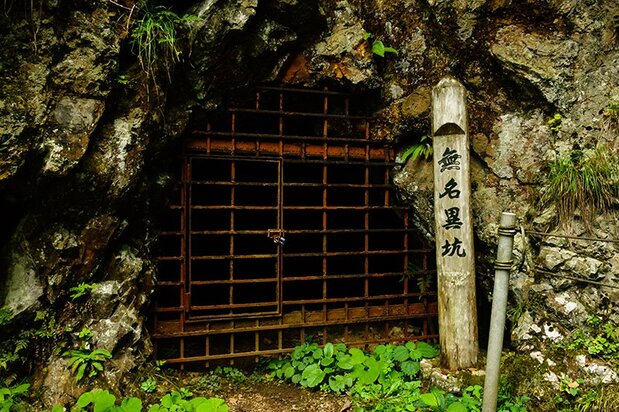 A sign reading 無名異坑 (mumyōi mine) near the entrance to the remains of the Sado gold mine.
“In Chinese traditional medicine, iron is an important element, and it is particularly abundant in mumyōi,” Sekisui says. “The clay feels dry like sand. Some forms of ceramics use clay with stones containing radium. Perhaps when they first made mumyōi-yaki, they were seeking to achieve a similar kind of medicinal effect.”
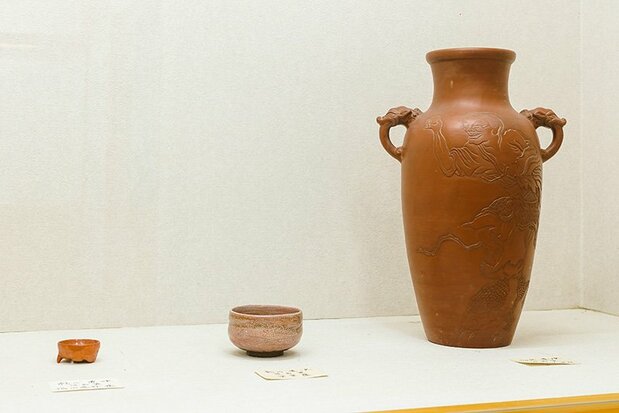 Early mumyōi-yaki works by Sekisui V.
Sekisui V was born as Itō Yōichi in 1941. Before he entered university, his father died. This meant that he learned the art of making mumyōi-yaki from his elderly grandfather Sekisui III. Forced to immerse himself in the family trade at a tender age, he started work in earnest in 1966. Japan’s economy was booming, as was the Sado tourist industry. Mumyōi-yaki items were highly popular in the island’s tourist shops, but Yōichi did not get carried away by this, setting his sights on reaching a higher level as an artist.
Mumyōi-yaki is known for its gorgeous red color. Yōichi’s predecessors valued a beautiful red that calls to mind Chinese-style shudei (vermilion earth) works. However, the high level of iron oxide in mumyōi-yaki means that it turns black where it is touched by the flames in the kiln. This yōhen wood-firing effect was traditionally considered to result in a failed piece, but Yōichi thought that burning some parts black might set off the red to greater effect. Using the yakishime technique of firing unglazed wares at extremely high temperatures, he created his own distinctive series with a striking contrast between the two colors.
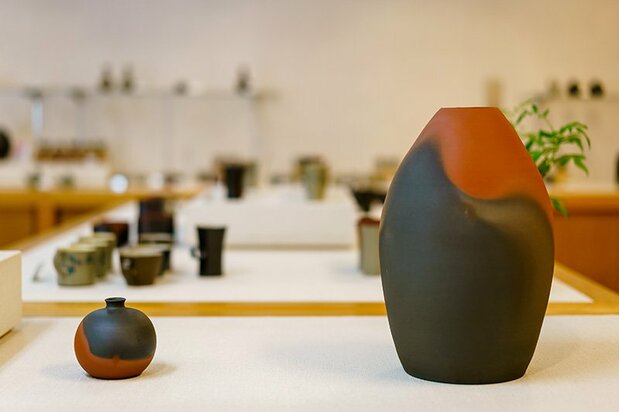 The eye-catching contrast of red and black is the keynote of the yōhen series.
“Depending on where potters place the works in the kiln, they can have a good idea of what kind of yōhen will happen,” Sekisui says. “However, it is not possible to do this with a precise level of control over the outcome. This is the interesting thing about pottery. With the color changes, I’ve added range to my work.”
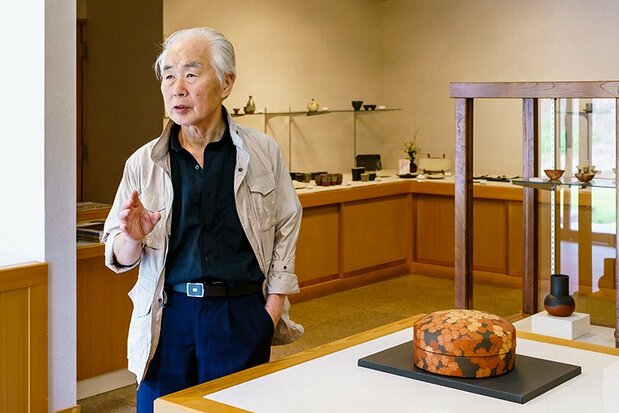 Sekisui offers insight into his works.




 Read in other languages