


Dragging Peace into Existence
Even when talking about films, Ōbayashi immediately starts discussing war and peace. For him the topics seem to be inseparable.
“The Japanese word happī endo [happy ending] comes from films. Cinema grew up in the era of two world wars and became a means of escaping from that strife. For the Jews who made their names in the film industry after being persecuted around the world, Hollywood was a new land that they’d traveled to seeking freedom.
“Of course, the unfortunate reality is that there will never be peace. But to admit this would mean that humanity has no hopes or dreams. So even if it’s a lie, depicting peace in film may create a truth from that falsehood. Undoubtedly, people in their hearts yearn for peace, and so the action of showing it on screen can one day drag it into existence. People in countries defeated in war longed for a cinematic happy ending. That’s why I think films were made all over the world.”
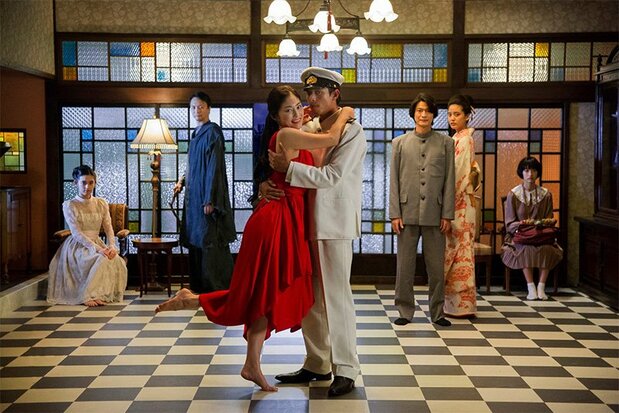
 A scene from Hanagatami. (© 2017 Karatsu Film Project / PSC)
As a young boy, Ōbayashi felt a sense of betrayal at Japan’s defeat. Later, he was vehemently opposed to those postwar Japanese who did their best to act as if the war never happened. This is why the shadow of war is always present in his films, no matter how much they aim to entertain audiences.
Terminal Cancer’s New Perspective
Ōbayashi’s latest film, Hanagatami, is based on a short story written by Dan Kazuo and published in 1936, the year before the outbreak of war with China. The director first wrote a script for the piece in 1975, before the release of House.
“Both Hanagatami and House are about the same thing. Back in the days when I wrote them, nobody would watch a film based on a literary source, but they’d watch a horror flick. So I decided to make a film expressing my disgust for war—but I made it so people wanted to see it.”
Although he is pleased he was able to ultimately make Hanagatami, he offers a warning. “After more than 40 years, this film has finally come into being. I feel happy, but at the same time I’m afraid we’re in a similar period. War was approaching when the story was written, so Dan probably wasn’t able to write what he really wanted to. I imagined what he wanted to write and added it to my interpretation. If you said then that young people were considered as nothing more than cannon fodder, you’d get taken out and shot. He couldn’t express that, so he turned it into a story of young people’s love and friendship.”
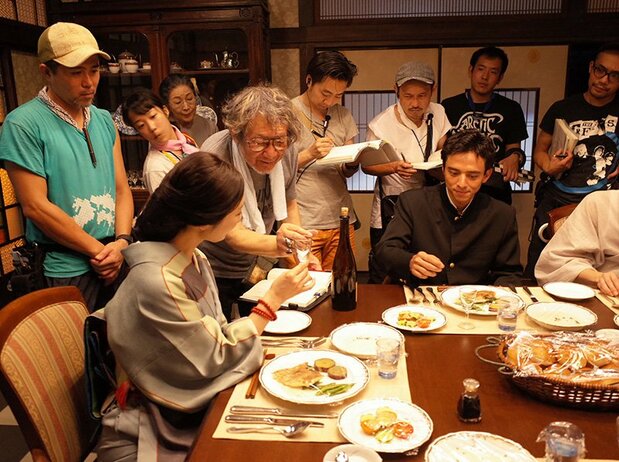 Ōbayashi Nobuhiko directing actress Tokiwa Takako on the set of Hanagatami. Mitsushima Shinnosuke is seated at the right. (© Ōbayashi Chigumi / PSC)
In August 2016, two hours before a staff meeting the day before the start of filming, Ōbayashi was told he had stage-four lung cancer and six months to live. Then, two days after filming began, a further hospital visit halved this to only three months. Yet, unexpectedly, the director remembers feeling happy.
“While I was waiting forty years for the time to be ripe for this film, I was also waiting for myself to be ready. Mishima Yukio wrote of Hanagatami that the state had power of life and death over the young characters living in wartime. The only freedom they had was to put their all into loving someone and rebelling against the moral code. I worried whether we, who have enjoyed all the pleasures of the peaceful postwar era, had the right to make films about the youth of our parents’ generation.
“When I met Dan Kazuo forty years ago and got his permission to adapt the story, he had terminal lung cancer. Knowing I was in the same position, I felt happy that I could finally have the same experience of regret and resignation as that generation. I had to say now the words that they couldn’t say. At the same time, this means passing the message on to young people—born in a peaceful age—who will live on into the future.”




 Read in other languages