


Fine Cuisine and Professional Utensils Too
After the tuna auction, head back to the Management Facilities Building, then back out to the walkway leading to the Yurikamome train station. To the south is the Fisheries Intermediate Wholesale Market, with its third-floor dining area featuring over 20 restaurants, including eight sushi shops, in an area twice that of the restaurant area in the management facility.
Among the sushi restaurants in this section is Sushi-dai, which was considered one of the best when it was on the Tsukiji Market grounds as well. Other popular shops that have also relocated from Tsukiji offer tonkatsu, gyūdon (bowls of steamed rice topped with thinly sliced beef), Japanese curry over rice, and coffee shops. All of the sushi shop menus are as fresh and tasty as would be expected from their location on the market premises themselves. Prices range from ¥3,000 to ¥4,000 per person—not necessarily cheap, but still good value for quality, as acknowledged by the market’s workers themselves. All are highly recommended.
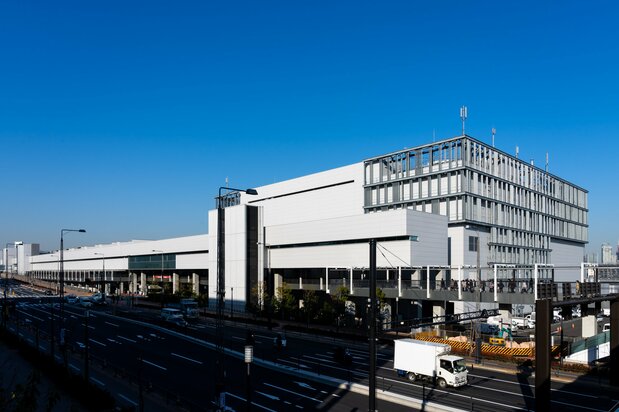
 The giant Fisheries Intermediate Wholesale Market. The elevator at center left in the photo accesses the greenery area on the rooftop.
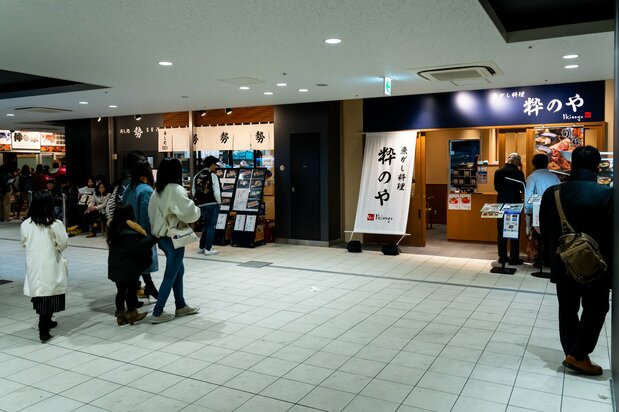 The intermediate market has a bigger restaurant area than that in the management complex, and is a common stop for tour groups.
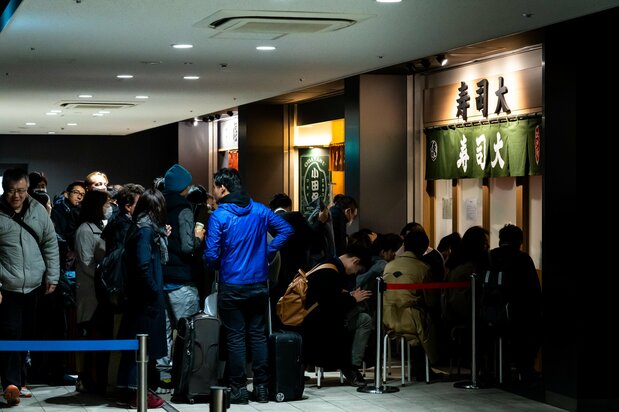 Crowds start lining up early in the morning at the popular Sushi-dai restaurant.
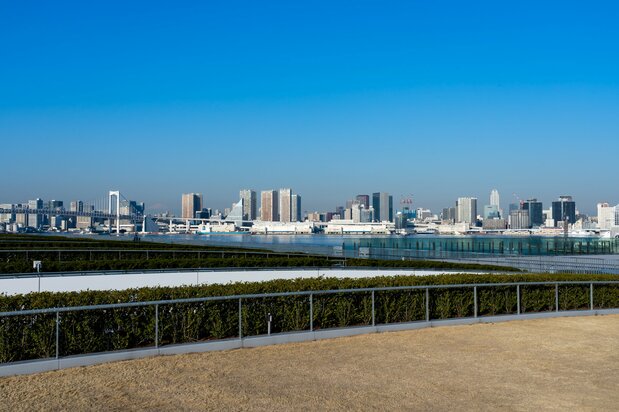 The rooftop greenery area is the perfect place to catch your breath after walking around the expansive market grounds, offering views of sights like Tokyo Tower and the Rainbow Bridge.
Farther along the walkway from the restaurant area into the Fisheries Intermediate Wholesale Marketis an observation gallery where visitors can take souvenir photos of themselves riding one of the turret trucks that transport goods throughout the market.
The fourth floor of the complex is set aside for Uogashi Yokochō, a shopping area catering primarily to restaurant chefs and other professionals. Other customers are also welcome to browse the wide selection of foods, utensils, and other items.
A wide range of foodstuffs is on offer, including everything from wasabi and tsukemono (pickled vegetables) to tamagoyaki (Japanese-style rolled omelettes), dried nori seaweed, and soup-stock-related products like konbu (kelp) and katsuo-bushi (dried bonito). The outlets stock all manner of necessities for Japanese restaurants. Other stores carry merchandise not procurable through Toyosu’s wholesalers, including beef, pork, and other meats. Still other stores specialize in spices, alcoholic beverages, rice, and many varieties of cheese.
There are also professional supply stores offering everything from the high-grade knives used by cooks to the rubber boots that are essential wear in fish markets. Items that were popular during the Tsukiji days—such as dishware, packaging, and the noren curtains that traditionally signify that a Japanese shop is open for business—are available here, too, due to popular demand. These stores also sell to nonprofessional customers who want top-quality products to put to use in their own households.
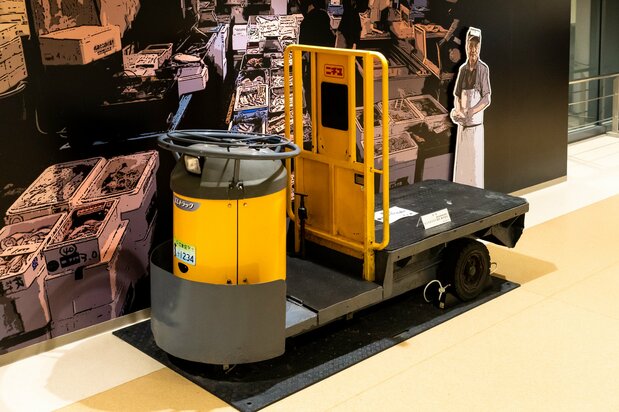 This turret truck is located in the visitor’s gallery in the Intermediate Wholesale Market. Visitors can climb on and pose for souvenir photographs.
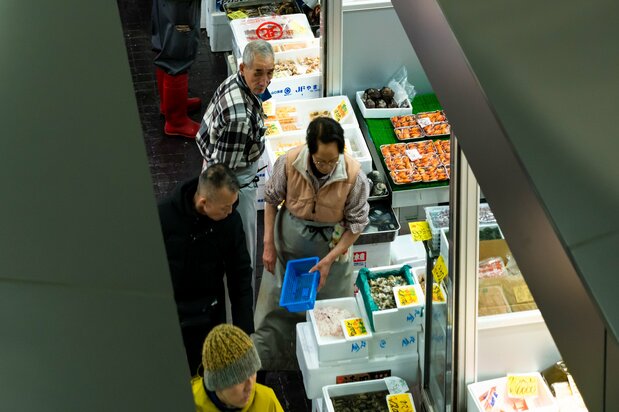 An observation gallery offers a glimpse of the action on the market floor.
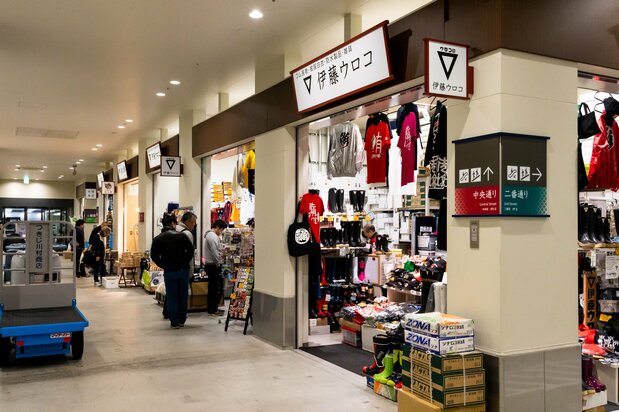 Uogashi Yokochō offers professional-grade foodstuffs, cooking utensils, and tools of various trades.
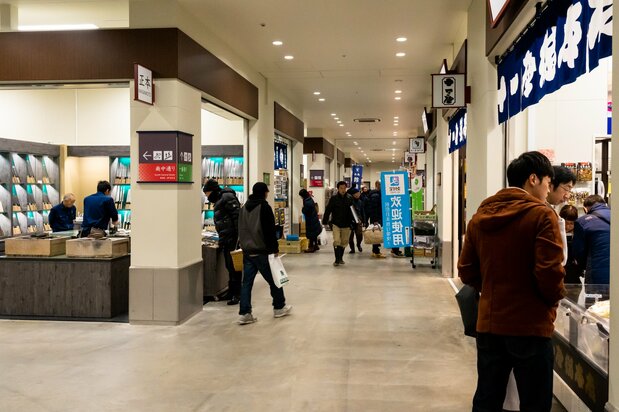 Also on sale here are a full range ofg professional-grade kitchen knives, tamagoyaki (Japanese omelettes) for snacking while walking, and t-shirts and caps, which make fine souvenirs.




 Read in other languages