


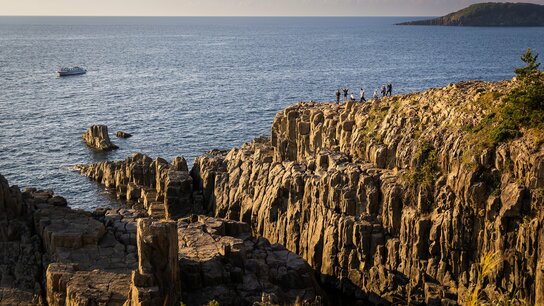
Tōjinbō in Fukui Prefecture is well known for its dramatic cliffs and rock formations in shapes like a lion and a Tyrannosaurus.
A Panoramic Vista
The cliffs at Tōjinbō, in the Fukui Prefecture city of Sakai, are probably the most renowned in Japan. Up to 25 meters high, the columnar cliffs are a favorite setting for films and TV dramas, often featuring murders, suicides, or scenes where a police detective is closing in on a criminal. The soaring bluffs, battered by the rough waves of the Sea of Japan, often provoke a sense of unease guaranteed to make an impression even on those who have never actually been to the area.
Columnar cliffs form when lava from a volcanic eruption cools and contracts, with the fissures assuming polygonal shapes. The basalt columns at Tōjinbō were created as lava from 13 million years ago was eroded by wave action to create the dramatic scenery admired today.
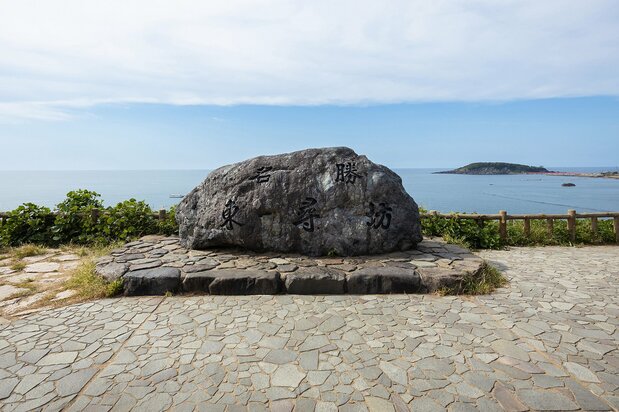
 A stone monument at Tōjinbō, with the sacred island of Oshima in the background to the right. (© Nippon.com)
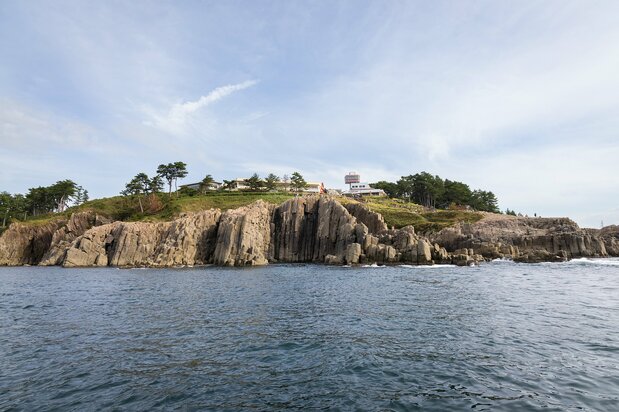 Tōjinbō, viewed from the sea. The cliffs at Ōike inlet at the center are the highest point of the rock formation. (© Nippon.com)
Tōjinbō, designated a site of natural beauty and a natural monument, is a specially protected area of the Echizen-Kaga Kaigan Quasi-National Park. To preserve its natural appearance and attractive views, there is no fencing, and visitors can walk all the way to the edge of the cliffs. The heights are dizzying but the spectacular view is worth the weak-kneed feeling. Stairs lead down to the rocky shoreline at Senjōjiki, allowing for a close-up side view of the rock columns.
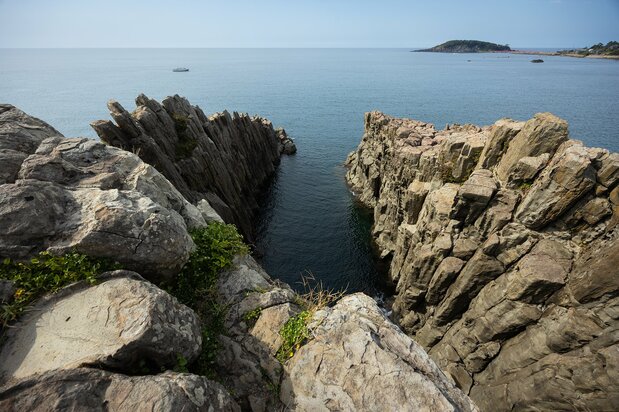 Peering out over the edge of Ōike. Footing is uneven, so step carefully! (© Nippon.com)
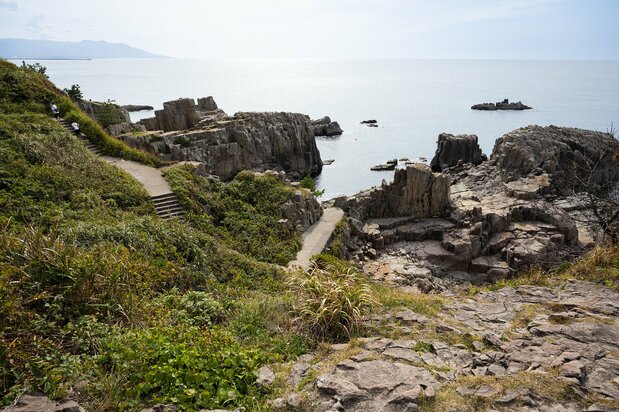 The path down to Senjōjiki, the highlight of a visit to Tōjinbō. The rock formation just offshore is Gunkan-iwa (Battleship Rock). (© Nippon.com)
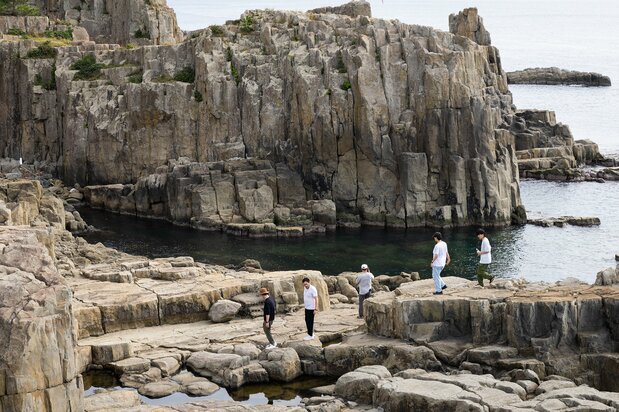 The surface of Senjōjiki is relatively flat, so it is safe for visitors young and old. (© Nippon.com)
Scenic Views and Unusual Rock Formations
Looking up at Tōjinbō from the water is also recommended. Sightseeing boats leave from near Ōike, where the cliffs are highest, and the 30-minute cruise travels up to Oshima 1.5 kilometers to the north. The trip is worthwhile for the views of scenic spots not visible from land and the scores of exotic rock formations along the way.
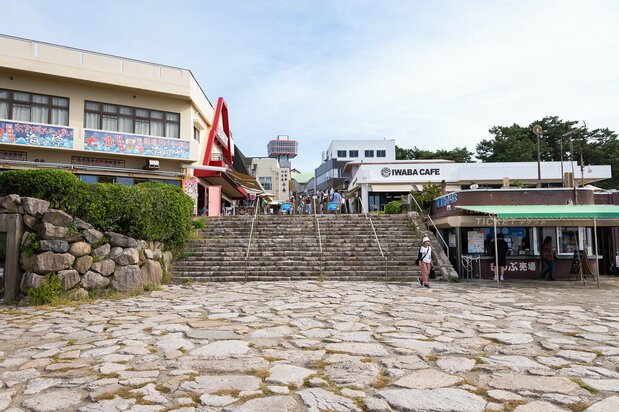 A street lined with seafood restaurants, cafés, and souvenir shops leads to stairs down to the rocky shore and the sightseeing boat ticket booth. (© Nippon.com)
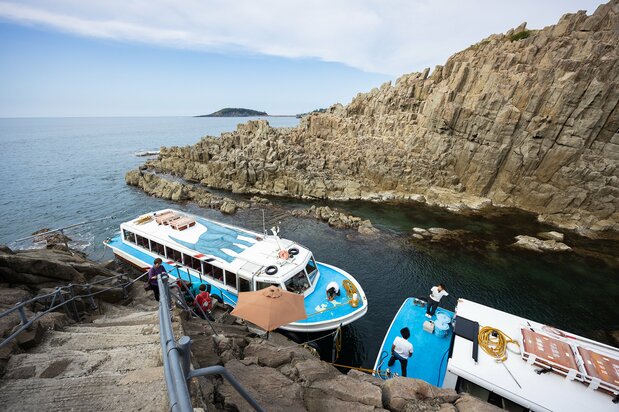 Sightseeing boats depart every 15 to 20 minutes. (© Nippon.com)
Oshima, the largest of the islands off the Echizen coast, has been revered as sacred since ancient times. The island is uninhabited but is the site of Ōminato Shrine, said to have been erected in the mid-seventh century, and the Oshima lighthouse.
The island’s columnar cliffs, some listing at a 45-degree angle and others in honeycomb-like formations that hang upside down, are visible from the water. They look different than those at Tōjinbō and project a mysterious atmosphere.
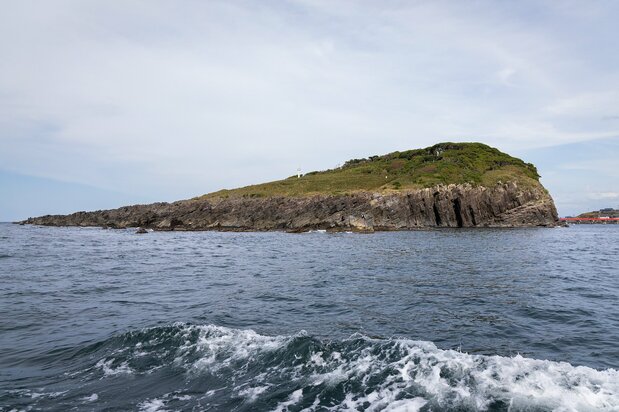 A view of Oshima from a sightseeing boat, with angled rock columns forming the left half of the island. Visitors can cross to the island on Oshima Bridge, the vermillion structure in the distance on the right. (© Nippon.com)
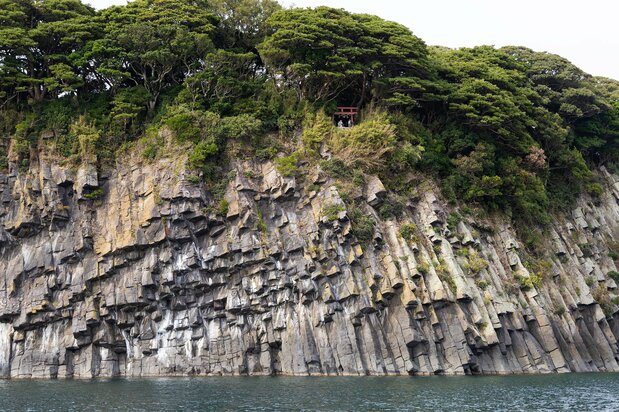 The red torii gate of Ōminato Shrine is visible above the island’s honeycomb-like cliff. (© Nippon.com)
Site of Spectacular Sunsets
The rock formations visible from the water have names like Lion Rock, Candle Rock, and Six-Panel Screen Rock, which are described as they come into view. One recently discovered rocky outcrop is nicknamed Tyra-bō, after Tyrannosaurus. About four years after its discovery, the Tyra-bō rock became a leading attraction at Tōjinbō. Fukui Prefecture is the most prolific site of dinosaur fossils in Japan and is known as the “dinosaur kingdom.”
On days when seas are calm, sightseeing boats go all the way into the Ōike inlet, giving visitors a good view of the gigantic columnar rocks there.
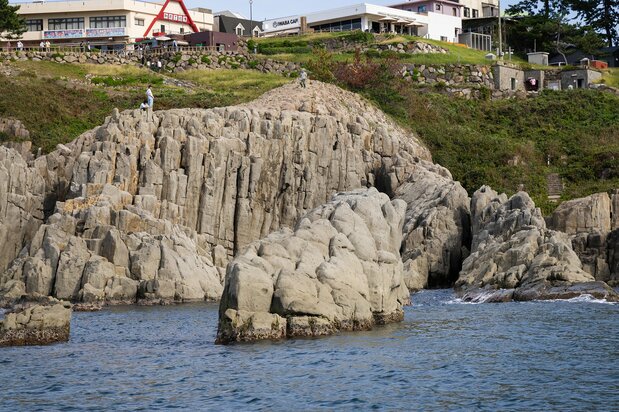 The Lion Rock (center), that resembles a sitting lion looking toward land. (© Nippon.com)
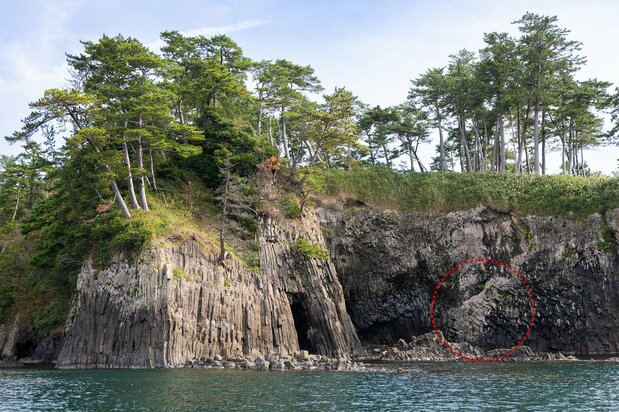 The rounded reddish rock lying low in the water looks like a Tyrannosaurus, named Tyra-bō after a public naming contest in 2023. (© Nippon.com)
 The soaring cliffs bordering the Ōike inlet are truly impressive. (© Nippon.com)
Incidentally, Tōjinbō is said to take its name from that of a long-ago priest at nearby Heisenji temple, a rough character with superhuman strength who was hated for his dissolute ways. One day, another priest, who was also a rival in love to Tōjinbō, invited him to stroll along the cliffs, where they had a drinking party Tōjinbō fell asleep after imbibing, and the other priest pushed him off the cliff. That is the rather grisly way in which one of the region’s most spectacular sights got its name.
With the extension of the Hokuriku Shinkansen from Kanazawa to Tsuruga, Tōjinbō can be reached by bus from Awara Onsen Station on the line. In addition to its cliffs, Tōjinbō is renowned for its splendid sunsets. Timing a visit for late afternoon and then enjoying a bounty of seafood at a nearby hot spring inn is a fine way of savoring the area’s delights.
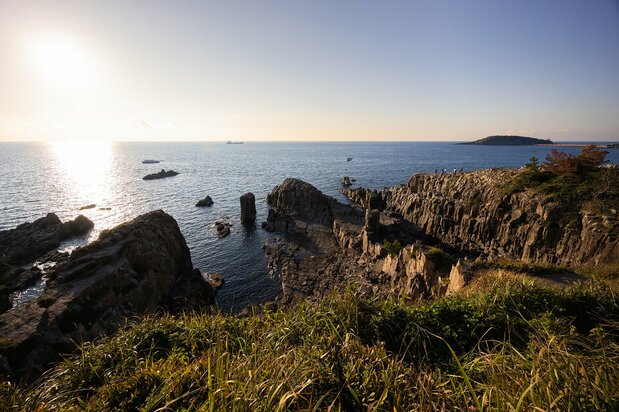 Tōjinbō at sunset, with rocks silhouetted by the setting sun. (© Nippon.com)
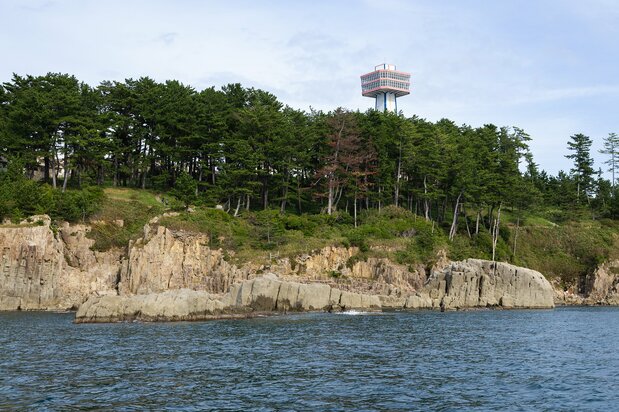 Tōjinbō Tower, visible in the background to Byōbuiwa (Folding Screen Rock), offers scenic panoramas of the Echizen coast. (© Nippon.com)
Tōjinbō
- Address: 64-1 Antō, Mikunichō, Sakai, Fukui Prefecture
- Access: From JR Awara Onsen station, 45 minutes by Keifuku bus bound for Tōjinbō; from Echizen Railway Mikuni station, 15 minutes by Keifuku bus bound for Tōjinbō; from the Kanazu interchange on the Hokuriku expressway, 15 minutes by car.
- Tōjinbō sightseeing boats: Hours 9:00 am–4:00 pm; in winter (November–March) 9:00 am–3:30 pm. No operation on Wednesdays. Fare ¥1,800 for ages 12 and up; ¥900 for ages 6–11.
(Originally published in Japanese. Report, text, and photos by Nippon.com. Banner photo: The cliffs at Tōjinbō bathed in the setting sun. © Nippon.com.)



 Read in other languages