


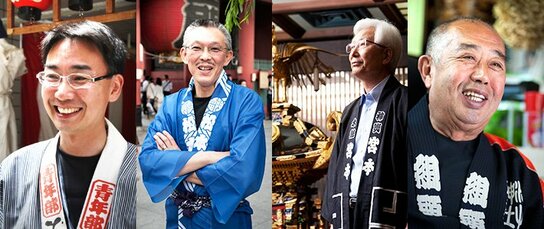
Katsugite: The Bearers of Tradition

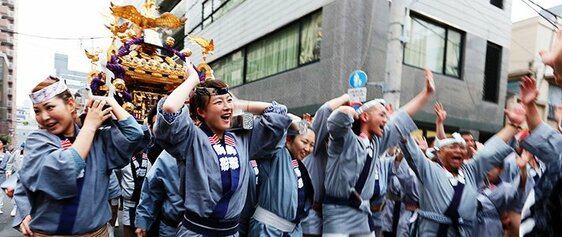
 Shifting population patterns in recent years mean that many neighborhoods can no longer recruit sufficient numbers of ujiko to carry the heavy mikoshi at the festival each year. The neighborhood communities are helped out by teams of volunteer shrine bearers from near and far, people drawn by the opportunity to experience the excitement of the festival up close and to help keep the traditions alive at the same time.
Matsumoto Kōichi, director of the Asakusa Omatsuri Museum, is a good example. He has helped carry mikoshi at festivals all over the country. But for Matsumoto, the Sanja Matsuri has a special significance. “I grew up with the sound of festival music in my ears. It was like a nursery rhyme to me.” Matsumoto says his understanding of the festival has changed since he moved to Asakusa 12 years ago, and he became an ujiko himself.
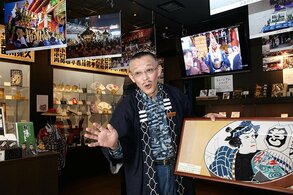 Matsumoto’s enthusiasm for the festival is infectious.
“I realize now how important the festival is to the people who live here, many of them from families that have been settled here for generations. Of course the out-of-town shrine bearers really get into it, too—so I don’t want to draw too sharp a contrast. Both groups are necessary to ensure that the festival goes smoothly.
“The Sanja Matsuri in Asakusa has a reputation to live up to—everyone wants to see teams of strong, big-hearted people carrying the mikoshi. At the museum we want to make sure that the festival continues to bring enjoyment and excitement to the people who watch and take part, far into the future.”
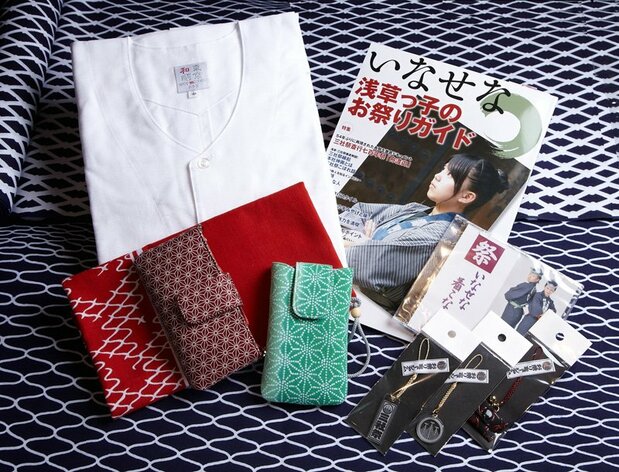 A variety of festival-related merchandise is on sale in the museum shop.
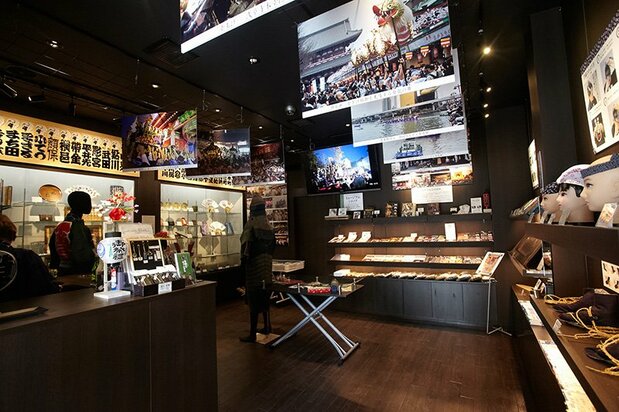
Asakusa Omatsuri Museum (Address: Kaminarimon 2-3-5, Taitō-ku, Tokyo; Tel. +81 3-6796-7800; open daily.) http://omatsurimuseum.net/english
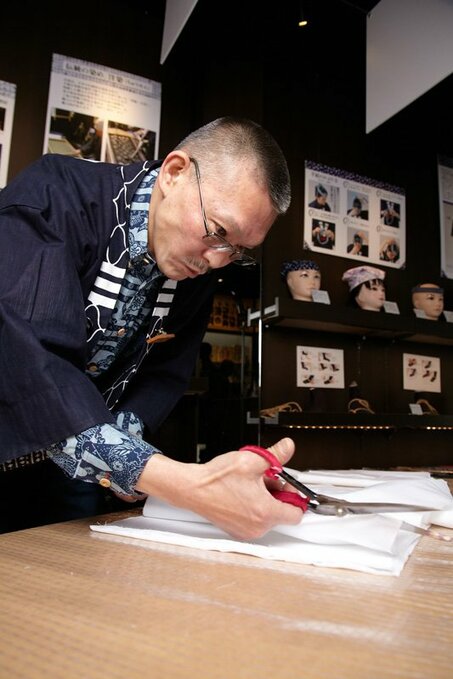 Cutting the white fabric for special festival hand cloths.









 Read in other languages