


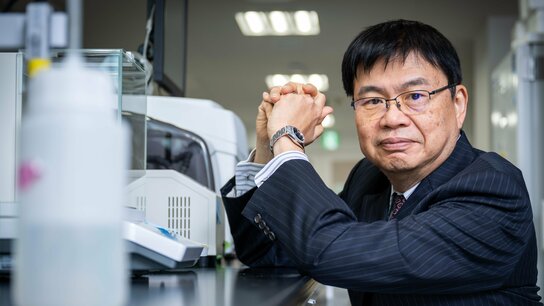
By modeling patients’ diseases in the laboratory and evaluating candidate drugs directly in human-derived cells, researchers like Okano Hideyuki of Keiō University are using iPS cells to open a new era in drug discovery. With Japan’s February 2026 announcement of a manufacturing system for an iPS cell-based therapy for spinal cord injury, the field is now entering a new phase of real-world implementation.
A Breakthrough in ALS Research
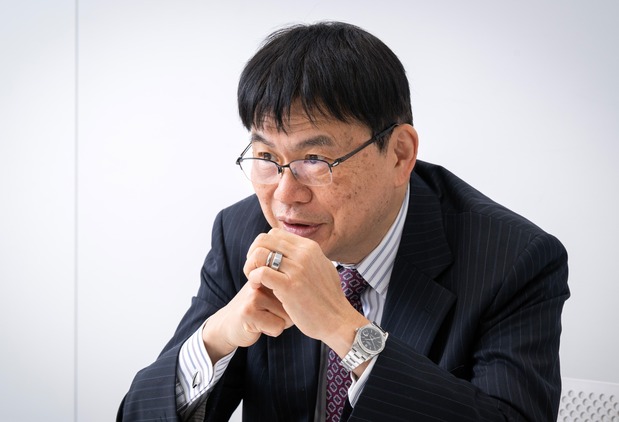
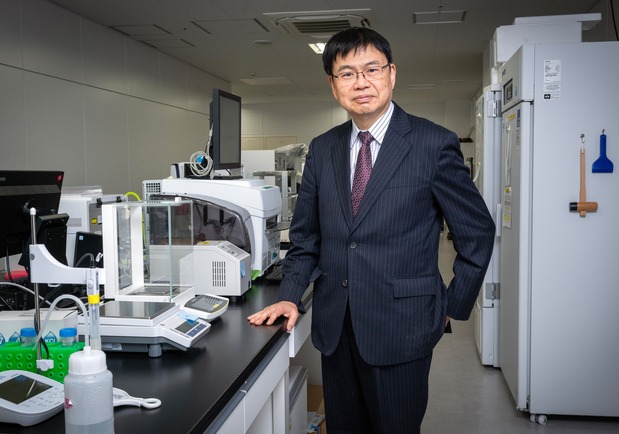
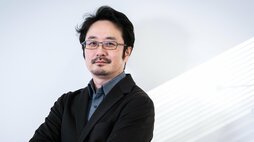
Director Okano Hideyuki of the Keiō University Regenerative Medicine Research Center is one of the world’s leading figures in applying iPS cell science to practical medical treatment. Induced pluripotent stem cells (iPS cells), created by reprogramming skin or blood cells, can differentiate into nearly any cell type. Leveraging this property, he has pioneered methods to model neurological diseases using patient-derived cells, creating a direct bridge from basic research to drug development and regenerative therapies.
The most striking progress has come in amyotrophic lateral sclerosis, a progressive and fatal neurodegenerative disease. ALS destroys the motor neurons that carry signals from the brain to the muscles, eventually robbing patients of movement and even the ability to breathe, while leaving consciousness intact. Roughly 10,000 people in Japan live with the disease, and no curative treatment or reliably effective drug exists.
“Drug development for ALS has been marked by repeated failure,” Okano notes. For decades, researchers relied on mouse models engineered to carry the same genetic mutations as patients. More than 10 drug candidates that showed promise in mice ultimately proved ineffective in human clinical trials.

 © Yokozeki Kazuhiro
“Human and mouse neurons differ fundamentally in their properties and circuitry,” he explains. “For central nervous system diseases, that gap has been a decisive barrier.”
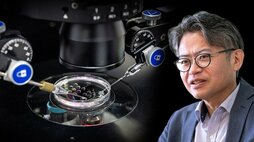
To overcome it, Okano’s team adopted an innovative approach: generating iPS cells from ALS patients and differentiating them into motor neurons. These human-derived neurons reproduced the disease’s hallmarks in the dish: shortened neurites, hyperexcitability, and early cell death—precisely the abnormalities seen in patients’ brains and spinal cords. The accuracy of this model represented a major breakthrough.
Unexpected Promise of a Parkinson’s Drug
Using this human cell model, the team pursued drug repositioning—testing existing, already approved drugs for new therapeutic effects. Because safety profiles are known, repurposed drugs can reach patients far faster and at lower cost.
“Using human iPS cells allows us to create patient-specific cells carrying the exact mutations,” Okano explains. “We can even build 3D organoids that mimic organ structure. It made sense to test drugs directly on such human-derived cells.”
The strategy paid off. In 2018, the team discovered that ropinirole hydrochloride, a Parkinson’s medication, significantly improved the abnormal phenotypes of ALS motor neurons. “Ropinirole restored neurite length, reduced hyperexcitability, and prevented cell death,” Okano says.
The findings, published in Nature Medicine in 2018, drew international attention. Perhaps more importantly, research moved rapidly from lab to clinic. Keiō University launched a physician-initiated clinical trial that December, enrolling about 20 ALS patients. The results were encouraging, and preparations for the next trial phase are now underway.
“The speed from iPS cell-based discovery to clinical testing would have been unthinkable under the earlier models,” he says.
Another advantage of iPS cell-based research is its ability to account for patient-to-patient variability. Okano’s team generated iPS cells from roughly 250 ALS patients and conducted detailed analyses of each cell line’s characteristics. The reason, he explains, is that “even when patients share the same ALS diagnosis, the underlying pathology varies enormously from person to person and cannot be treated as a single, uniform condition.”
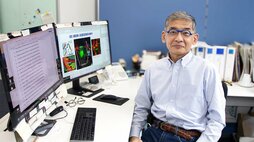
To address this diversity, the research team is collecting multidimensional datasets, including genomic analyses, evaluations of cellular phenotypes, and analyses of small extracellular vesicles secreted by the cells. Okano’s ultimate aim is—with the help of AI—to build a system capable of recommending individualized drug treatments: an “AI prescription” tailored to each patient’s biology.
Restoring Movement After Spinal‑Cord Injury
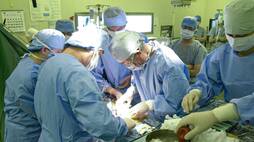
Okano’s work extends beyond drug discovery. His team is also conducting regenerative medicine trials using human iPS cell‑derived neural precursor cells—progenitor cells that can differentiate into various neuronal types—transplanted into patients with spinal‑cord injuries. In a study involving four patients with severe quadriplegic paralysis, two showed marked improvement, and one regained enough function to begin walking training.
This, Okano says, was the world’s first clinical study using human iPS cell-derived neural precursor cells. “The therapeutic effect is clear, so we hope to secure conditional, time-limited approval within three to four years—ideally sooner.”
 © Yokozeki Kazuhiro
Japan’s 2014 revision of the Pharmaceuticals and Medical Devices Act created a pathway for early provision of regenerative medicine products once probable efficacy and safety are demonstrated. This allows products to be used to treat patients while additional evidence is gathered for seven years—a framework considered one of the most progressive globally.
Ensuring real-world use also requires establishing reliable manufacturing technology, Okano notes. So, in addition to leading the development of new drugs and therapies, he also serves as chief scientific officer of K Pharma, a biotech startup spun out of Keiō University that was established to translate basic research into practical applications, and is driving social implementation from a business perspective as well.
That effort is already taking concrete shape, as the company is working with Nikon Cell Innovation to manufacture human iPS cell-based regenerative medicine products for spinal-cord injury, aiming to begin company-led clinical trials by 2027. This marks a crucial step toward establishing the industrial infrastructure needed for regenerative medicine in Japan.
Unraveling the Biology of Psychiatric Disorders
Okano’s team is also applying iPS cell technology to psychiatric conditions like schizophrenia—diseases historically difficult to study because symptoms like hallucinations or delusions require speech to confirm and therefore cannot be observed in animals. “By generating neurons from the iPS cells of patients with psychiatric disorders, we may finally be able to uncover human-specific disease mechanisms,” he says.
In collaboration with Swiss-based MaxWell Biosystems, the team is carefully analyzing the electrical activity and morphology of neurons derived from schizophrenia patients’ iPS cells using advanced measurement technologies.
“If we can identify the electrical abnormalities in these neurons and test whether drugs correct them, we may be able to move directly toward clinical application without relying on animal models,” Okano says. This could shrink drug development timelines, which now require 10 to 20 years, to just a year or two, bringing profound benefits to patients worldwide.
“Using iPS cell technology enables us to find effective drugs and treatments much faster than before,” Okano emphasizes. “But such discoveries will be meaningless if they don’t reach the people who need them. The real challenge is how quickly we can make iPS cell-based therapies widely available so that all patients can access them.”
Twenty years after Yamanaka Shin’ya first developed iPS cells, the promise of transformative treatments is finally beginning to take shape. The future envisioned by regenerative medicine is on the cusp of becoming reality.
 © Yokozeki Kazuhiro
(Originally published in Japanese. Reporting and text by Ōkoshi Yutaka of Team Pascal, with editing by Power News.)




 Read in other languages