


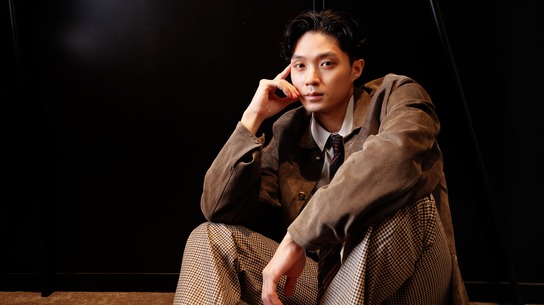
A victim of a tragedy meets the men who brought it on and surprisingly ends up becoming a mentor of sorts to them. The director Yoshida Keisuke’s newest film, Mentor, explores the complex interactions that ensue.
Past Tragedy and Present Relationships
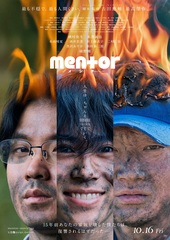
 © 2026 Mentor Production Committee
The gap between Generation Z and their parents’ generation is built on a mutual unwillingness to impose. The older side is reluctant to criticize younger people lest they be accused of bullying; the younger set, meanwhile, tends to hold back from asking for input, even as it leaves them without the guidance they need to grow. Would so many younger people be turning to chatbots for life advice if they had an older confidant they could trust instead? Mentor, the latest film from Yoshida Keisuke, arrives at the perfect time to explore this generation gap.
The word mentor goes back to the character of the same name in the ancient Greek epic The Odyssey. Broadly speaking, it refers to someone that a younger or less experienced person can turn to for advice and support. Yoshida, known for movies that sharply dissect Japanese society, tackles the ideal of mentorship as it is today in this outing.
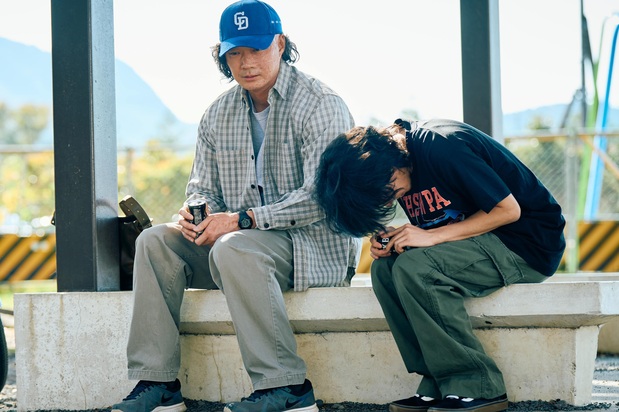 Takumi (Suezawa Seiya) reunites with Nomoto (Ayano Gō, left), who suffered severe burns and lost his wife and unborn child in a fire caused by Takumi. (© 2026 Mentor Production Committee)
A Fateful Meeting, 15 Years Later
The film’s inciting incident takes place 15 years prior, when two boys playing with fireworks accidentally burn down an entire apartment building. The tenants suffer devastating losses, with one man losing his pregnant wife and being severely burned. A decade and a half later, the perpetrators are young adults, and our story begins.
One of the boys, Takumi (Suezawa Seiya), temporarily became a virtual recluse due to the trauma of the experience, but managed to escape his social withdrawal three years ago. He now works as a vending machine restocker and uses his wages to pay ongoing compensation to the tragedy’s victims. Then, one day, he meets one of those victims in person: a man named Nomoto (Ayano Gō).
Nomoto still bears the physical and emotional scars of the fire, and continues to grieve for his wife and unborn child. Nevertheless, not only does he accept Takumi’s apology, he becomes a close acquaintance, even offering helpful advice to the younger man. In time, Takumi starts to see Nomoto as a mentor.
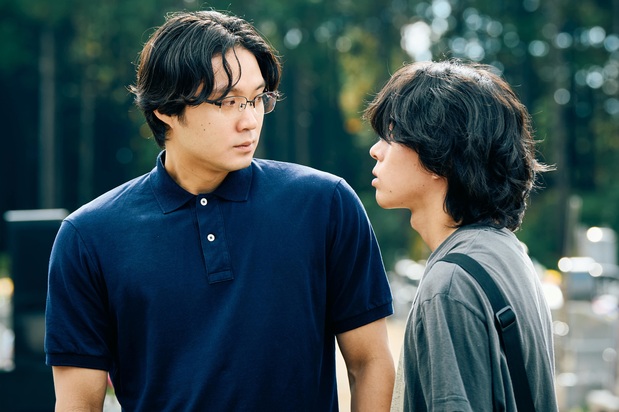 Ryūnosuke (Isomura Hayato, left) reunites with his childhood friend Takumi for the first time since the fire. (© 2026 Mentor Production Committee)
Takumi eventually goes to visit Ryūnosuke (Isomura Hayato), the other boy responsible for starting the fire, and introduces him to Nomoto as well. Ryūnosuke is by then a top-level archer hoping to represent Japan at the next Olympic Games, with an important qualifier coming up. How he and Nomoto will react to each other is an open question.
Preparing for the Role from the Physical Side
Mentor depicts a warped three-way relationship between Nomoto and the two younger men responsible for the tragedy that sent his life off course. Takumi and Ryūnosuke respond to Nomoto in completely different ways. Ryūnosuke has fewer quirks and seems to be more socially adapted than Takumi and Nomoto, but that makes him all the more challenging to portray.
“My approach to playing Ryūnosuke?” Isomura explains. ”Well, I began preparation from the physical side. To develop an archer’s body, I began training a year before filming and subsequently devoted myself to practicing the sport.” He saw this process as similar, in a way, to Ryūnosuke’s attempt to escape his feelings of guilt by immersing himself in competition.
“In archery, stilling your mind is very important,” says Isomura. “You have to control your body movements and how you use your muscles so that you can shoot the bow the same way every time. Ryūnosuke’s concentration is undermined by the appearance of Takumi and Nomoto, but he still takes the same deep breaths and goes through his routine in an attempt to clear his mind. I wanted to show the turmoil he keeps bottled up inside naturally bleeding into the world around him.”
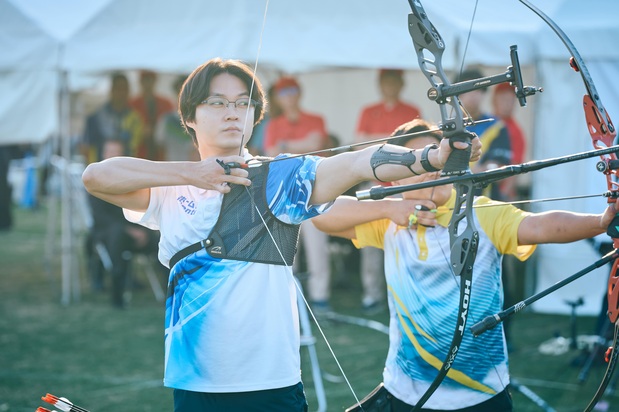 A steady stance reflecting a well-trained core. (© 2026 Mentor Production Committee)
How did Isomura understand Ryūnosuke’s emotional state as he dove into archery?
“Takumi remains stuck in the past; by contrast, Ryūnosuke is moving forward. Through the filter of archery, however, this can also look like he is running away from his past. Still, pushing forward was the only choice he had. He might not have been able to erase what he did, but he could at least distance himself from it. I couldn’t build my performance on a similar experience in my own past, but I based it on the understanding that there really are people who carry burdens like this through life.”
A Mysterious Balance of Distance and Intimacy
Ryūnosuke and Takumi face the past in different ways. That difference is powerfully visible in how they relate to Nomoto. The subtle balance of distance and intimacy among the three is one of the key points Yoshida emphasized in his direction. Isomura made sure to remain receptive in his performance alongside his costars Suezawa and Ayano.
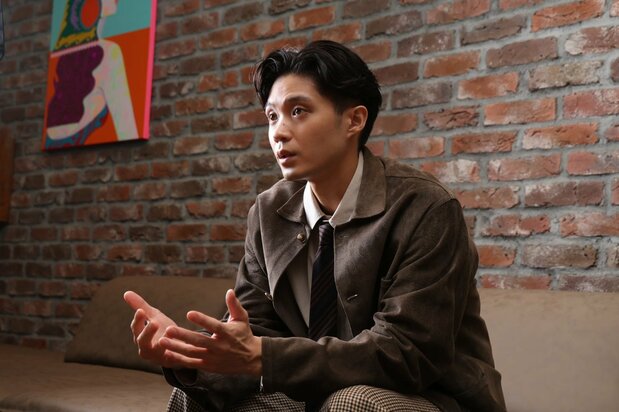 (© Hanai Tomoko)
“I thought it would be enough for me to take in what the two of them were feeling and discussing in each scene,” says Isomura. “Ryūnosuke feels that Takumi has changed since their childhood. Takumi begins speaking and acting more strangely by the day, and I made sure to accept that, the excess and ridiculousness of it, as it came.”
Takumi becomes intoxicated by Nomoto, who remains positive despite his tragic past, and alters his own approach to life as well.
“Suezawa played this straight, completely matching his role, which was a lot of fun to react to. As for Nomoto, Ayano came up with all kinds of tics and habits, specific ways of walking and talking, which let you know what sort of person he was the moment you met him. He had an aura that made it feel like the three of us were in a world of our own.”
Ryūnosuke, on the other hand, does not open his heart to Nomoto as readily as Takumi. That imbalance in their relationship has unexpected effects, revealing the complexities of the human heart.
“Nomoto is the person that Ryūnosuke least wants to meet—someone who reminds him of an incident he doesn’t want to remember. Nomoto says that he’s rooting for Ryūnosuke, but Ryūnosuke can’t quite believe him. This is partly due to awkwardness, but also because he doesn’t understand what Nomoto is thinking. In the end, that strange combination of distance and intimacy is maintained between them to the end.”
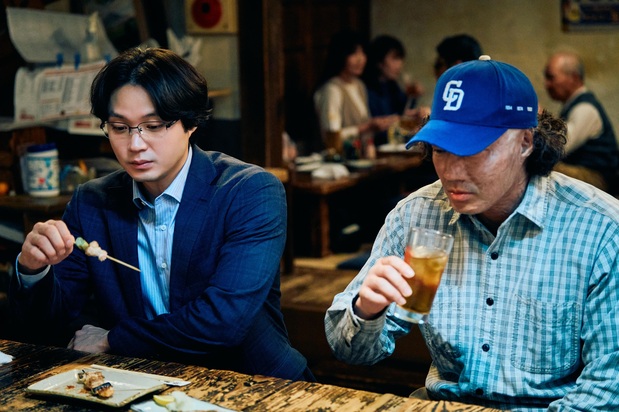 Ryūnosuke reacts to meeting Nomoto very differently from Takumi. (© 2026 Mentor Production Committee)
Beyond the Serious: The World of Yoshida Keisuke
Isomura garnered some attention for his role as Alain in 2015’s televised series Kamen Rider Ghost, but his big break came two years later, when he played a role in the NHK serial morning drama Hiyokko. He then took on a wide range of acting roles, winning the Best Supporting Actor award at the forty-seventh Japan Academy Film Prizes for Ishii Yūya’s 2023 The Moon. In the same year, he had roles in Ripples, The Dry Spell, and (Ab)normal Desire—a string of films throwing the warped nature of contemporary society into relief. His work in these roles was widely acclaimed.
“Looking at my career as a whole, it’s true that I’ve appeared in many movies with social themes,” he says. “That’s partly intentional, of course. I make a point of choosing projects that let me link the global situation or events happening in Japan to my everyday thinking.”
Another thing common to many of Isomura’s films is that the script was written by the director. This is true of Mentor as well; in fact, Yoshida has built his career largely on directing films from his own original scripts.
“When a film has an original script, if you have any questions about the intentions behind some lines or scenes, you can ask the director and get a clear answer right away,” says Isomura. “That makes for an easy set to work on.”
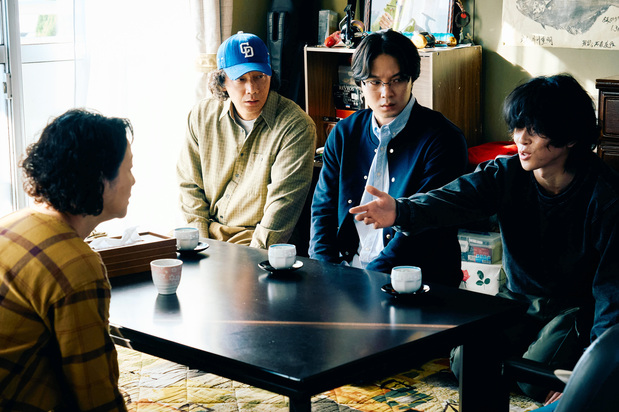 Influenced by Nomoto, Takumi begins behaving and speaking in unexpected ways. (© 2026 Mentor Production Committee)
Mentor, too, shows both the craft of the script, with its unexpected twists and turns, and the skill of the director in balancing the story between reality and exaggeration.
“It’s not easy for people to establish mutual understanding,” says Isomura. “The distance and intimacy created among the three leads is a point of interest that’s one of Yoshida’s trademarks.”
Yoshida’s previous work Unchained, released in June 2026, depicts a character who breaks down walls in support of children who have largely been abandoned by their families and schools. The director himself has suggested that audiences should watch the two films together.
“Yoshida has tended to make serious films in recent years, with a strong lean toward social themes, but Mentor is full of comical aspects, even if the humor is black,” says Isomura. “I think it represents Yoshida taking on all kinds of new challenges. The result is a movie that you can approach more casually, enjoying the laughs as you watch.”
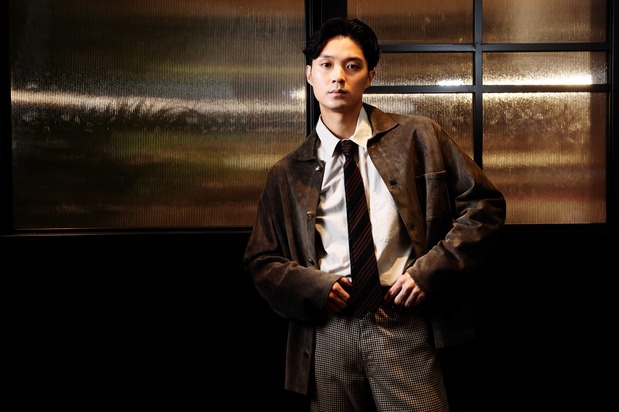 (© Hanai Tomoko)
Mentor (2026, Japan)
Official website: https://www.mentor-movie.jp/
Trailer (Japanese)
(Originally written in Japanese by Matsumoto Takuya of Nippon.com. Photos © Hanai Tomoko except where otherwise noted; Isomura Hayato’s hair and makeup by Satō Tomokatsu, styling by Kasai Tom. Banner photo: The actor Isomura Hayato. © Hanai Tomoko.)




 Read in other languages