


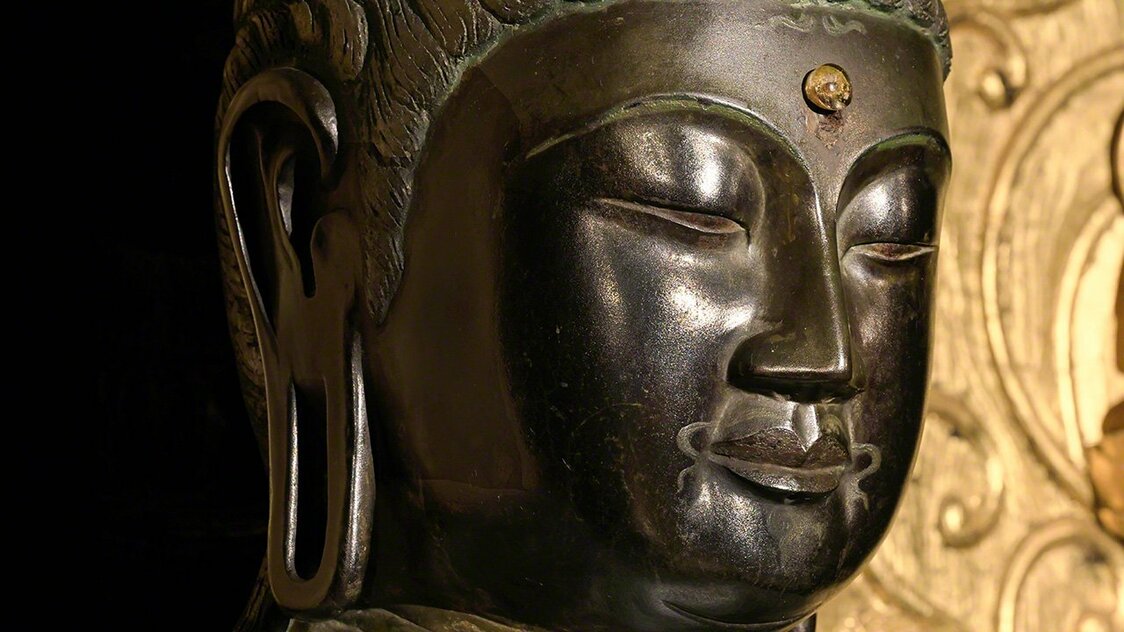
With the bearing of a noble prince, Yakushiji’s national treasure Kannon combines grace with quiet intensity.
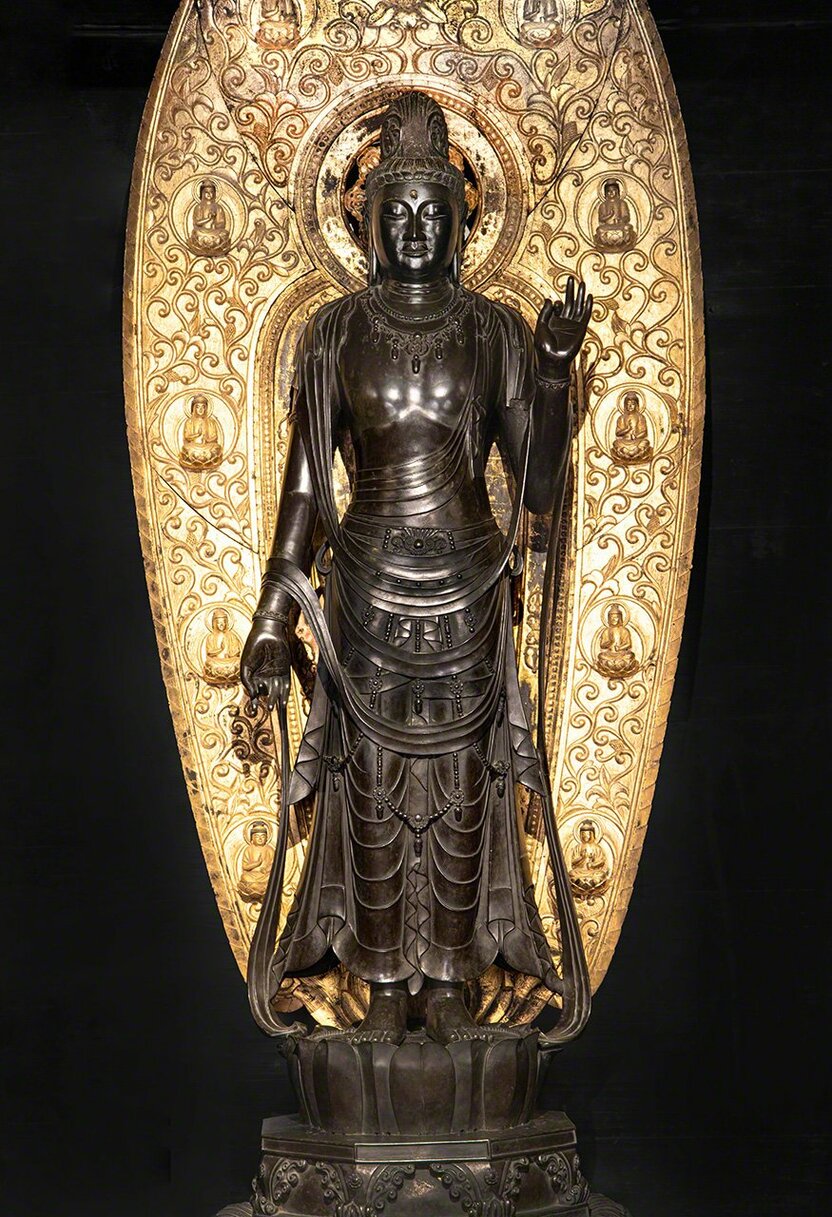
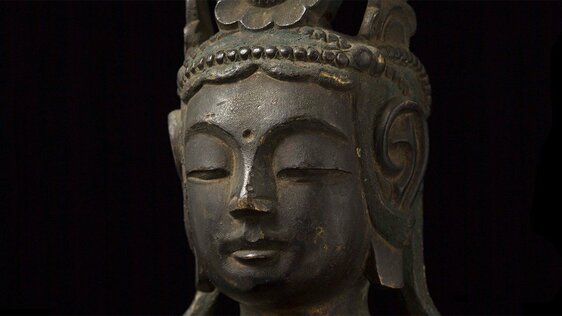
The Standing Shō Kanzeon Bosatsu, the bodhisattva Avalokitesvara, at the Buddhist temple Yakushiji in Nara is the principal image of the Tōindō, a Buddha hall that is itself a national treasure. Its dignified bearing inspires a sense of reverence.
 (© Muda Tomohiro)
Yakushiji was founded by Emperor Tenmu in the late seventh century to pray for the recovery of his ailing consort. First built in Fujiwarakyō (in present-day Kashihara), it was relocated to its current site in Nara following the transfer of the capital to Heijōkyō in 710. Tōindō was later constructed in memory of Empress Genmei, who established the new capital.
In Buddhist tradition, Avalokitesvara (also called Kannon) assumes 33 different forms, such as Jūichimen (11-headed) Kannon and Senju (thousand-armed) Kannon, to bring salvation to suffering beings. Shō Kannon represents the deity’s original and most fundamental form. With one face and two arms, it is the manifestation that most closely resembles a human being.
The Yakushiji statue stands erect on its pedestal, the right hand lowered and the left raised, both palms facing outward. With its slightly parted stance, the bodhisattva exudes an air of solemn dignity and composure. The robe falls in thin, delicate folds that reveal the contours of the legs, a technique said to reflect the influence of ancient Indian sculpture.
 (© Muda Tomohiro)
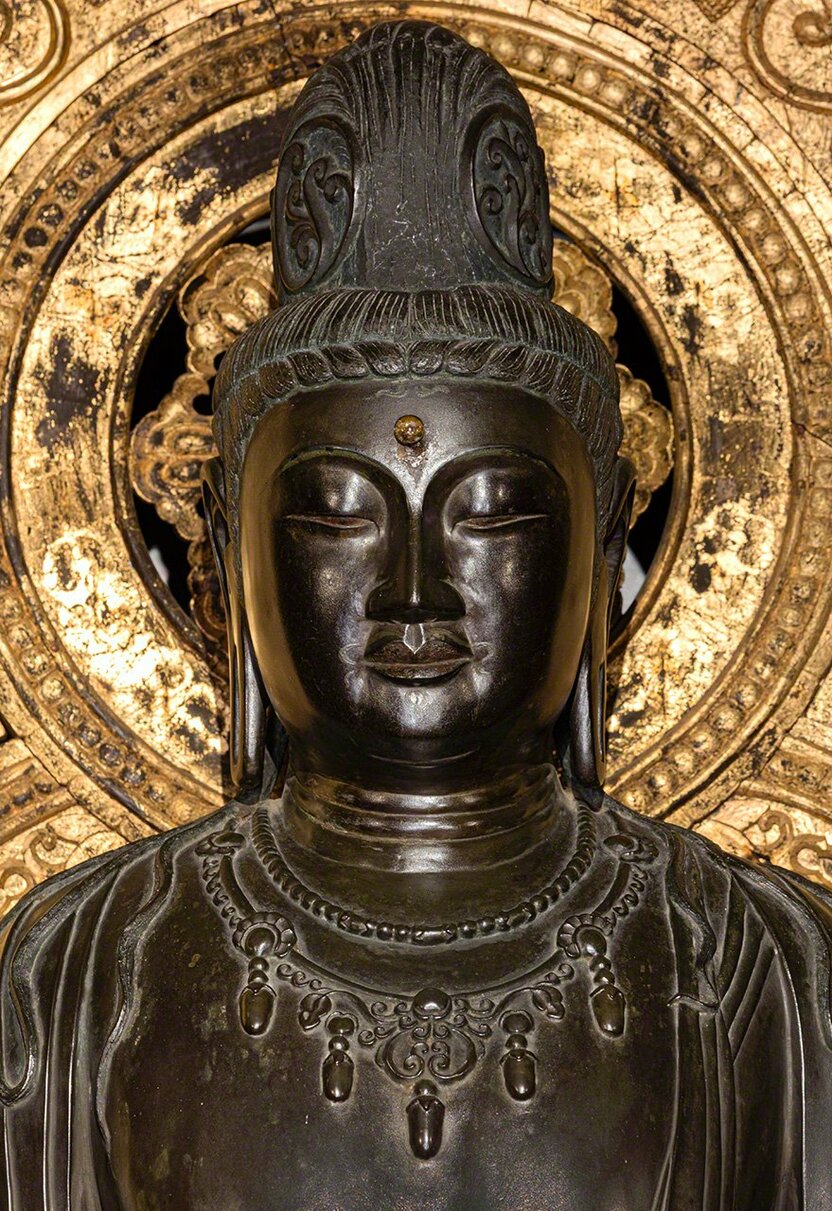
The hair is gathered into an elaborate topknot, adorned on the left and right with karakusa motifs. Though seemingly symmetrical at first glance, a closer look reveals subtle differences between the two designs.
 Karakusa designs on either side of the topknot. (© Muda Tomohiro)
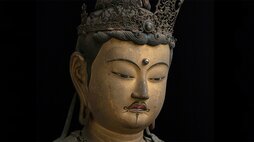
Traces on the front of the topknot suggest that it may once have borne a small Buddha image. The forehead and bridge of the nose form a single, unbroken line, giving the figure a distinctively exotic appearance.
 (© Muda Tomohiro)
The statue’s date of creation has long been the subject of scholarly debate. The dominant theory, based on stylistic similarities to the national treasure Yakushi Triad in Yakushiji’s Kondō main hall, places it in the late seventh century. Others argue that it was produced in the eighth century, around the time the Tōindō was built. To this day, no definitive conclusion has been reached, and the work remains one of the most enigmatic masterpieces of Japanese Buddhist sculpture, continuing to inspire the interest of researchers and art historians alike.
 (© Muda Tomohiro)
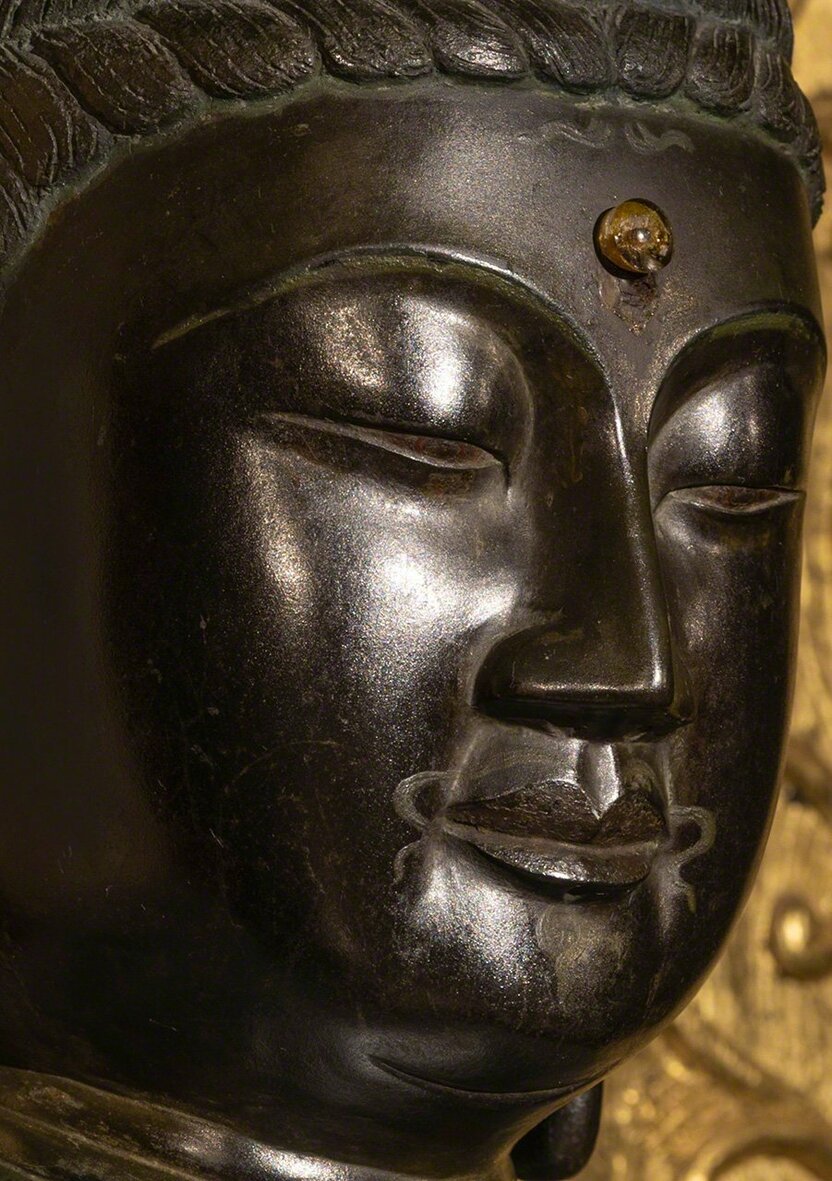
“This Shō Kannon possesses a purity and elegance that resonate deeply with Japanese sensibilities,” says photographer Muda Tomohiro. “I never tire of looking at it. Yet its appeal goes beyond its beautifully balanced features. Through a telephoto lens, I noticed the faint red coloring around the eyes, the lingering touch of crimson on the lips, and the delicate mustache above the mouth. The longer I studied these details, the more I sensed the power of the bodhisattva’s gaze, as though it could peer straight into the hearts of those who stand before it.”
Standing Shō-Kanzeon Bosatsu
- Height: 188.9 cm
- Date: Hakuhō–Tenpyō period (Asuka–Nara period)
- Yakushiji (Nara Prefecture)
- National treasure
(Originally published in Japanese. Banner photo: Standing Shō Kanzeon Bosatsu at Yakushiji. © Muda Tomohiro.)

 Read in other languages