-
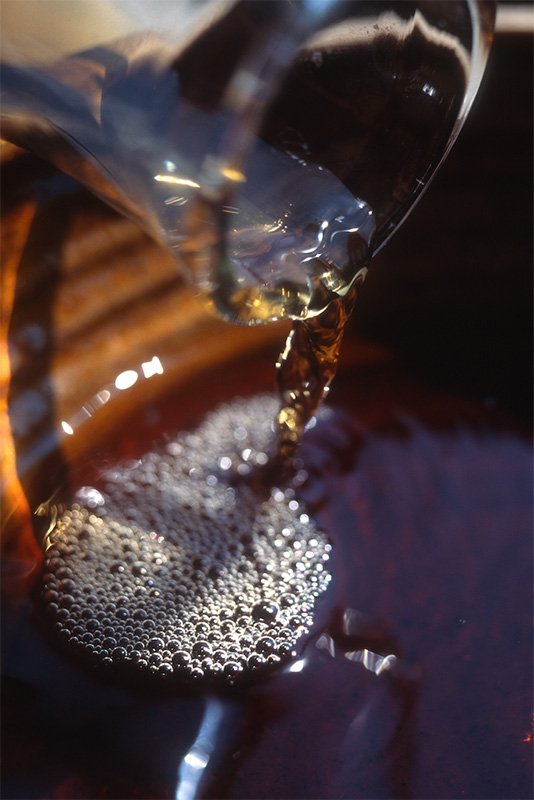
The amber color darkens as the vinegar ages.
-
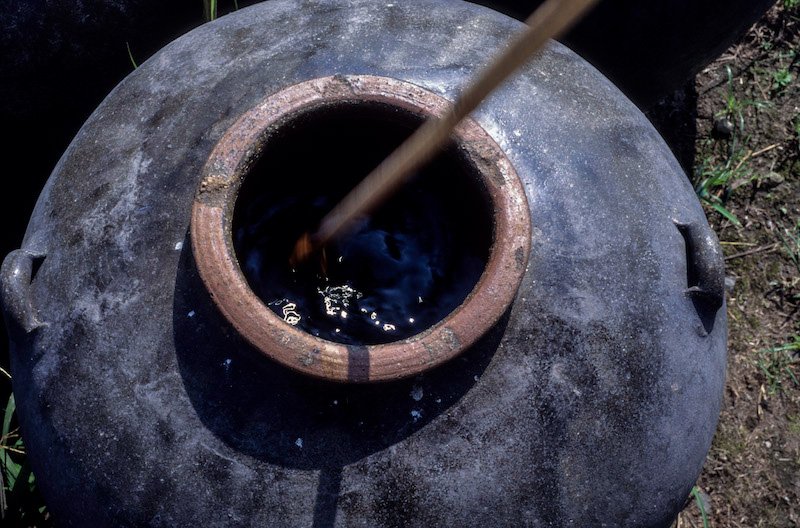
After initial fermentation comes a period of three to six months of maturation in the jars. After this, waste products are skimmed off the surface and the vinegar is allowed to age.
-
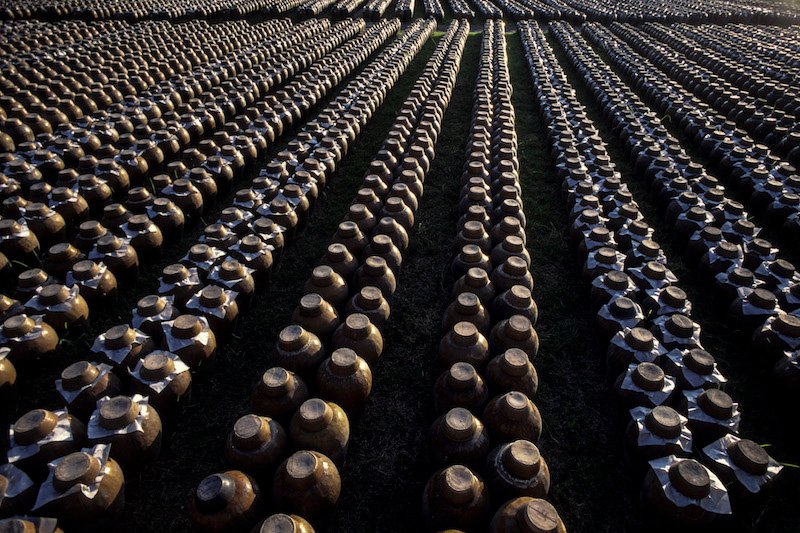
Jars of kurozu stretch into the distance. The size and dark tint of the vessels, meant to maximize heat absorption and retention, have remained the same for two centuries; they are even placed in rows stretching north to south to ensure they can all receive both morning and evening sunshine.
-
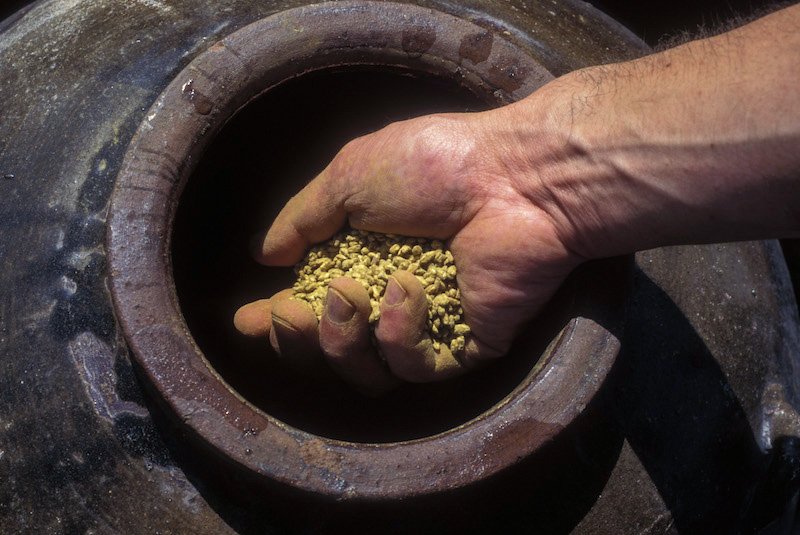
An artisan adds a final layer of kōji-kin to keep out any unwanted microbes that might disrupt the fermentation process.
-
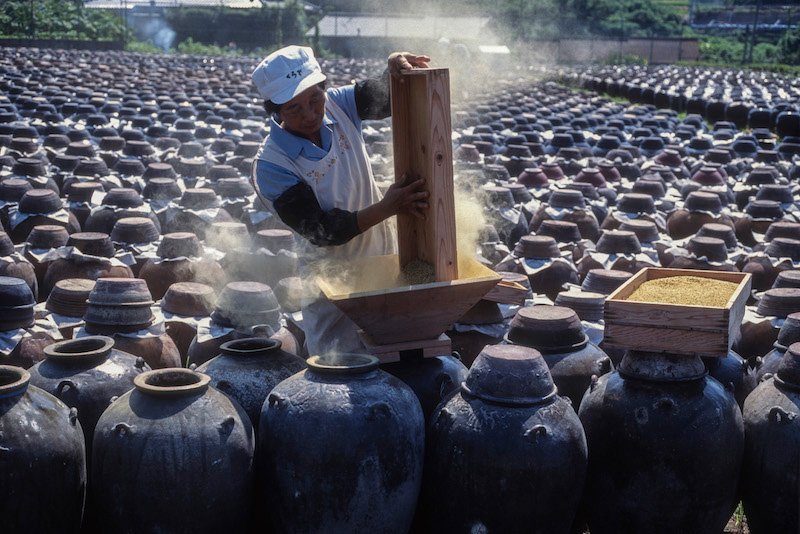
An artisan puts kōji-kin into ceramic jars, along with steamed rice and water. The fermenter is made by hand by spreading mold spores on steamed rice and allowing it to sit for three days in a special temperature-controlled room.
-

From left to right: After a month, bubbles on the surface indicate that fermentation is in full swing. After three months, acetic acid fermentation progresses and the surface layer of kōji-kin sinks to the bottom. By the fourth month, a thin layer of acetic acid bacteria forms; when it disappears, the initial fermentation process is finished.
-
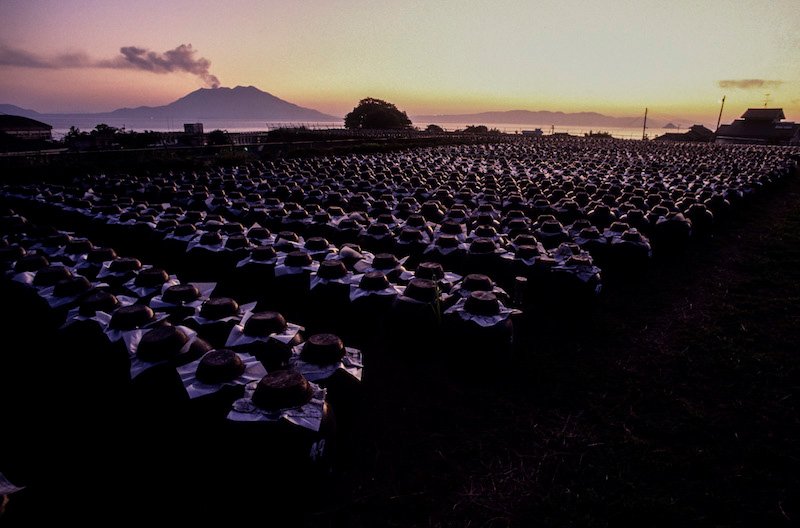
Dusk falls on Fukuyama as the volcano Sakurajima lazily breathes smoke into the skies above Kagoshima Bay.


 Read in other languages