-
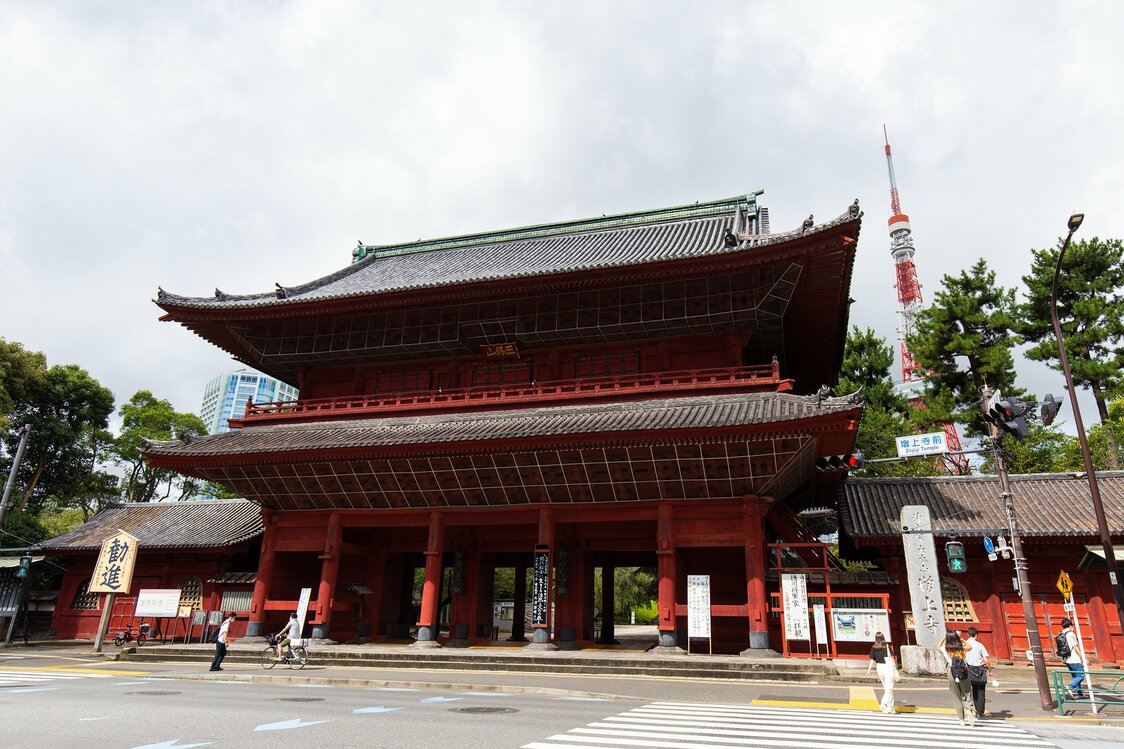
The Sangedatsumon with Tokyo Tower peeking through in the background.
-
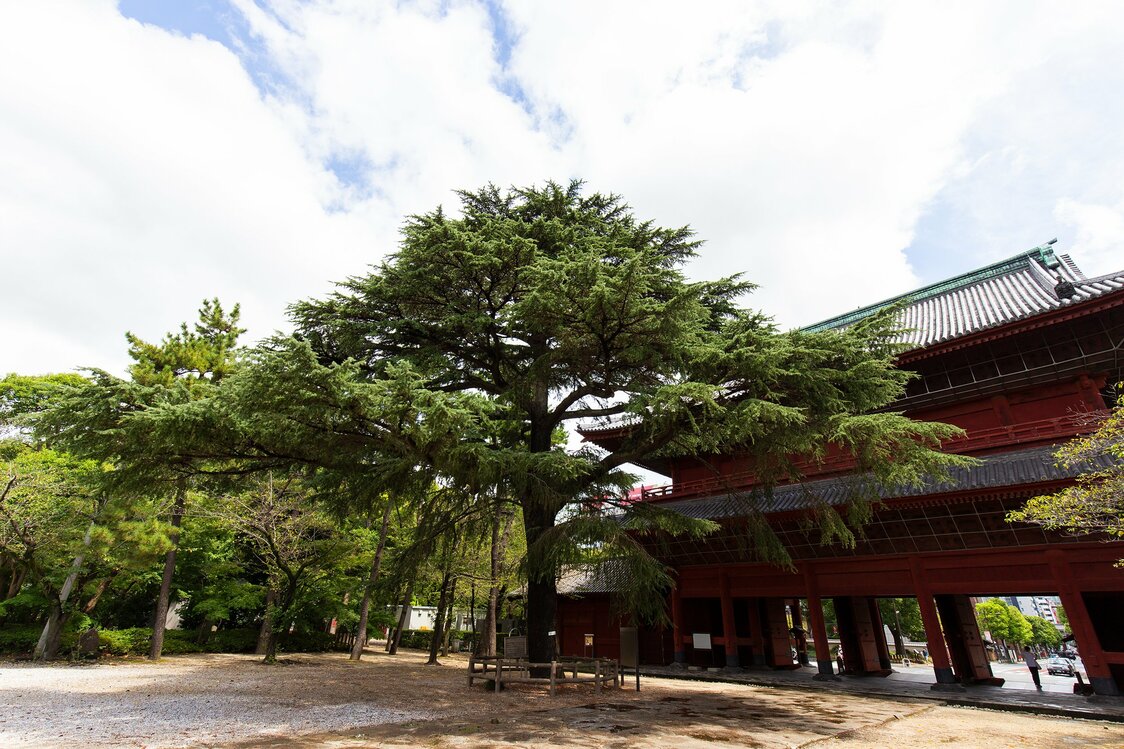
A pine planted by US President Ulysses S. Grant, who visited Japan with his wife in 1879 after leaving office, stands just inside the gate.
-
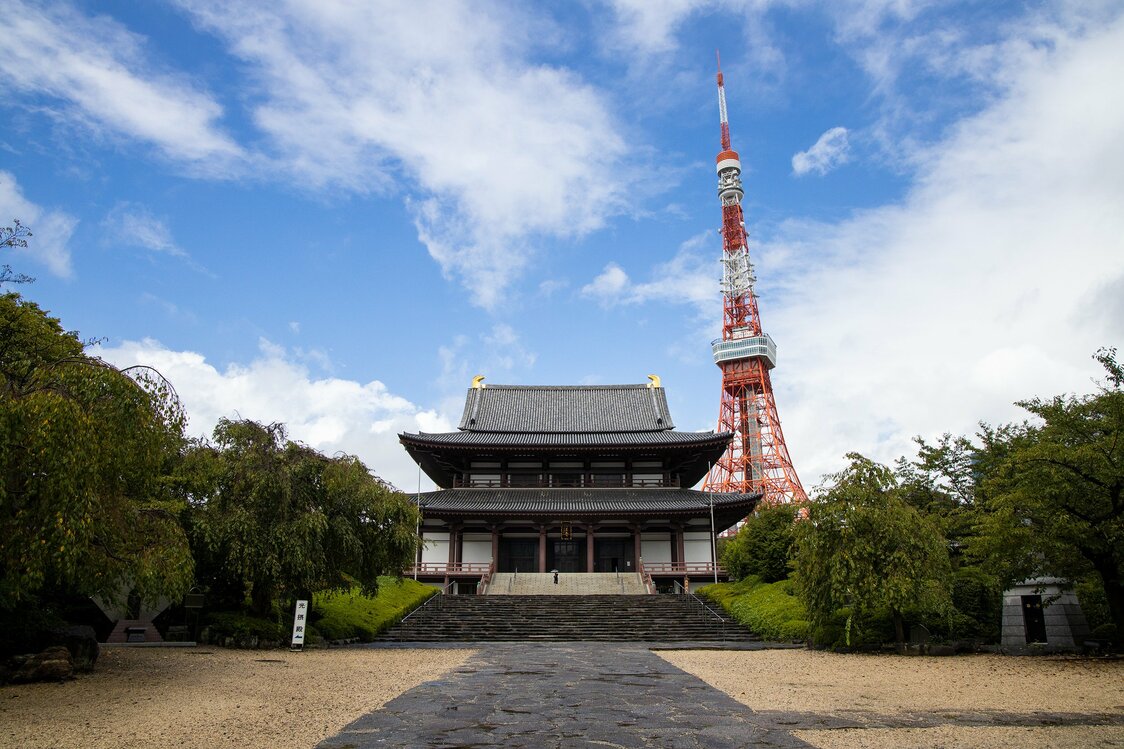
The Daiden, or “great hall,” of Zōjōji together with Tokyo Tower.
-
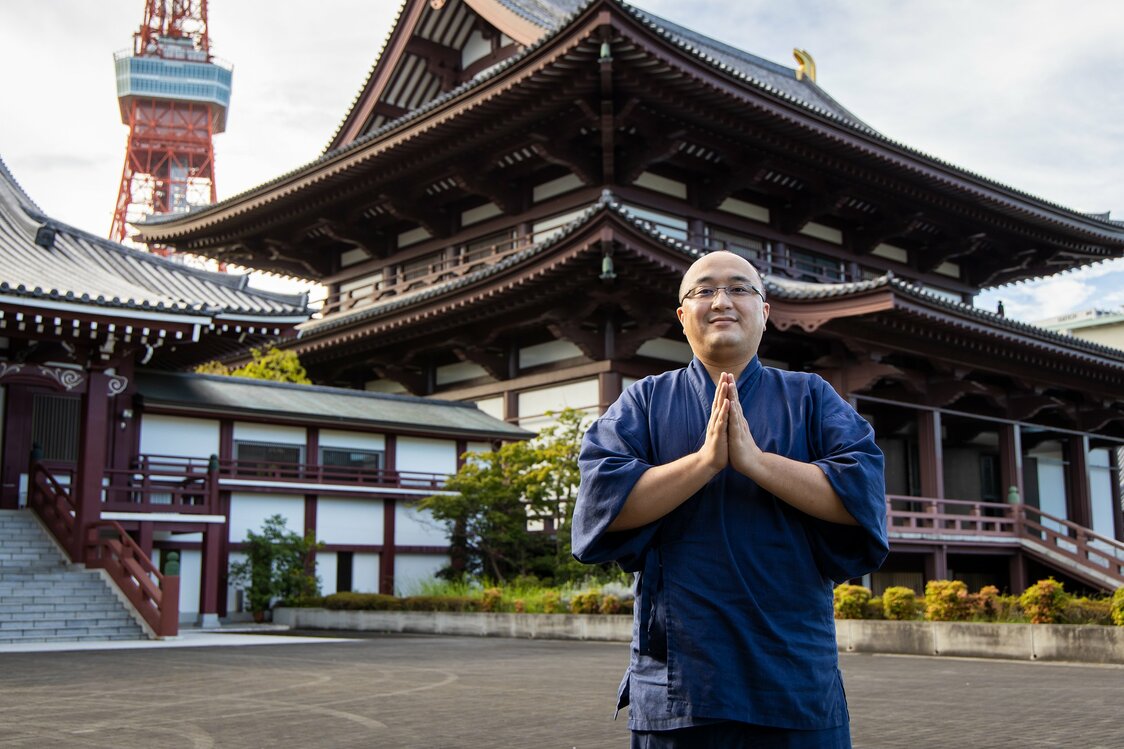
Matsunaga Hakuchō shares Zōjōji’s history with visitors.
-
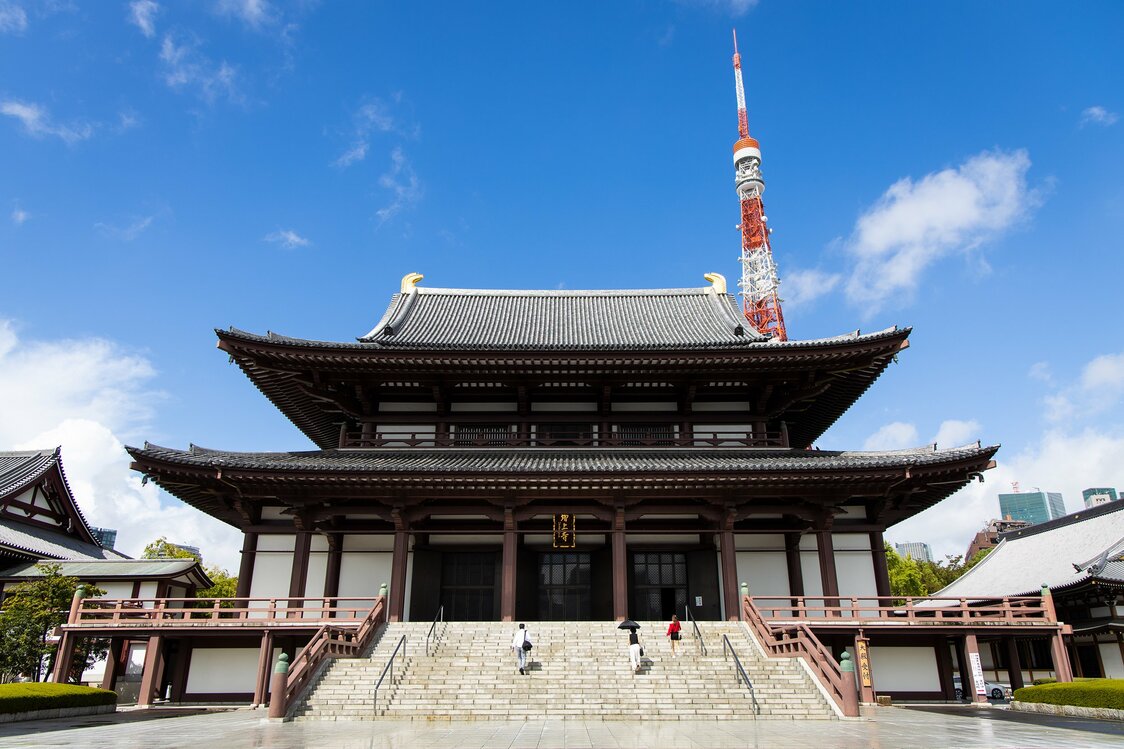
Zōjōji’s proximity to Tokyo Tower creates a unique backdrop for photos and film. Japanese fashion brand Atsushi Nakashima debuted its 2021 spring and summer collection on the steps of the Daiden.
-
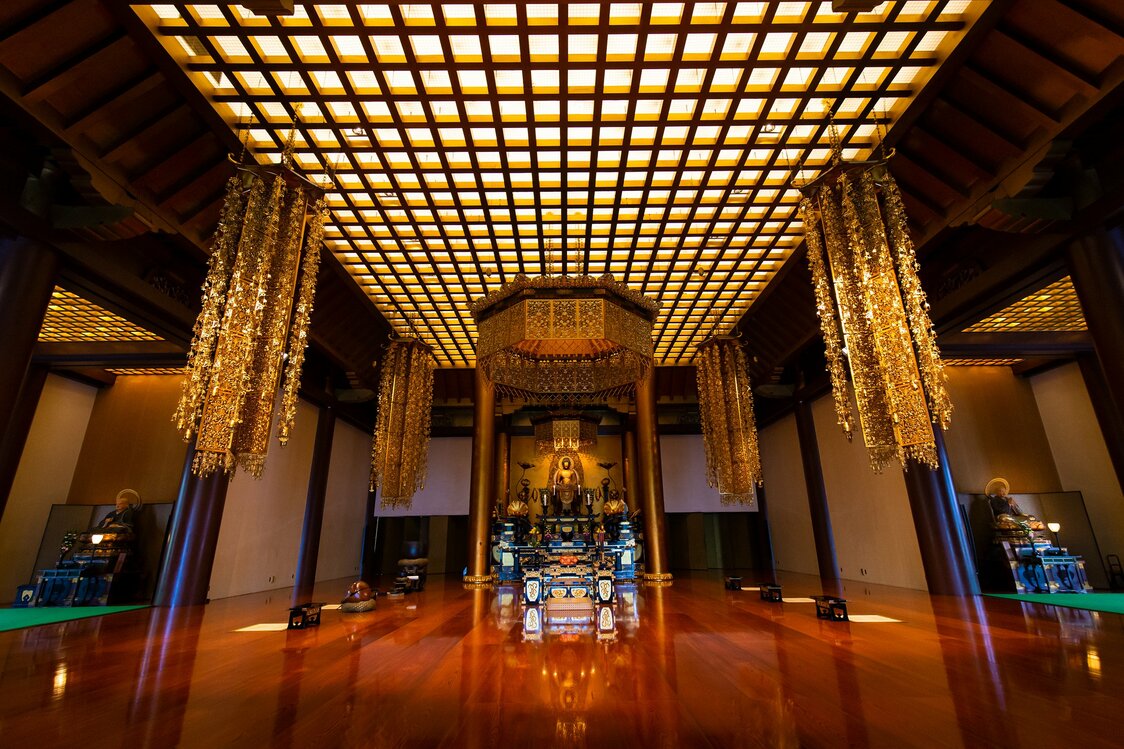
The figure Amida Nyorai, flanked by images of the priests Hōnen, left, and Shandao.
-
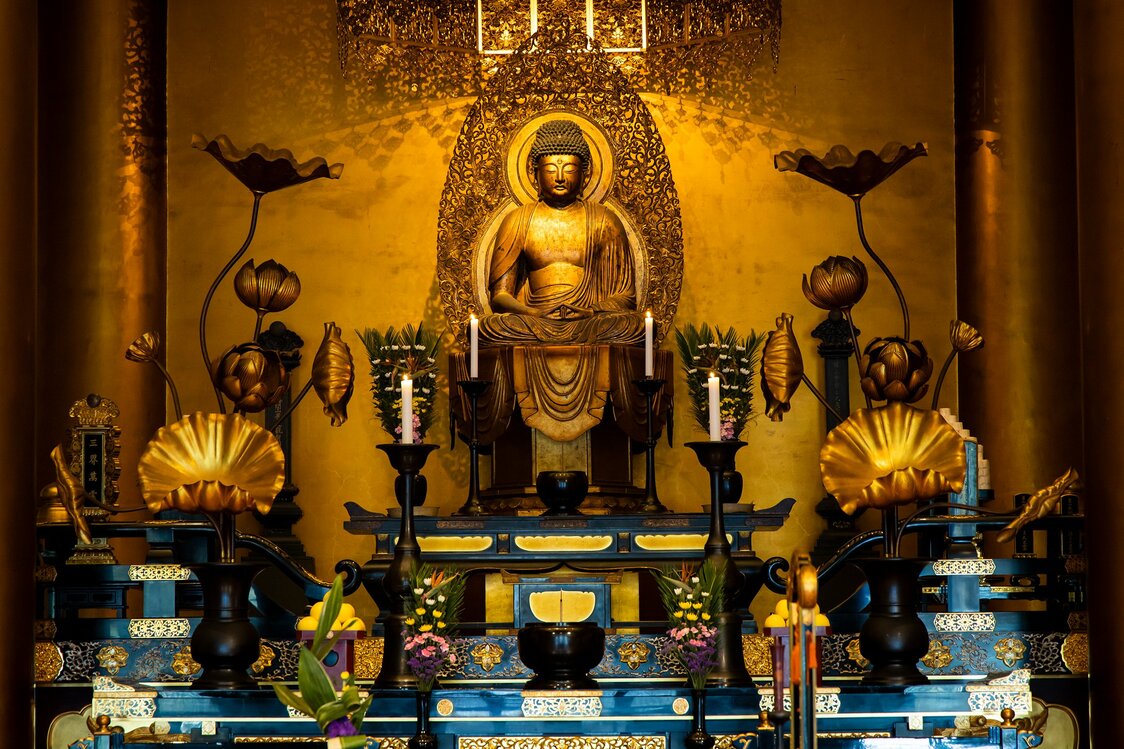
The seated figure of Amida Nyorai at center is registered as a Tokyo Cultural Property.
-
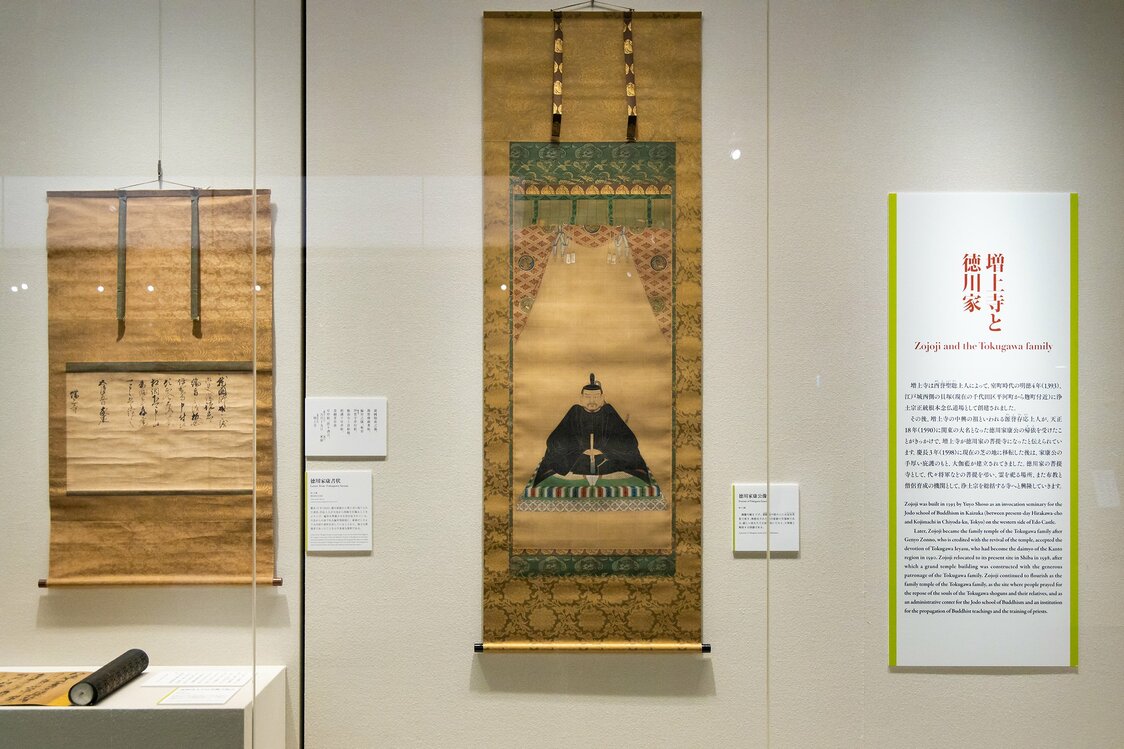
A painting of Tokugawa Ieyasu and message by the warlord in honor of priest Zonnō at the Zōjōji Treasury Gallery.
-
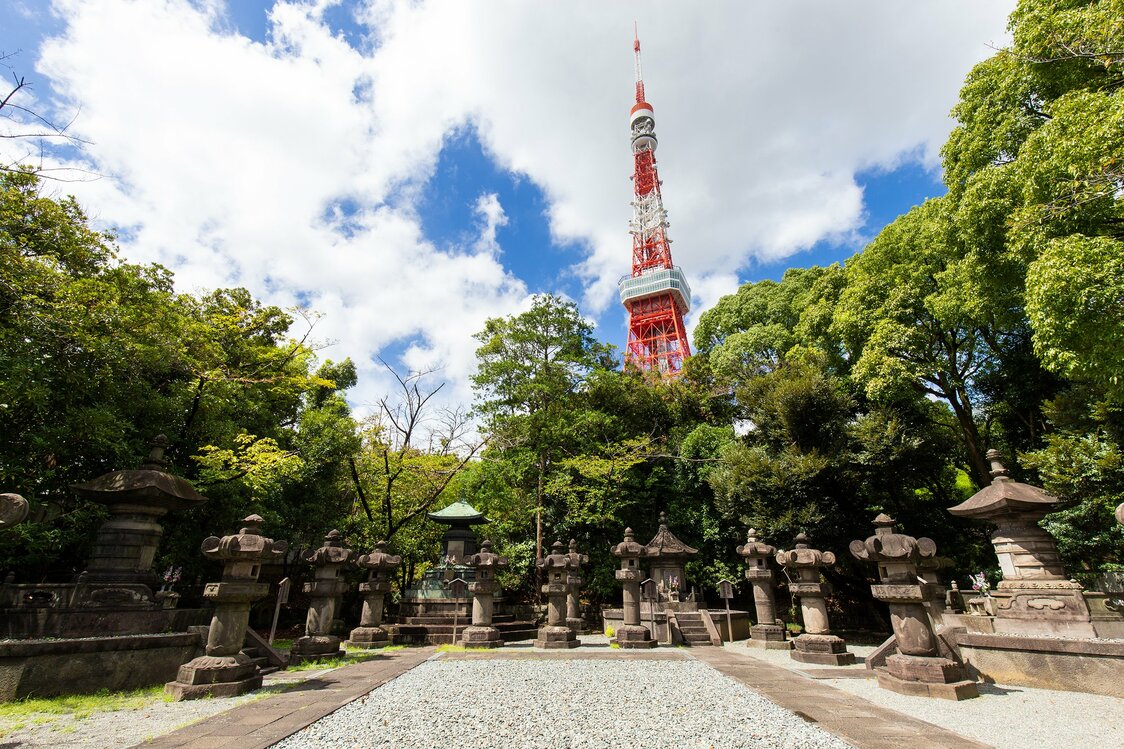
The graves of the six Tokugawa shōguns are joined by those of wives and other family members.
-
The graves of the six Tokugawa shōguns are joined by those of wives and other family members.
-
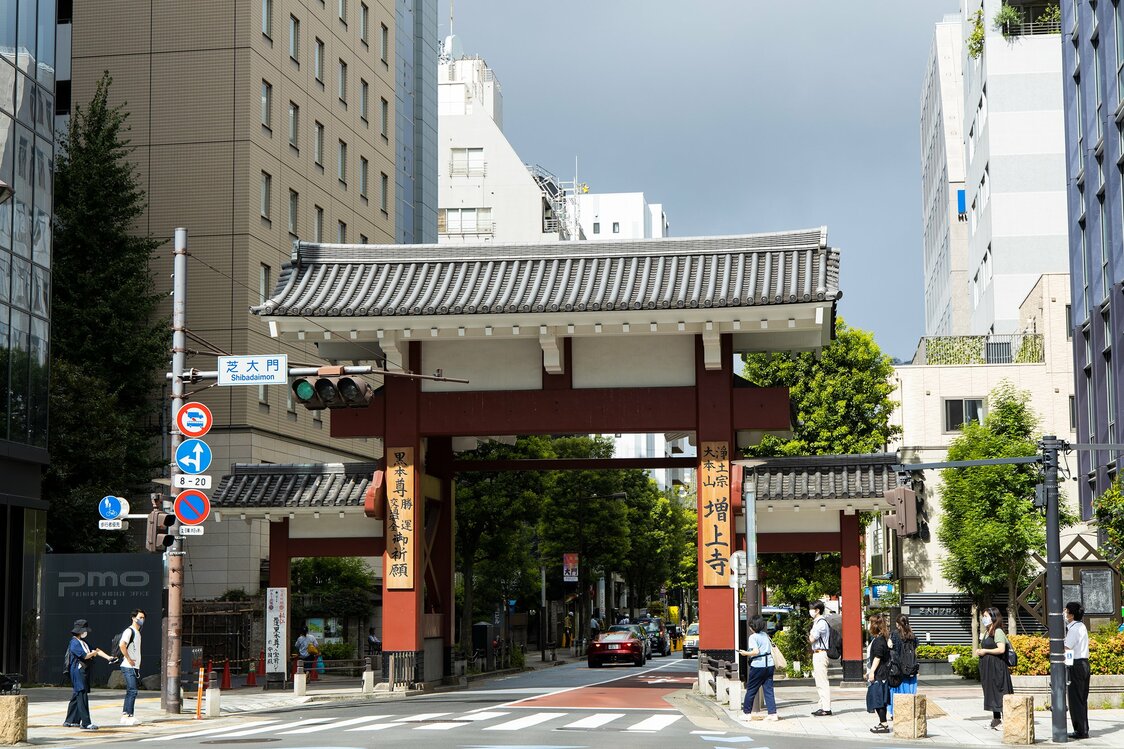
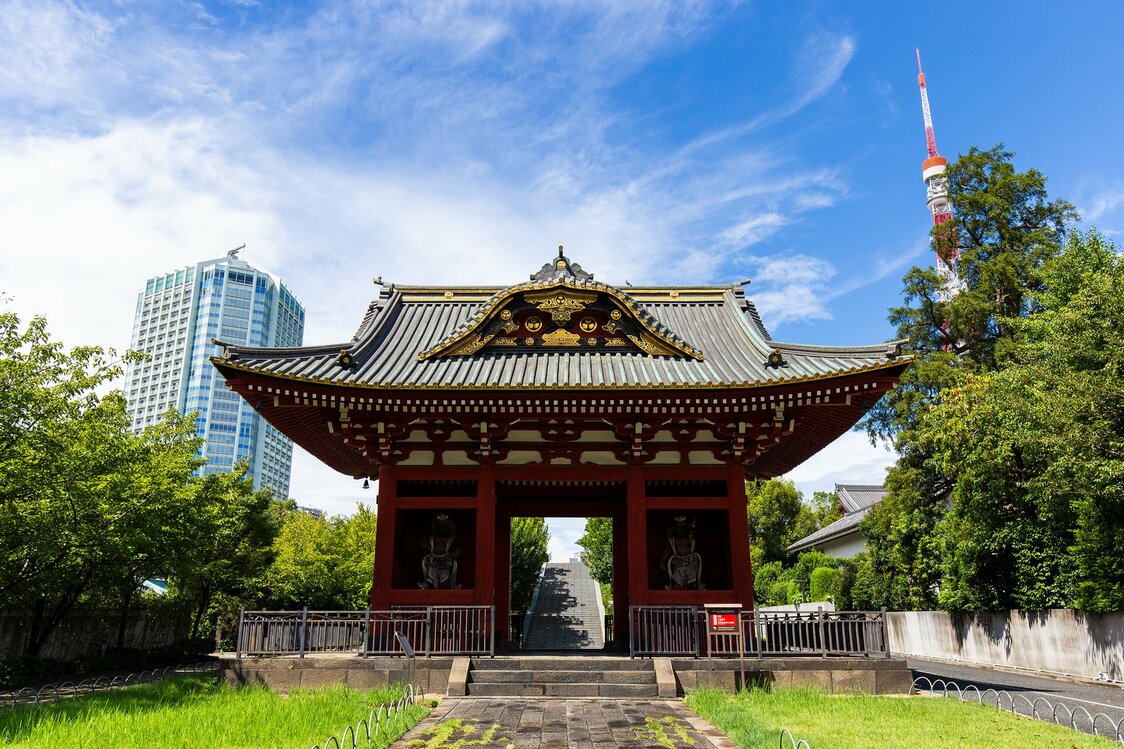
The Meiji government reduced the size of Zōjōji and donated the land to the newly founded city of Tokyo. In 2016, the metropolitan government returned the site of the Daimon to the temple.
-
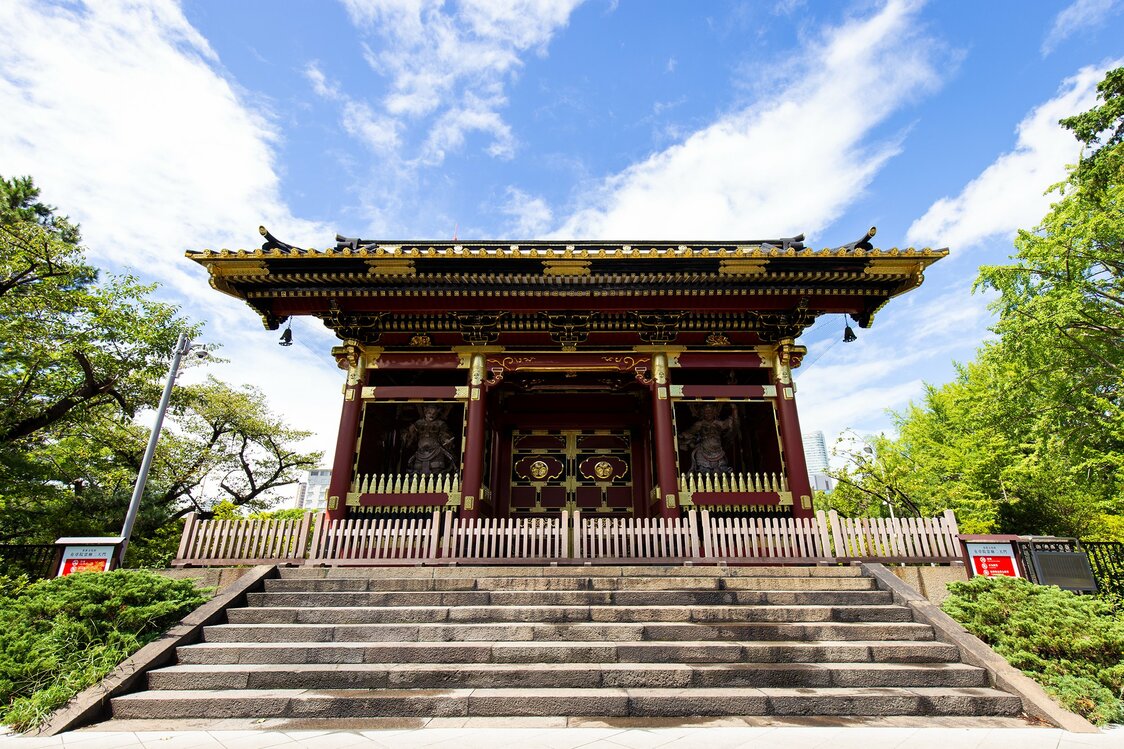
The Nitenmon once marked the entrance to the Yūshō-in, the mausoleum of the Tokugawa shōguns. Registered as a National Important Cultural Property, it now stands on the grounds of the Prince Hotel.
-
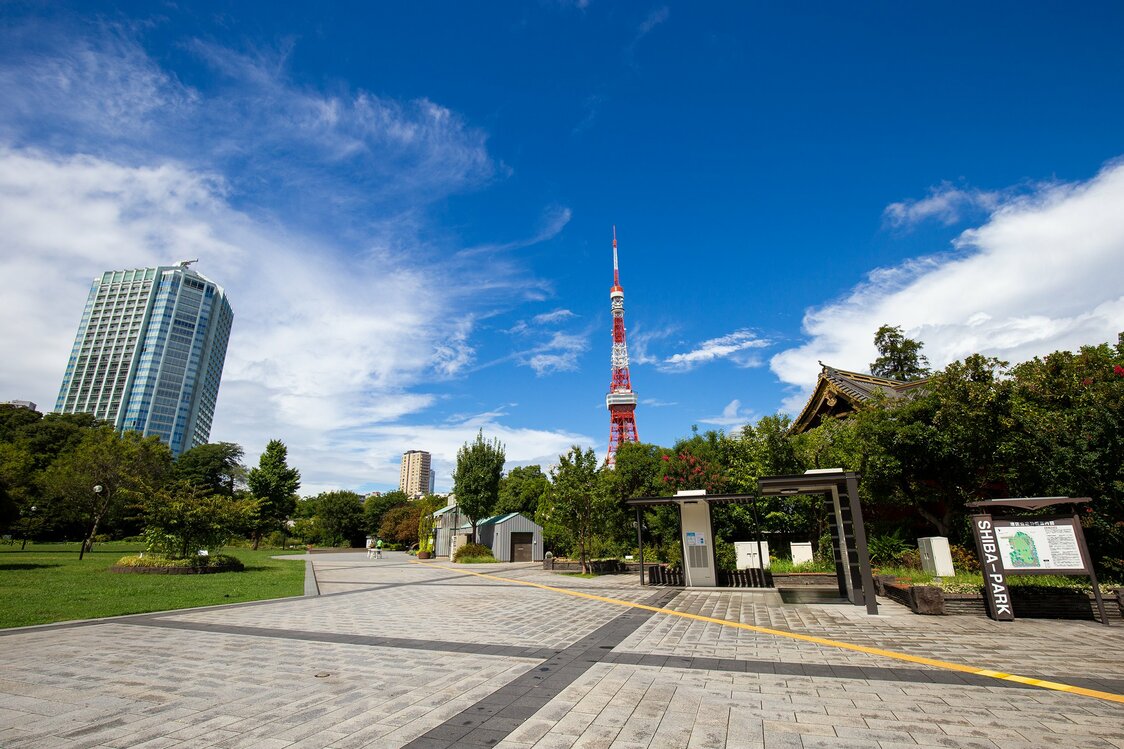
Shiba Park, one of Japan’s first public parks, was created on land that was part of the enormous grounds of Zōjōji.
-
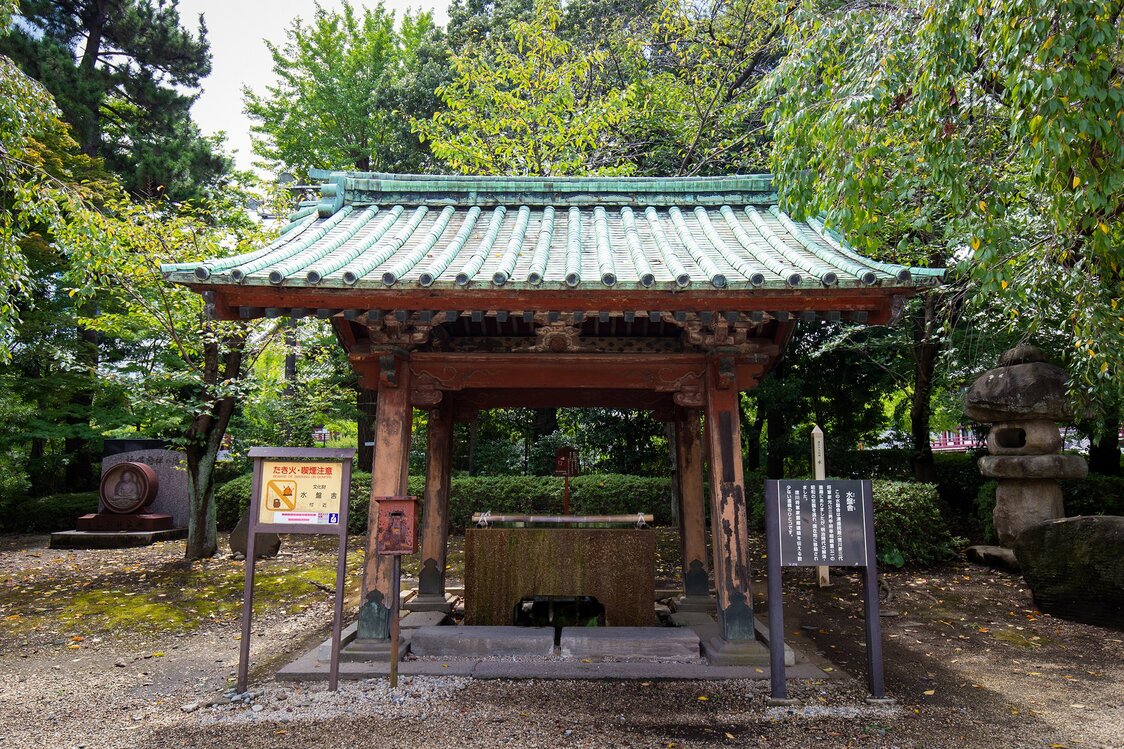
The cistern from the mausoleum of Tokugawa Tsunashige is still in use.
-
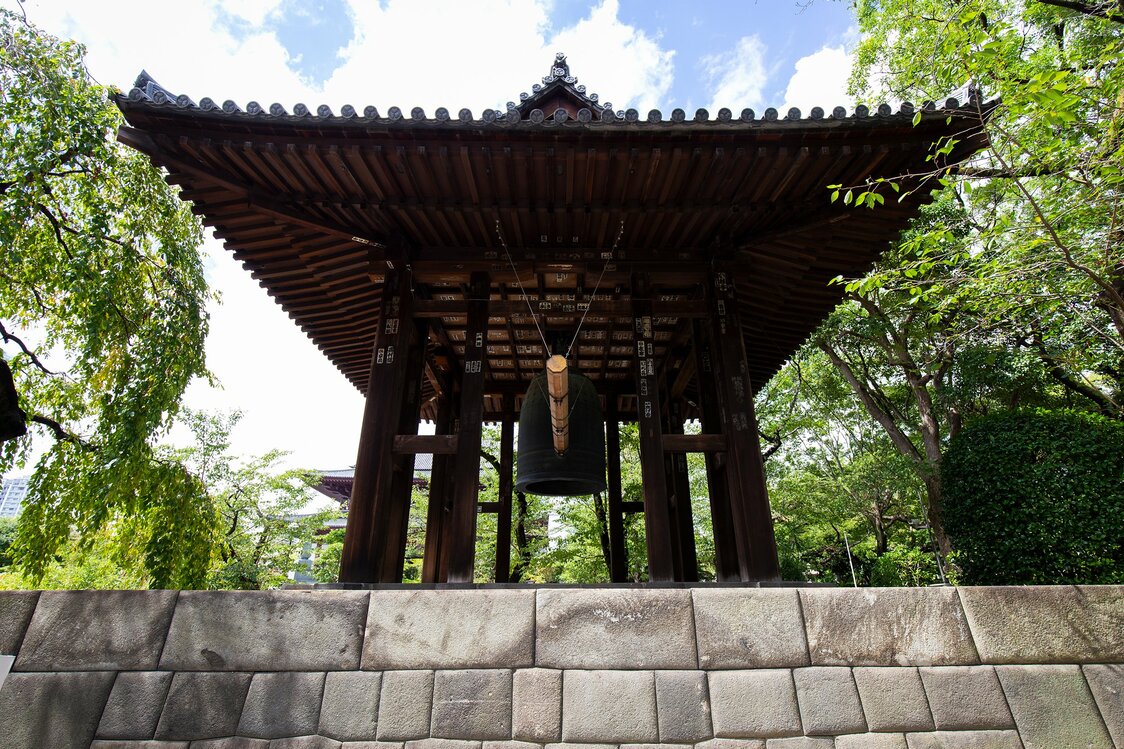
The Daibonshō was considered one of Edo’s three great temple bells.
-
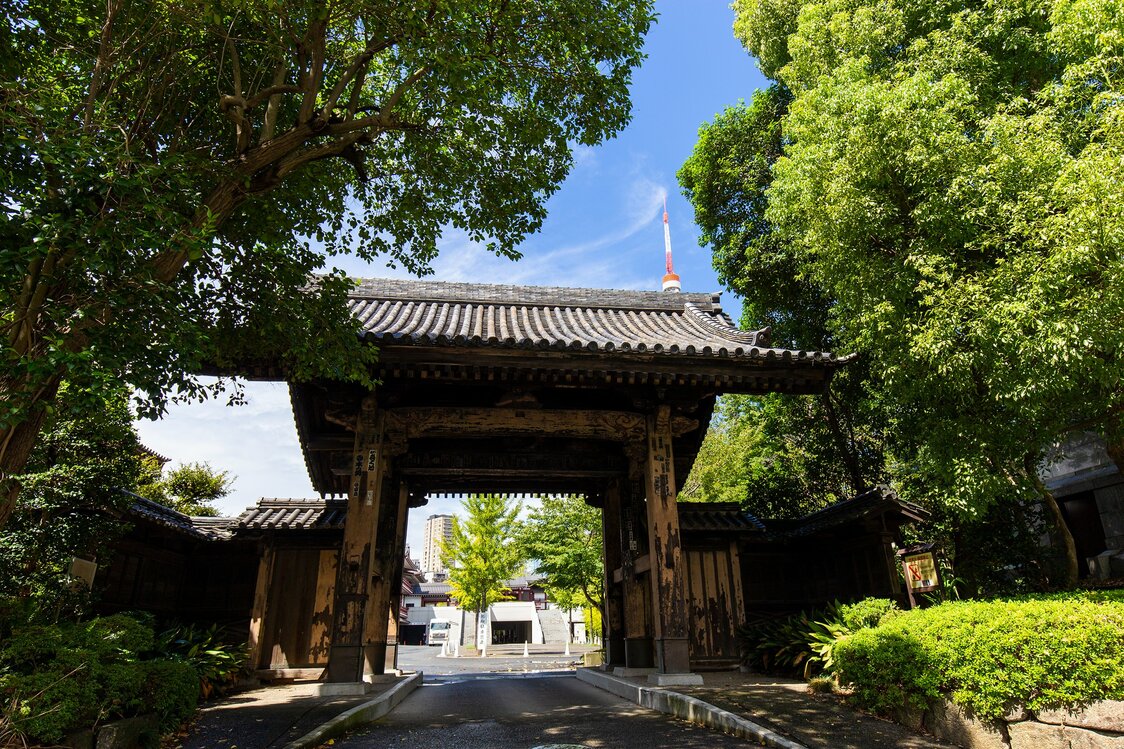
The Kuromon to the south of the Sangedatsumon was commissioned by third shōgun Iemitsu.
-
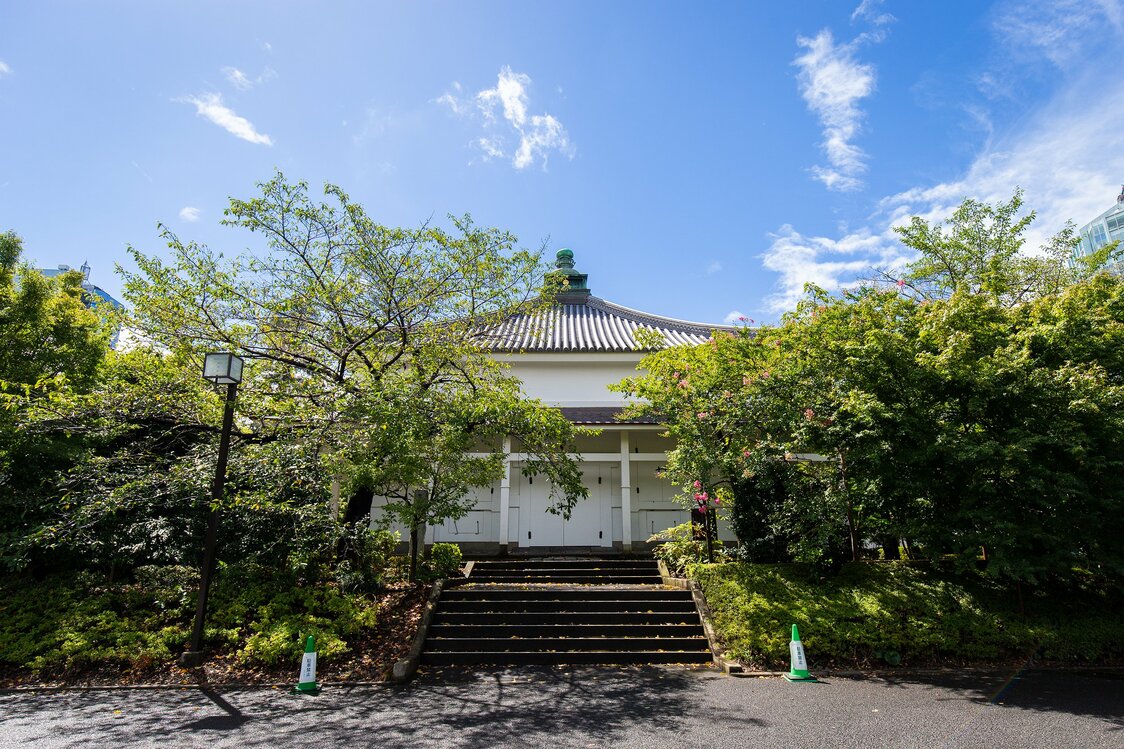
The sutra repository at Zōjōji, originally built in 1613, was reconstructed in 1799. It is registered as a Tokyo Cultural Property.
-
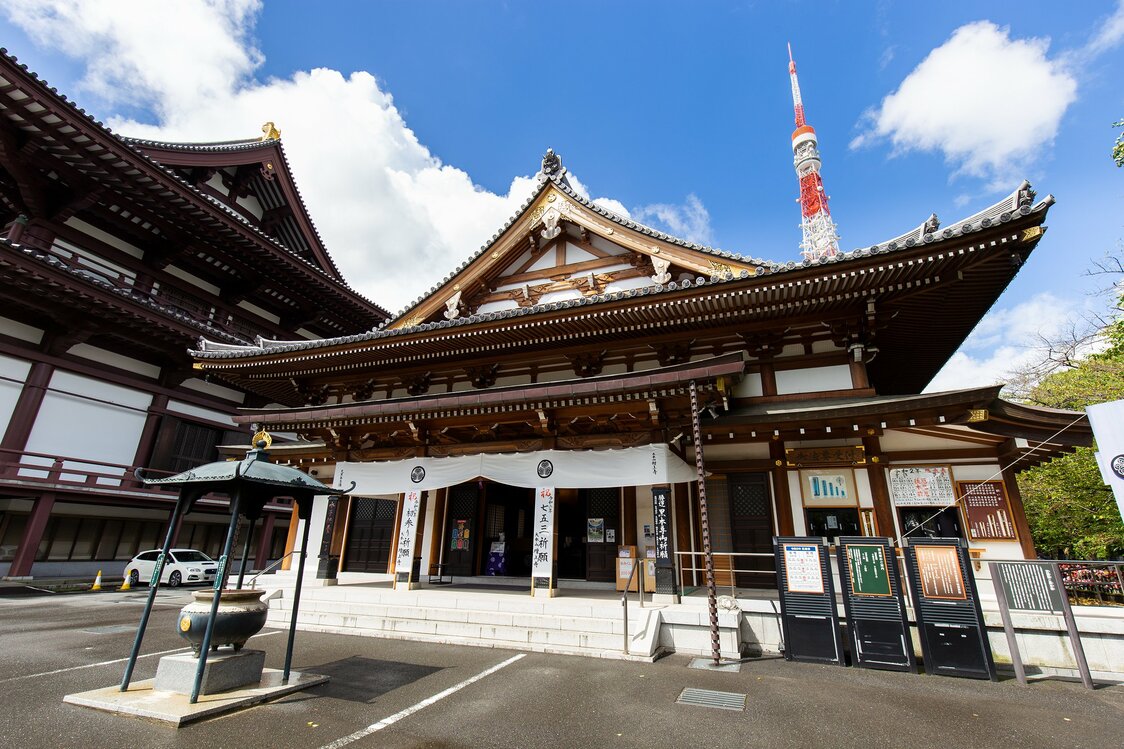
The Ankokuden was named after Tokugawa Ieyasu’s Buddhist title, Ankokuin. Visitors can purchase charms and items used for various Buddhist services at a dedicated stall.
-
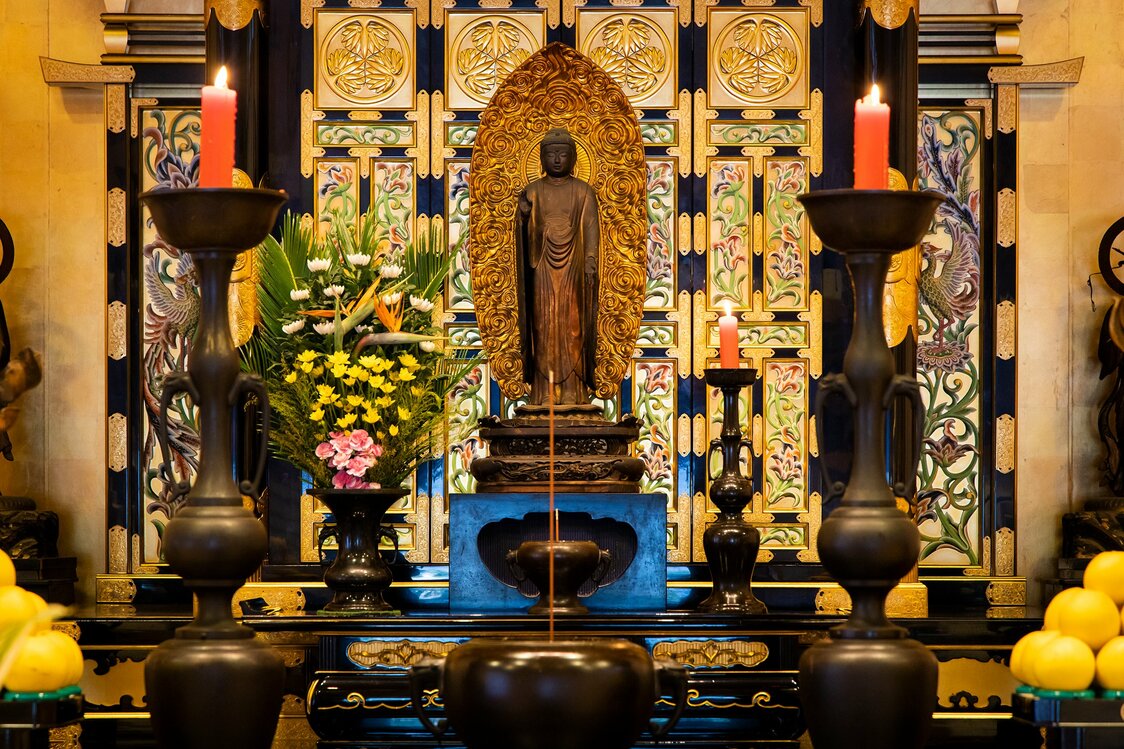
The black image of Amida Buddha is displayed to the public three times a year, on the fifteenth of January, May, and September.
-
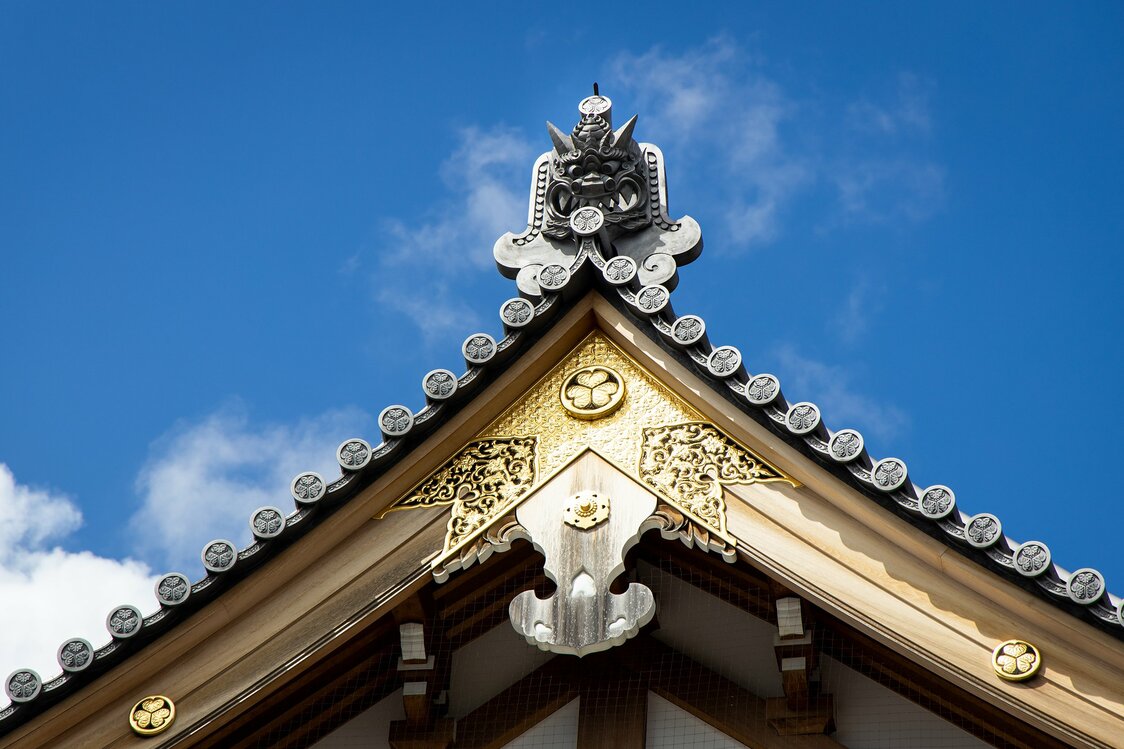
The Tokugawa family crest with its iconic three hollyhock leaves is visible under the ogre-faced onigawara tiles on the roof of the Ankokuden.
-
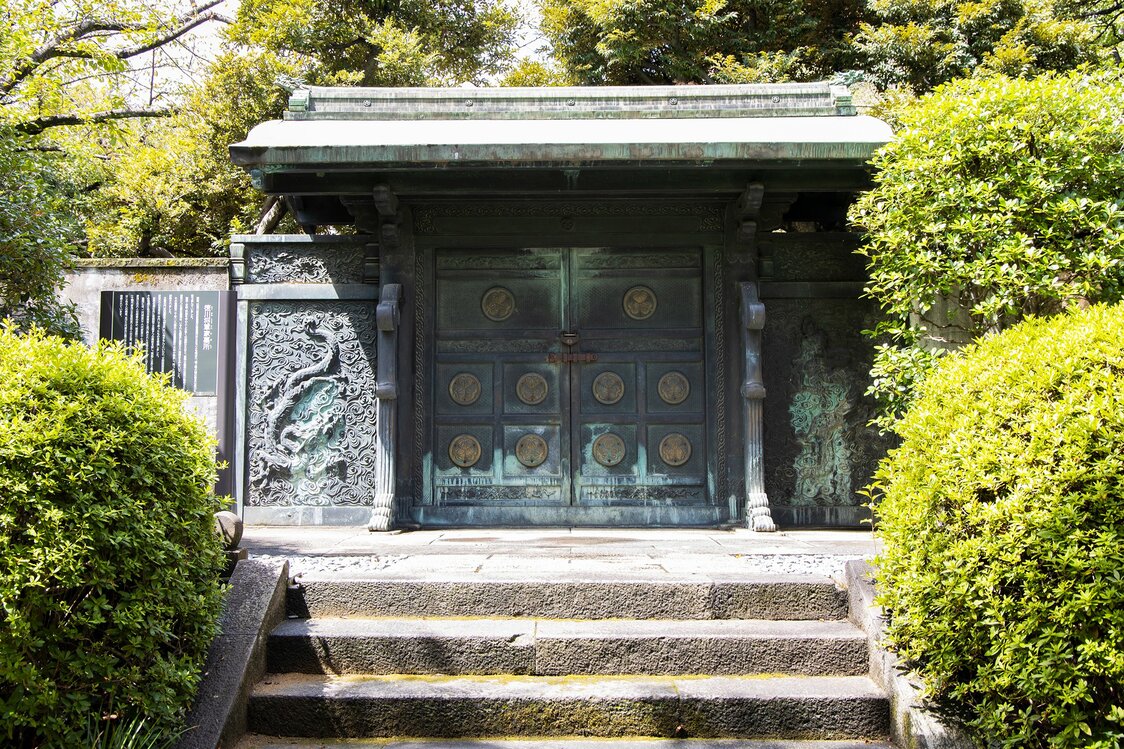
The Inukimon, the bronze gate of the mausoleum of the Tokugawa leaders, was originally part of the tomb of sixth shōgun Ienobu.
-

The entrance to the Yuya Shrine.
-
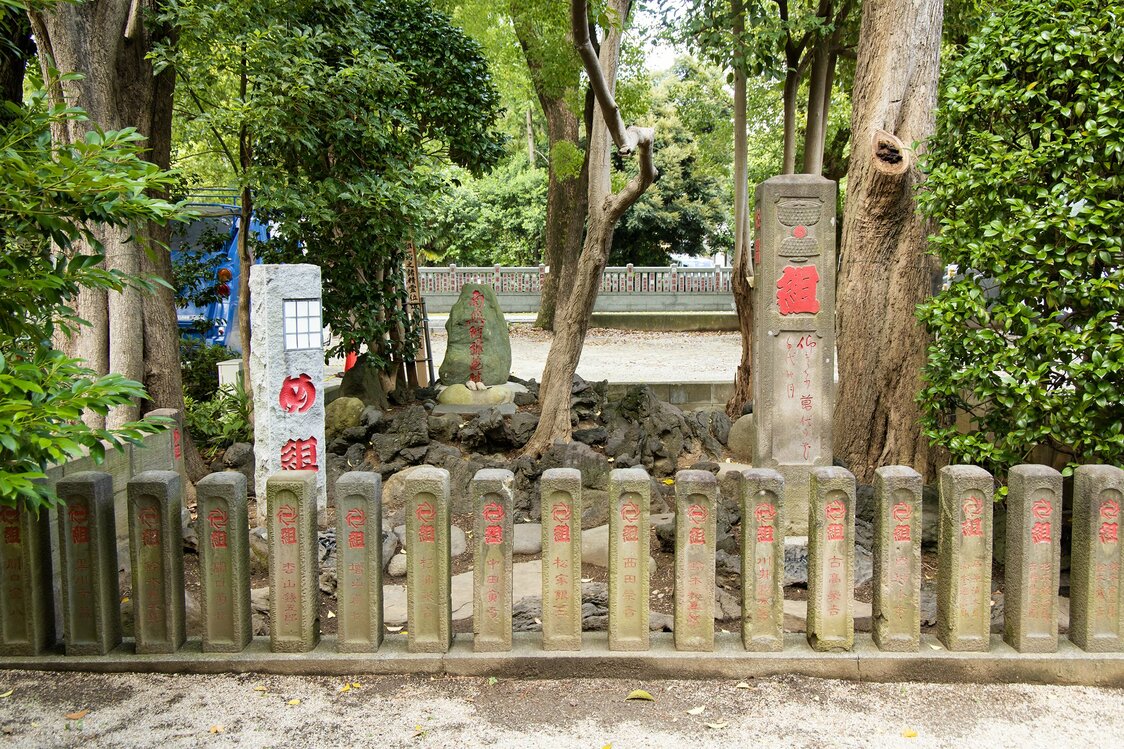
The stone monument to Edo’s megumi fire brigade was dedicated in 1716.
-
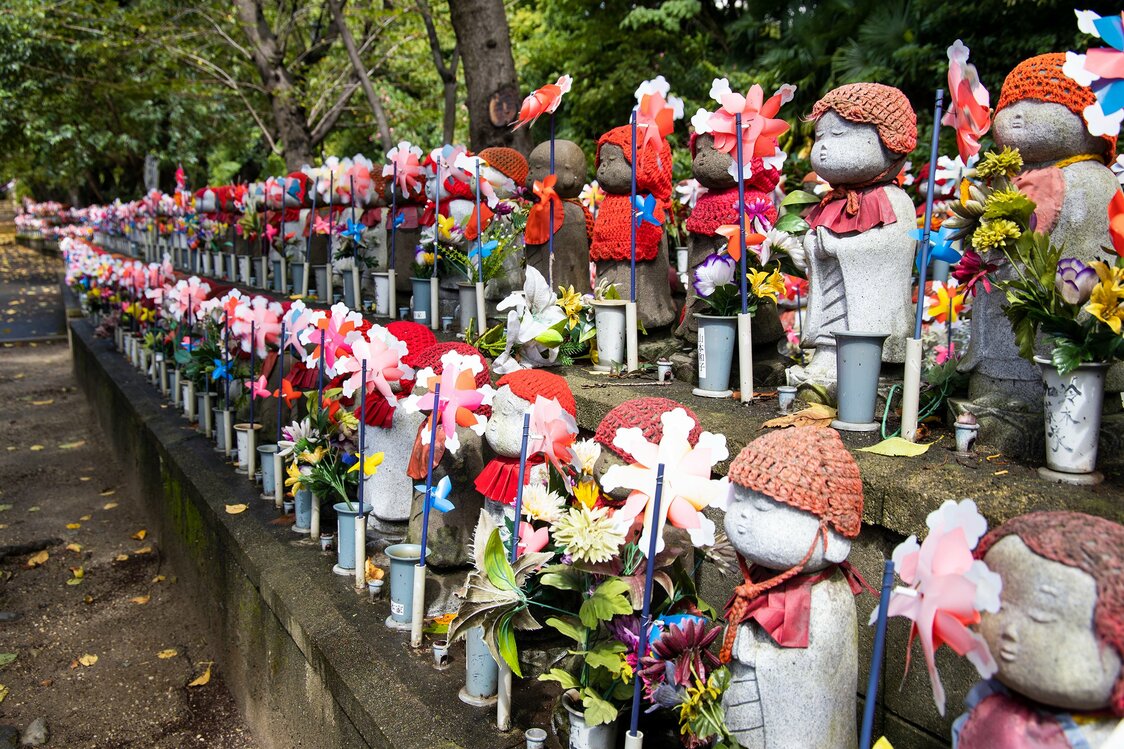
Pinwheels and offerings of flowers and toys decorate the rows of Jizō statues.
-

The lobby of the Treasure Gallery displays works by calligrapher Yanagida Taiun and artist Shinoda Tōkō.
-
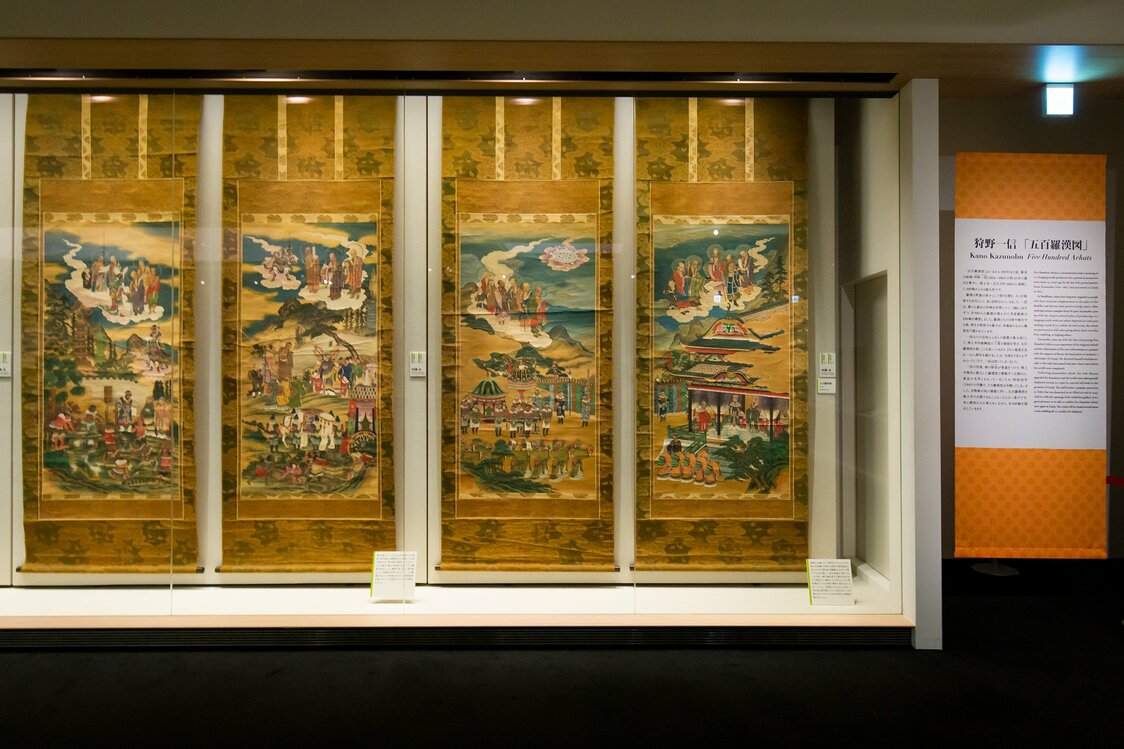
Works from a set of 100 hanging scrolls by Edo-period artist Kanō Kazunobu depicting 500 disciples of Buddha.
-
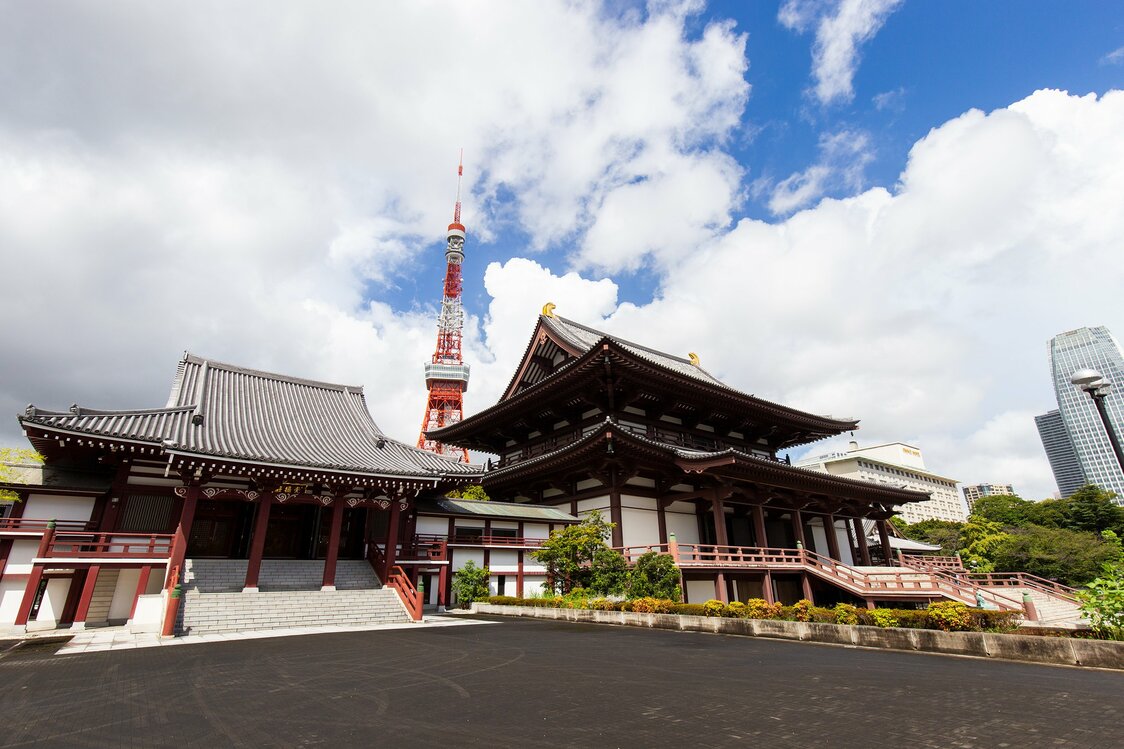
The Kōshōden to the left of the Daiden is where prospective priests come to study.
-
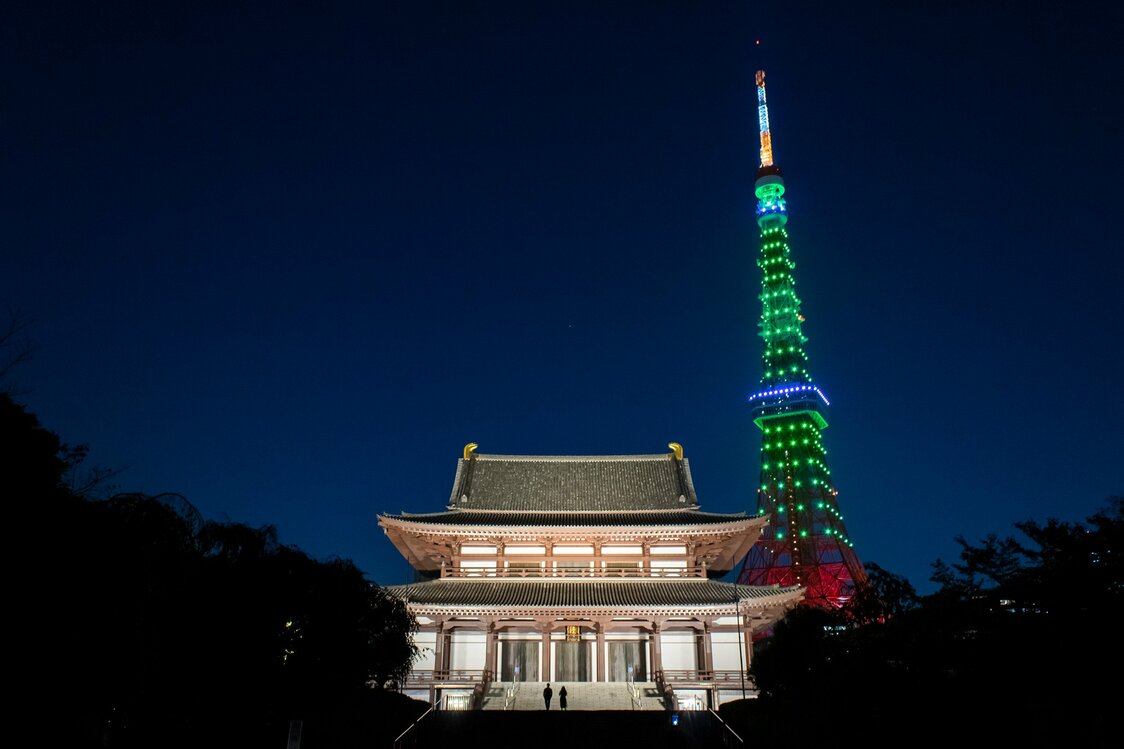
Zōjōji’s Daiden and Tokyo Tower illuminated at night.


 Read in other languages