-
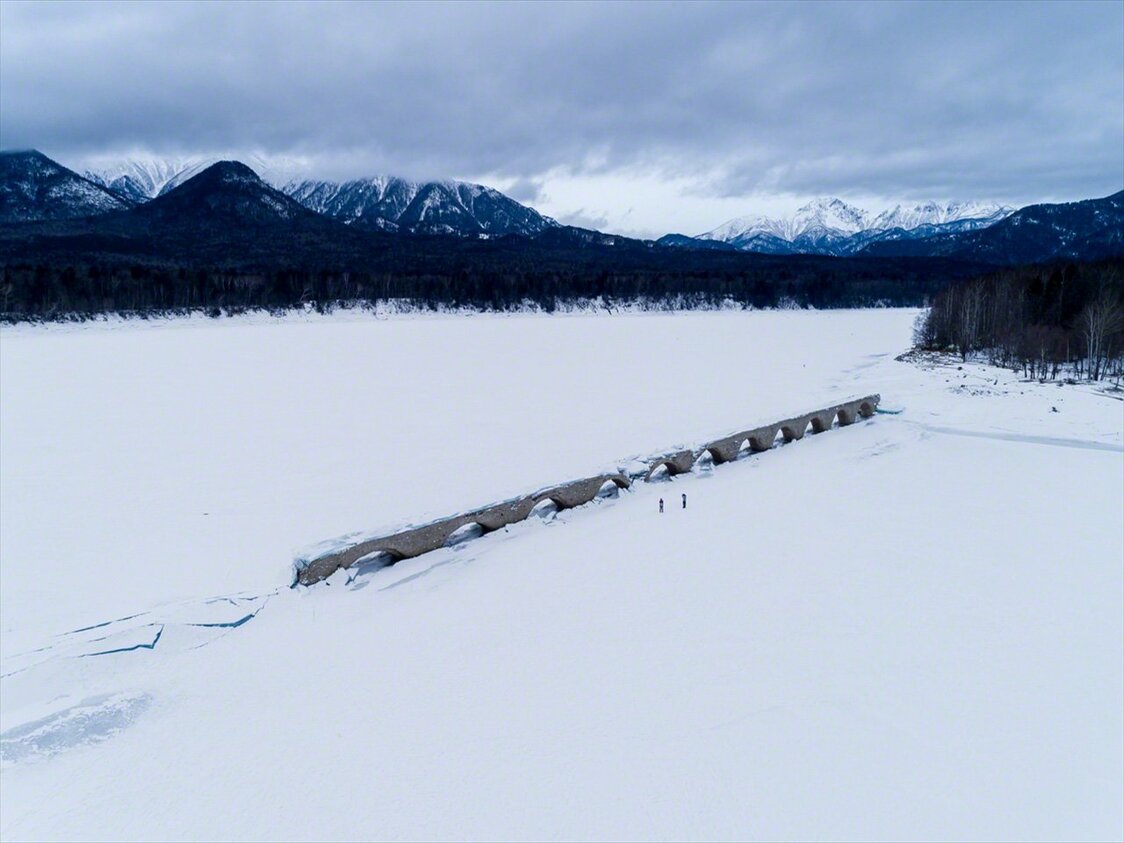
The waters of Lake Nukabira start to drop in January, and the bridge becomes visible on the frozen surface. The mountains of the Daisetsuzan National Park are seen in the background.
-
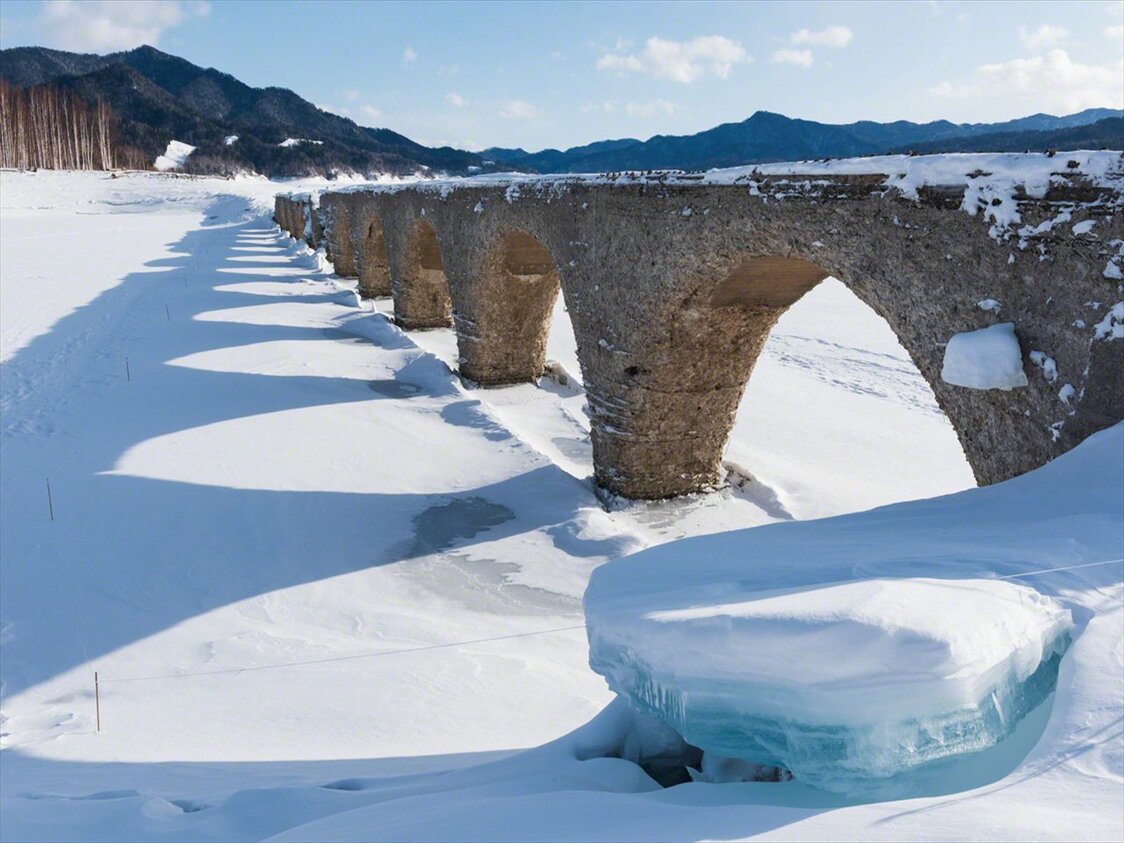
In February, the bridge stands out amid the frozen landscape, with thick ice forming on the lake as temperatures drop as low as minus 25 degrees Celsius.
-

In March, ice and snow cover Lake Nukabira. The Otofuke river is seen flowing on the right.
-
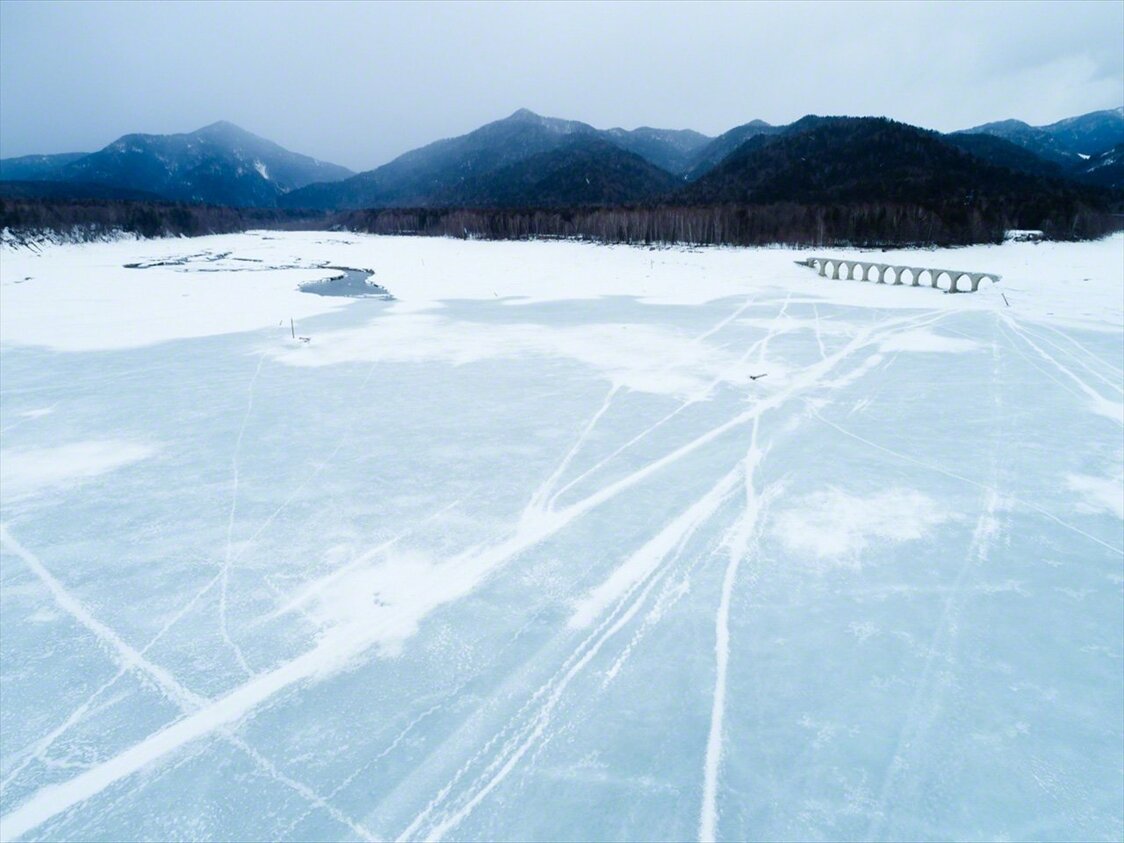
The ice on the lake grows fragile in March, making it dangerous to venture onto the surface.
-
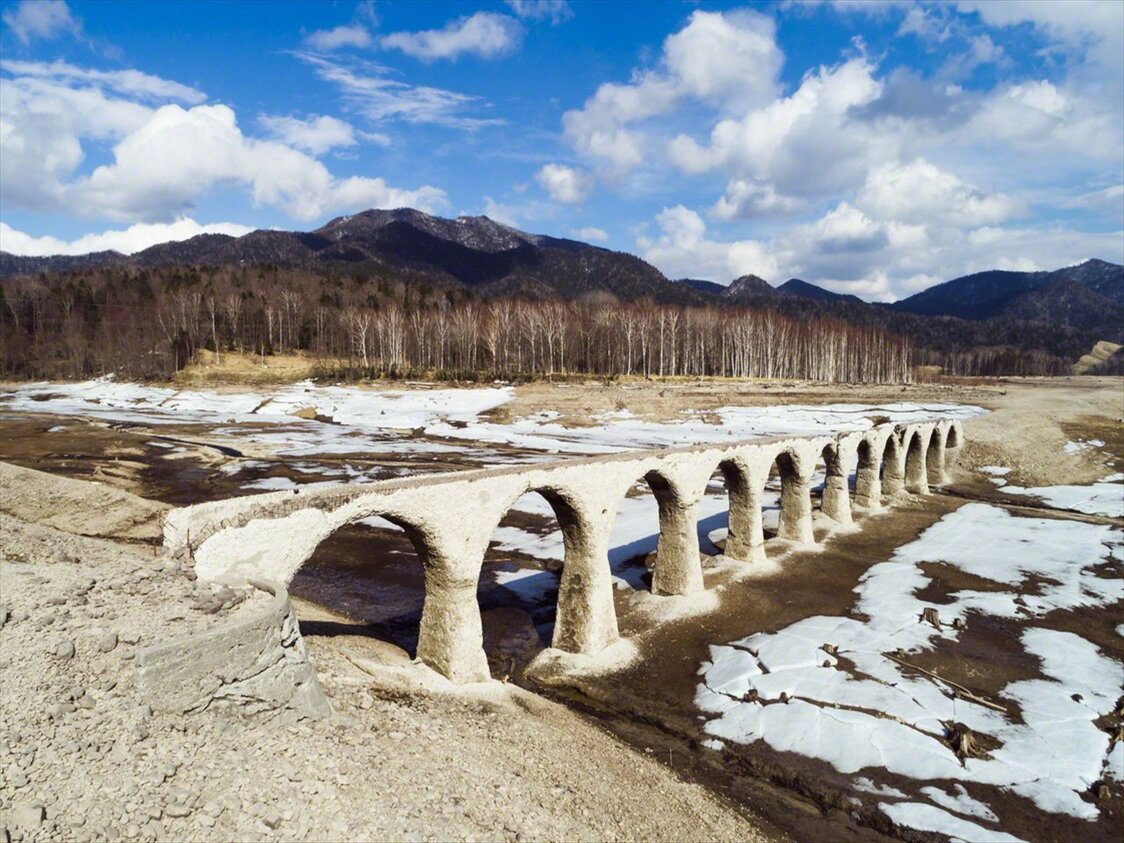
In April, the ice is gone, but snow lingers on the ground.
-
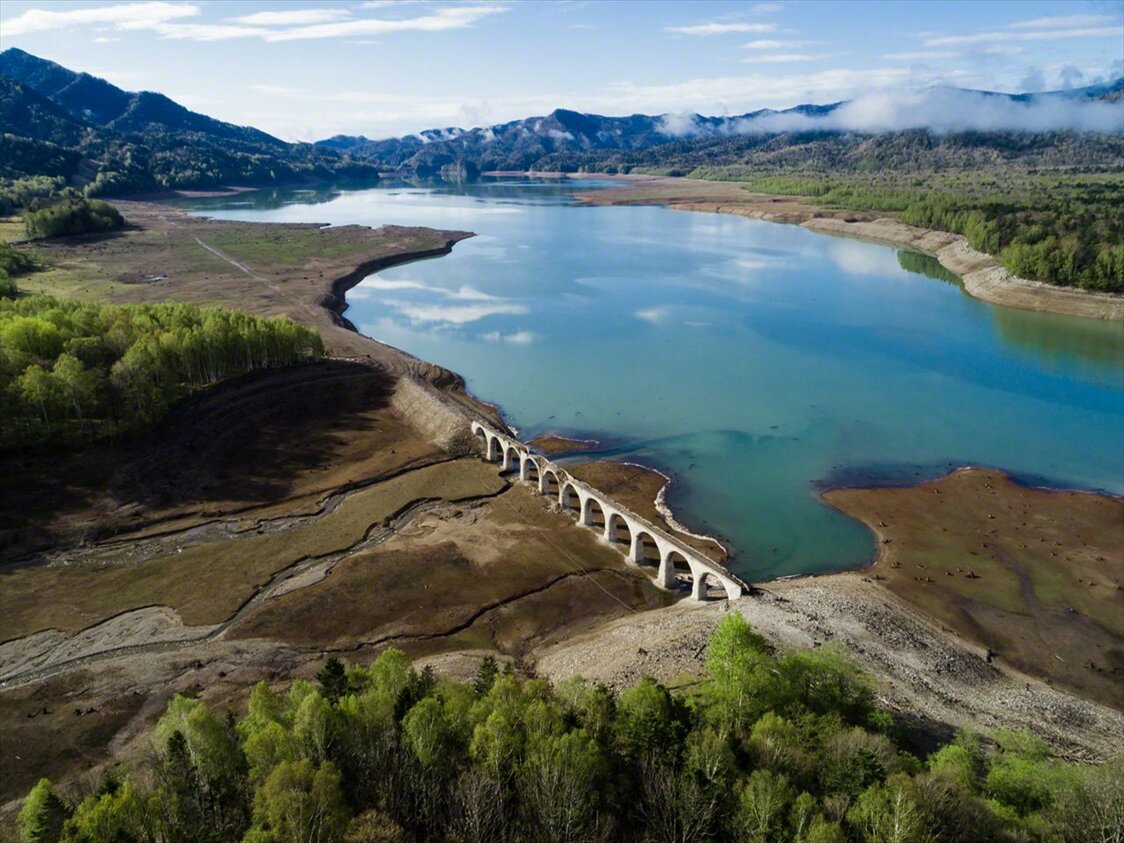
In May, the surrounding forest shimmers with new foliage. The run-off from snow flows into the lake, bringing the water level gradually closer to the bridge.
-
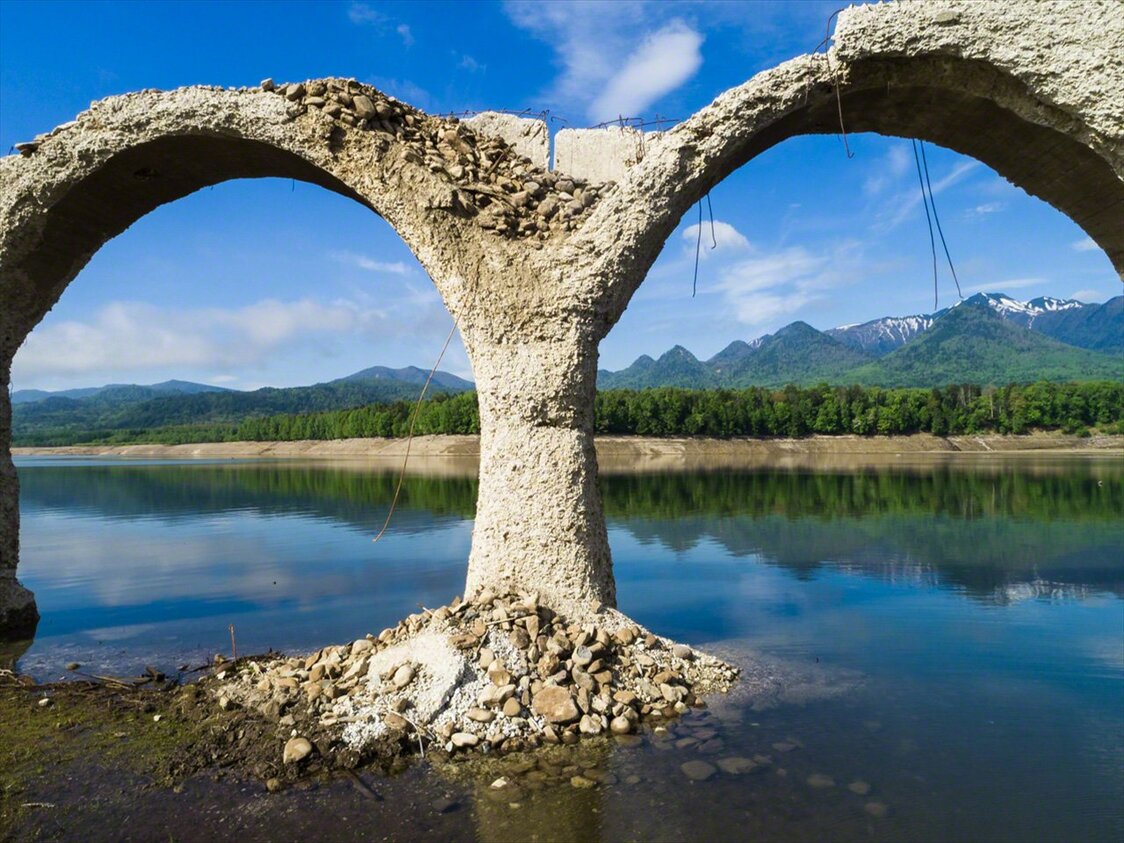
In June, water starts to cover rubble along a crumbling section of the bridge.
-
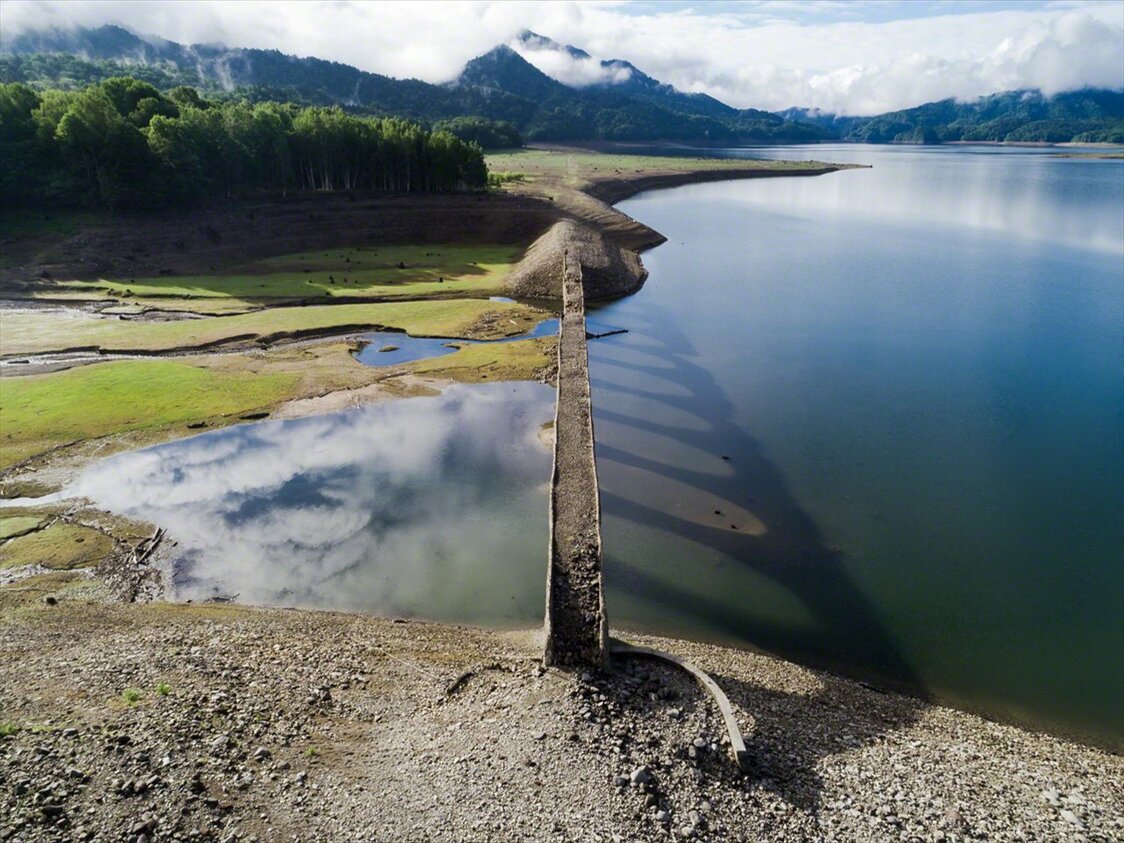
Come June, it is almost possible to imagine the trains that once rumbled across the bridge.
-
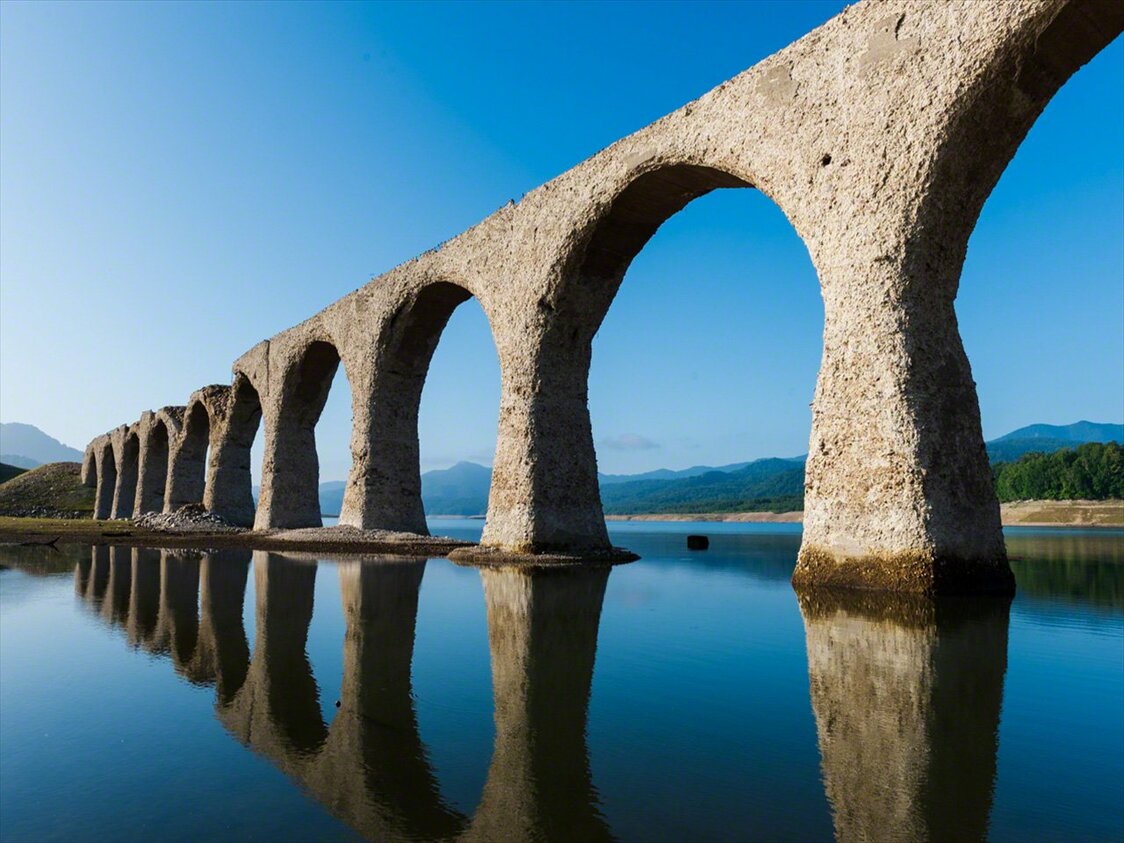
The arches reflect in the water on a windless July morning, lending the span its other nickname, the “spectacle bridge.”
-
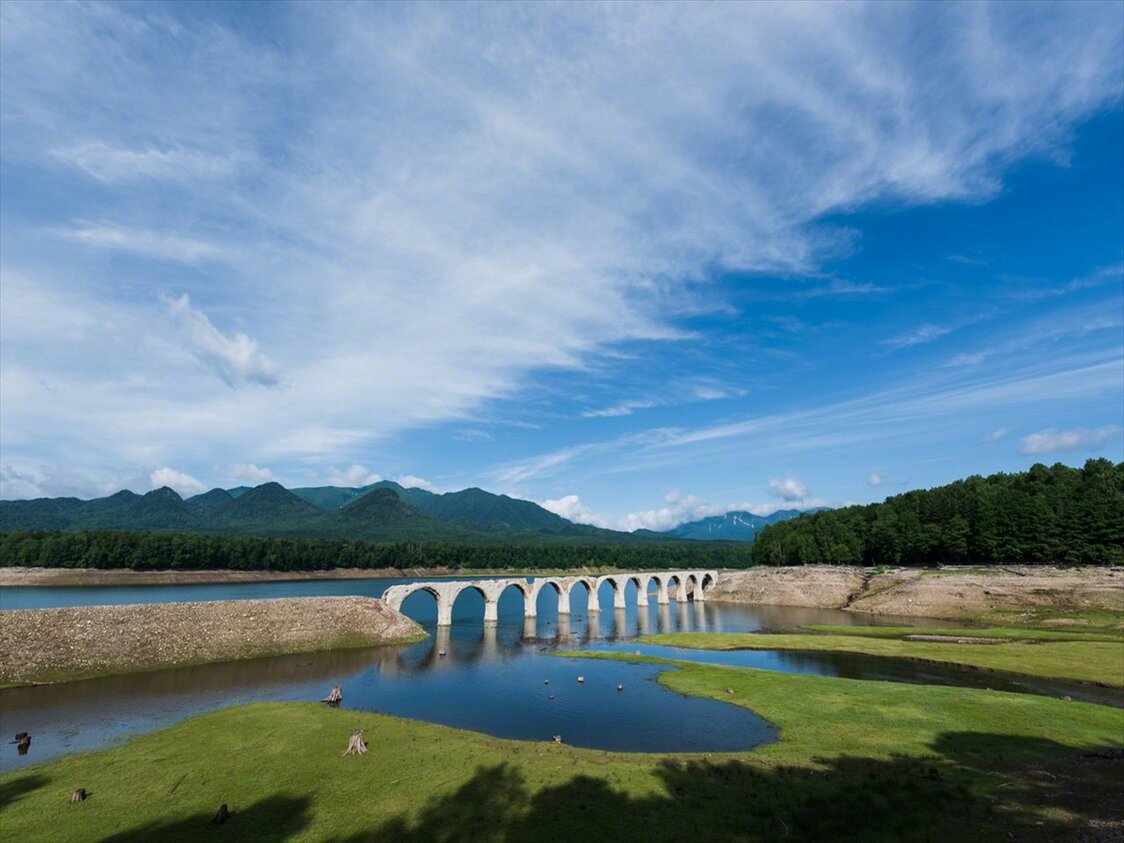
The bridge blends in with the surrounding nature under Hokkaidō’s limpid July skies.
-
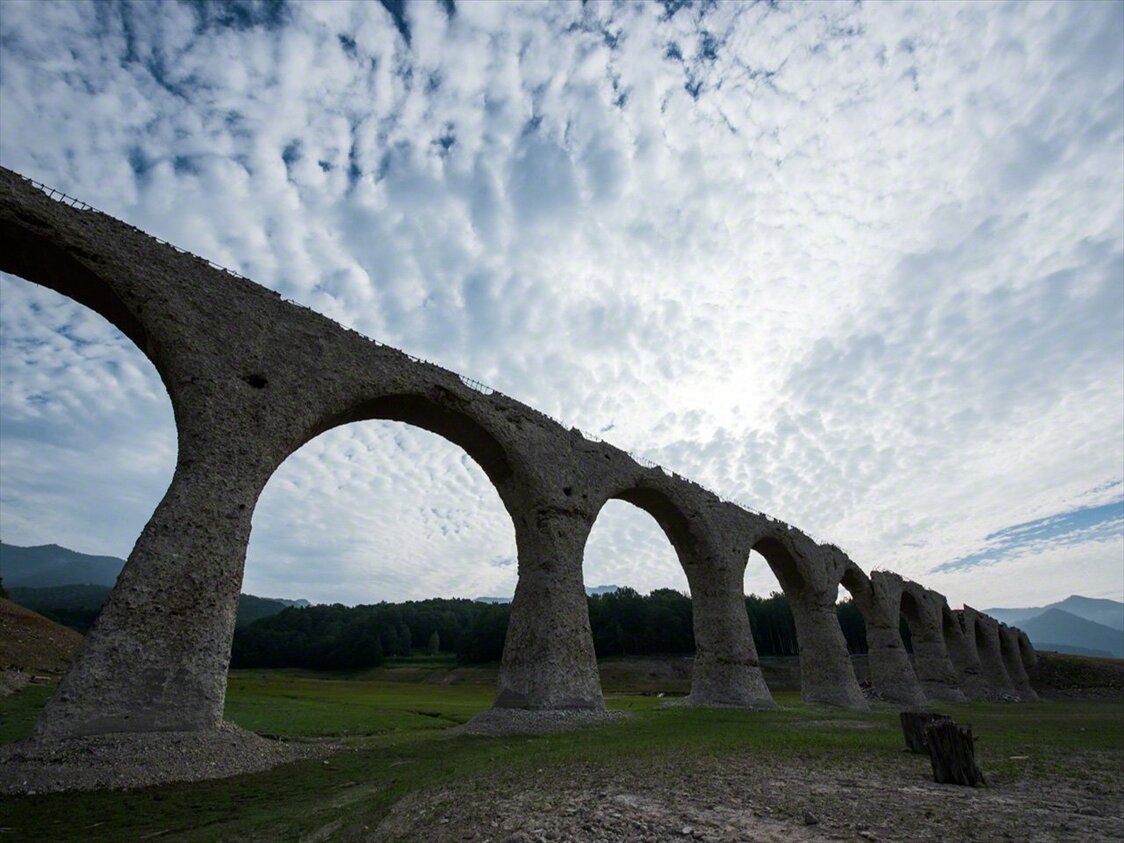
The air in Hokkaidō starts to get cooler in the second half of August.
-
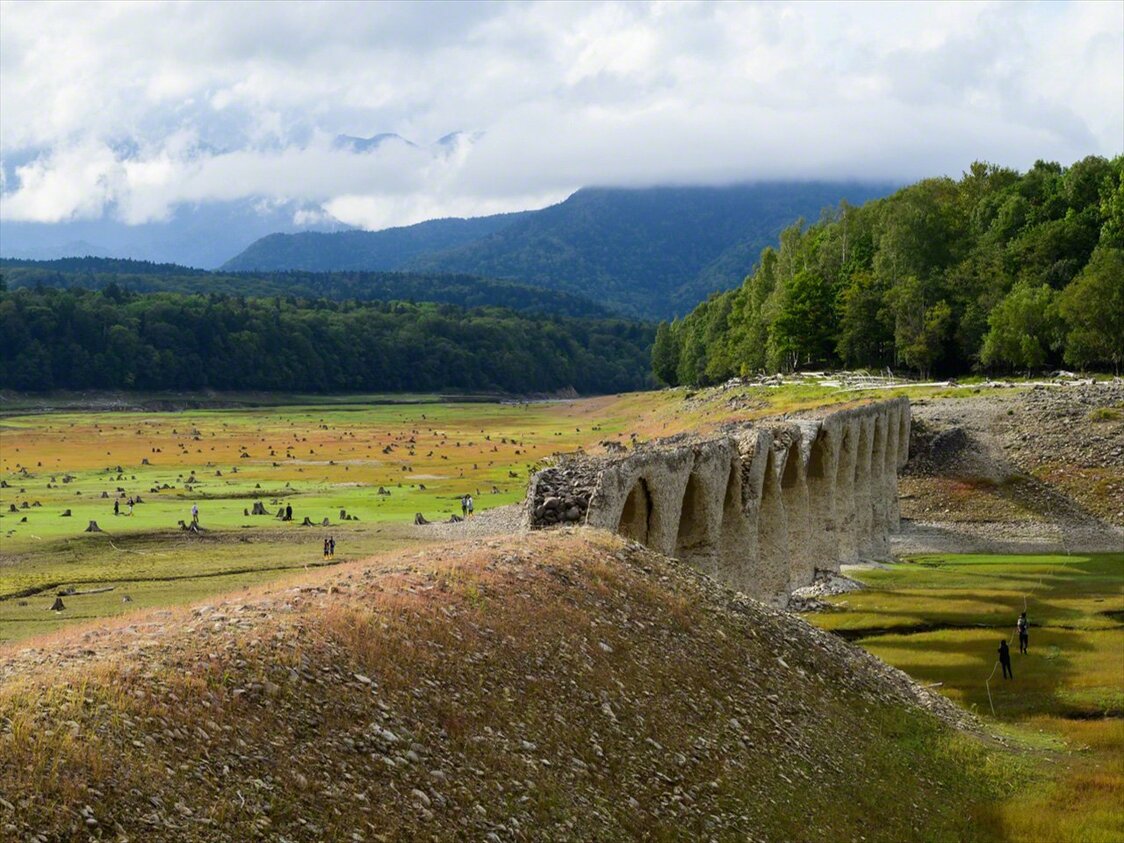
A dry lake bed is a very unusual sight, even in September.
-
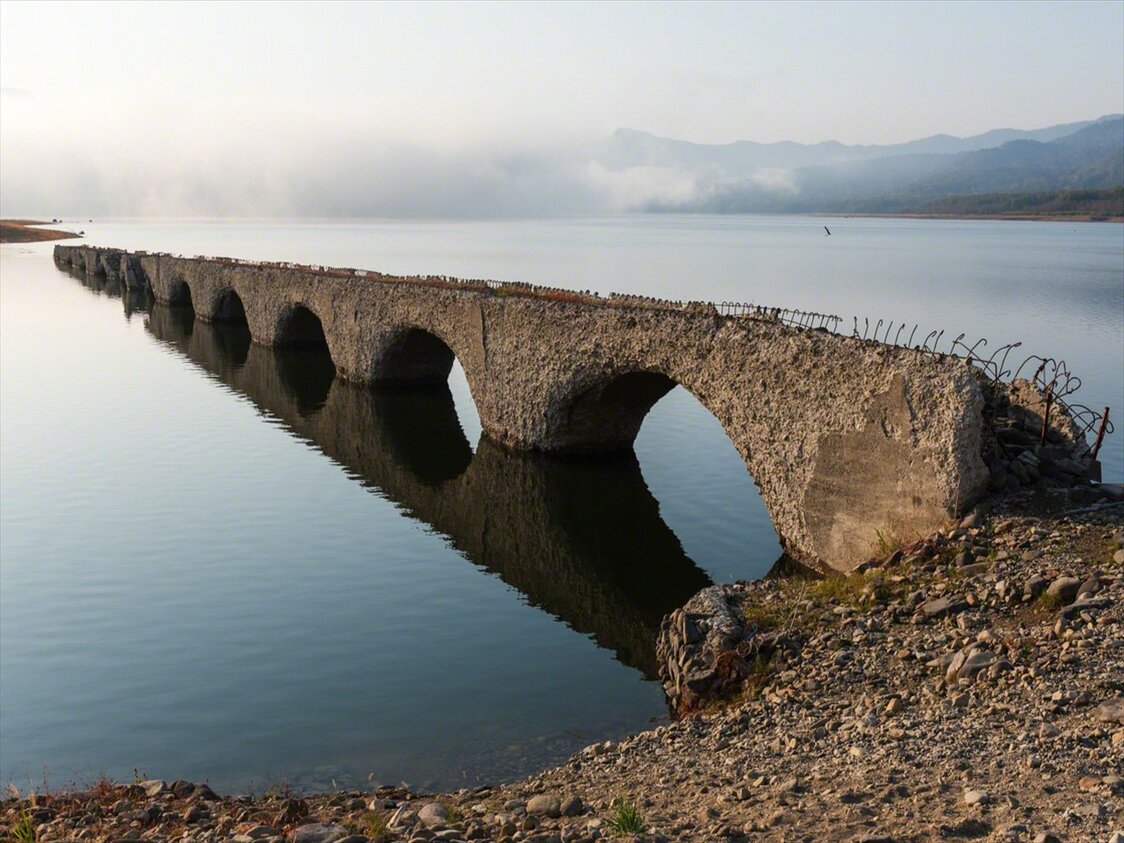
As the level of the lake rises with the approach of winter, about 70% of the bridge is submerged by October.
-
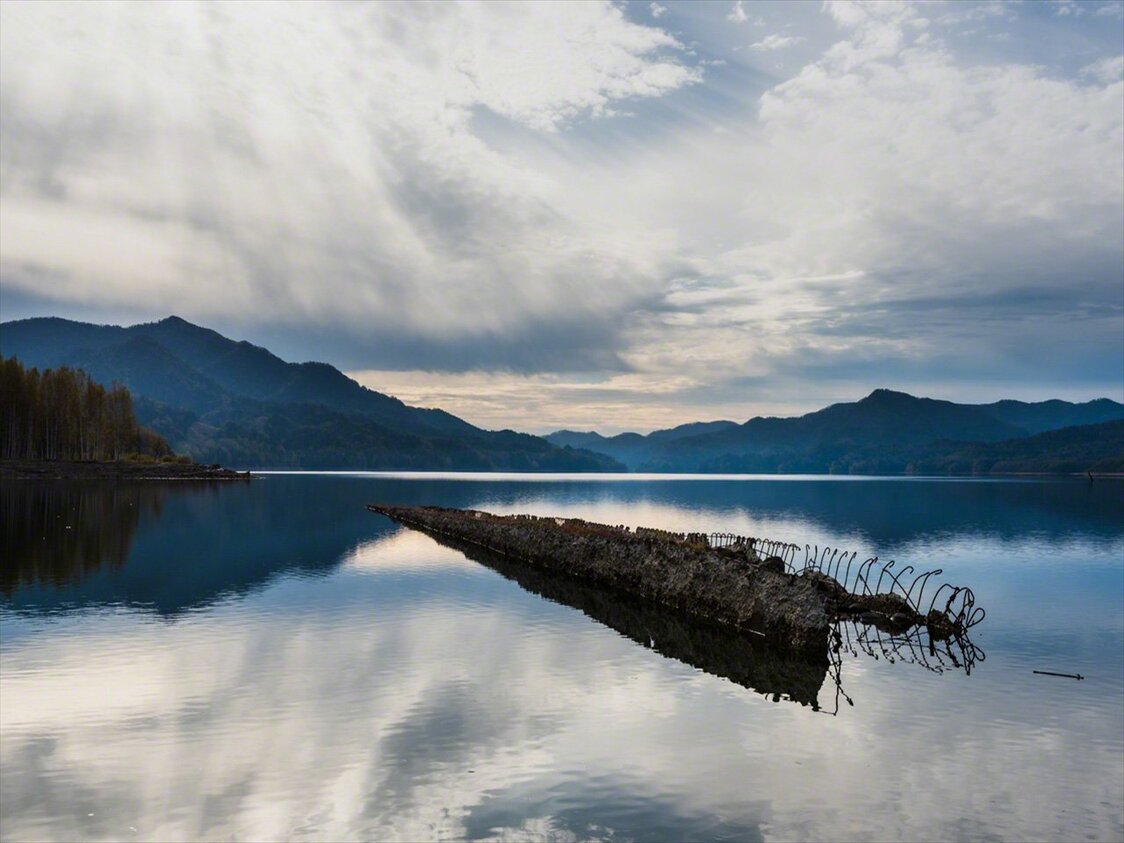
In October, as autumn advances, the bridge becomes almost completely submerged.
-

In December, the bridge gradually begins to reappear through the thin ice as water levels drop.
-
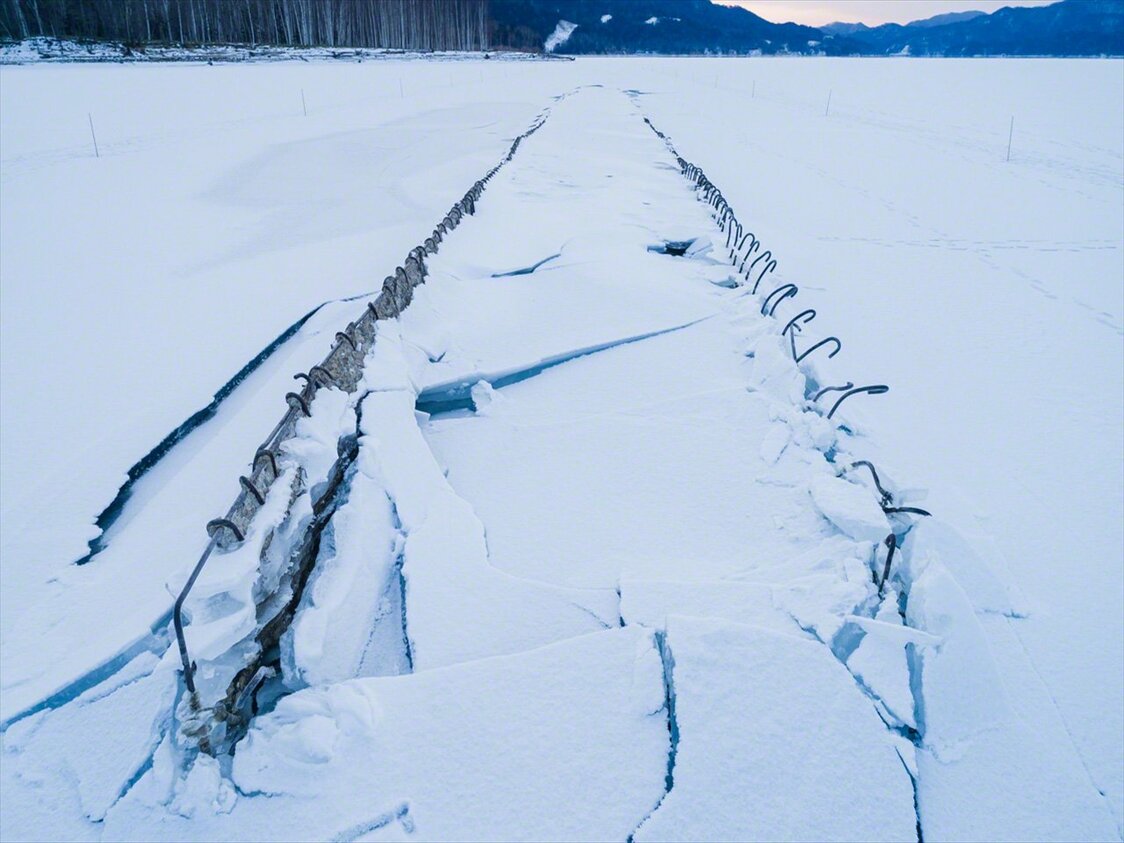
The bridge pushes through the thick December ice.


 Read in other languages