-
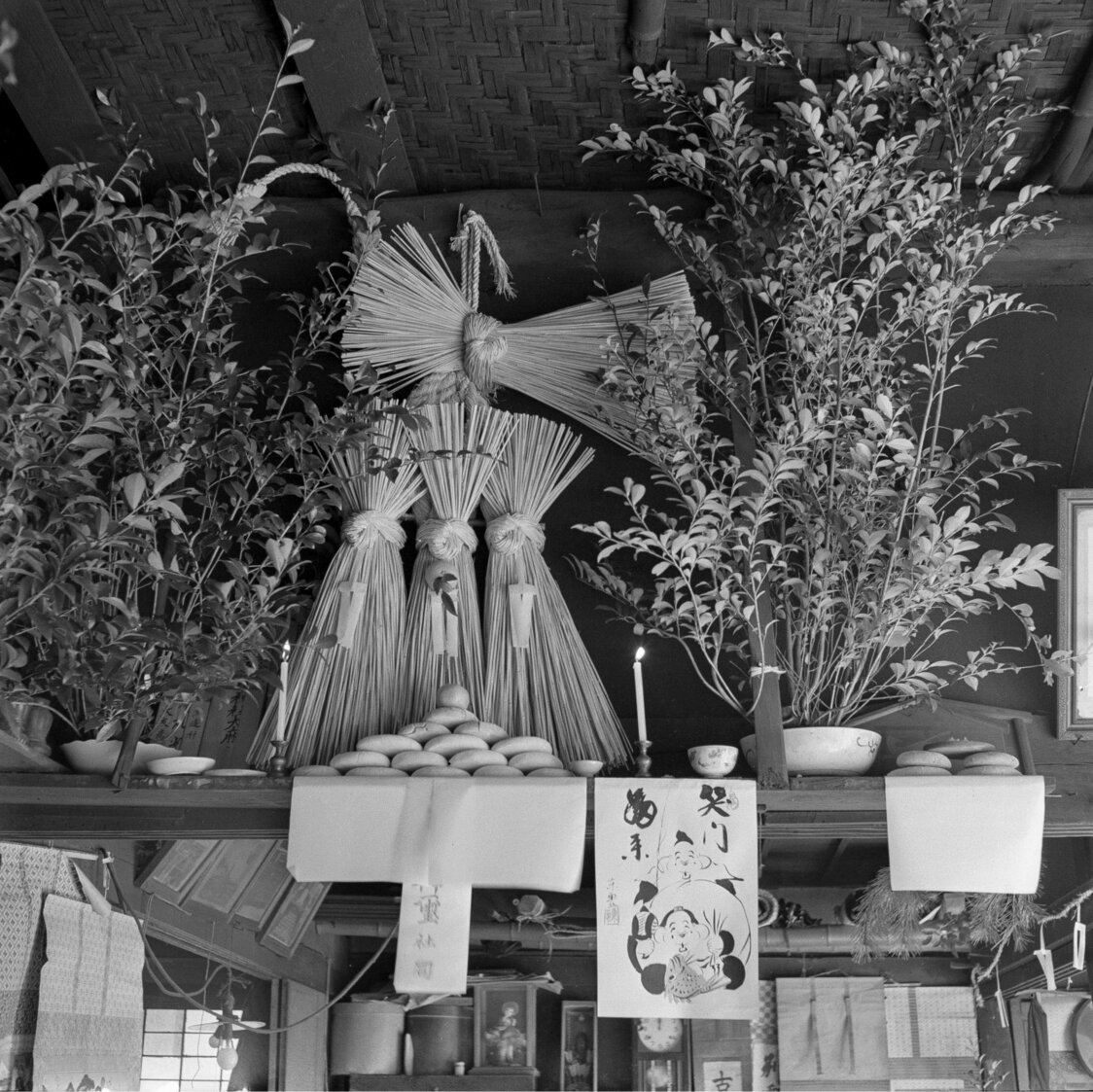
The altar for worshipping Shōgatsu-sama on the first day of the new year. (© Haga Hideo)
-
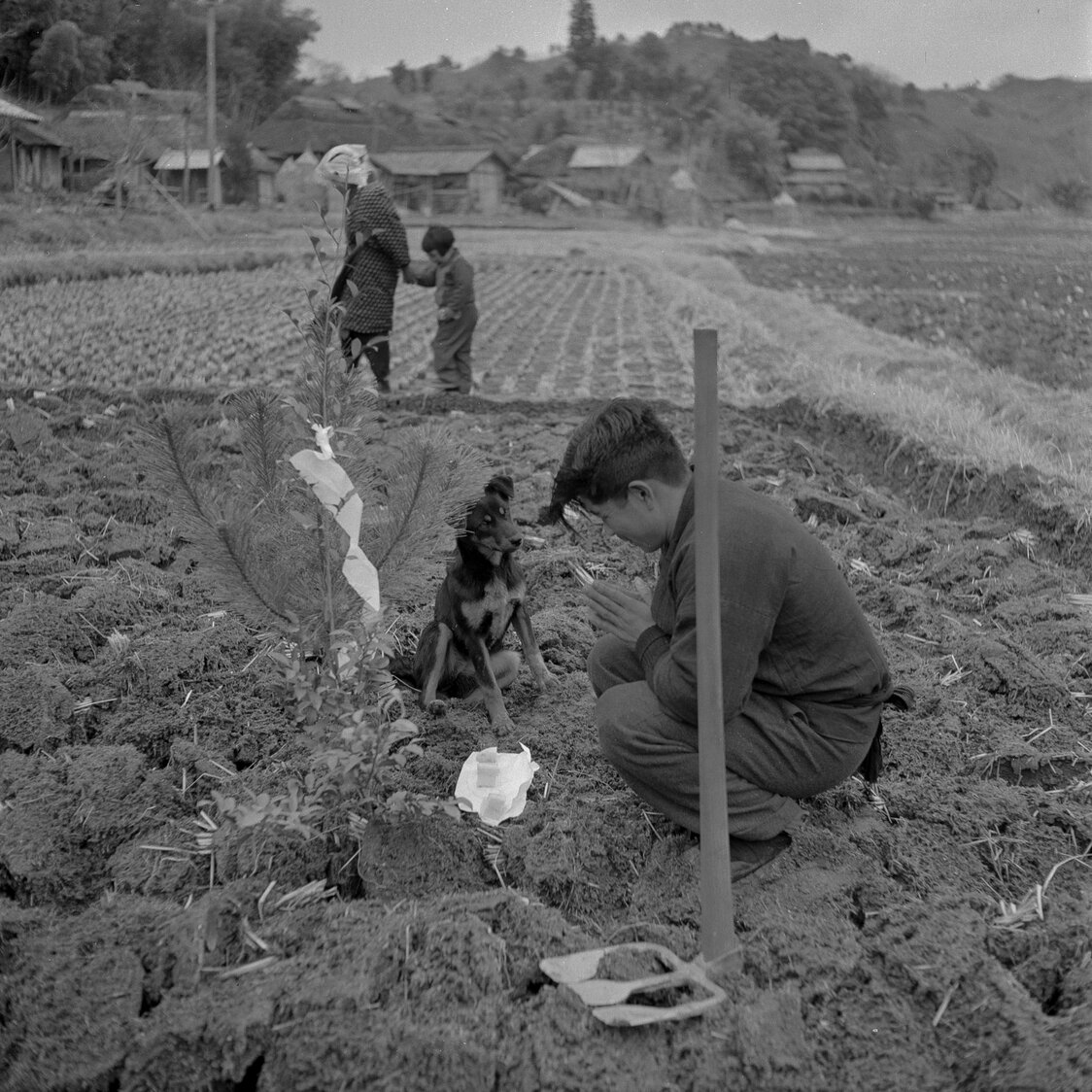
A ceremony to pray for a good harvest, performed after a paddy dried out during winter has been worked with a hoe in preparation for planting. (© Haga Hideo)
-
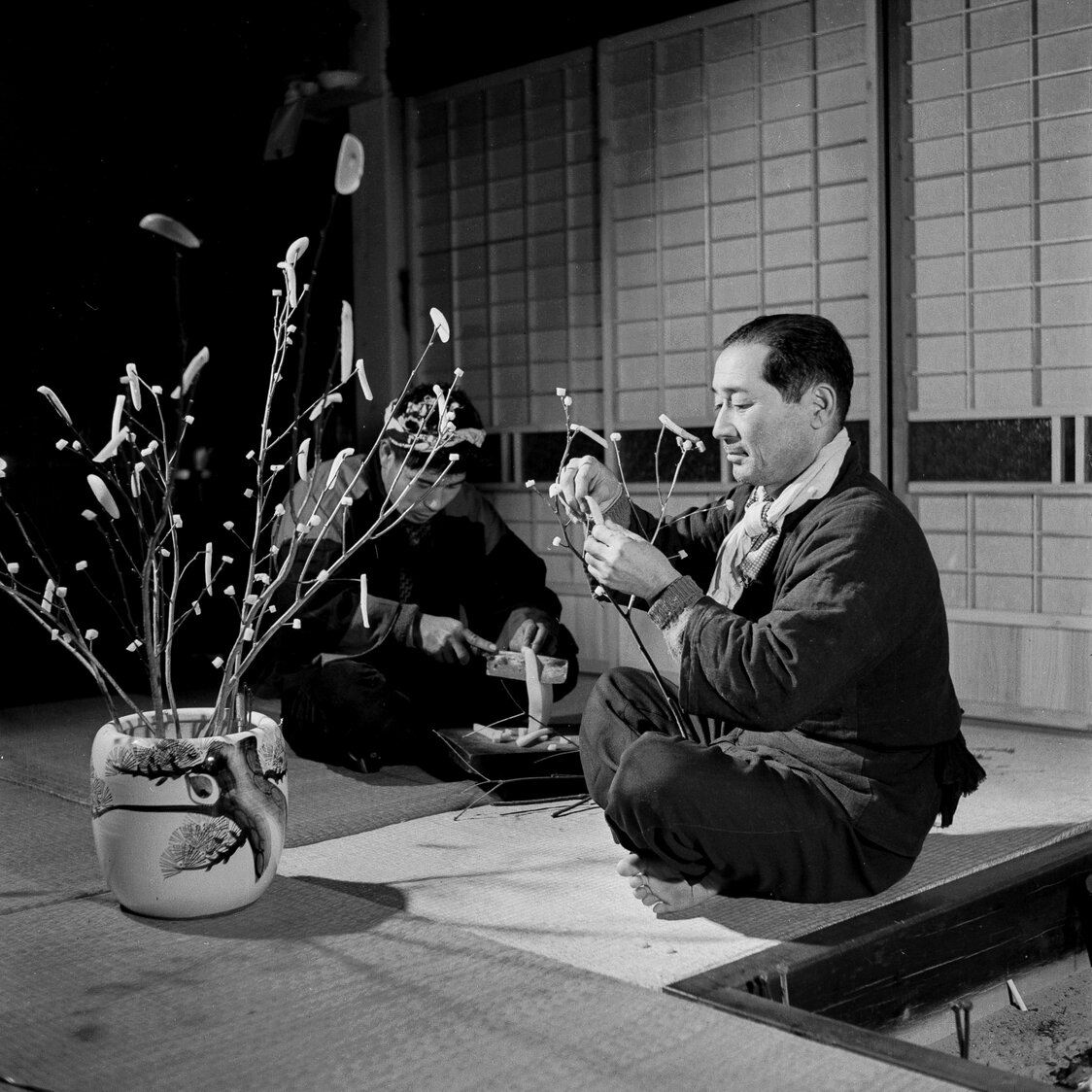
Preparing mochibana, bits of mochi pounded rice threaded onto branches, as a stand-in for Shōgatsu-sama, on January 13. (© Haga Hideo)
-
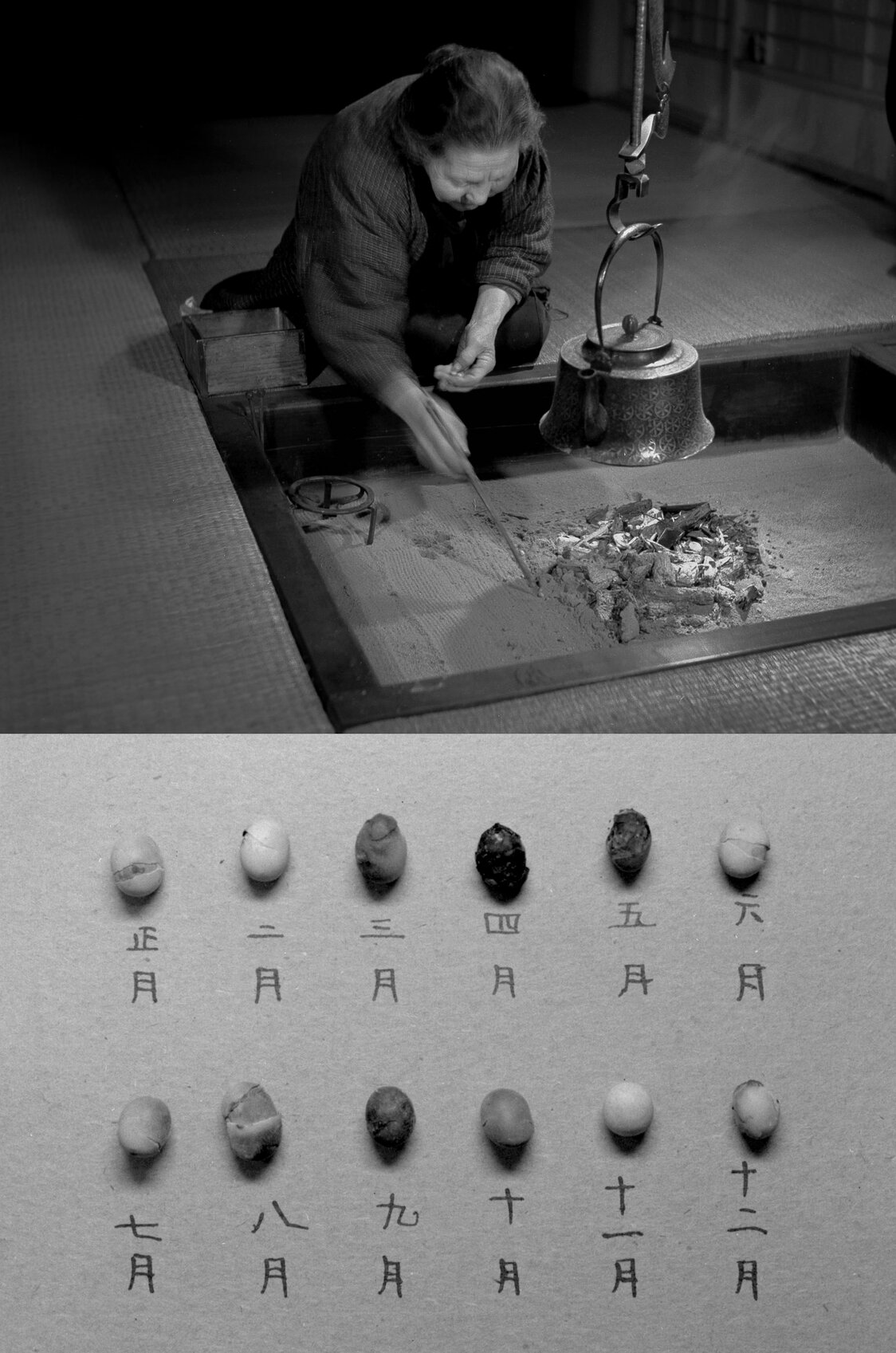
A divination ritual conducted on the evening of January 14. Twelve soybeans are roasted in the irori sunken hearth and used to predict the weather for the coming year according to the degree of charring. (© Haga Hideo)
-
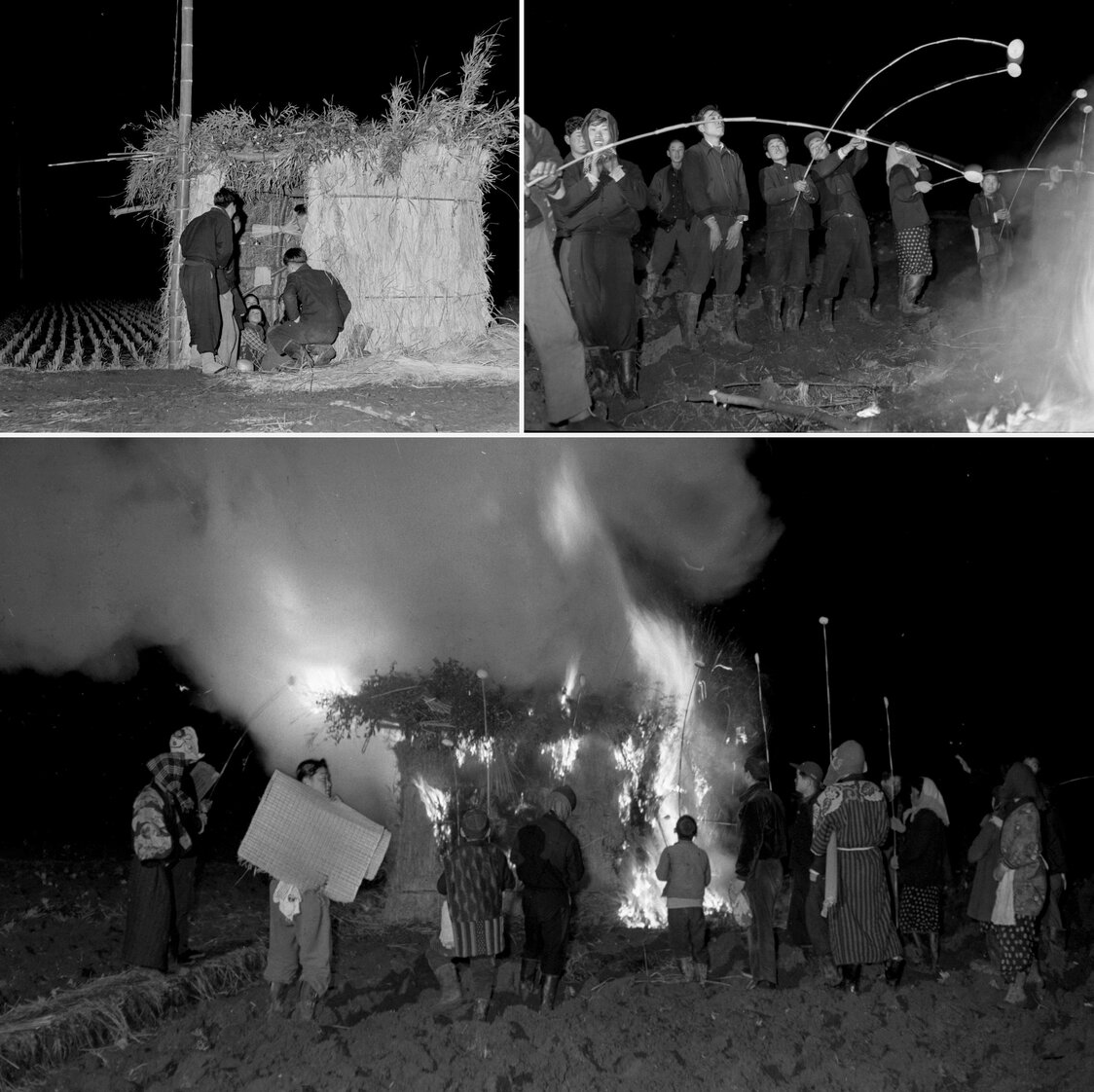
Torigoya is conducted even today on koshōgatsu, January 15. Bamboo, straw, and New Year decorations are burned to return Shōgatsu-sama to the heavens. (© Haga Hideo)
-
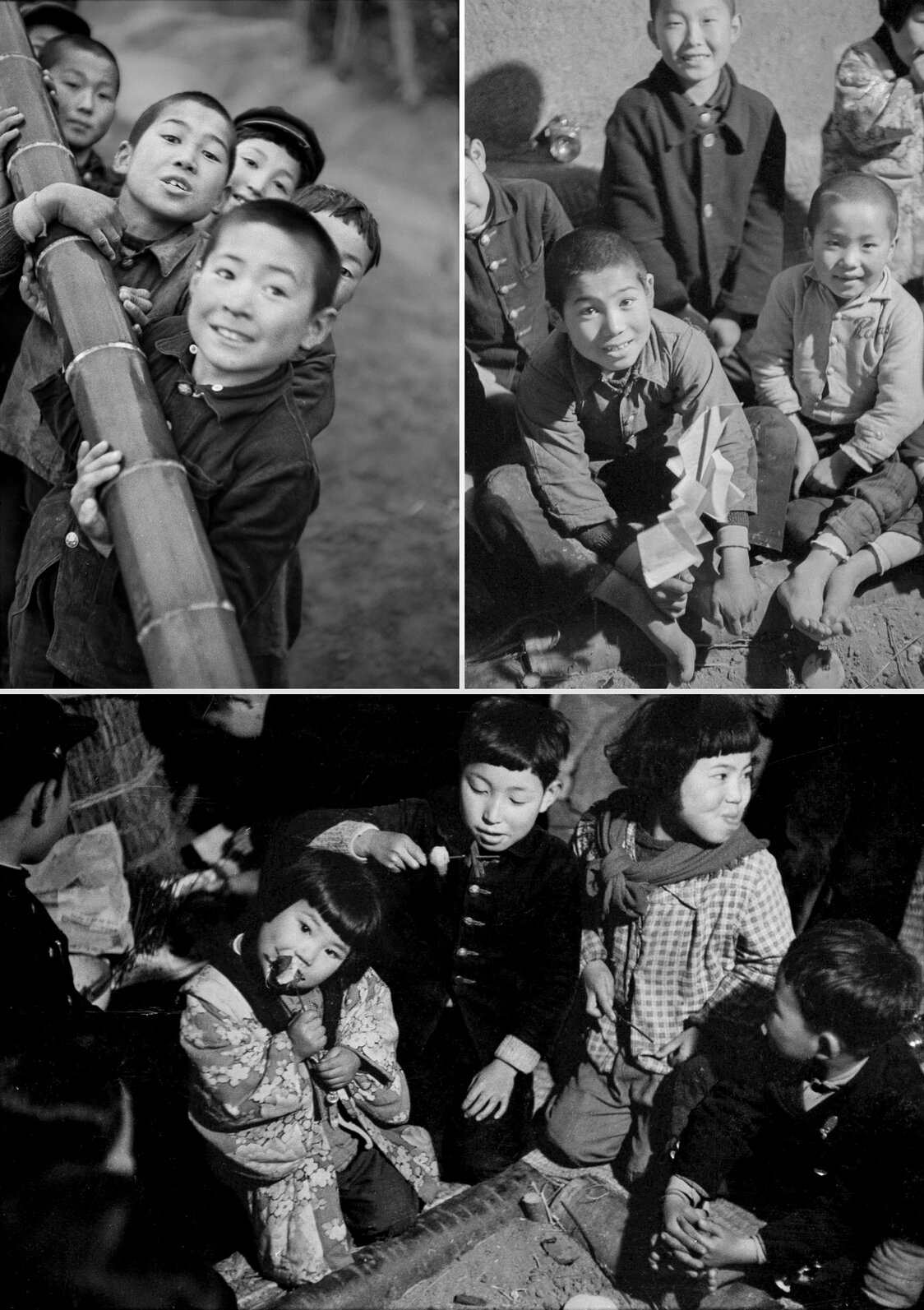
Warmed by hearty oden stew, children gather in a hut to sing a song to drive away birds, which eat the grain the fields, in the hope of an abundant harvest. (© Haga Hideo)
-
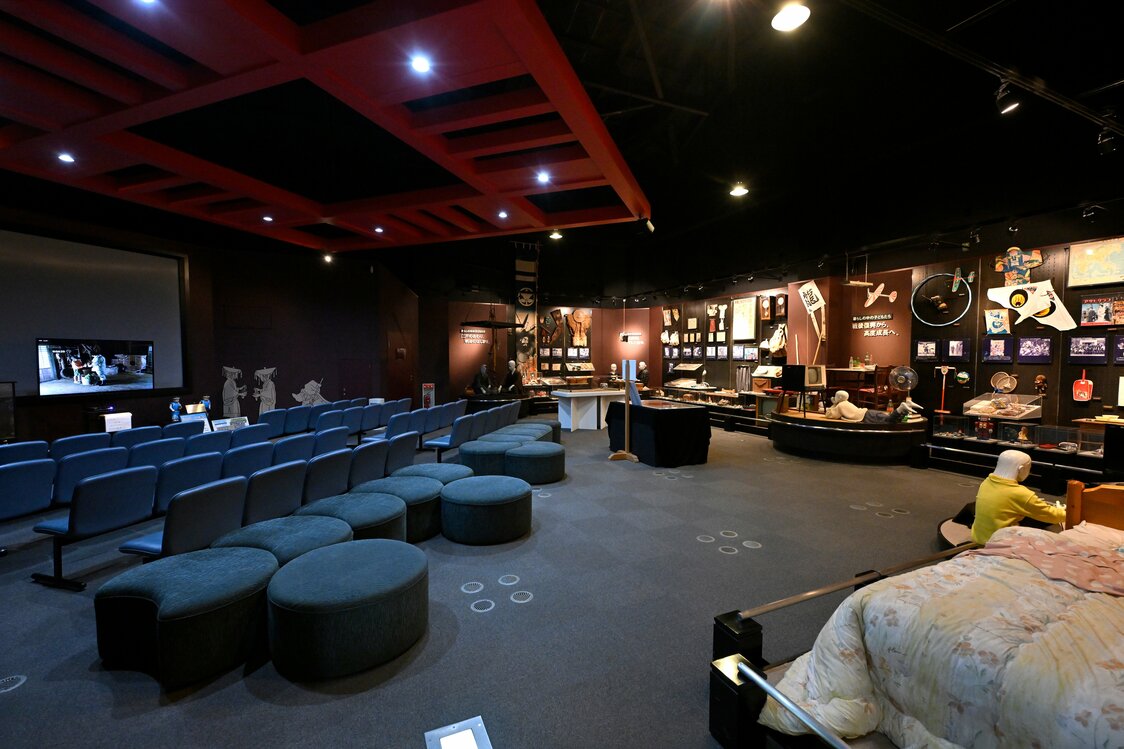
The permanent exhibit showcases farm life from the Edo period (1603–1868) to the present. (© Uzawa Akihiko)
-
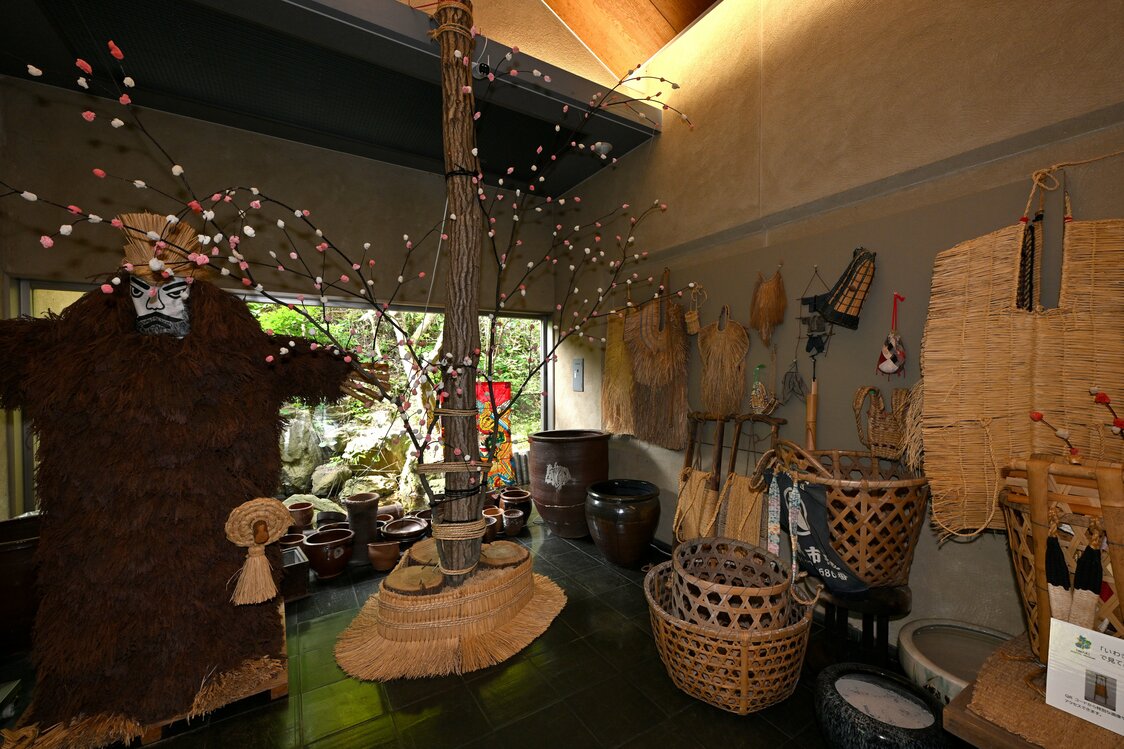
Farm tools and artifacts, including a life-sized figure (at left) created to protect the village from evil, have been collected from various parts of Iwaki. (© Uzawa Akihiko)
-
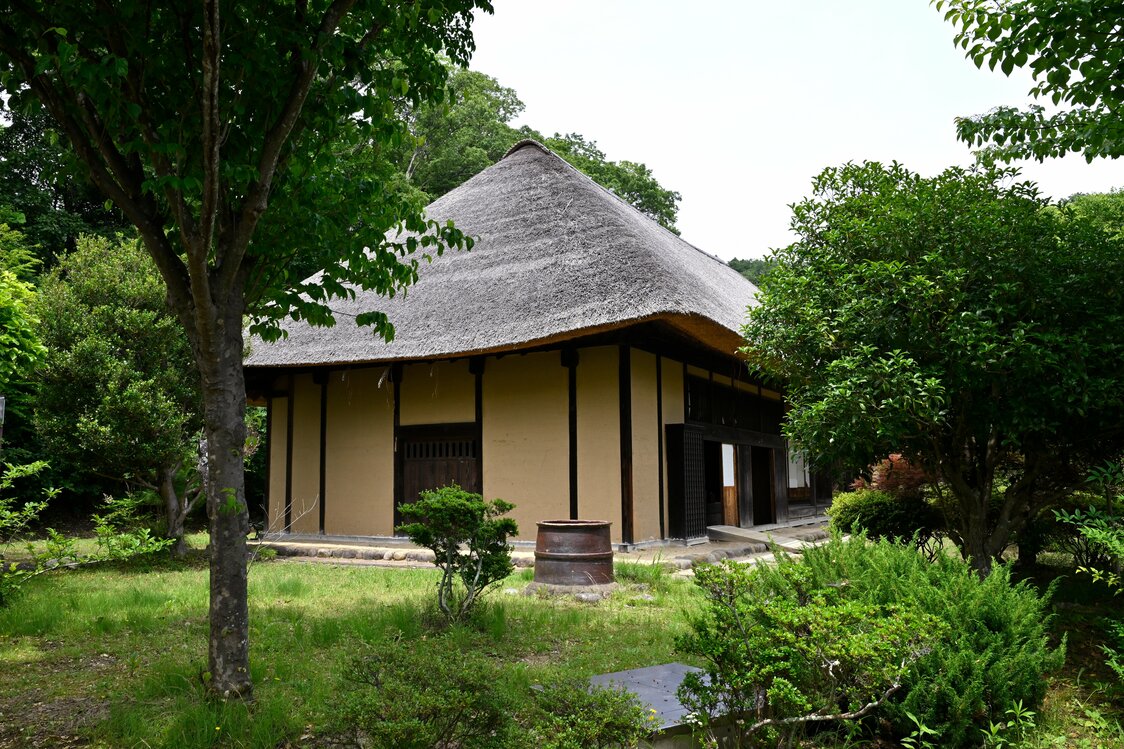
A traditional home from the latter half of the nineteenth century stands in the park. (© Uzawa Akihiko)
-
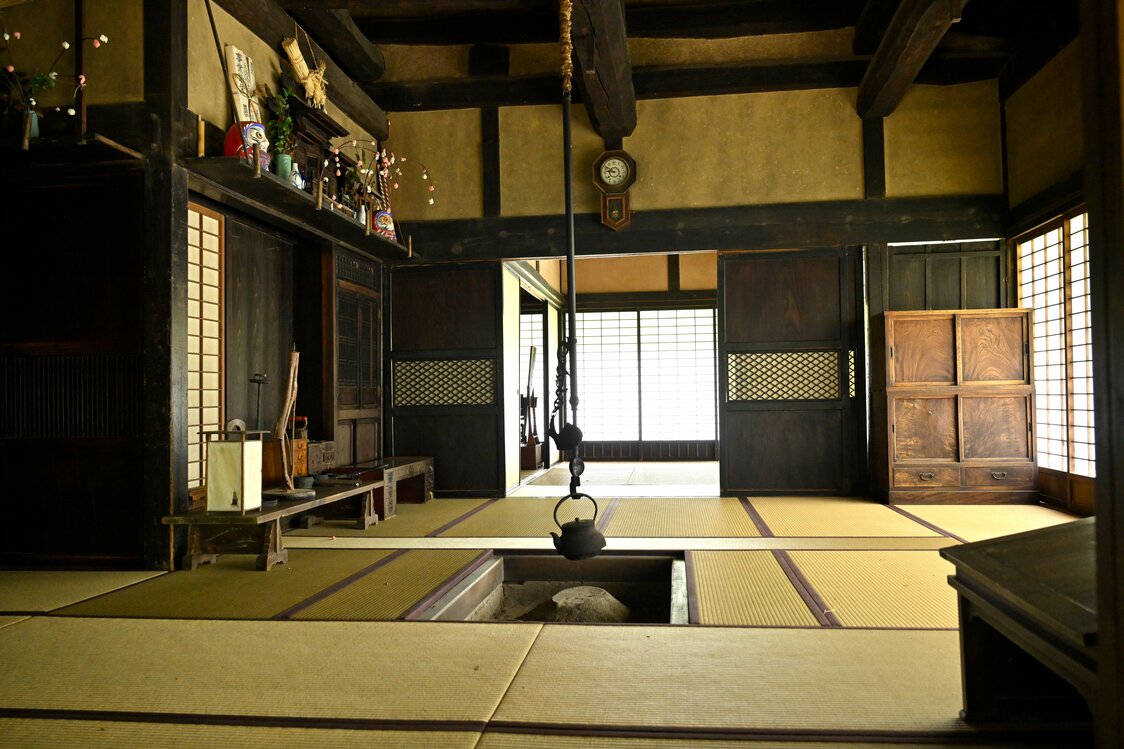
The interior is mostly untouched. (© Uzawa Akihiko)
-
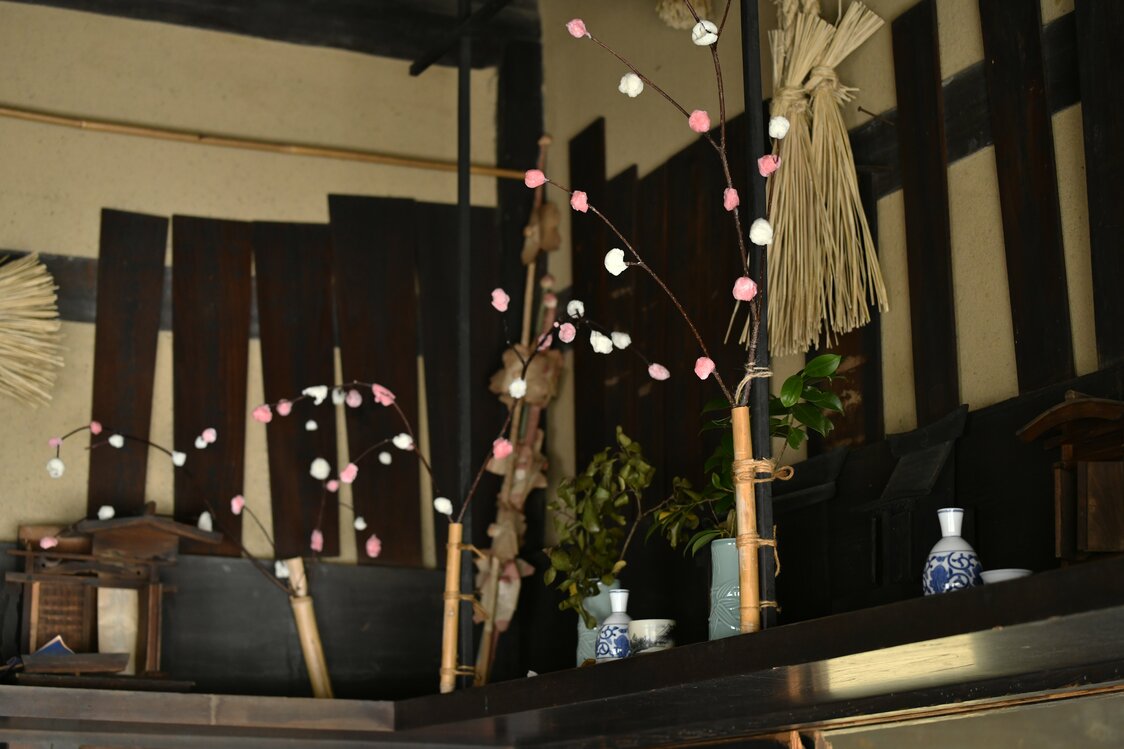
Mochibana prepared by children are displayed. (© Uzawa Akihiko)
-
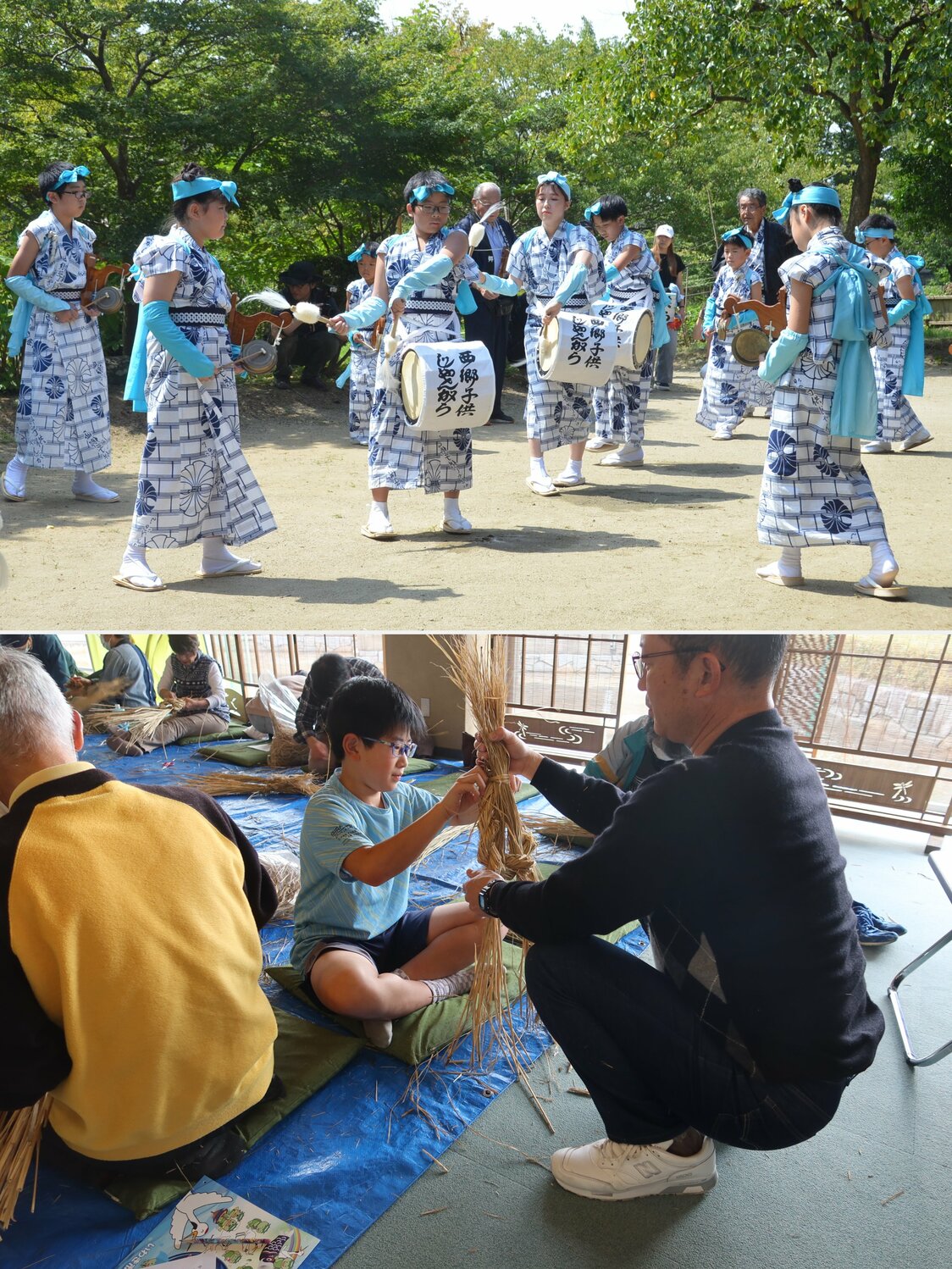
Top: The Jangara Nenbutsu Odori folk entertainment performed during the midsummer bon period. Bottom: A child is taught how to make a New Year decoration. (Courtesy Iwaki City Museum of Folklore and Traditional Housing)
-
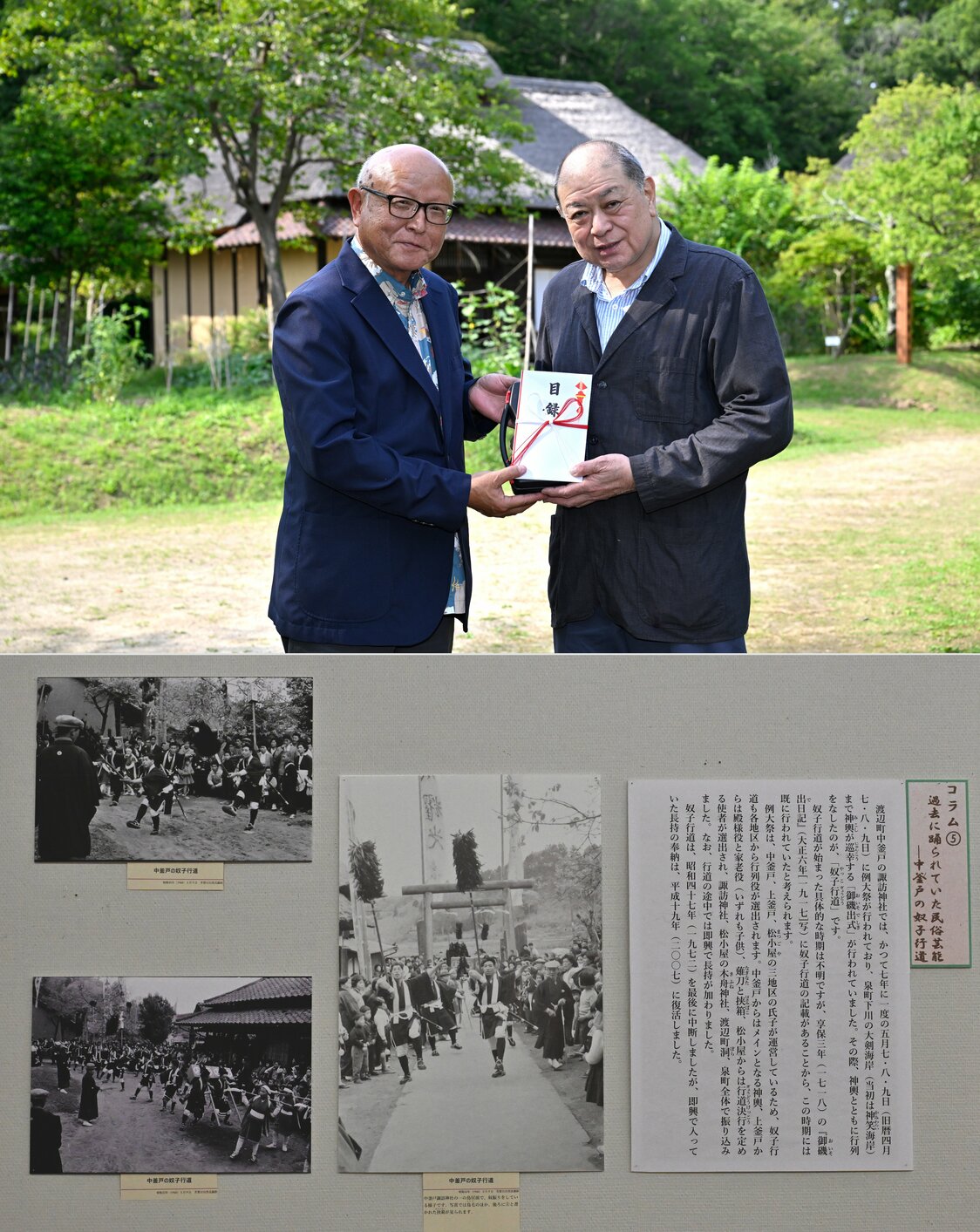
Top: Haga Hinata, at right, presents digitalized photo data to museum director Yajima Noriyuki. Below: The Folk Entertainment of Iwaki exhibition, which runs until September 27, includes photos taken in 1960. (© Uzawa Akihiko)
-
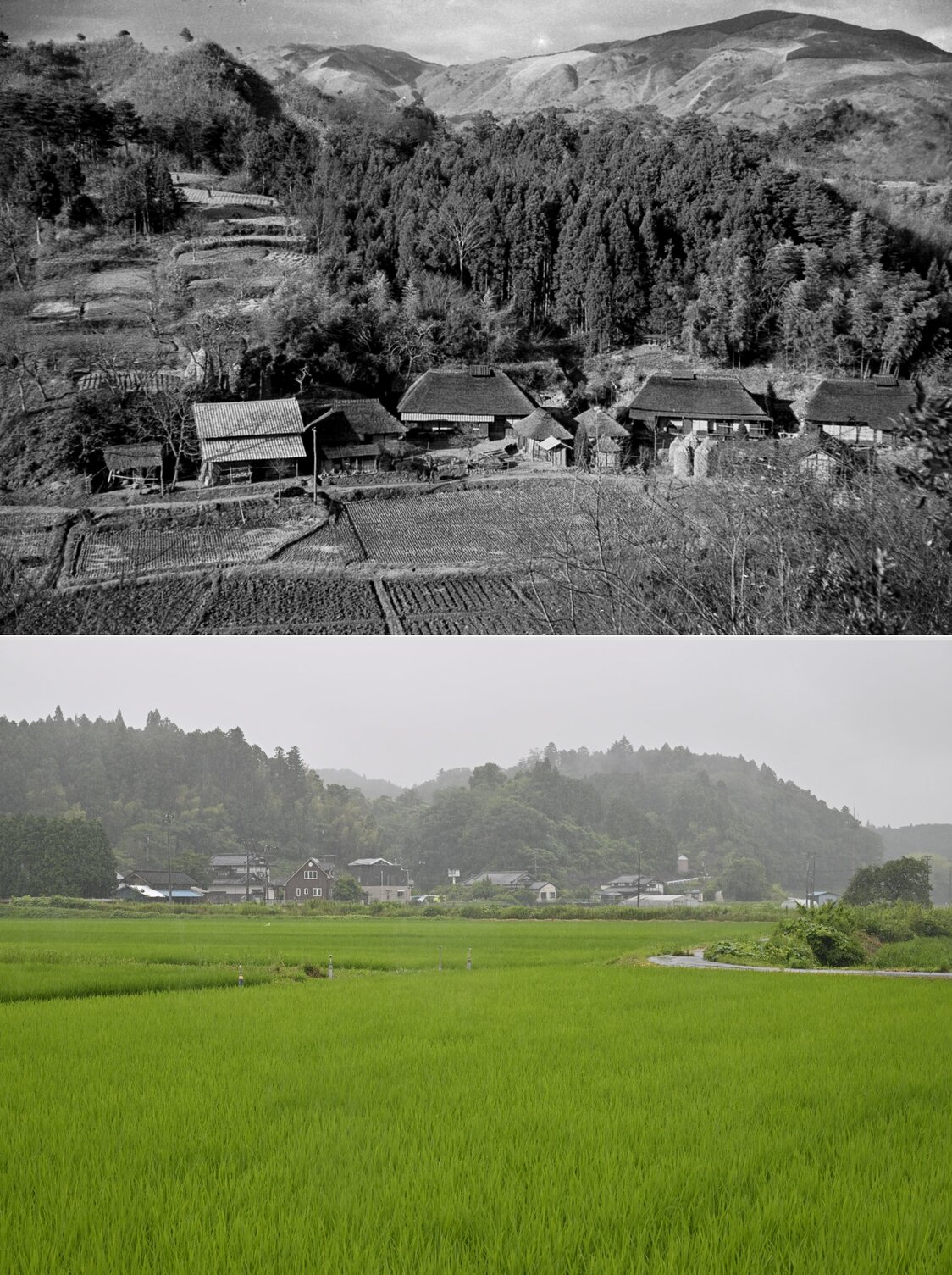
Although acreage under cultivation has decreased, rice-growing continues. The photo at top (© Haga Hideo) shows the hamlet of Kamikamado, where Haga photographed New Year ceremonies in 1953; below (© Uzawa Akihiko) is the same setting today.
-
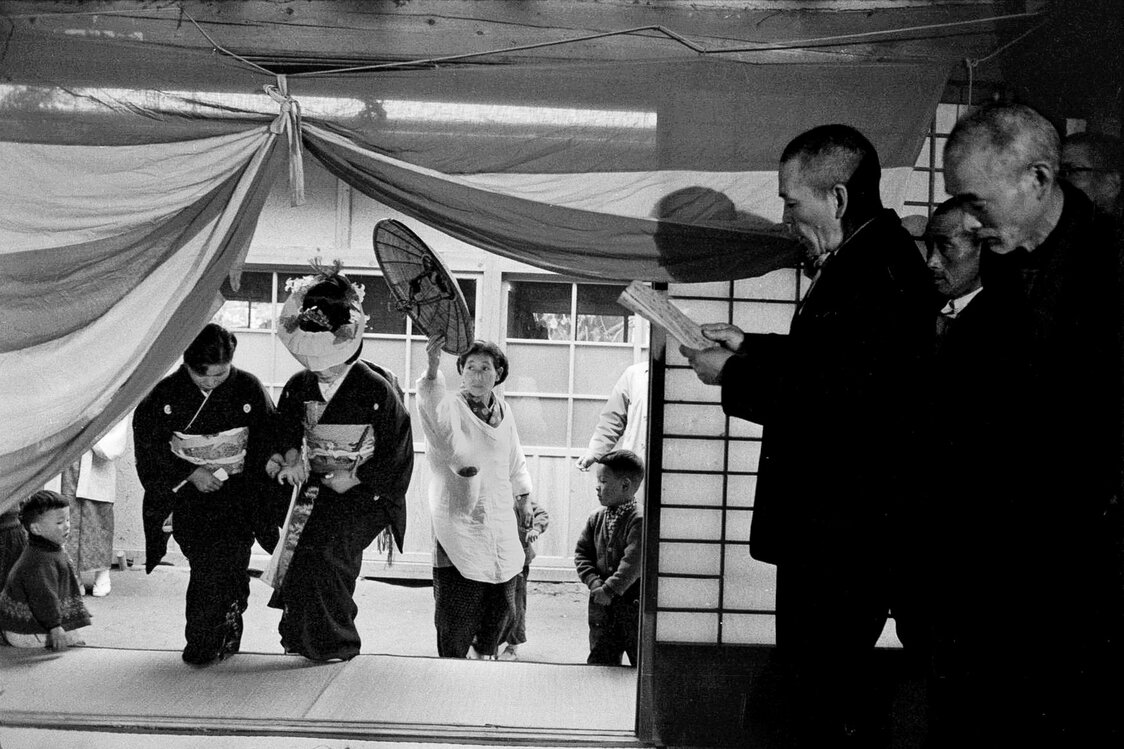
A photo from the wedding. Haga recorded the entire proceedings, from the exchange of yuinō betrothal gifts to reporting the marriage to the local shrine’s tutelary deity. (© Haga Hideo)
-
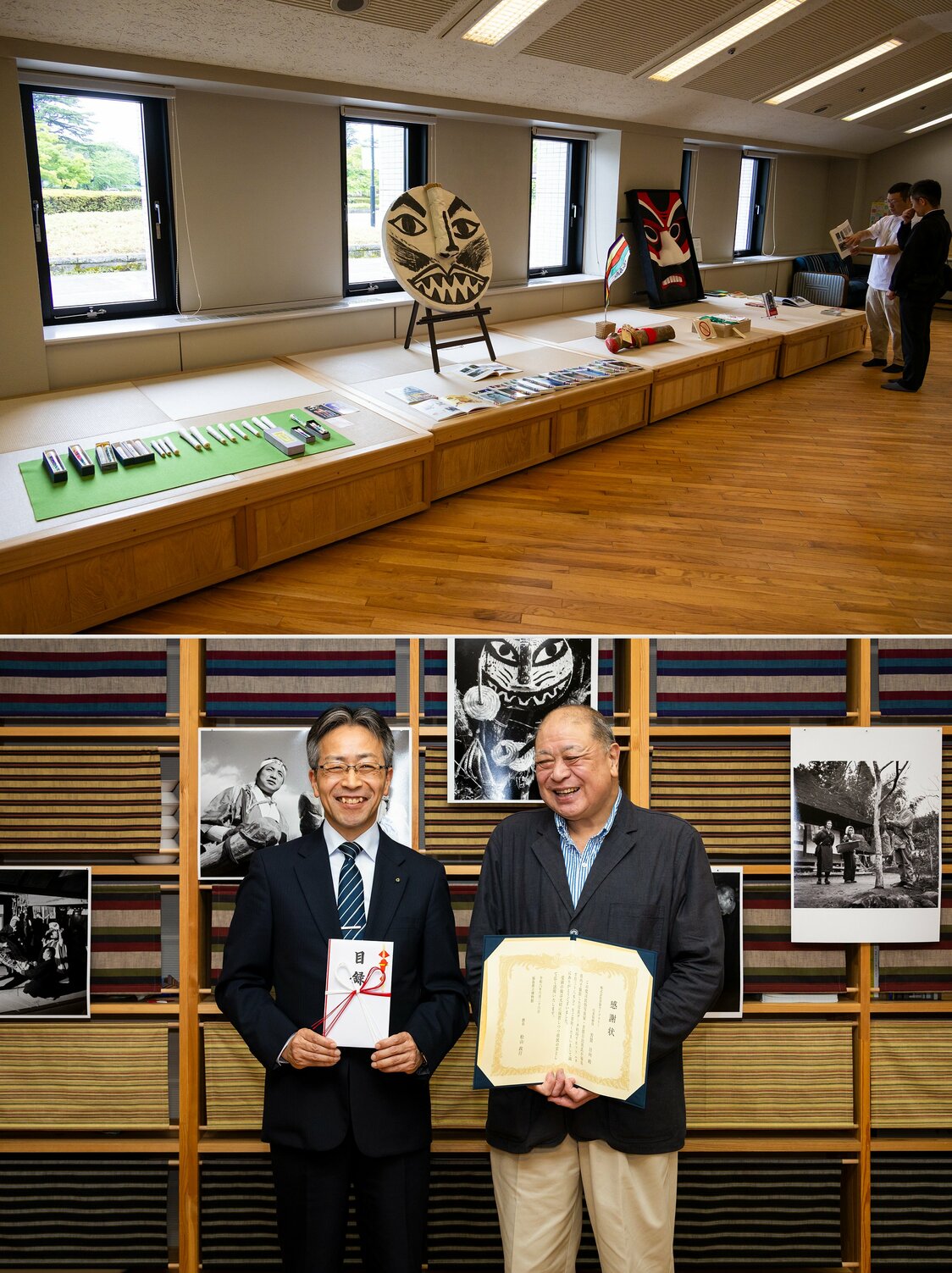
Top: A Fukushima Museum display of folk implements similar to those depicted in the donated photo collection. Bottom: Museum director Matsuyama Masayuki, at left, expresses pleasure at receiving the collection, which he considers a valuable resource for communicating Fukushima’s past way of life. (© Nippon.com)
-
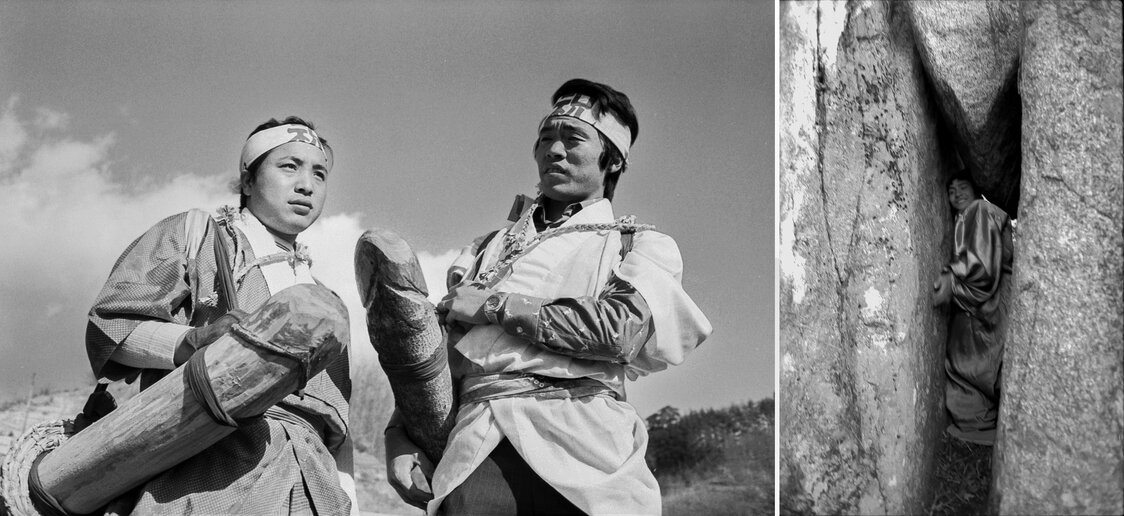
The Kohata no Hata Matsuri in Nihonmatsu, where a coming-of-age rite for 15-year-olds includes transiting through a narrow passage to symbolically “emerge” into adulthood, is still conducted today. (© Haga Hideo)
-
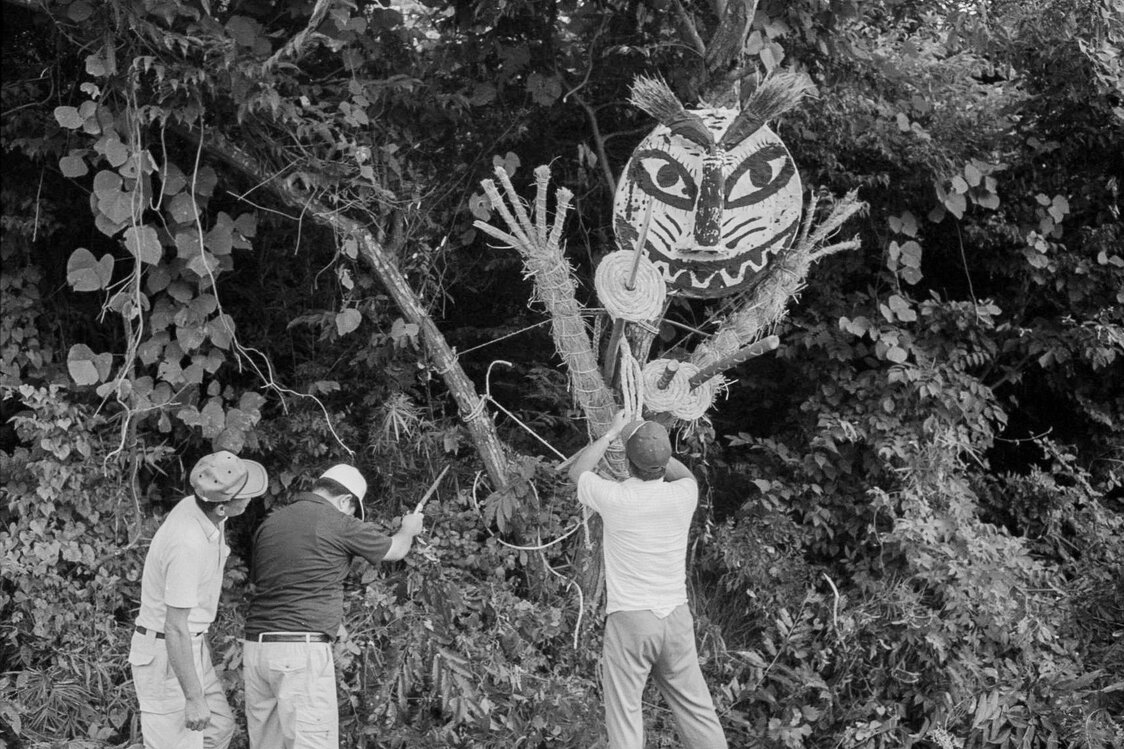
A traditional rite in the town of Asakawa, held to protect fields and paddies from strong winds, celebrates a deity known as Kazebukuro-sama. (© Haga Hideo)
-
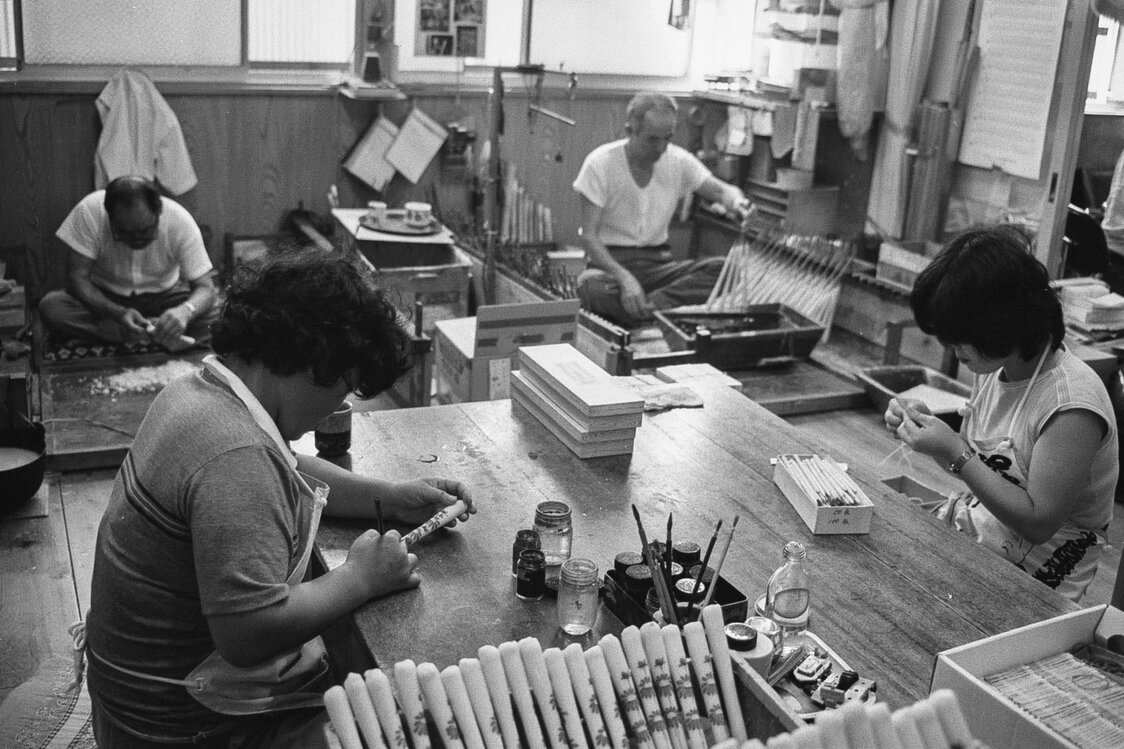
Artisans making traditional handcraft Aizu erōsoku candles. (© Haga Hideo)


 Read in other languages