


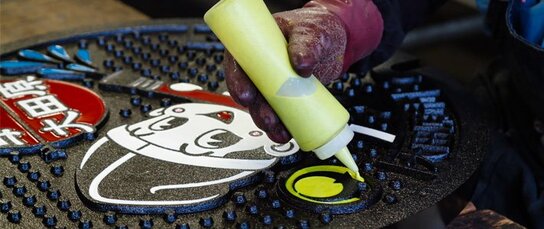
Cleaning and Coloring
Removing the Manhole Covers
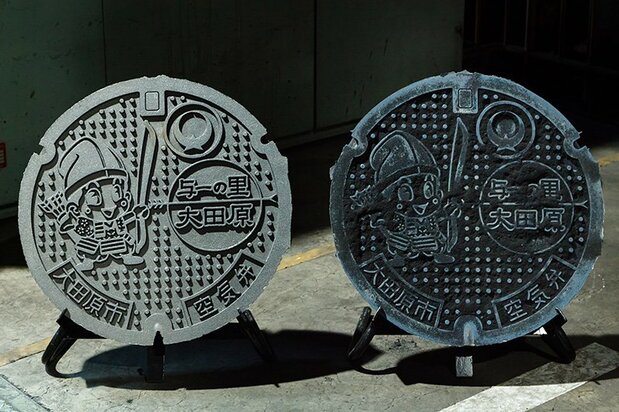

After covers cool and the sand molds are broken, they are cleaned in a process called shot blasting that removes particles of sand by firing small pieces of metal at the surface. Covers before (right) and after (left) cleaning.
Finishing
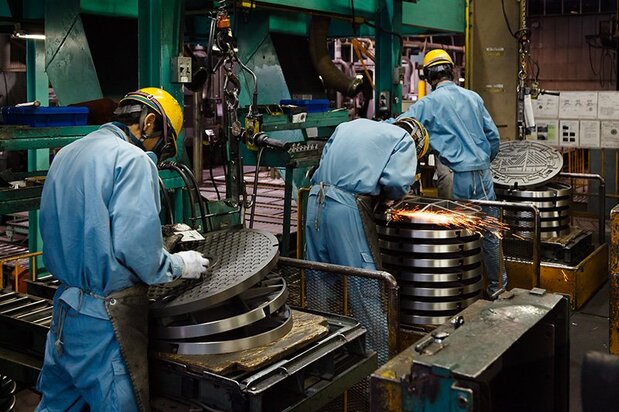
Trimming removes unwanted material.
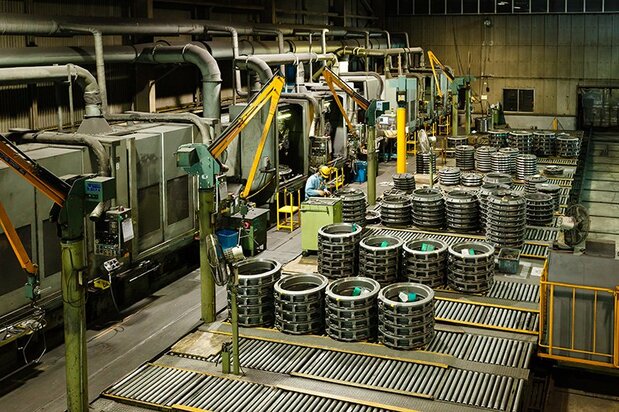
Machine finishing polishes the sides and ensures the disks and frames join perfectly.
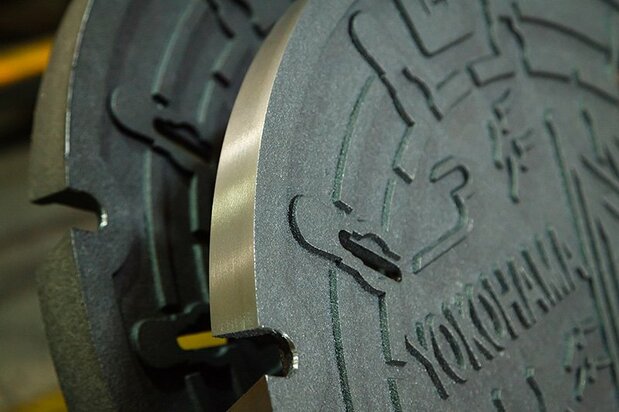
The edges before (background) and after (foreground) polishing. Just 0.2 millimeters of difference can cause rattling.
Coating
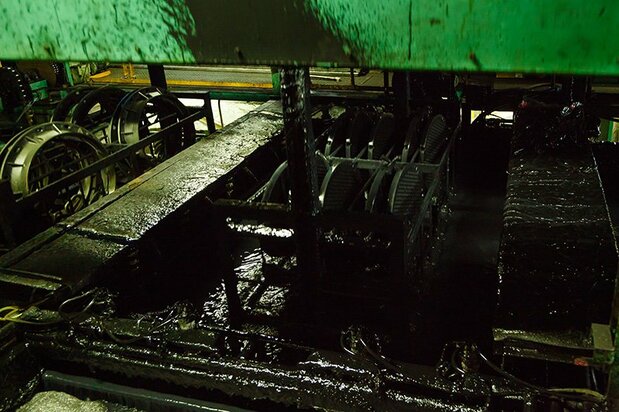
All covers are coated in black paint to prevent rusting. The same electrocoating technique used for automobiles ensures an even finish.
Assembly
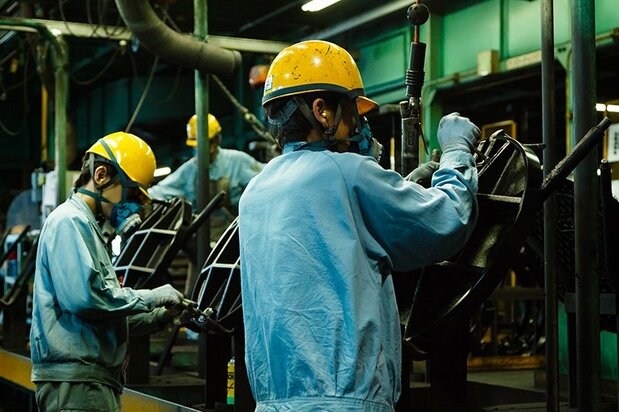
Workers assemble the five parts of the manhole covers.
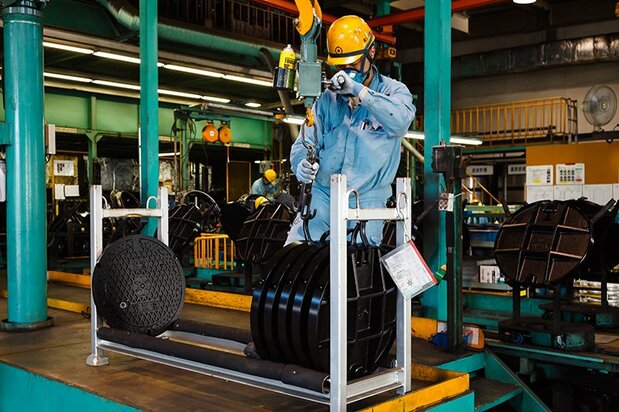
The completed covers are transported to the distribution center.
Adding Coloring
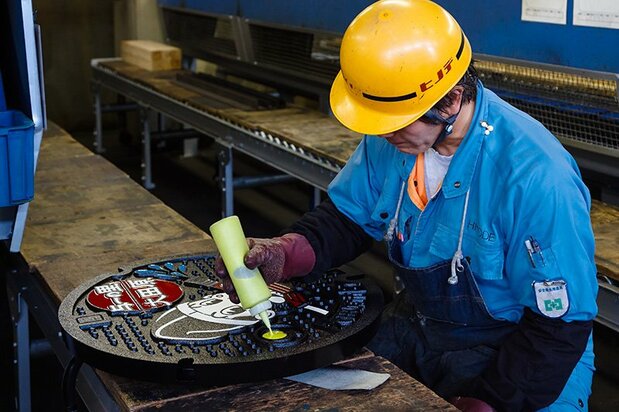
For special colored manhole covers, all coating is done by hand. The dispensers are much like the ones for ketchup and mustard at restaurants, but contain colored resin.
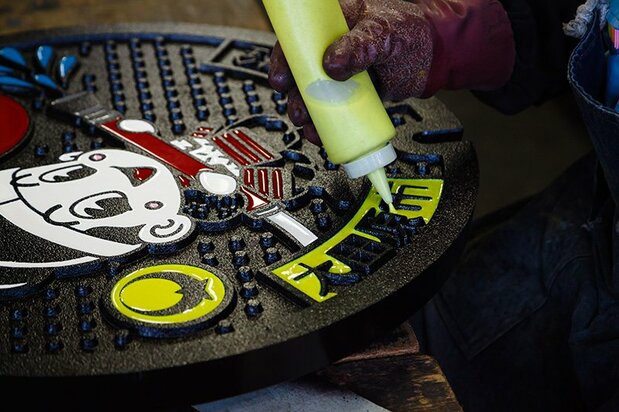
Careful handling is needed for complex designs. Even with larger areas, the resin needs to be evenly applied. It takes a skilled worker about one hour for each cover.
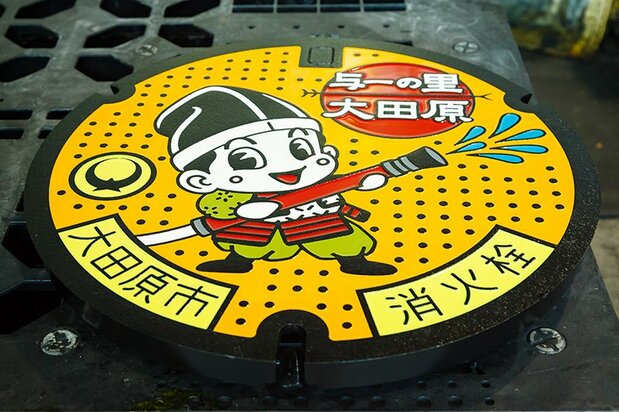
Heating with a gas burner hardens the resin, leaving a shiny cover. After a day of drying the cover is ready for delivery. This one is for a fire hydrant in Ōtawara, Tochigi Prefecture, and features local mascot Yoichi-kun.
(Originally published in Japanese on September 15, 2017. Text by Suzuki Naoto. Photographs by Miwa Noriaki.)













 Read in other languages