


Making New Waves in the Bathing Industry
Contrasting with the old-time charm of traditional bathhouses, sleek modern establishments are making waves in the sentō world. Our next stop, also in Adachi, is the groundbreaking designer bathhouse Taiheiyu. It was the first project of Imai Kentarō, an architect who specializes in bathhouse renovation.
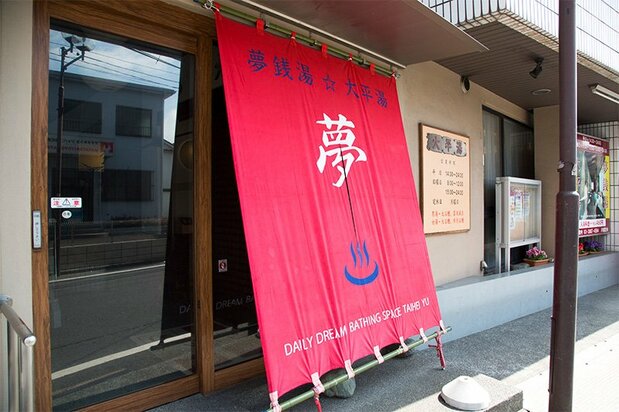
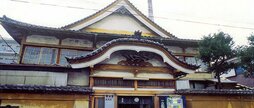
 The Taiheiyu noren curtain with the kanji 夢 (yume; dream).
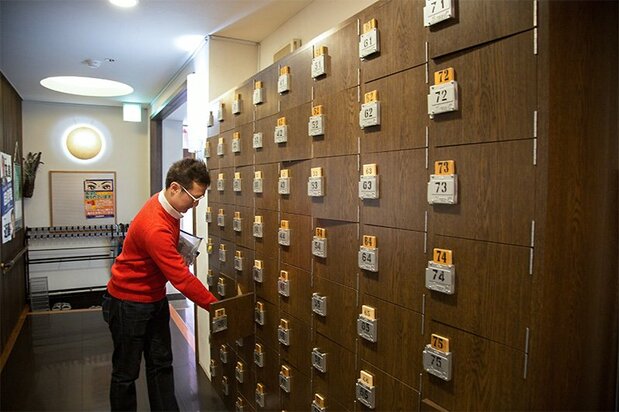 Store your shoes in the getabako lockers at the entrance.
Originally built in 1965, the building underwent initial refurbishment in 1985 to strengthen it with steel frames and add a modern spacious lobby. Then in 2000, Imai was tapped to design the interior, and it became the Taiheiyu of today.
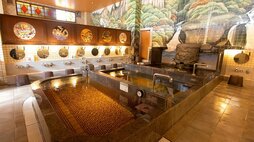
Skillful use of lighting on the walls creates a fairyland atmosphere, which is particularly romantic at night. Taiheiyu pioneered such features as having the baths overflow for five minutes every hour to keep the water fresh and providing customers with free shampoo, conditioner, and bodywash. It formerly used electricity drawn during lower-price nighttime hours to heat the water, but recently switched to gas.
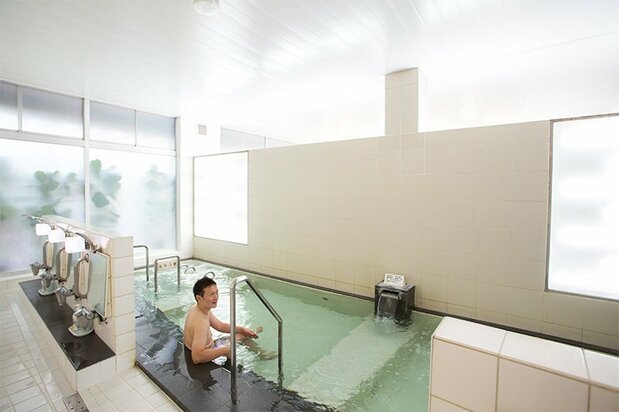 Light contributes to a feeling of open space.
Owner Yoshida Kensuke said he made three requests of Imai. The first was to have bathers enter the water by stepping downwards, like at an onsen, rather than lifting their feet over the edge of the tub. The second was to have a water-filled exercise walkway in the women’s bath. This was a suggestion from his wife, who had undergone hip rehabilitation. The third was to construct a counter in the lobby where people could eat. Other than that, Imai made all the decisions, proceeding through trial and error to his final design. Upon completion it drew high praise, inspiring many more designer bathhouses.
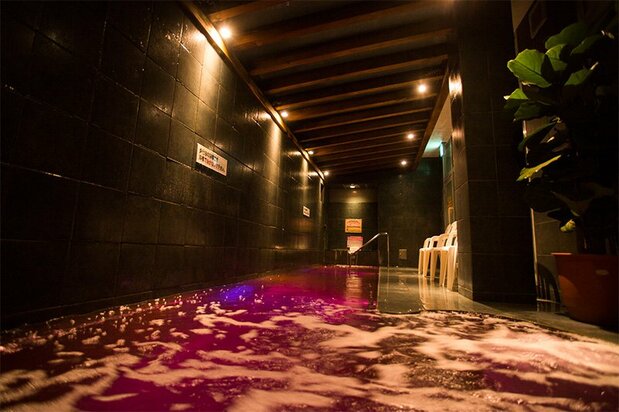 The women’s water-filled walkway at night. The men’s side has an outdoor bath.
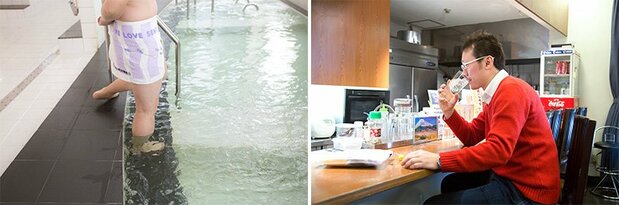 It’s an easy step down into the water; outside the bathing area, the counter provides a spot to get a bite to eat or a drink.
At Taiheiyu now, there is free karaoke every Thursday evening, and the bath is well known as a local place to relax. Its extensive parking facilities also mean that many visitors come from farther afield. Many customers prefer going to a relatively nearby bathhouse rather than a distant hot spring resort, a trend Yoshida hopes to see continue. Sentō that offer modern, high-quality facilities are helping to keep the industry healthy and relevant to the modern age.
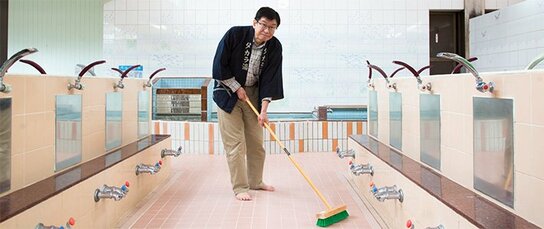
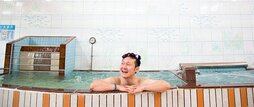
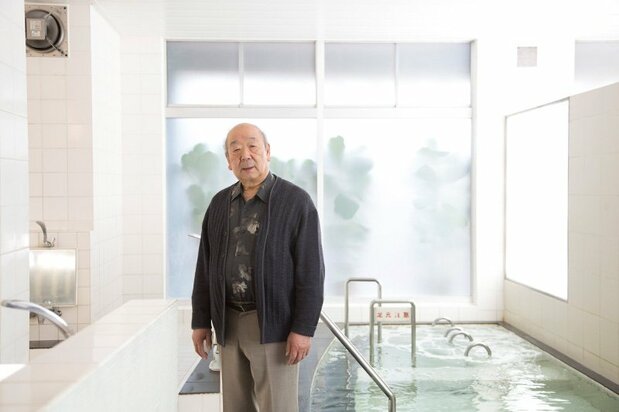 Yoshida in the Taiheiyu bathroom.





 Read in other languages