


Working to Eradicate Rabies in Bali
INTERVIEWER How did you get involved with the rabies eradication program in Bali?
TOKUDA When Kumamoto Prefecture and the provincial government of Bali signed a memorandum of understanding in 2017, Bali’s governor visited my hospital and asked for my help in eliminating rabies in Bali. Rabies is widespread there, and there’s little public understanding of the rabies vaccine or the need to vaccinate dogs. Japan, like Bali, is surrounded by oceans but is rabies-free, because it took the necessary steps and succeeded in eradicating the disease. Bali is an island, so it shouldn’t be difficult to take proper measures and prevent rabies from entering. If dogs are vaccinated and sterilized at the same time, rabies can be stopped. In Bali, the job is to educate people to have their dogs vaccinated and neutered, but the issue must be highlighted so that the public will at least start showing interest.
INTERVIEWER Tell us about the wristbands you created to draw attention to the rabies problem.
TOKUDA I wanted to do something to raise awareness of the Bali rabies eradication drive and raise funds for the project, so I created the wristbands. They’re bright blue with “Eradication of Rabies” printed in white. We sold 3,000 of them at 300 yen apiece. They’ve helped us to raise awareness of the situation in Bali among people who want to help animals, and the people buying and wearing them are helping to educate others. I’m convinced that getting a movement going in Japan will motivate people in Bali to act. I also want to let the world know that a Japanese veterinarian is working on the rabies problem there. We eradicated the disease in Japan, and I’m sure Bali can do the same.
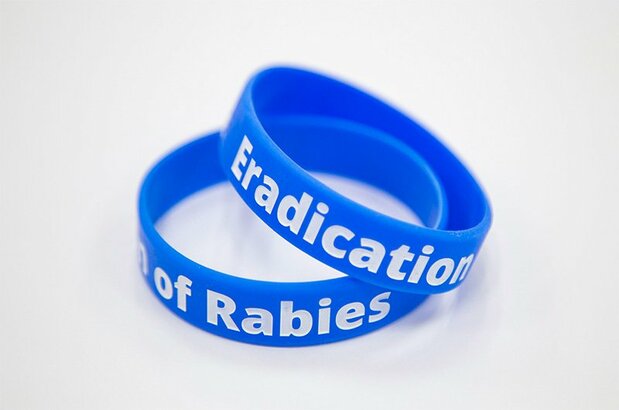
 The Bali rabies eradication campaign wristbands.
Humane Approaches to the Stray Cat Problem
INTERVIEWER In addition to the rabies eradication campaign, you’re also involved in TNR.
TOKUDA TNR is the abbreviation for “trap, neuter, and return.” Today this is an international byword: to prevent stray cats from endlessly multiplying, they are captured, neutered, and then returned to their usual territory. Stray cats are a public nuisance—their urine and feces are smelly, they ransack kitchen waste put out for collection, and they climb onto cars and scooters, scratching or soiling them. TNR can help keep the number of stray cats down. I’m active in the TNR movement, and anyone catching a local stray can bring it to my hospital. I neuter the animal, and after monitoring it for a few days to make sure it’s recovered well, return it to where it came from. At first, some people who disliked cats or were indifferent to them grudgingly participated in TNR, but it was interesting to see how after a while many of them came to feel that the practice was worthwhile. They even developed a liking for cats. TNR also helps create and reinforce community bonds and revitalize neighborhoods. I really feel that animals can help change communities.
 TNR surgeries are an important part of Tokuda’s work.
INTERVIEWER What are your plans for the future?
TOKUDA I want to educate the public to place more value on pets’ lives. At the Kyūshū Animal Academy attached to my hospital, students are taught that animals are members of society and have equal status with humans. I want to improve quality of life for humans and animals alike. This is something to pursue for the animals, which have a desire to live just like us; for people, who share their lives with animals; and for society as a whole, in which animals and people live together. For this to happen, I believe local animal hospitals should be proactive in communicating information about animals. I’m the type of person who puts a lot of energy into whatever I do, so I’ll continue working full steam ahead as long as I’m needed.
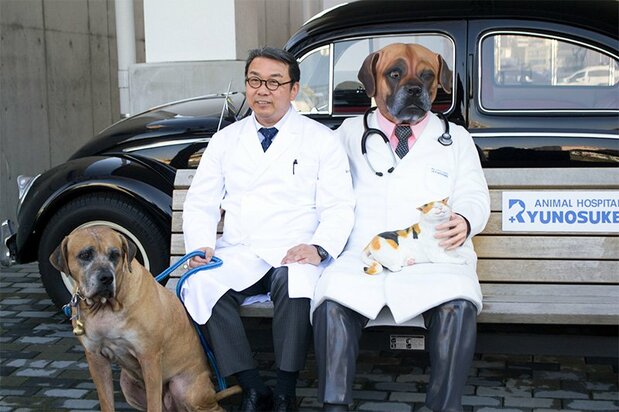 “Dr. Dog” is the eye-catching mascot at the entrance to Ryūnosuke Animal Hospital.
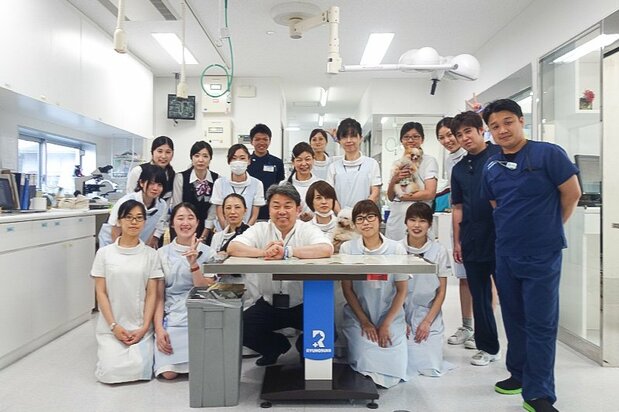 Tokuda with hospital staff.






 Read in other languages