


Work has begun Japan’s first-ever national intelligence strategy. Planned for completion by spring 2027, this initiative represents Prime Minister Takaichi’s ambition to tackle the espionage threat with an approach distinct from the National Security Strategy.
Working Towards a Foreign Interference Prevention Act
With the recent passage of the National Intelligence Council Establishment Act, the administration of Prime Minister Takaichi Sanae completed the first step of its plans to overhaul and strengthen the Japanese government’s approach to intelligence collection and analysis. Enabling the establishment of a new National Intelligence Council and National Intelligence Bureau, this legislation brings the intelligence functions previously exercised by disparate agencies such as the National Police Agency, the Ministry of Foreign Affairs, the Ministry of Defense, and the Public Security Intelligence Agency into a single organization within the Cabinet Secretariat. In turn, the NIB will facilitate the flow of information to the NIC, its parent agency chaired by the prime minister, to inform Cabinet-level decisions on critical national security and intelligence issues.
This was, however, only the first step. The government subsequently established an expert panel to consider further strengthening of Japanese intelligence capabilities. Speaking to the panel of 17 experts, Prime Minister Takaichi shared her belief in the need for “a national intelligence strategy outlining medium- to long-term measures for advancing the government’s intelligence activities.” She also called for strengthened measures to prevent “illegitimate interference by foreign countries” and indicated her government’s intention to work on legislation to prevent foreign espionage directed toward Japan. The expert panel agreed to focus its immediate discussions on two key areas: a national intelligence strategy and foreign interference legislation.
In addition to concerns about traditional espionage—such as alleged Russian interference in presidential elections—influence operations aimed at manipulating and influencing public opinion in other countries through social media and other channels has recently intensified. This blurs the line between wartime and peacetime security approaches. To address this situation, the Takaichi administration plans to finalize the proposed national intelligence strategy by next spring before moving forward with legislative change focused on preventing foreign interference.
DIMET and Enhanced Defense Intelligence
Many global powers have long recognized that comprehensive national power rests upon combining diplomacy, intelligence, military, economy, and technology (DIMET) tools. Among these, intelligence has come in for renewed focus in recent years.
In Japan in particular, a fundamental strengthening of intelligence capabilities is necessary to counter the activities of foreign spies and increasingly more sophisticated foreign influence operations. In August 2026 the ruling Liberal Democratic Party published several proposals to strengthen defense intelligence capabilities, including the enactment of a “foreign interference prevention act” that would impose criminal penalties on foreign actors conducting unlawful interference.
This follows international trends. Since around 2018, European nations, the United States, Canada, and Australia and many others have set about enhancing legislative frameworks to deal with expanded Chinese and Russian espionage, interference, and influence operations. Such initiatives have included the passage of laws requiring individuals and organizations engaged in political activities on behalf of foreign governments to disclose their clients and the details of their activities. The LDP also proposed legislation requiring the registration of foreign agents.
This is particularly the case in the English-speaking “Five Eyes” countries, which operate a global framework for sharing classified information. The Five Eyes nations collectively welcomed the Japanese government’s proposed intelligence reforms and offered their support and cooperation. The Takaichi administration and the expert panel will draw upon the information and lessons provided by these countries when considering further reforms to Japan’s intelligence institutional framework.
Up Next: An External Intelligence Agency?
Japan will also look to strengthen HUMINT, or the gathering of foreign intelligence through human sources and interpersonal communication. The October 2025 coalition agreement between the LDP and the Japan Innovation Party explicitly outlined a commitment to setting up an independent foreign intelligence agency by the end of fiscal 2027. This will increasingly feature in the next stage of deliberation around intelligence reform.
However, securing and training personnel to handle foreign-facing HUMINT capabilities will require significant resources. How to construct this agency will also need to be debated. The aforementioned LDP proposal identified foreign-facing secret intelligence services in the United Kingdom (MI6) and Australia (ASIS) as promising models, where an independent agency comes under the supervision of the Minister of Foreign Affairs. However, the challenge of ensuring autonomy and independence so that the agency’s activities are not compromised by specific political considerations will also need to be considered.
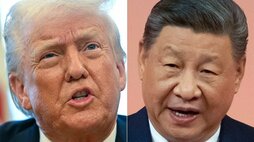
Strengthening intelligence capabilities also includes the projection of information outward in addition to combating influence operations in Japan. For example, during the recent US-China summit in September, President Donald Trump concurred with the Chinese side’s assertion that “the United States and China were allies during World War II.” The United States’ ally during the Pacific War was the Republic of China (present-day Taiwan), not the People’s Republic of China (which did not exist until 1949). This was a clear misrepresentation of the facts that caused great consternation within the Japanese government.
It should not be surprising that Beijing would deploy history issues against Japan and emphasize US-China solidarity in its attempt to drive a diplomatic wedge between the United States and Japan. This is a standard tactic of China’s approach to “cognitive warfare.” However, it raises the question of how Japan can counter such tactics on a sustained basis and fight back through the daily conduct of intelligence activities. Tokyo needs to strengthen its rapid response capabilities in its conduct of both diplomacy and intelligence activities.
(Originally published in Japanese. Banner photo: Prime Minister Takaichi Sanae, in the foreground, speaking at an expert panel deliberating ways to strengthen Japan’s intelligence capabilities. September 28, 2026, Prime Minister’s Official Residence. © Jiji.)




 Read in other languages