“Chōjū Giga”: The Medieval Ancestor of Modern Manga
Guideto Japan
Culture Art- English
- 日本語
- 简体字
- 繁體字
- Français
- Español
- العربية
- Русский
Manga’s Ancient Ancestor
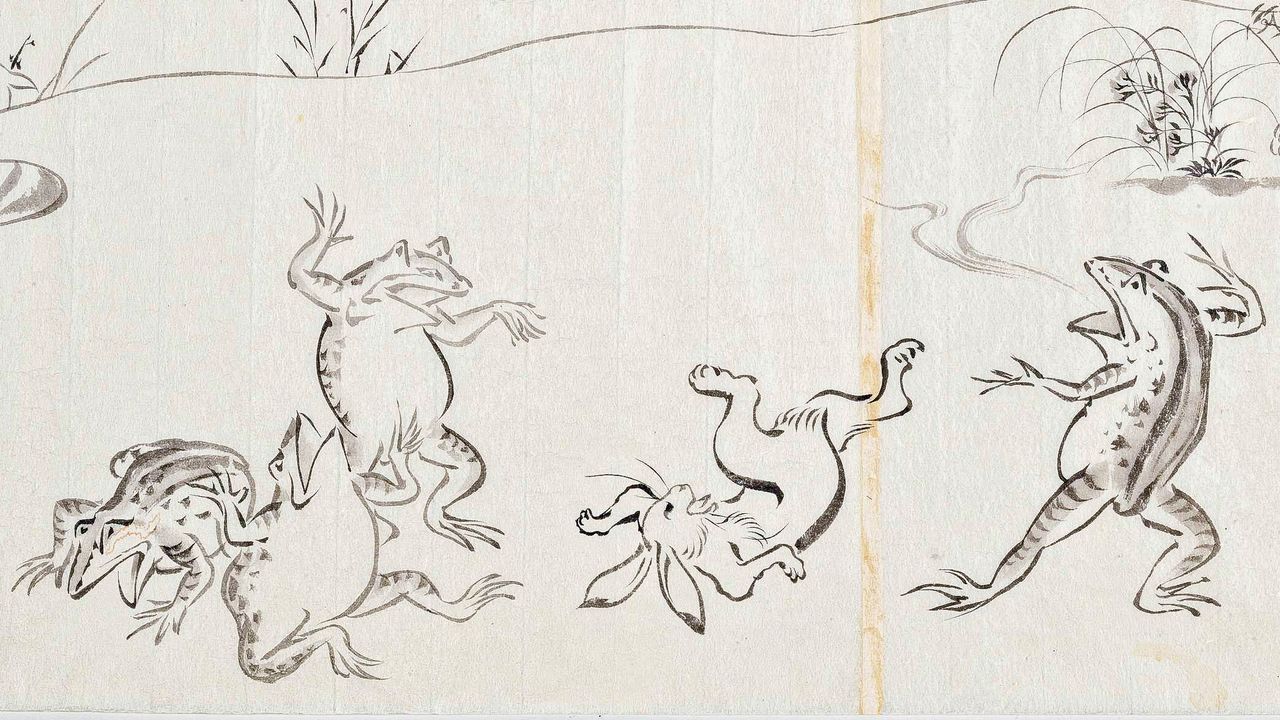
The classic Japanese artwork Chōjū giga (Scrolls of Frolicking Animals), dating from the late Heian to the Kamakura period (twelfth to thirteenth centuries), is often regarded as an early precursor to modern manga. It consists of four scrolls, now owned by the Kyoto temple of Kōsanji, and is most famous for its humorous scenes of anthropomorphic animals, such as a sumō match in which a frog sends a rabbit tumbling.
It is not known who painted the original monochrome ink drawings, and as there is no accompanying text, it is unclear whether the aim was entertainment or a deeper purpose. However, the scrolls’ cavorting frogs, rabbits, monkeys, and other creatures remain well-known today, and appear on products ranging from tote bags to teacups—sometimes with added color.
Although commonly known as Chōjū giga, the full title of the artwork is Chōjū jinbutsu giga (Scrolls of Frolicking Animals and Humans).
Find Out More
- Information about Chōjū giga by Kōsanji.
(Originally written in English. Banner image: A frog defeats a rabbit in a sumō bout. From an 1886 copy by Maeda Tsuranari. © Colbase.)