
Young Japanese Women Drawn to Urban Living
Family Lifestyle- English
- 日本語
- 简体字
- 繁體字
- Français
- Español
- العربية
- Русский
A Strong Preference for City Living among Young Women
The overconcentration of Japan’s population in Tokyo and population outflow from the regions outside the country’s main urban centers are becoming serious issues, with a particularly notable influx of women to metropolitan areas. In a recent survey by the Nippon Foundation, young people aged 16 to 19 were asked how they felt about the population of the region where they lived, the importance they placed on regional revitalization policies, and how satisfied they felt with those initiatives.
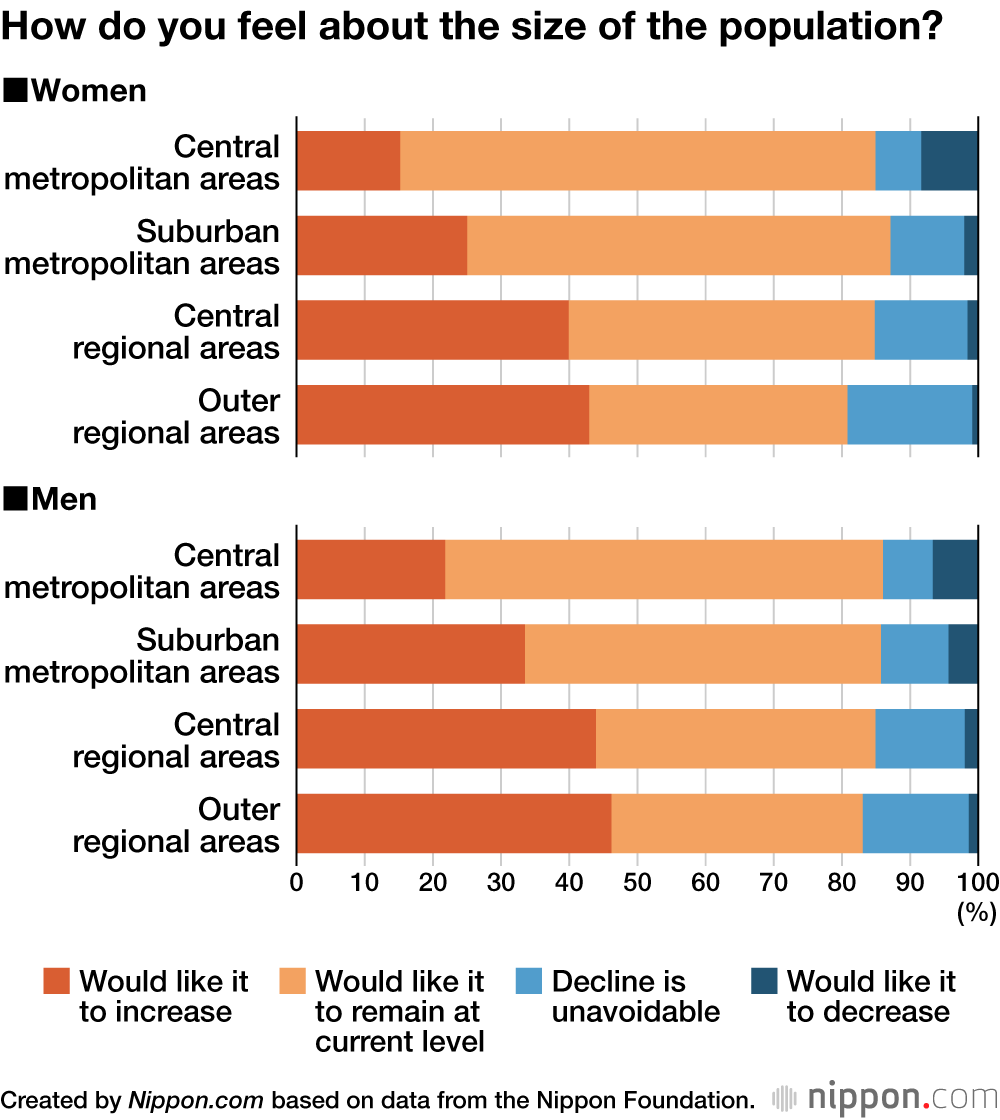
The regions where respondents lived were categorized into four types: “central” and “suburban” areas of the three major urbanized centers (Tokyo, Osaka, and Nagoya) and “central” and “outer” regional areas elsewhere in the country. When the data regarding respondents’ opinions on population was analyzed, it showed that, when combined, more than 80% in each area felt that the population “should increase” or “should remain at its current level.” In “outer” areas, with severe population outflow and decline, the figures were nearly double those for people residing in the three major metropolises.
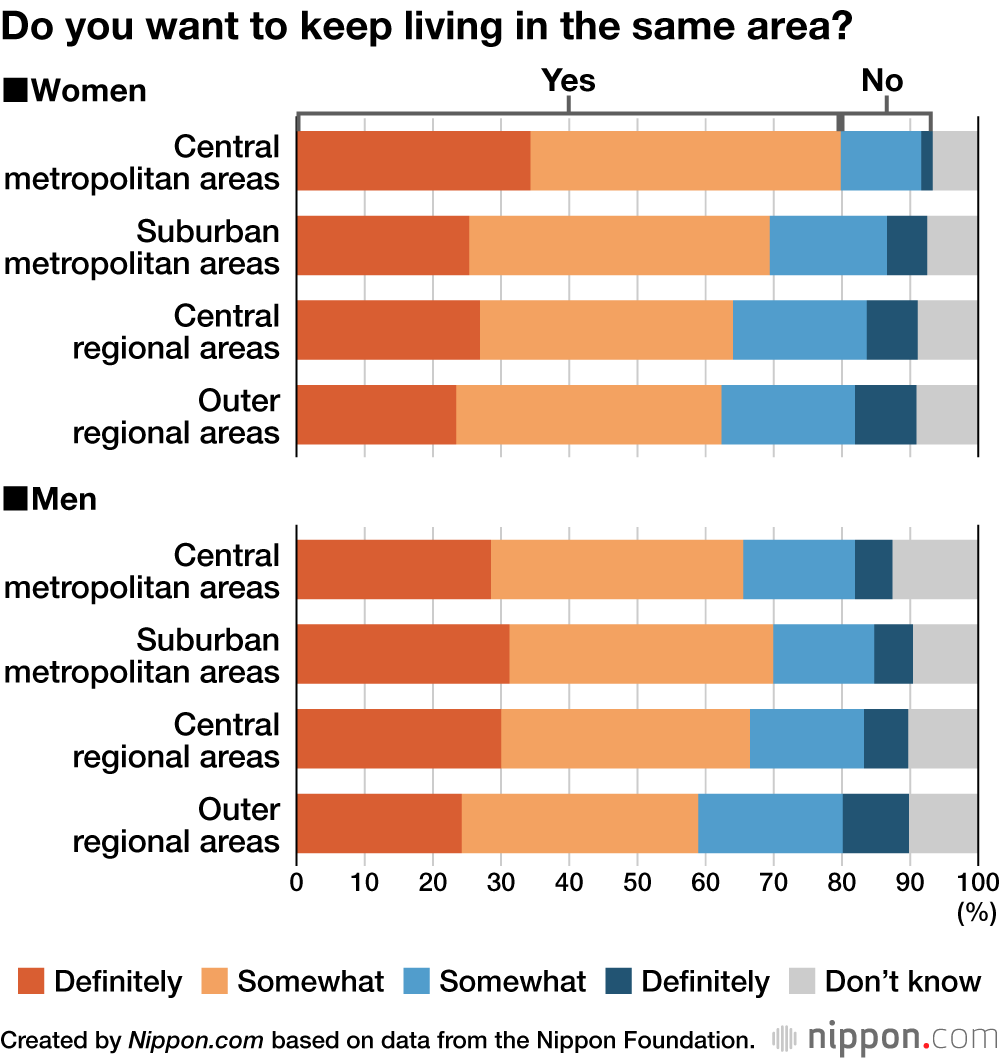
When asked if they “want to continue living in the same area,” the highest response, combining those who answered “strongly” and “somewhat,” was among women residing in central metropolitan areas and men living in suburban metropolitan areas. Most significantly, 80% of women living in central metropolitan areas wish to stay there. This was 15 percentage points higher than the figure for men; a clear indication that women preferred major cities.
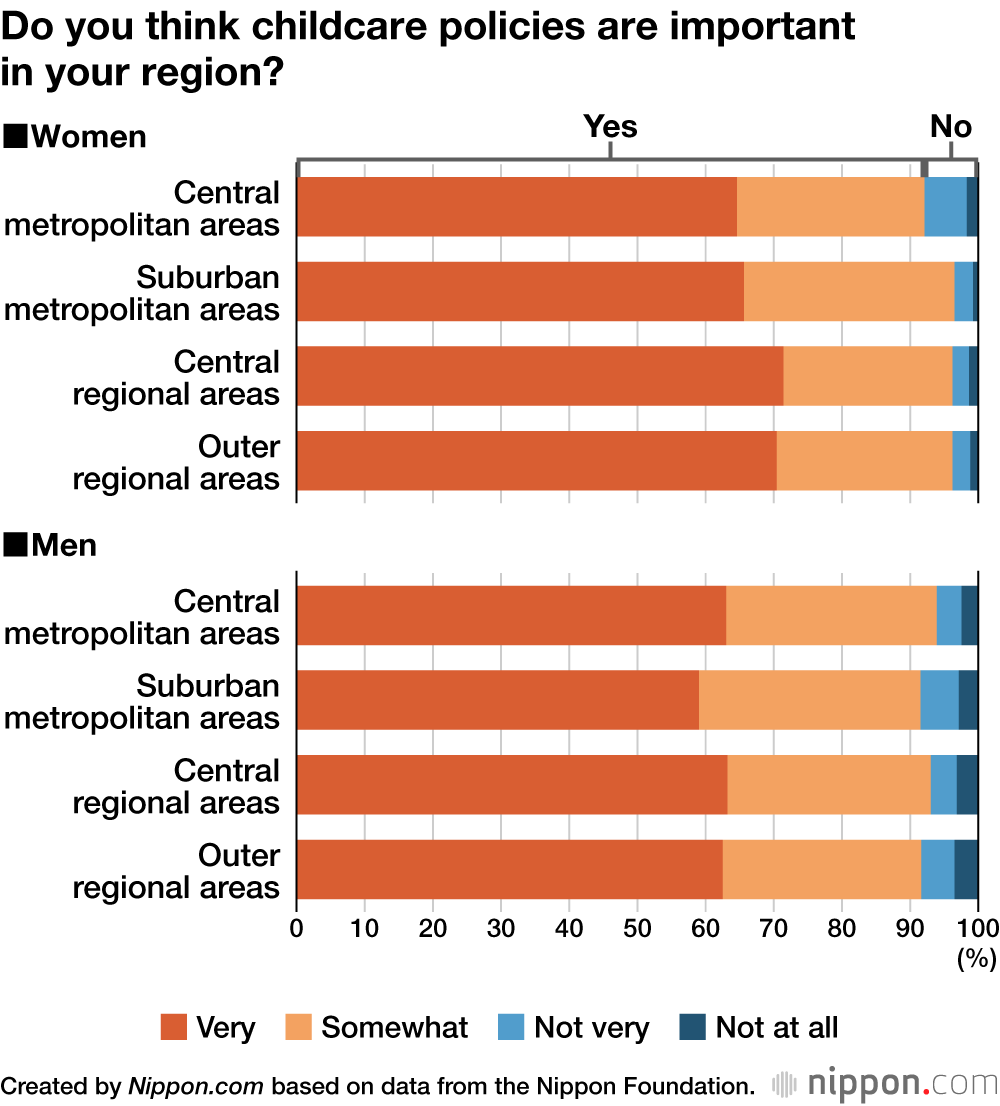
The survey also asked broader questions regarding how respondents felt about the importance of policies that dealt with challenges being faced by the area in which they resided and how satisfied they were with those initiatives.
Looking specifically at responses from young women living in regional areas related to “regional childcare policies,” including development of childcare facilities and creating safe spaces for children, while more than 70% of those living in both central and outer areas indicated they were “very important,” a considerable gap was revealed as only around 20% said they were “very satisfied” with those initiatives.
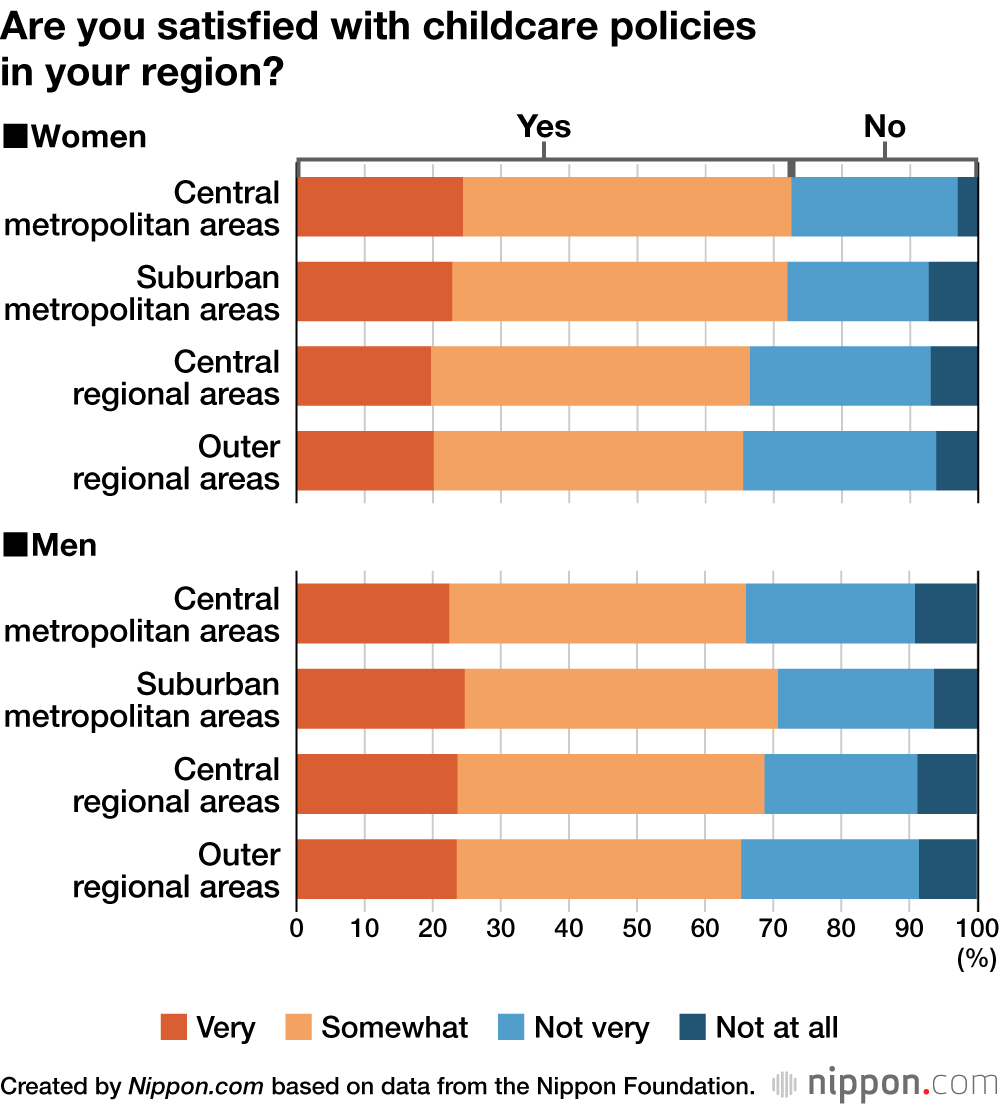
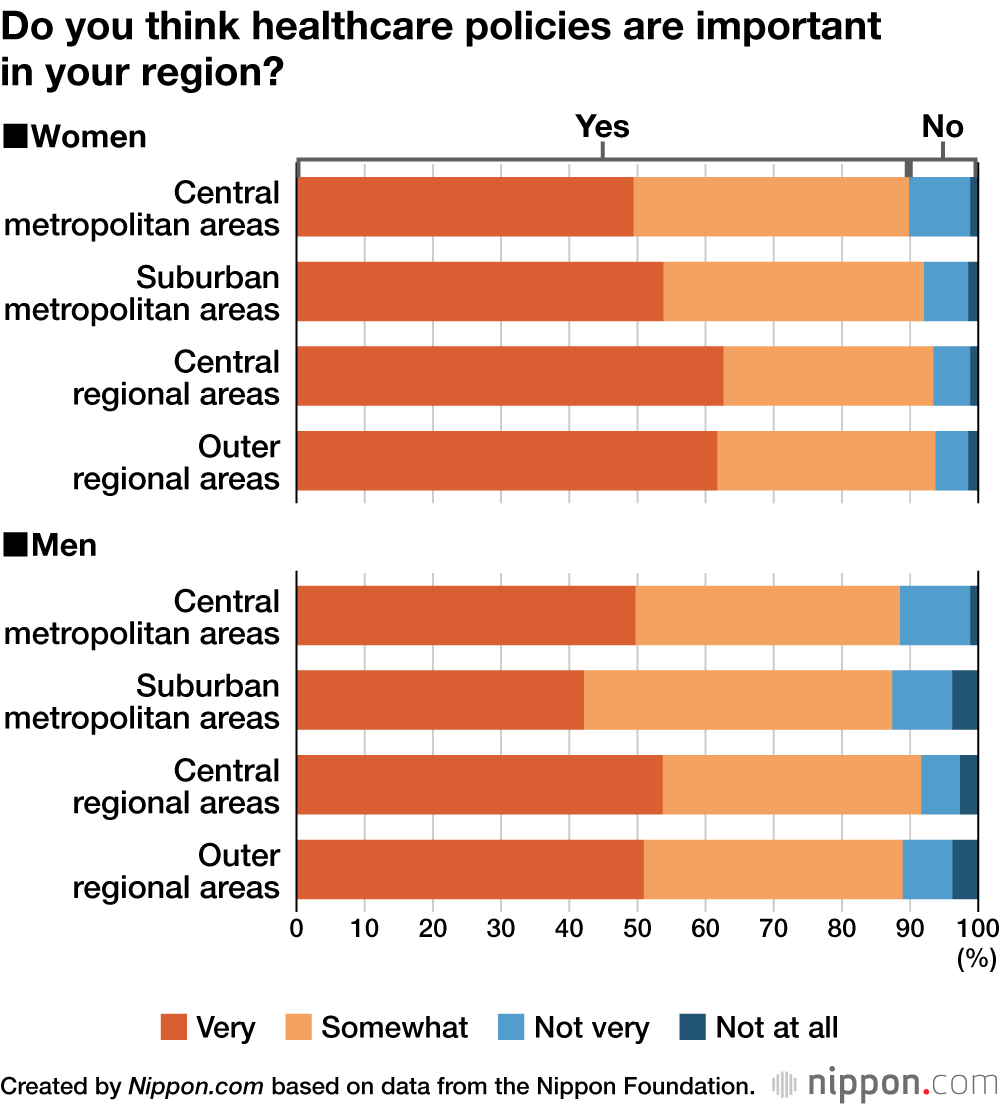
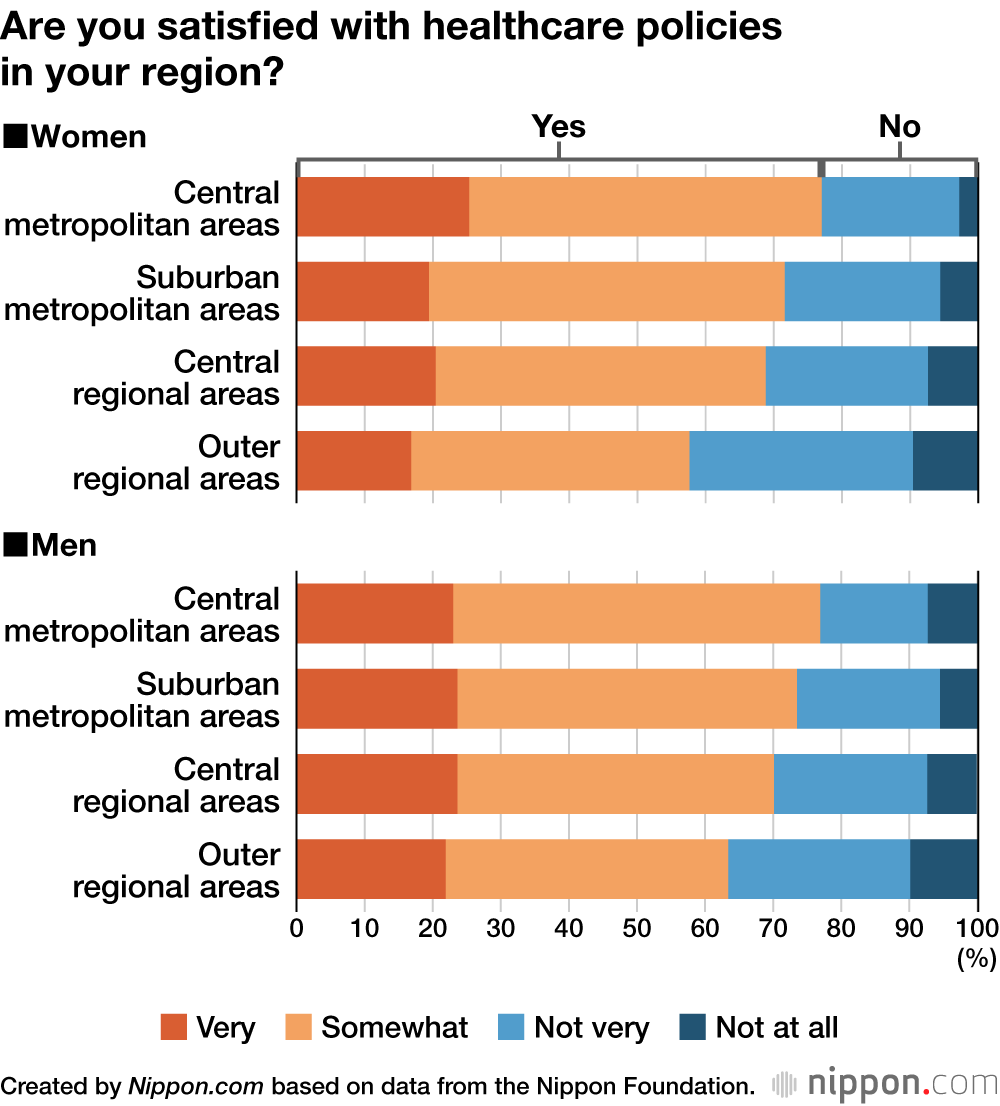
It was the same case for “regional healthcare policies,” with more than 60% of women living in both central and outer regional areas considering them “very important,” much more than men and women based in the three major metropolitan areas, while their satisfaction with the policies was relatively low. It is possible that being unable to imagine a future where they can lead comfortable lives is contributing to the population outflow from regional areas.
The survey was conducted online in mid-May. It received 4,700 responses in total from young men and women aged 16 to 19 from 47 prefectures.
Data Sources
- Data from regional revitalization survey of teenagers (Japanese) from The Nippon Foundation
(Translated from Japanese. Banner photo © Pixta.)