


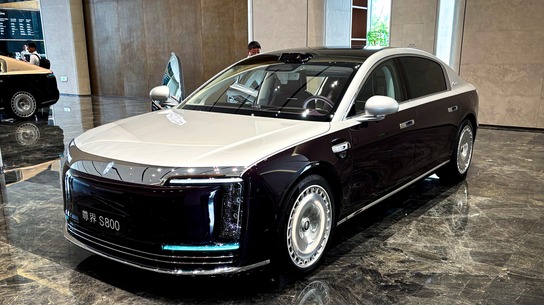
For some years now China has held the top spot in global automotive exports. A new model is coming to the fore in the Chinese market, with tech giant Huawei at the top of the value chain, designing and directing the manufacture of rapidly growing fleets of EVs and other new energy vehicles.
China Takes the Auto Export Lead
According to a Kyōdō News report, US President Donald Trump said in an interview with Fox News in September 2026 that he would be open to the entry of Chinese automakers into the US market, as long as the cars are produced locally. This can be seen as him welcoming Chinese automakers willing to contribute to American job creation.
As the world’s second-largest automobile market, the United States is highly lucrative for Japanese automakers like Toyota, Honda, Nissan, Mazda, and Subaru. If Chinese automakers begin producing and selling vehicles in the US market, as Trump’s remarks suggest could happen, Japanese automakers will find themselves in fierce competition with their Chinese counterparts.
The Chinese automotive industry is very eager to gain a foothold in the North American market, and there is a clear reason why. Although China is the world’s largest automobile market—with 34.4 million new vehicles sold in 2025—sales are stagnant amid slowing economic growth. New vehicle sales in January–July 2026 totaled 17.6 million, down 3.7% from the same period last year. Of these, 9 million were NEVs, or new energy vehicles, most of which are electric vehicles. The number of NEVs sold actually grew by 9.6% year on year, but it is believed that intensifying price competition in the Chinese market is eroding profitability there. Consequently, Chinese automakers are setting their sights on overseas markets and stepping up export and local production efforts.
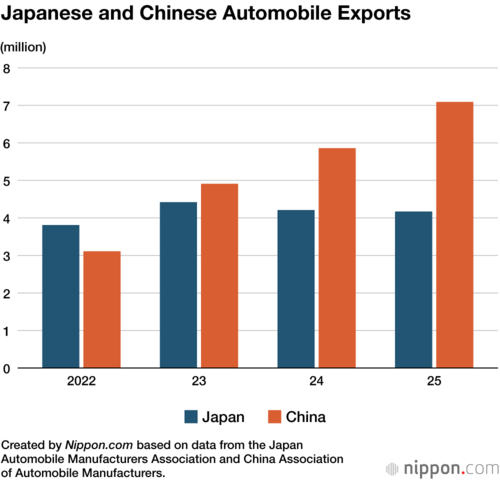
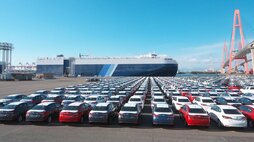
In fact, China has already emerged as the world’s leading auto exporter. After surpassing Japan in 2023 with exports of 4.9 million vehicles, it has held the top spot for three consecutive years. As of July 2026 Chinese manufacturers had shipped 6.14 million vehicles abroad, an annual increase of fully 66.8%, putting it on track to retain the crown for a fourth year. Japanese automakers have been overtaken in part because they have increasingly shifted production to locally based facilities around the world. The competition is particularly intense in Southeast Asia, Europe, and Australia, where Chinese automakers have been rapidly expanding their presence.

With the ongoing exception of the US market, China’s EV exports reach almost every corner of the globe. BYD’s Racco, a fully electric “kei car” developed specifically for the Japanese market and launched in July 2026, is one such export made in China. Its specifications and design are on par with those of kei cars made by Japanese automakers.
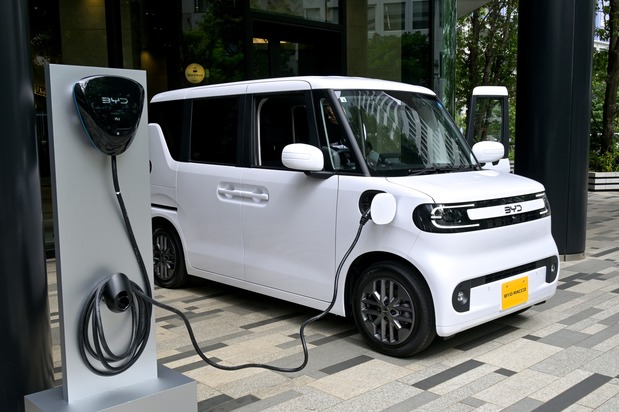 The launch of the BYD Racco in Japan sparked a surge in orders for BYD Auto Japan. (© Jiji)
Learning the Quality Ropes from Japan
The increase in exports by Chinese automakers is not driven solely by their weak domestic sales. “The quality of Chinese automobiles has been improving because Chinese parts and equipment manufacturers have become more capable,” says one executive at a Japanese equipment manufacturer stationed in China.
In July this year, I traveled to China and visited companies in Anhui Province and Shanghai involved in the automotive industry. In Shanghai, Toyota is now building a new factory for its Lexus EVs, with production scheduled to begin in 2027.
According to the aforementioned executive, Toyota’s new EV plant will be a state-of-the-art “smart factory” modeled in part on Tesla’s Shanghai plant. However, much of its equipment and components are being sourced from Chinese companies rather than supplied by Japanese companies.
For example, in procuring production equipment for “gigacasting,” a technology pioneered by Tesla that reduces vehicle weight by producing large automotive components as single cast-aluminum units, Toyota is reportedly turning to Chinese companies. There are also people within Toyota saying that Japanese suppliers can no longer compete with Chinese parts and equipment manufacturers in terms of cost reduction and development speed.
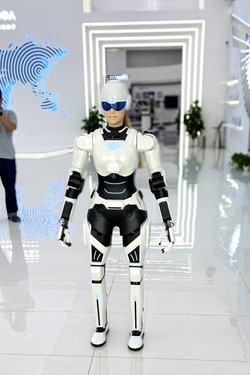 Chery Automobile is also involved in robotics development. When I visited the company’s headquarters, I was greeted by a robot in the reception hall. (© Inoue Hisao)
Among Chinese automakers, Chery Automobile, a company backed by the local government of Wuhu, Anhui, leads in exports. I visited its headquarters in July and had the opportunity to talk to Yin Tongyue, the company’s chairman. “The reason we have become China’s largest auto exporter is that we have been learning from Toyota’s manufacturing practices since our founding,” he told me. He also indicated that the company plans to step up local sales and production in Canada and Indonesia.
Chery plans to strengthen its collaboration with Japanese companies too. Starting in 2027, it plans on selling its EVs at stores operated by Japanese automotive retailer Autobacs. It has also acquired Nissan’s pickup-truck plant in South Africa and is considering producing Chery vehicles at Nissan’s underutilized Sunderland plant in Britain. In some parts of the Japanese automotive industry, though, this is fueling fears that excessive cooperation with Chinese competitors may do little more than help them to supplant Japan completely down the road.
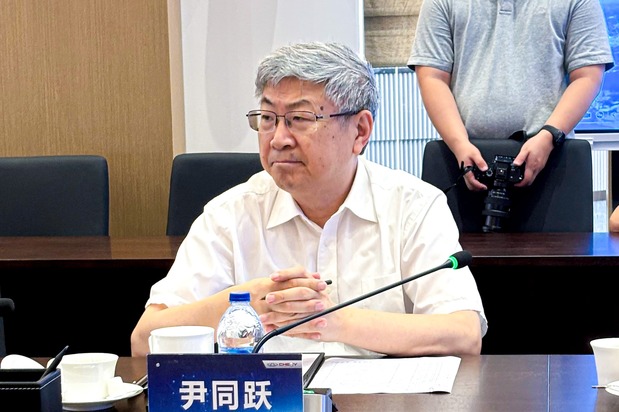 Chairman Yin Tongyue of Chery Automobile. (© Inoue Hisao)
Huawei Developing the “Brains” of Cars
There was more that surprised me on my trip to China. Visiting Huawei’s Lianqiu Lake R&D Center in Shanghai, said to be the global technology giant’s largest research facility, I learned about the company’s plans to bring about major changes in the automotive industry.
Although Huawei built its business around telecommunications equipment, it put its automobile business into full gear around 2023, focusing on intelligent driving systems for autonomous driving and related functions, as well as smart cockpit systems that use AI-enabled voice control. The operating system used in vehicles has been developed based on HarmonyOS, which Huawei uses for its smartphones.
Meanwhile, Toyota has selected Huawei’s in-vehicle OS for the bZ7, an EV it launched in China in March 2026. I was also told by a Honda executive that without Huawei’s cockpit system, cars are unlikely to sell well to younger consumers in China.
Climbing to the Top of the Supply Chain
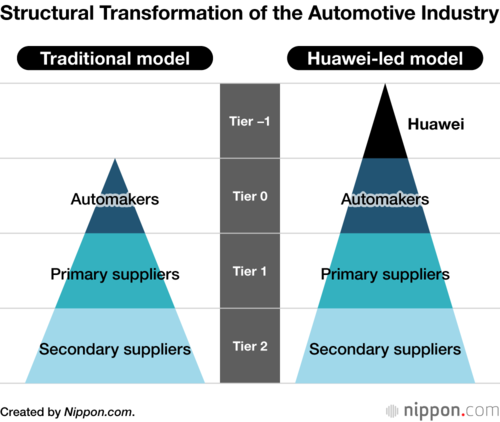
China is now seeing a major structural transformation in its automotive market, and Huawei is driving it. Huawei does not manufacture automobiles itself. Instead, it outsources production to a group of five automakers, which includes Shanghai Automotive Industry Corp., Beijing Automotive Industry Holding Co., and the Anhui Jianghuai Automobile Group, or SAIC, BAIC, and JAC. Under the multibrand project, known as HIMA (Harmony Intelligent Mobility Alliance), each manufacturer produces vehicles under a distinct brand. Although HIMA is considered a partnership, the reality is that these automakers have effectively become Huawei’s contracted manufacturers.
Huawei takes the lead in product planning and development, has the automakers adopt its high-value-added intelligent parts and systems for vehicle intelligence, outsources manufacturing of vehicles to the automakers, and finally sells the finished cars directly through the same retail stores it uses to sell smartphones and consumer electronics.
In the automotive supply chain, automakers that own the vehicle brands have occupied the top position, or Tier 0. Beneath them are the suppliers, organized into successive tiers: Tier 1, Tier 2, and so on. Huawei, however, can be viewed as sitting one level above the automakers, effectively creating a “Tier −1,” so to speak. Under the traditional industry structure, Huawei would have been a Tier 1 supplier providing systems to automakers. Under the new scheme, however, the roles appear to have become reversed.
This composition is reminiscent of Apple’s business model, where the US company plans and develops its smartphones while outsourcing manufacturing to companies like Taiwan’s Hon Hai (Foxconn). In such a model, added value comes more from the planning and development side rather than the manufacturers.
Of Huawei’s 2025 sales of 880.9 billion yuan (¥20.8 trillion), its automotive business accounted for just 45 billion yuan (¥1.1 trillion), or only 5% of the total. While this is not yet a very large source of revenue, the segment grew 72% year on year, the highest growth rate among the company’s businesses. While domestic market leader BYD saw its NEV sales in China decline 6.3% to 3.49 million vehicles, HIMA’s sales surged 32.3% to 0.59 million, making it the sixth-largest player in the domestic NEV market.
It is known that Apple once pursued a top-secret project exploring its own entry into the automotive industry. Codenamed “Project Titan,” it reportedly involved research and development on a unique autonomous driving experience using Apple’s own software; manufacturing of the vehicles would have been outsourced to established automakers. The company is reported to have walked away from the project in 2024.
Had Apple successfully implemented such a business model, it may have wrested control of the automotive industry from automakers. Huawei has emerged as the company picking up where Apple left off, apparently turning its vision into reality.
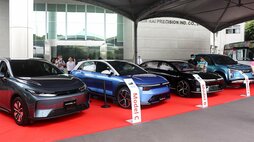
(Originally published in Japanese. Banner photo: The Maextro S800, Huawei-led HIMA’s ultra-luxury EV. JAC, based in Anhui Province, manufactures the vehicle. © Inoue Hisao.)

 Read in other languages