Ten Exceptional Utensils from Kappabashi, Japan’s Kitchen
Japanese Cutting Boards for the Kitchen and Table
Culture Guide to Japan Food and Drink- English
- 日本語
- 简体字
- 繁體字
- Français
- Español
- العربية
- Русский
Made from Premium Wood
Many households use light, inexpensive cutting boards made of plastic, but professional cooks generally avoid them. According to Iida Yūta, the sixth-generation owner of Iidaya, “Knife blades can be damaged when knives are used on a hard surface, so to keep them in good shape, a wooden cutting board is best. Cooking professionals swear by cutting boards made from Aomori hiba.”
Hiba, a type of conifer in the cypress family, is a species endemic to Japan. Aomori Prefecture accounts for 80% of domestic hiba. Along with Akita sugi cedar from Akita Prefecture, and Kiso hinoki cypress from Nagano Prefecture, it is considered one of the “big three” most beautiful wood species in Japan.

A hiba forest in Aomori Prefecture. (© Pixta)
Prized for its density, durability, and the natural antibacterial agent hinokitiol it contains, hiba takes over 200 years to fully mature. Its characteristics allow Iida to confidently recommend these cutting boards to customers concerned about mold. Hiba cutting boards are hygienic and their pleasing fragrance makes cooking a pleasure.
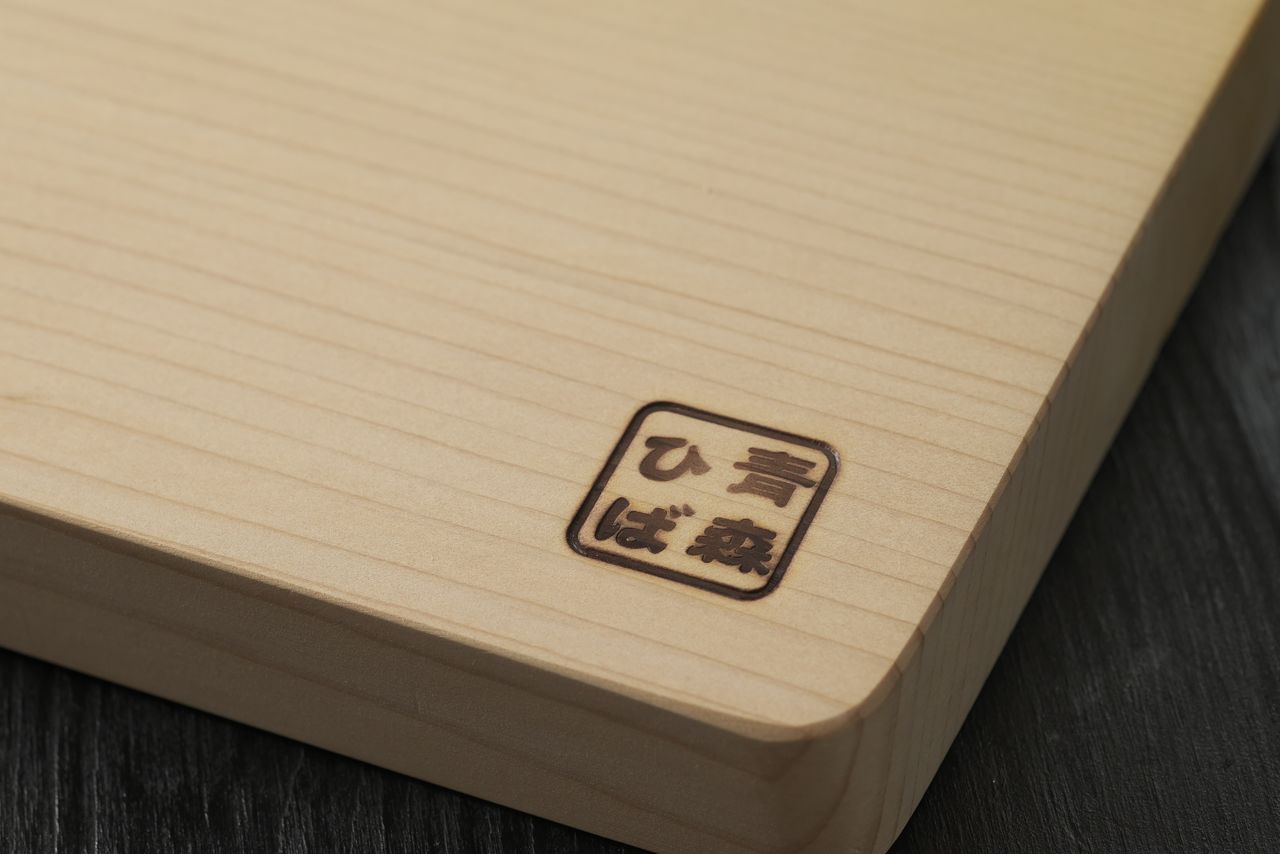
Cutting boards made from Aomori hiba have a wonderfully smooth texture. (© Nomura Kazuyuki)
Presumably having heard of these characteristics, an increasing number of foreign customers come to Iidaya to purchase hiba cutting boards. Iida says that some people come to his shop asking for “the same kind of cutting board I saw a Japanese chef using in a film.”
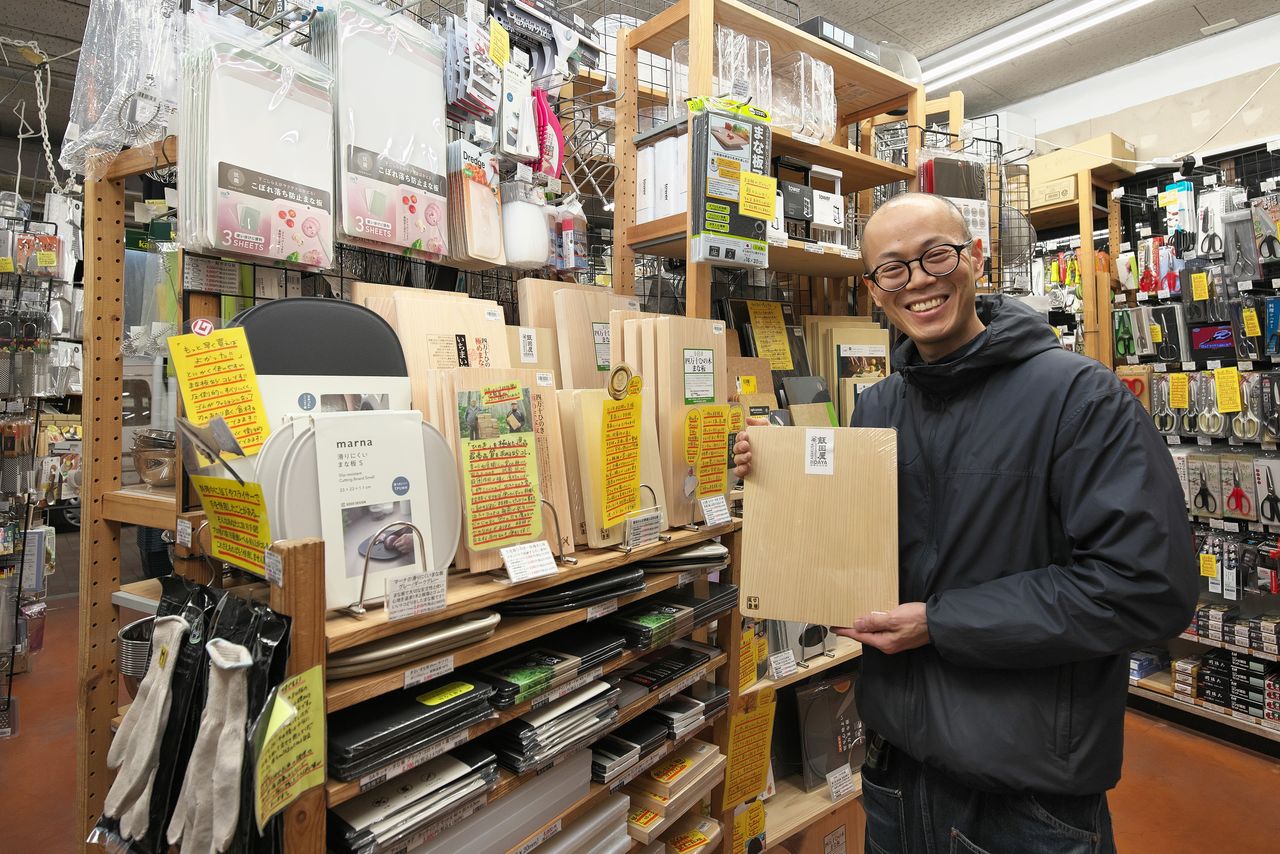
The selection of cutting boards at Iidaya runs from wood to bamboo and plastic. (© Nomura Kazuyuki)
Chopping at the Table
Cutting boards that can be used at the table are in the spotlight too. These round black cutting boards, made from a special resin containing glass fibers, perfect for chopping small quantities of ingredients at the table, are called, aptly enough, “Chop Plate.”
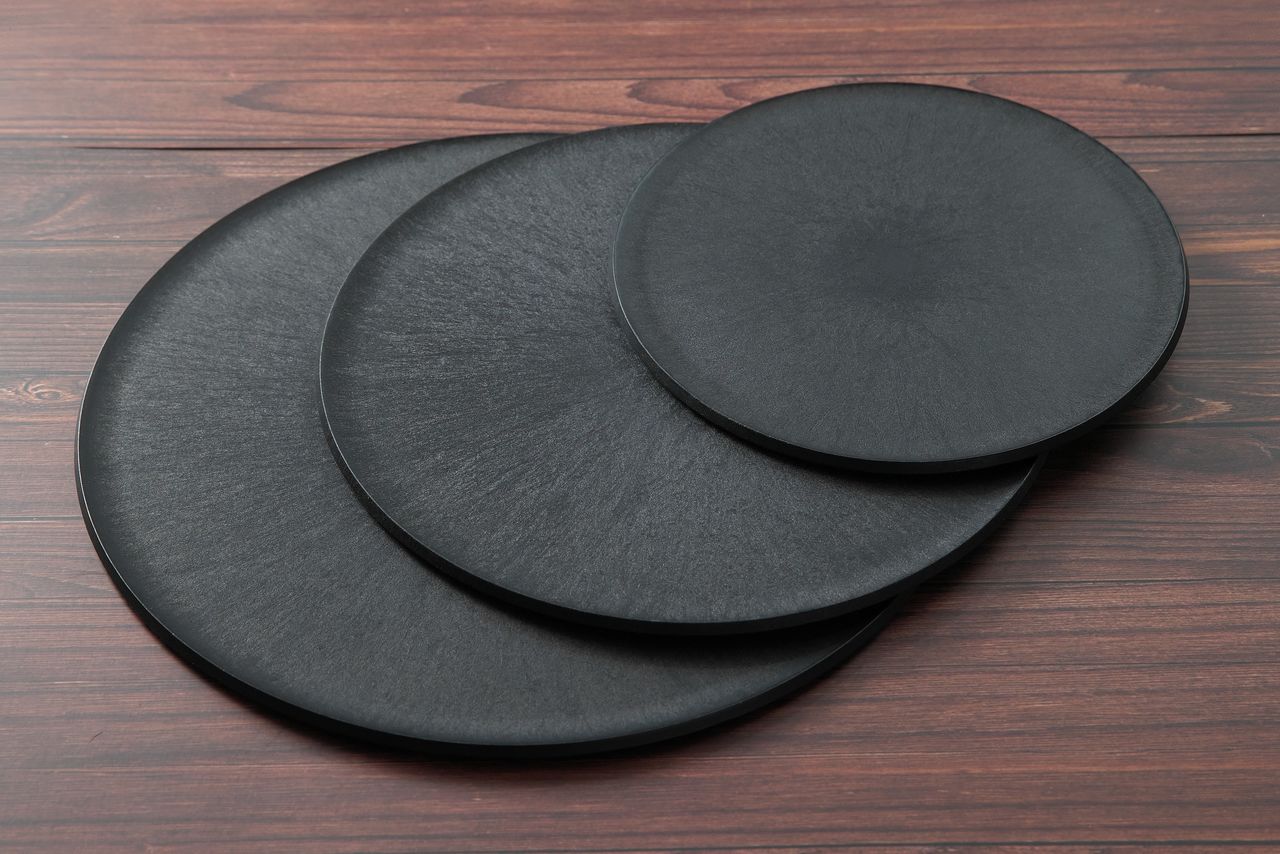
The Chop Plate comes in three different sizes. (© Nomura Kazuyuki)
The Chop Plate was developed by a manufacturer experienced in precision plastic processing, based in Sakai, Osaka. Although the company is involved mainly in producing parts for automobiles and home appliances, it decided to take advantage of its technology and branched out into the completely unrelated field of kitchenware.
At first glance, the plates look like ceramics, but thanks to their plastic material, they are light and shatterproof, and their embossed surface makes cuts less noticeable. The plates’ slightly raised rim keeps liquids from spilling, and they are microwave- and dishwasher-safe. The Chop Plate, which doubles as a cutting board and a serving dish, has recorded cumulative sales of more than 220,000 units since launch in 2021. Iida notes that there is especially strong demand for this item from foreign visitors, especially from Asia.
These two varieties of cutting board represent different strands of Japan’s culinary culture: the traditional wooden cutting board, prized for its natural antibacterial properties and refreshing aroma, and the Chop Plate, a plastic cutting board incorporating modern ideas and technology. Both are fine examples of Japanese craftsmanship.
Ten Utensils Sought by Overseas Visitors
- Oroshigane: Traditional Japanese Graters for Every Ingredient on Your Plate
- Suribachiand Surikogi: Function Meets Beauty to Create the Perfect Texture
- Onigiri Molds and Sushi Roll Mats for Beautifully Formed Japanese Cuisine in a Flash
- Japan’s Cutting Edge: Peelers, Slicers, and Scissors
- Tea Kettles and Strainers: Traditional Items with Surprising New Uses
- Pots Galore: Donabe and Yukihira Offering Quick Ways to Cook Every Day
- Frying Pans: Weighing the Choices Between Lifetime Use and Lightweight Cooking Action
- Bentō Essentials: From Tamagoyaki Pans to Nonslip Chopsticks
- Japanese Cutting Boards for the Kitchen and Table
- Soy Sauce Dispensers and Miso Muddlers

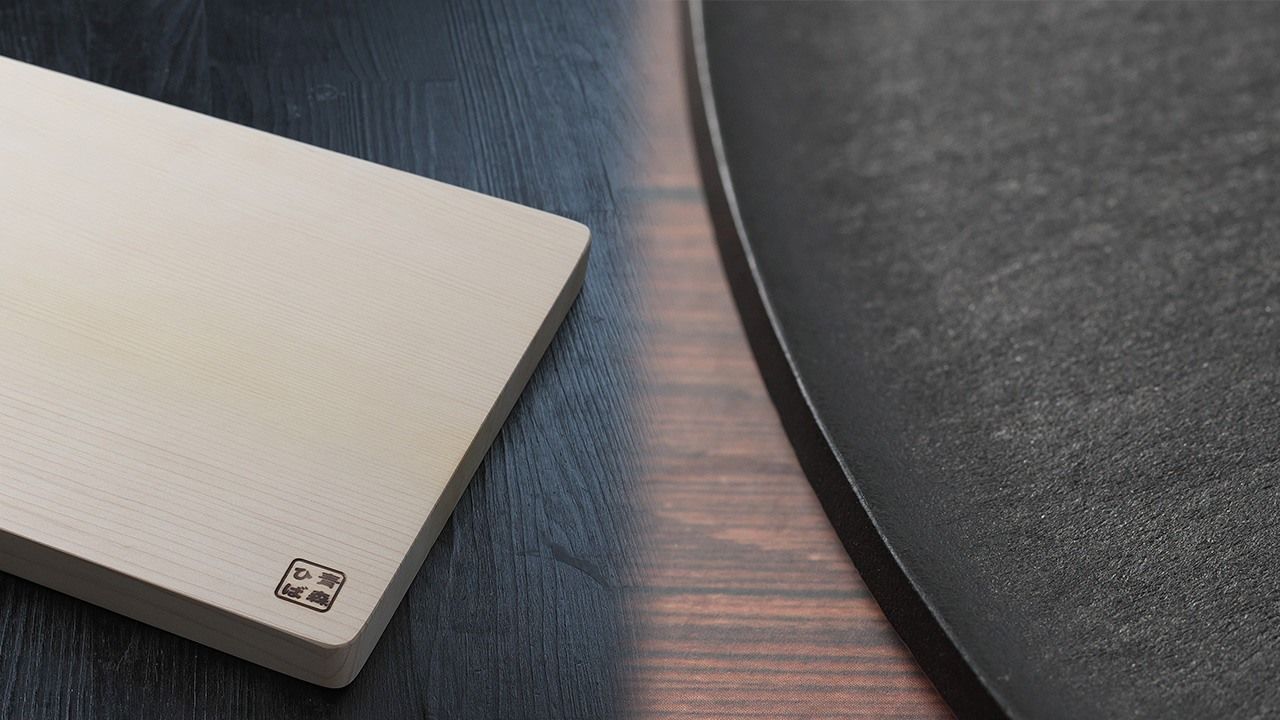
(Originally published in Japanese. Banner photo: Aomori hiba cutting board and the Chop Plate. © Nomura Kazuyuki.)