


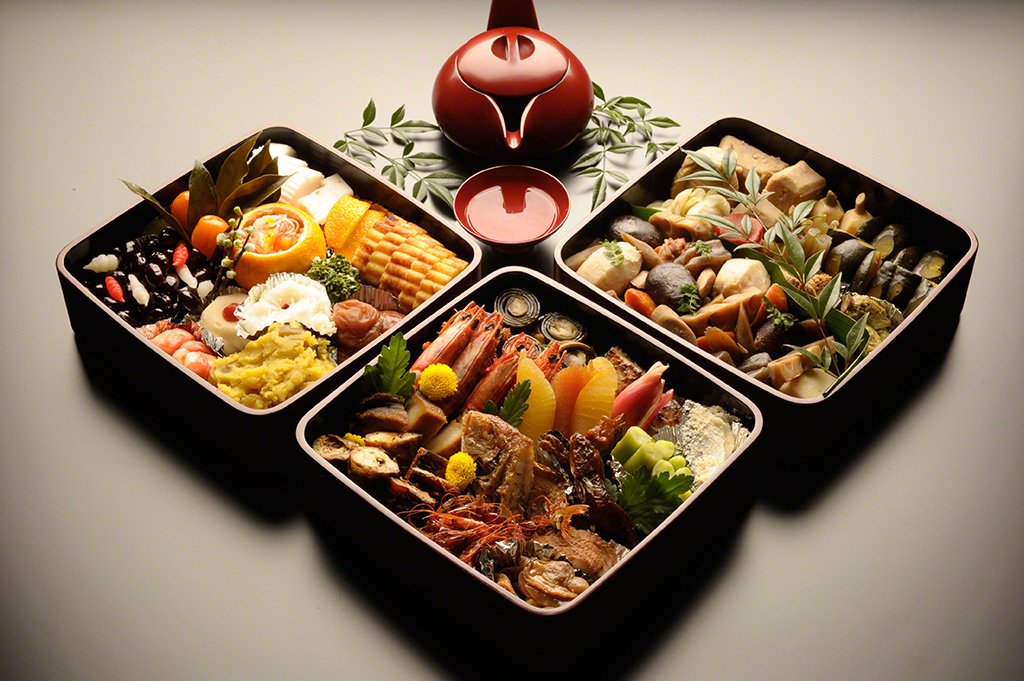
Osechi ryōri as prepared at the Tempura Kondō restaurant, Ginza, Tokyo
First layer: Celebratory foods and auspicious appetizers
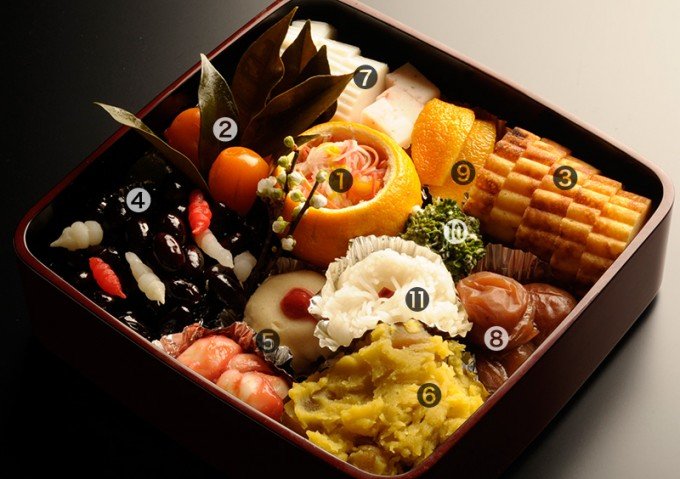

- Kōhaku namasu (Julienned daikon radish and carrot with crushed dried persimmons seasoned in sweet vinaigrette)
- Hatsuki kinkan (Kumquats with their leaves)
- Date-maki (Omelet prepared with minced white fish and egg mixed with sugar)
- Kuromame (Black soybeans)
- Yurine no bainiku-ae (Cooked salad of lily roots and Japanese apricot)
- Kuri kinton (Sweet confection of chestnuts and sweet potato)
- Kamaboko (Fish-paste loaf)
- Umeboshi no kanroni (Candied Japanese apricots)
- Yuzu no kanroni (Candied Japanese citron)
- Nanohana no kōji-zuke (Rape shoots marinated in sake lees)
- Kikuka kabu (Marinated turnip cut into the shape of a chrysanthemum)
Second layer: Grilled dishes and vinegar-dressed dishes
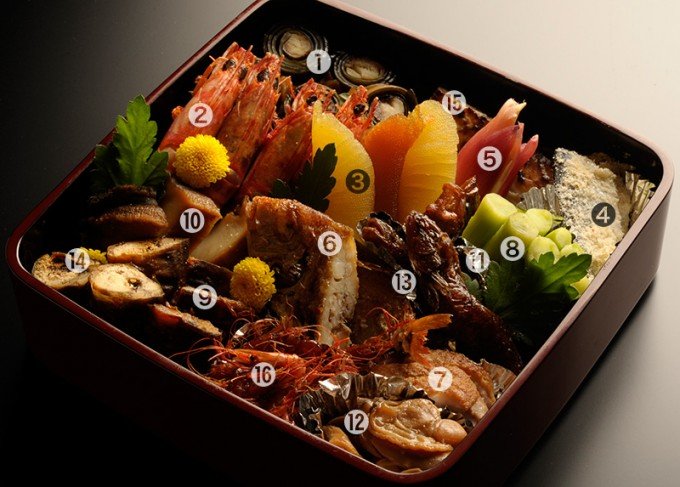
- Kobu-maki (Herring or other fish wrapped in kelp)
- Ebi no gusokuni (Shrimp boiled in the shell; gusoku means “armor”)
- Kazunoko (Herring roe)
- Kohada no unohana-zuke (Gizzard shad pickled with tofu lees)
- Myōga no amazu-zuke (Sweet pickled myōga ginger)
- Kodai no nanban-zuke (Escabeche of sea bream)
- Aigamo no jibuni (Grilled and simmered duck meat)
- Chishatō no shiro miso-zuke (Head of stem lettuce in white miso)
- Unagi no sanshō-ni (Freshwater eel cooked in Japanese pepper)
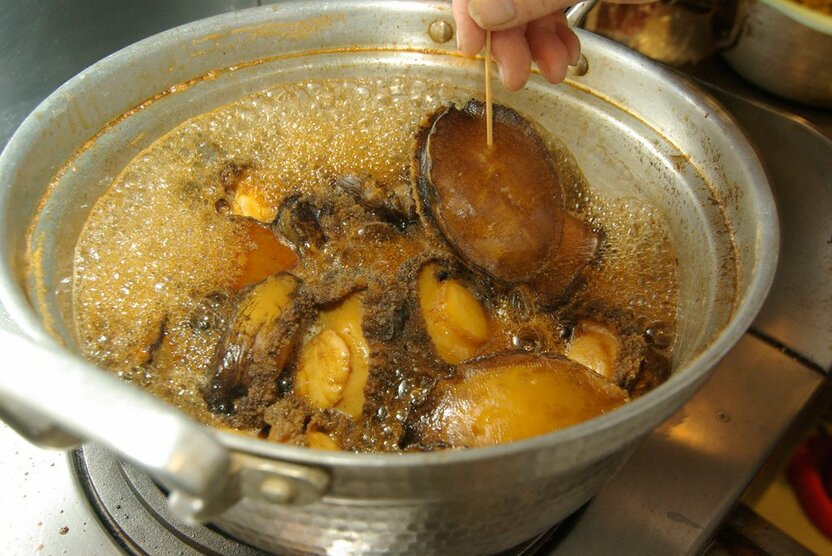
- Awabi no umani (Boiled abalone)
- Sukeko no shōgani (Alaska pollock roe simmered with julienned ginger)
- Hamaguri no shigureni (Sweet-cooked clams)
- Haze no kanroni (Slow-simmered goby fish)
- Komochi ayu no nibitashi (Sweetfish with roe simmered slowly in a light broth)
- Sawara no saikyō-yaki (Spanish mackerel marinated for a week in a mixture of white Kyoto miso and sweet cooking sake)
- Kawaebi no umani (Boiled river shrimp)
Third layer: Simmered dishes
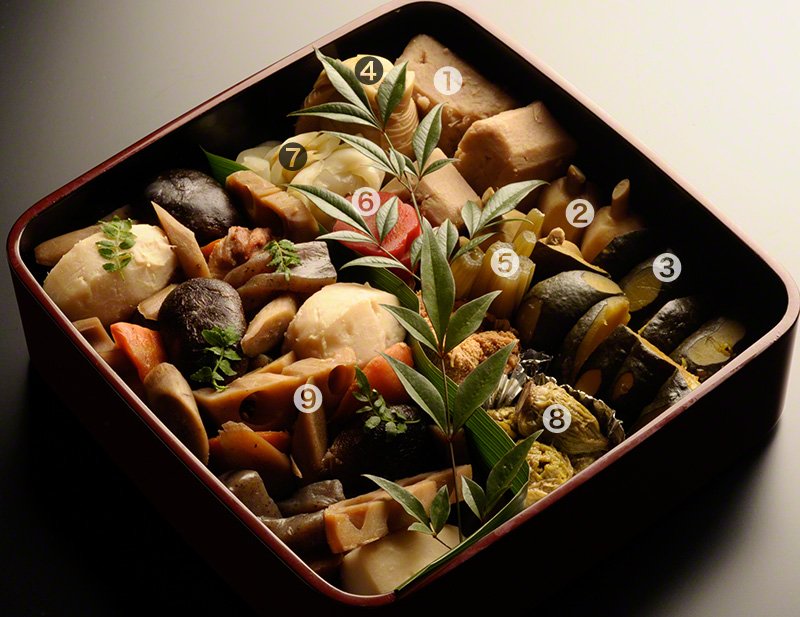
- Yatsugashira no umami (Cooked yams)
- Kuwai no nitsuke (Simmered arrowhead root)
- Kurokawa kabocha no amani (Sweet-simmered black-skinned pumpkin)
- Takenoko no tosa-ni (Bamboo shoots simmered in a strongly flavored broth of bonito and light soy sauce)
- Fuki no nimono (Simmered Japanese butterbur)
- Kyō-ninjin no nimono (Simmered red Kyoto carrot)
- Yurine no kanro-ni (Sweet simmered lily roots)
- Fuki-no-tō no ageni (Fried butterbur sprouts, simmered in a broth)
- Nishime (A dry stew of burdock, konnyaku [devil’s tongue], shiitake mushrooms, lotus roots, chicken, carrots, and taro, simmered in a broth)
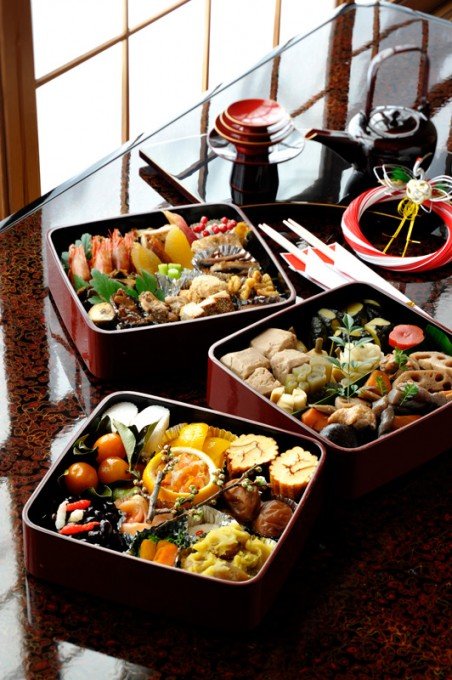
The mouth-watering colors of osechi ryōri brighten Japanese tables over the New Year holidays. “An osechi dinner contains several dozen courses,” says Kondō Fumio. “If someone singles one of them out for praise, the person who prepared the meal might take that to mean that the other dishes weren’t so great. Ikenami-sensei never made that mistake. He would always just say, ‘Thank you. That was delicious,’ and leave it at that.”
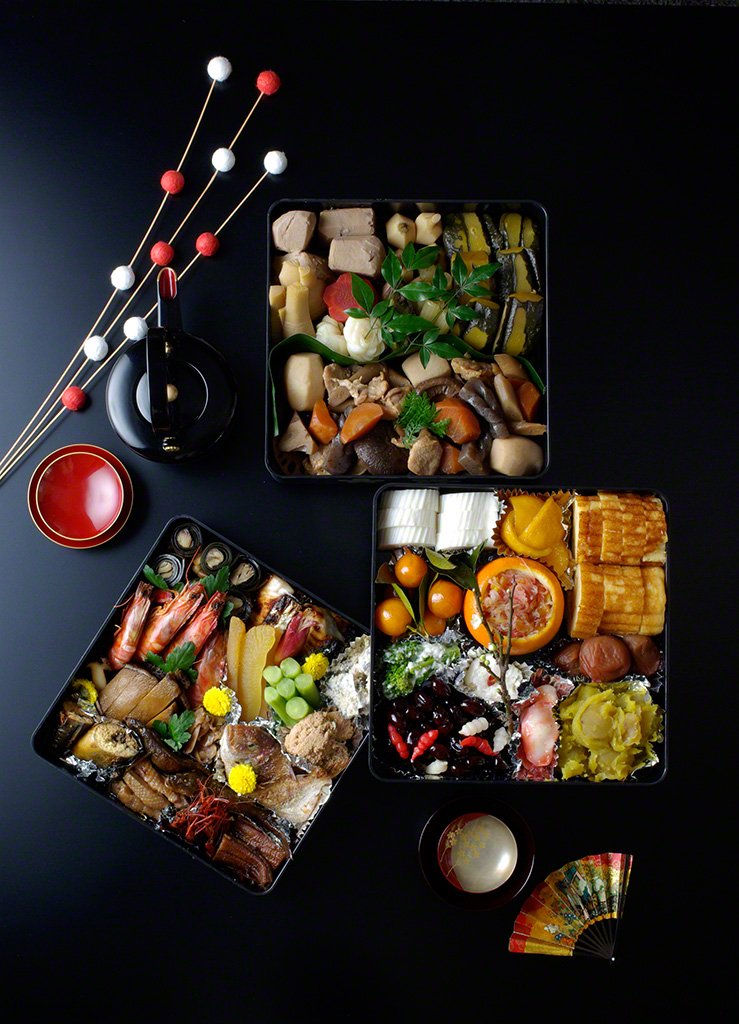 “Osechi ryōri” as prepared at the Tempura Kondō restaurant.
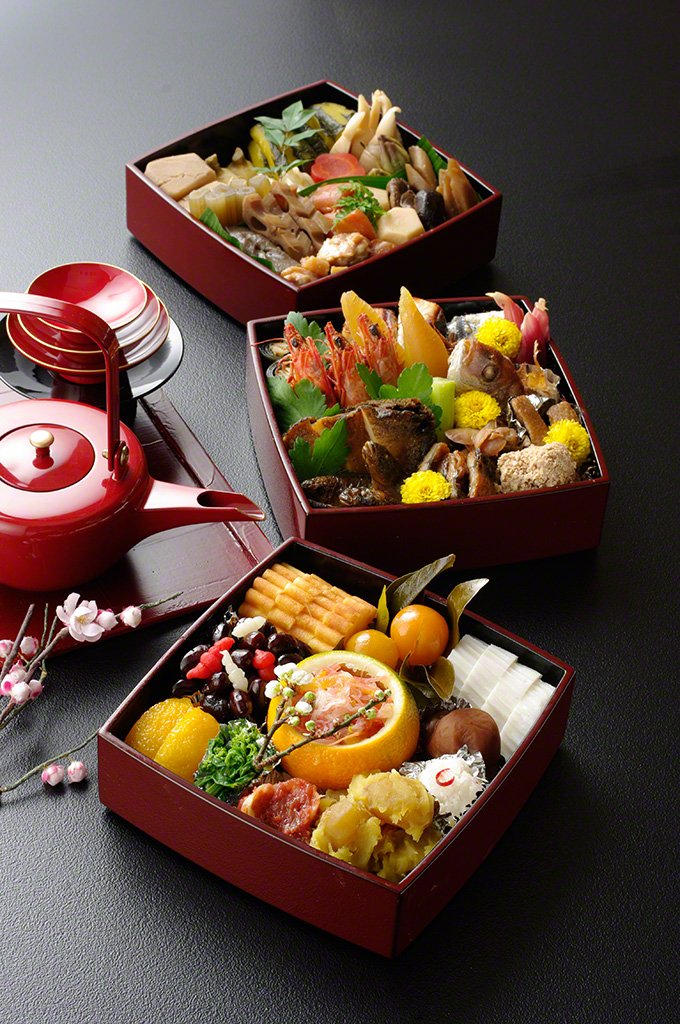 The same delicious flavors are delivered to the Ikenami household every New Year’s Eve.
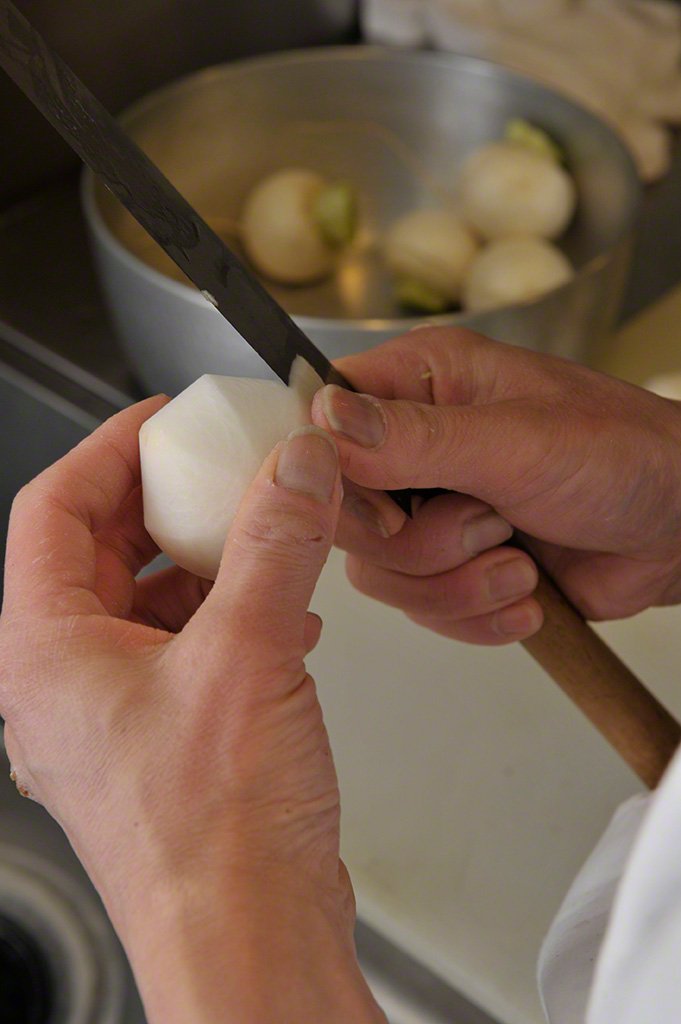 Japanese cuisine calls for all the ingredients to be trimmed to the same size.
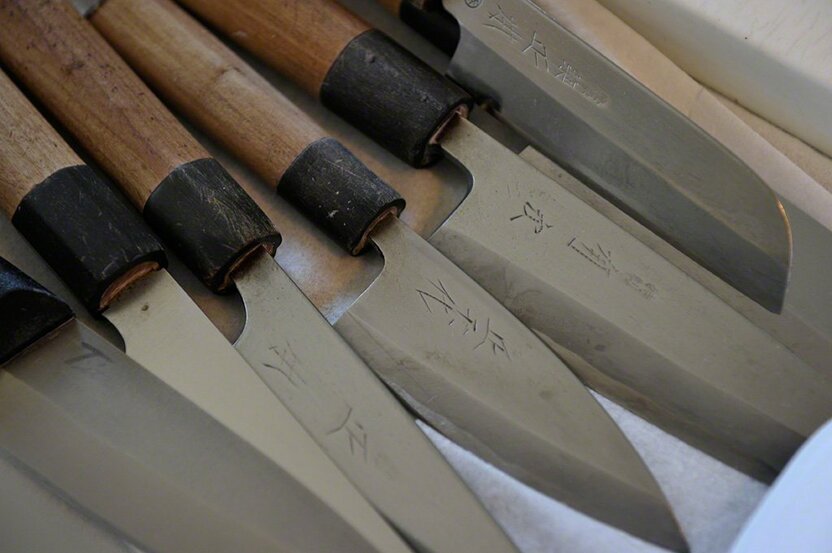 These knives are Kondō Fumio’s most prized possessions.
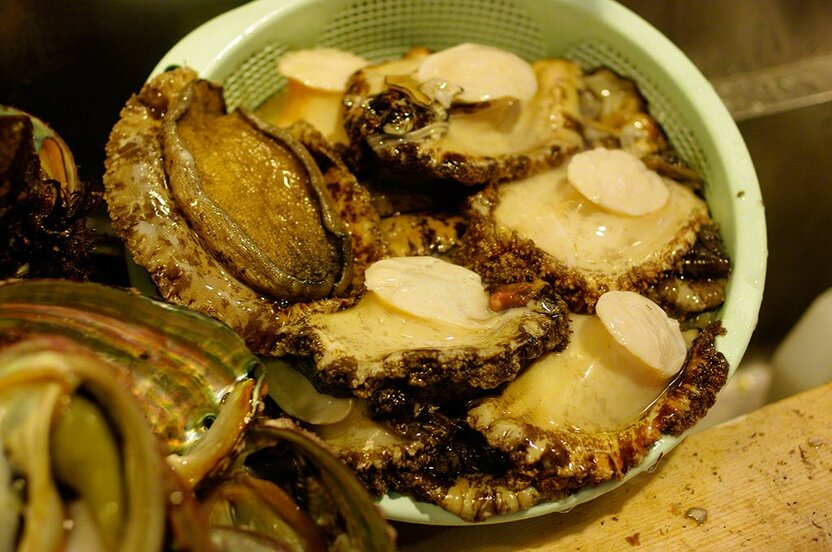 The finest-quality abalone are selected from the Tsukiji fish market and cleaned by hand.
 Frying sea bream. In frying, speed is essential to avoid overcooking the fish.

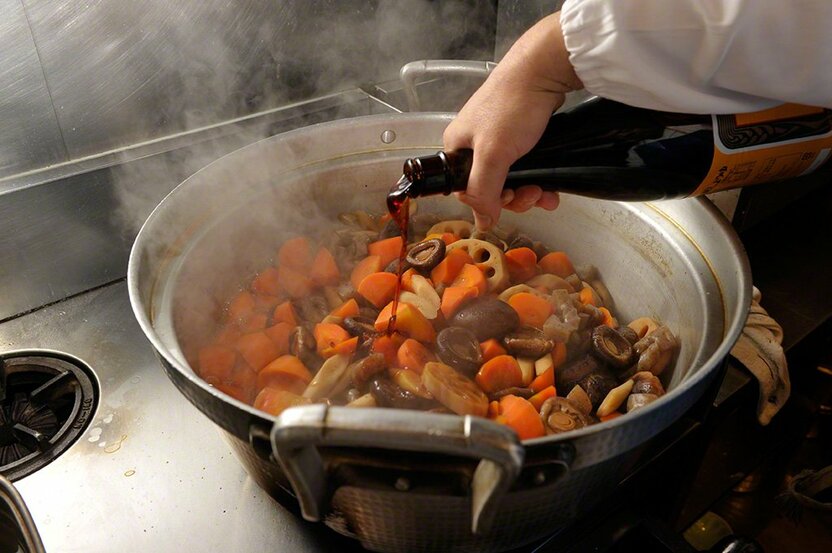 Adding dark soy sauce to the stock for the “nishime” vegetable stew.
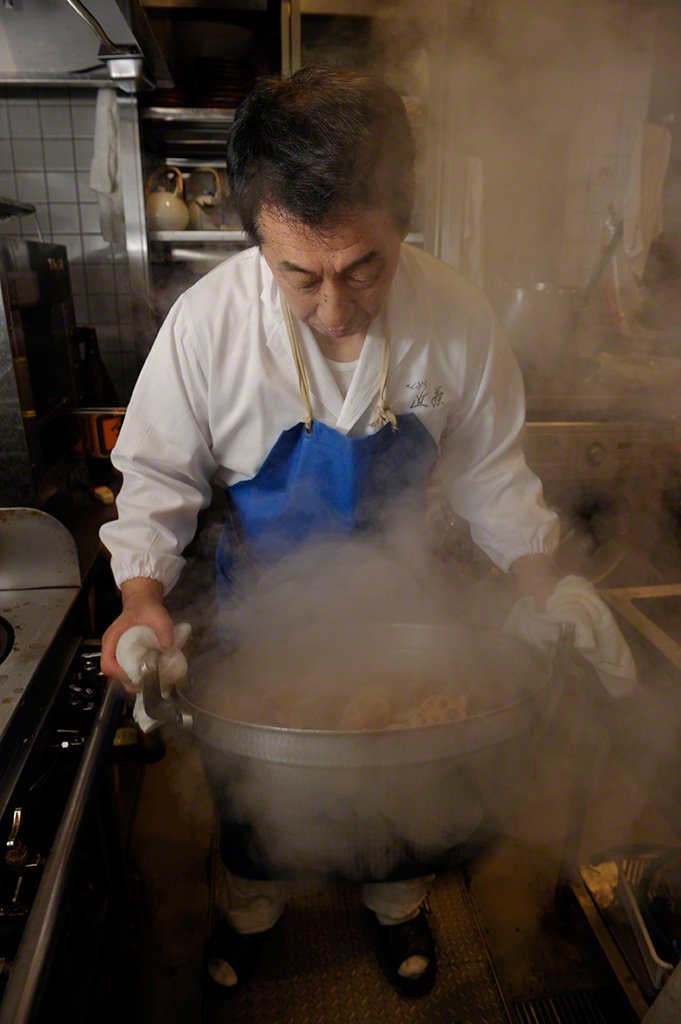 Shaking the cooking pot is heavy work.
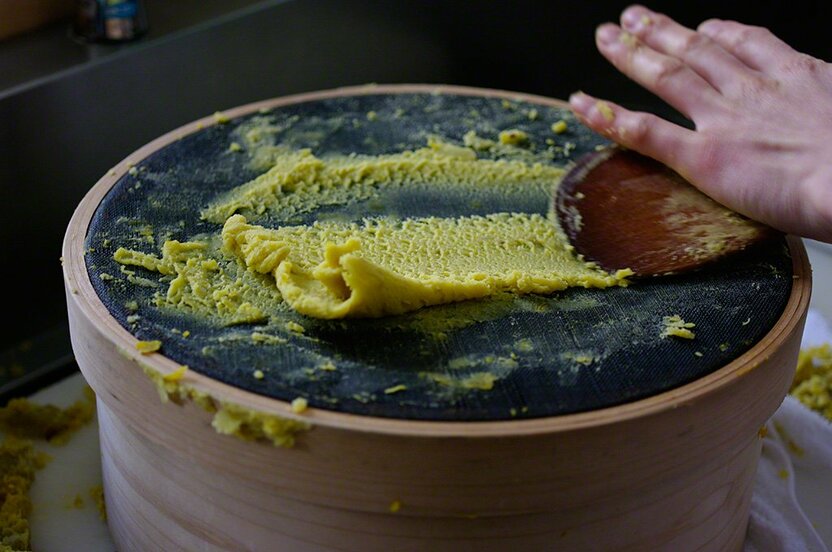 Preparing the sweet potato puree for the “kuri kinton” is time-consuming work, the hand patiently following the lines of the fine netting.
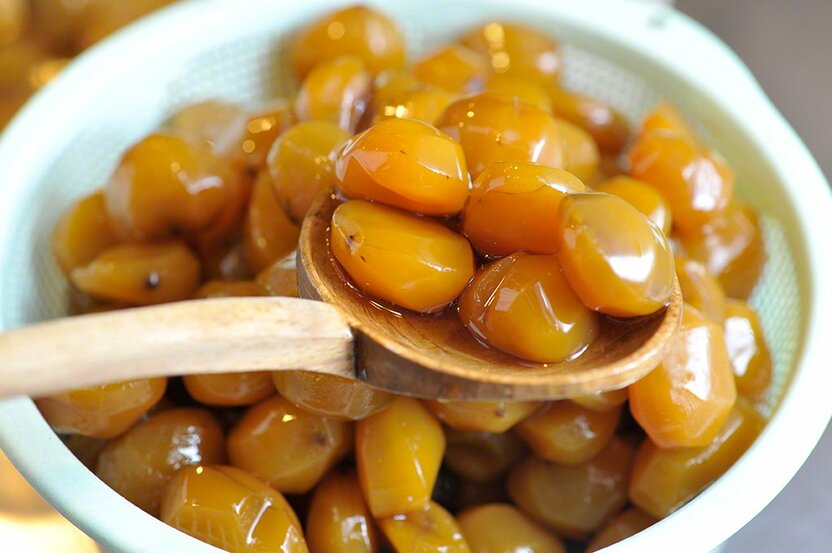 Chestnuts are simmered in honey and left for a whole day.
 Eel cooked in “sanshō” (Japanese pepper). Because the meat is so soft, the cook needs to take special care to make sure that it does not fall apart as it is cooked.
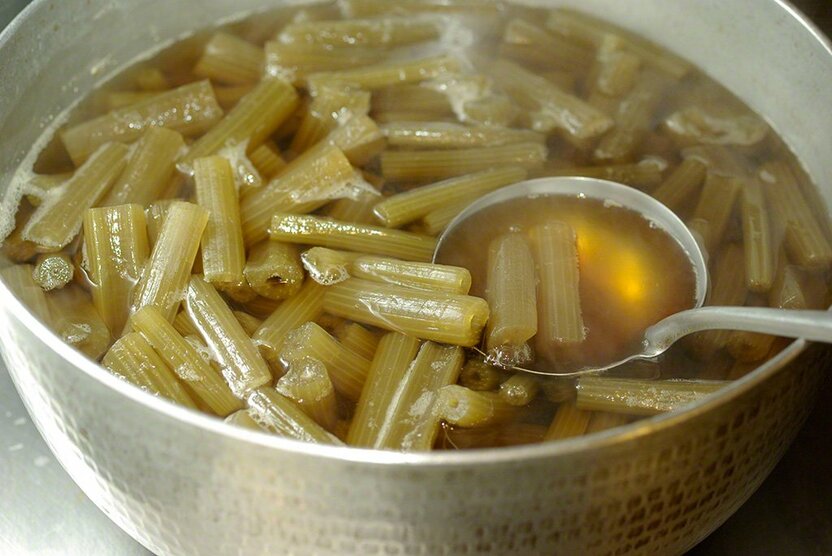 The butterbur is simmered in a light green stock to prevent it from losing its color during the cooking process.
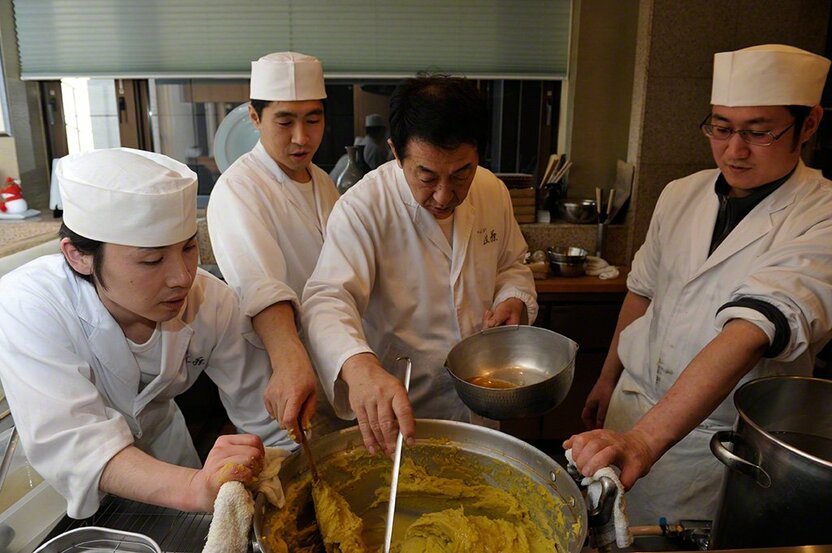 Preparing the chestnuts and sweet potato “kinton” takes many hours of work, and requires the help of several chefs.
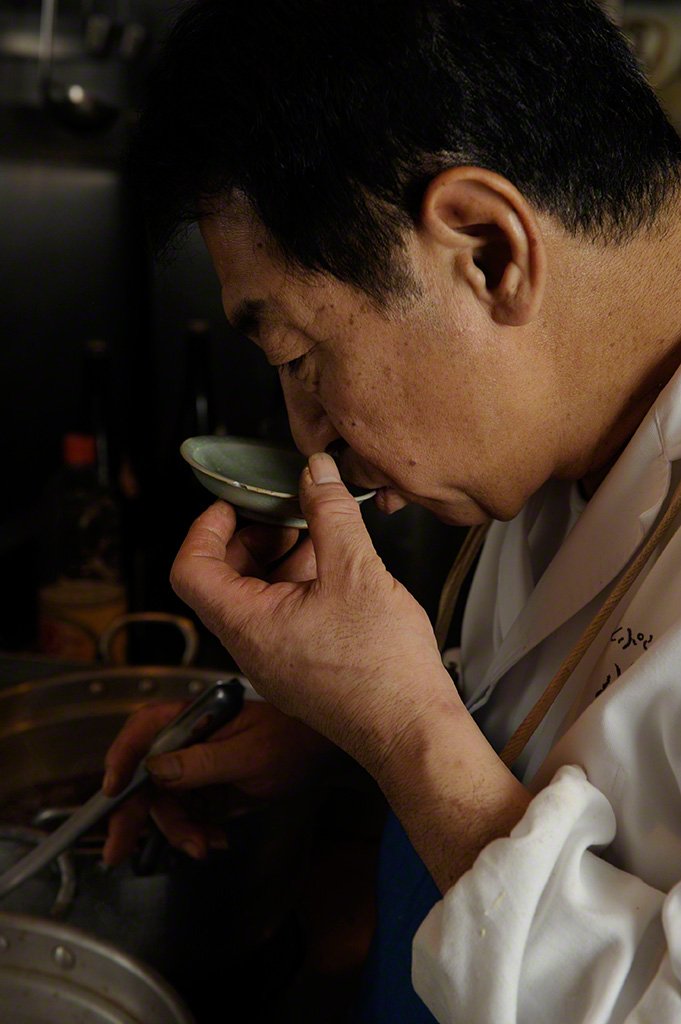 Kondō tastes the simmered dishes frequently to keep a close check on the constantly evolving flavors.
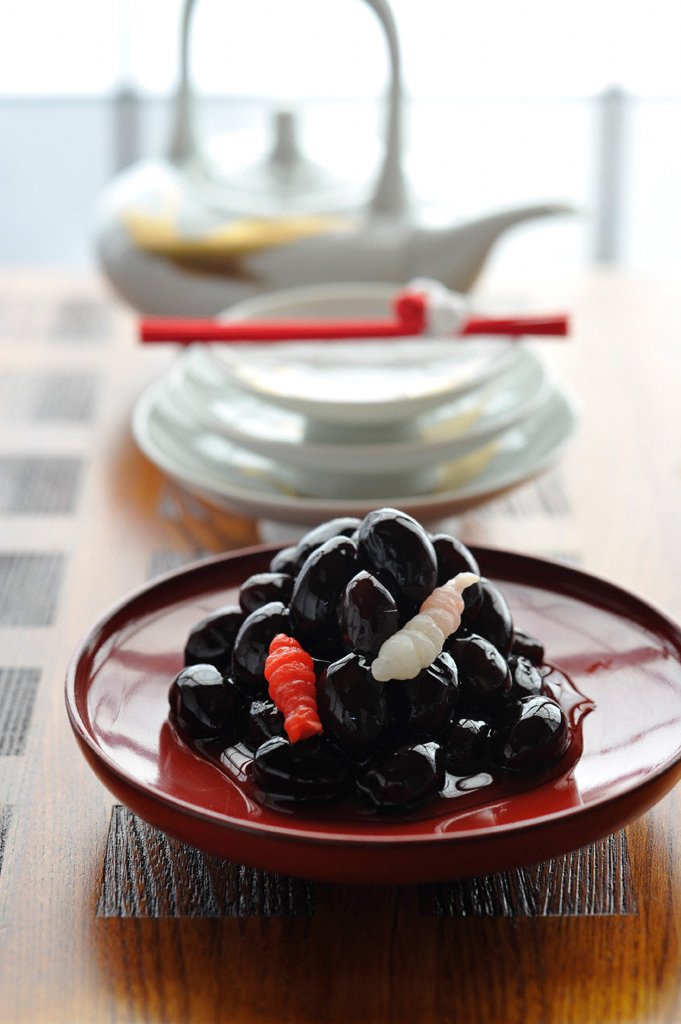 Four different types of sugar are used in the preparation of these sweet black soybeans.
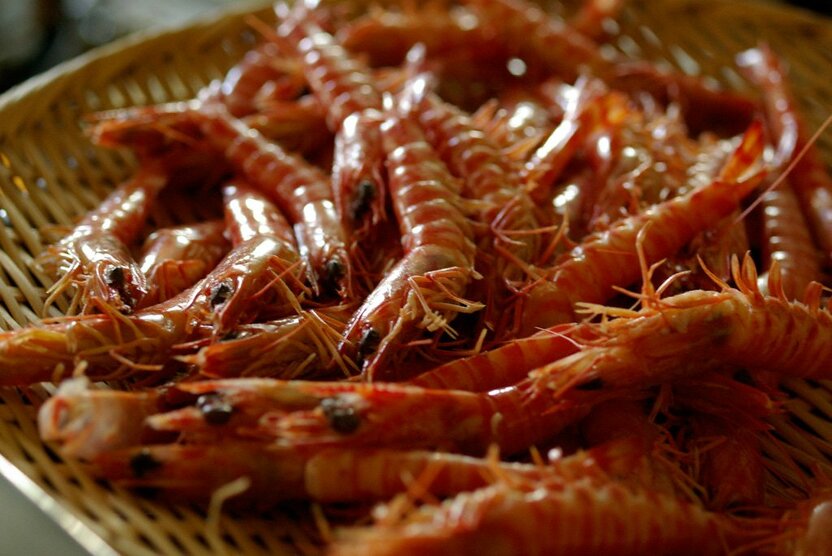 The shrimp are briefly boiled while still alive and then simmered to avoid shrinkage.
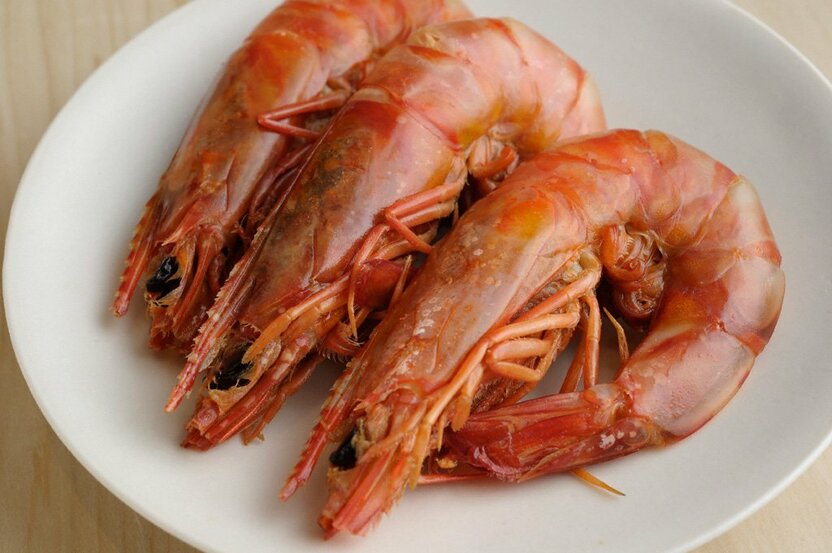 Shrimp cooked in their shells.
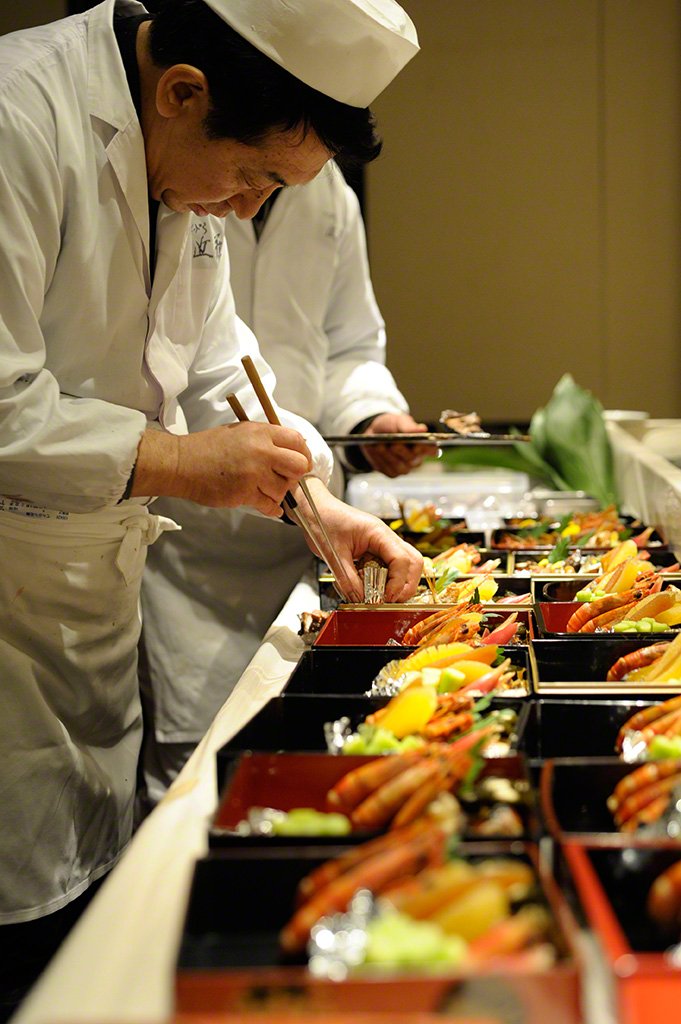 Packing the boxes carefully so that the contents do not shift.
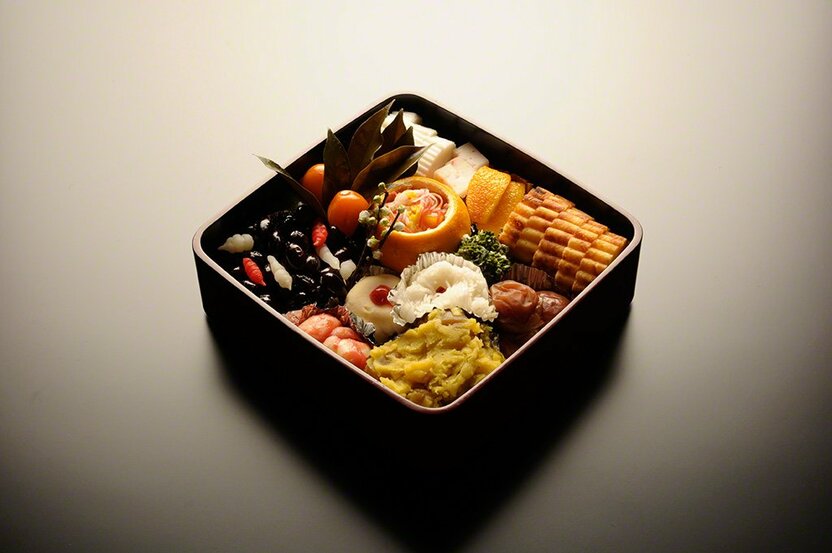 The first layer: celebratory foods and auspicious appetizers.
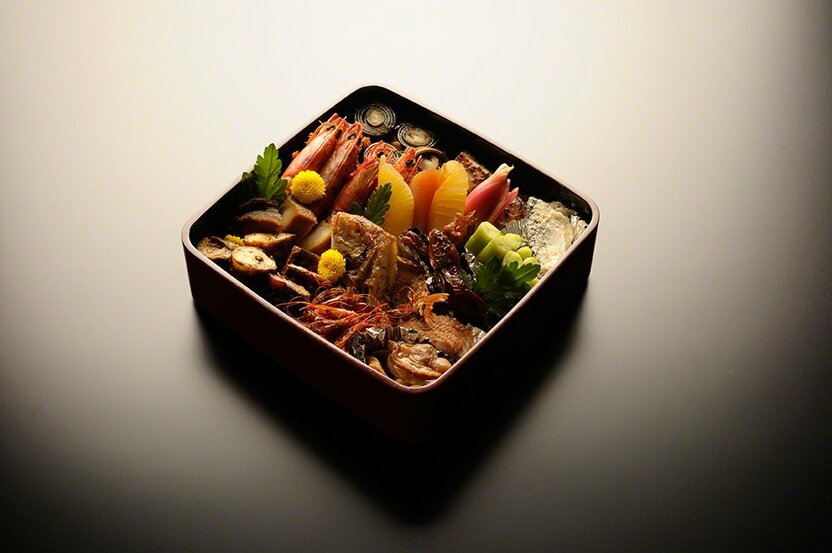 The second layer: braised dishes and vinegar-dressed dishes.
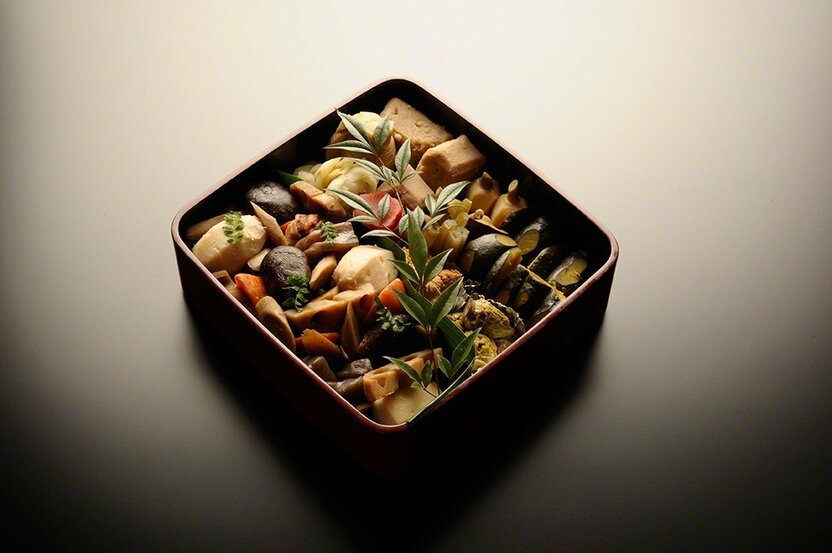 The third layer: simmered dishes.
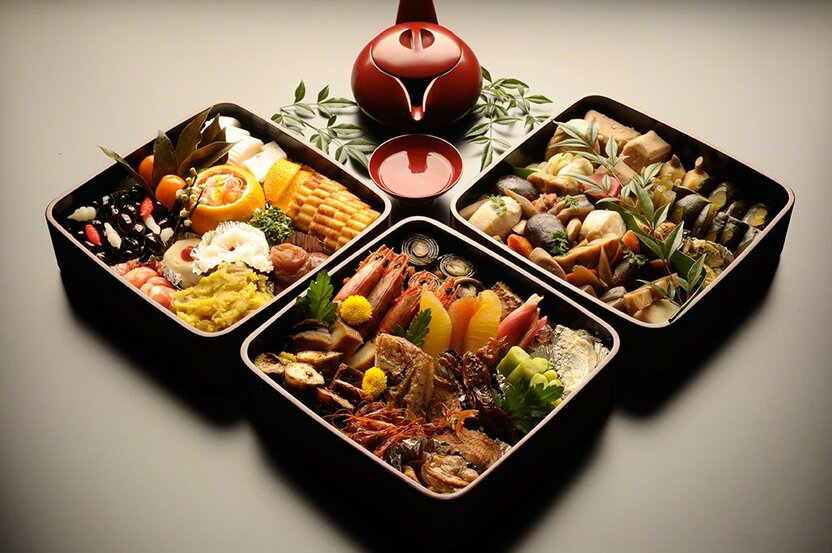 A complete “osechi” meal takes roughly 20 days to prepare.



 Read in other languages