


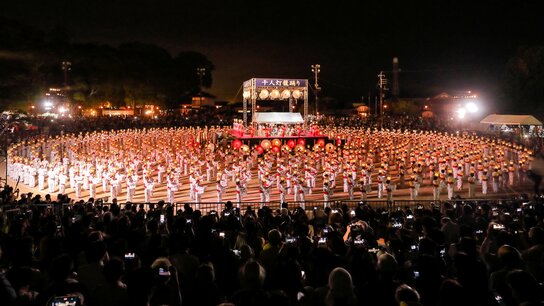
Japan’s festivals “come in threes,” as this series shows. In this entry we introduce matsuri spanning Japan from north to south that feature brilliant lanterns shining against the nighttime sky.
A Welcome for Ancestors’ Spirits
During Obon, which is observed in either July or August, households honor the souls of their ancestors. They erect a lantern or light a welcoming fire by the front gate to guide the spirits back to their homes. On the last day of Obon, they again light a fire, or release lanterns on a body of water, to send the spirits back to the realm of the dead. But with concerns about fire prevention and more people living in apartment buildings, nowadays the practice of lighting a fire is dying out.
Over time, Obon, which has its roots in Buddhist ceremonies, took on the air of a festival. While countries all over the world feature festivals with giant papier mâché figures or lanterns, floats carrying giant lanterns are a unique Japanese spectacle. These lanterns, which gradually acquired distinct local characteristics, enliven summer evenings and provide excitement.
Aomori Nebuta Matsuri
(August 2–7, Aomori, Aomori Prefecture)

 Aomori’s nebuta lanterns grew larger and larger during the Meiji era (1868–1912). Costly to create, the largest can be up to 9 meters wide, 5 meters tall, and 7 meters across. Including the floats on which they are mounted, they can weigh up to 4 tons. (© Haga Library)
Nebuta, or neputa, as they are sometimes called, lanterns are a fixture of summers in Aomori Prefecture. Other cities in the prefecture, such as Hirosaki and Goshogawara, hold their own festivals in early August. The best known and most popular of these is the Aomori Nebuta Matsuri, which attracts 3 million people over the six-day festival period.
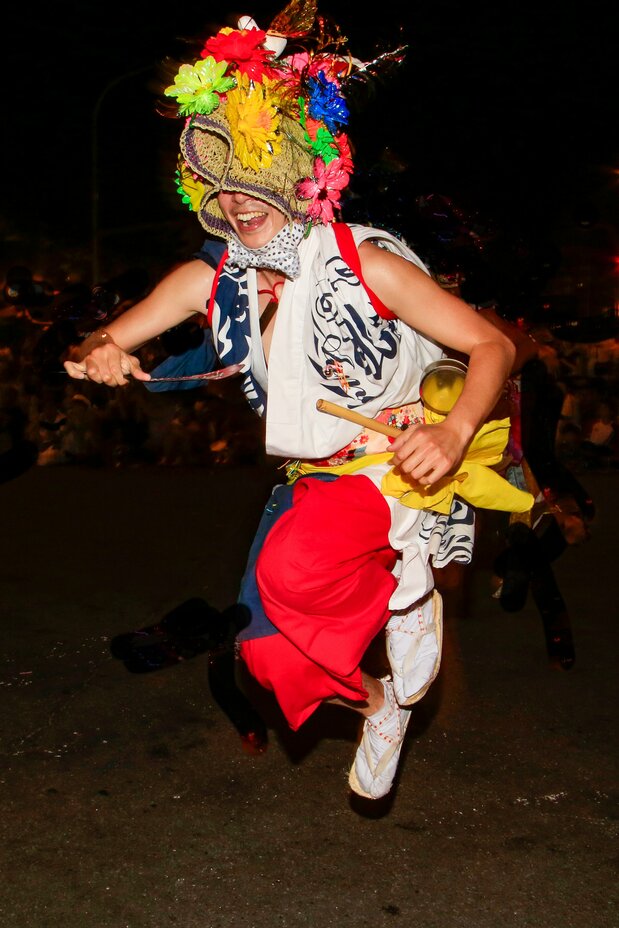 A leaping haneto dancer. (© Haga Library)
At dusk, 20 or so nebuta are lit up. Preceded by haneto dancers who prance and gyrate to the festival music, the parade gets under way to vigorous chants of “Rasse ra! Rasse, rasse, rasse ra!” accompanied by drums and flutes.
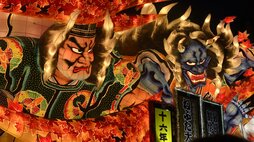
The nebuta depict heroic warrior figures casting fearsome glances, themed on historical personages or mythological beings, with the heroes shown grappling with snakes, skulls or evil spirits. Nebuta-shi artists devote themselves for a full year to creating the figures, whose scale leaves spectators in awe.
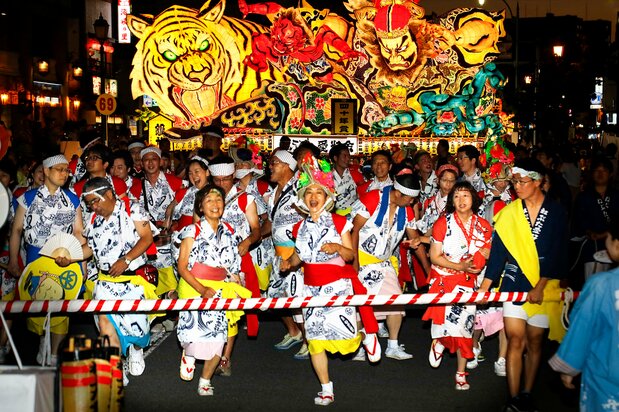 After renting or buying a costume, spectators can join in the dancing. (© Haga Library)
The word nebuta (or neputa) is believed to come from nemuta (sleepiness), recalling a time when farmers in the midst of the busy summer season sought to float their sleepiness away with lanterns. This practice was originally associated with the Tanabata star festival and gradually evolved into the matsuri we know today.
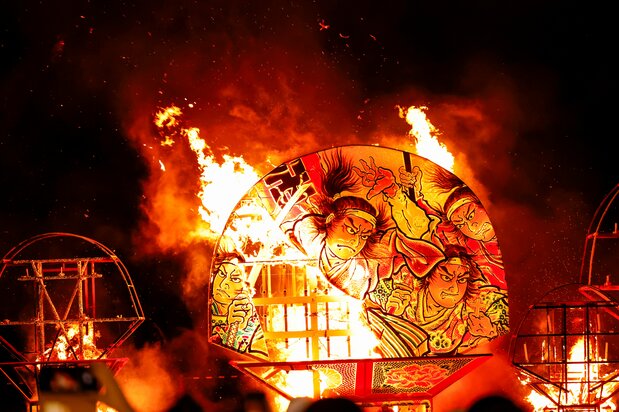 The finale to the Hirosaki Neputa Matsuri is modeled on the shōrō nagashi practice of floating neputa away for the spirits of the dead. (© Haga Library)
Issaki Hōtō Matsuri (Noto Kiriko Matsuri)
(First Saturday in August, Nanao, Ishikawa Prefecture)
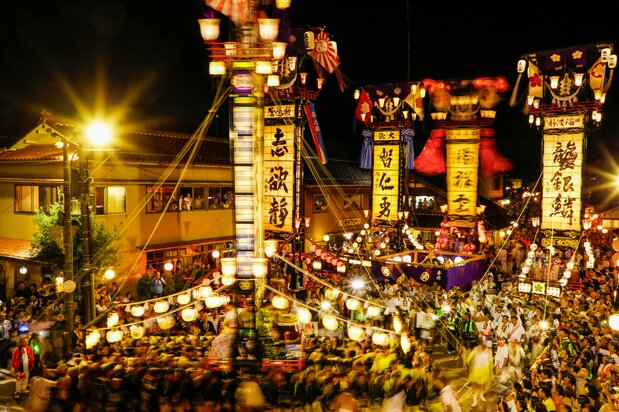 Huge twirling lanterns are the festival’s main attraction. (© Haga Library)
Summer on Ishikawa Prefecture’s Noto Peninsula means the Kiriko Matsuri taking over. Kiriko, which are called hōtō in some districts, are elongated paper lanterns derived from the lanterns used for Obon observances.
During the Edo period (1603–1868), the Noto region was frequently ravaged by epidemics. Taking the hint from Kyoto’s famed Gion Matsuri, which began as a purification ritual during outbreaks of pestilence, in Noto the festivals evolved into grand summer events for driving evil spirits out. Today, there are around 800 kiriko lanterns in Noto, with lively kiriko parades taking place in over 200 local districts.
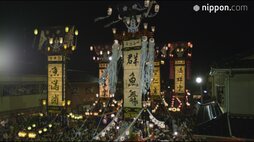
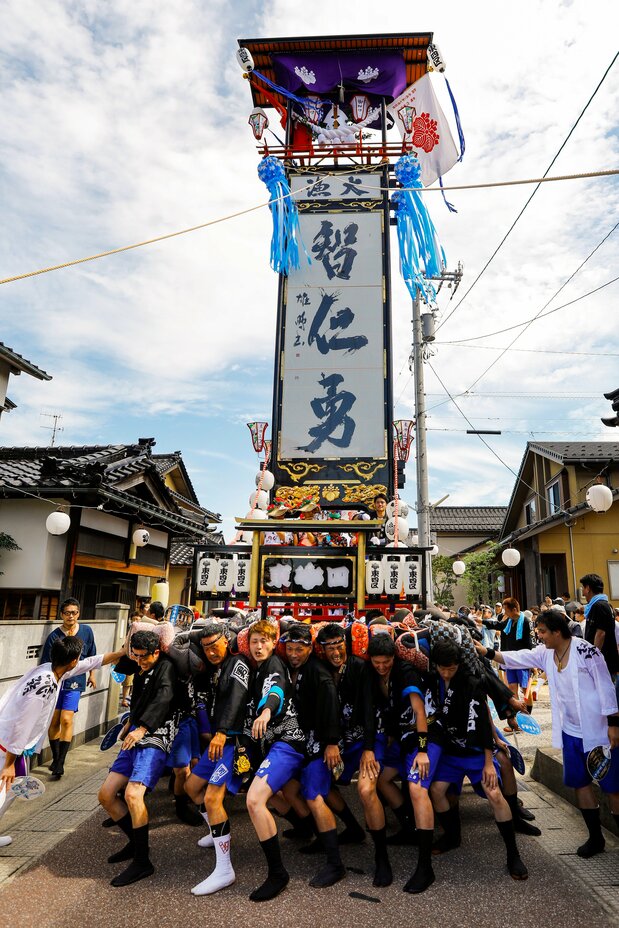 A giant lantern, dodging eaves and electrical wires, is maneuvered through a street in Nanao, Ishikawa. (© Haga Library)
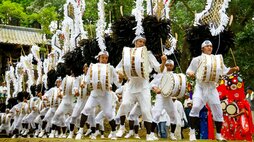
The best-known of the kiriko festivals, which take place from July to October, is the Issaki Hōtō Matsuri in Nanao, a city in the middle of the peninsula. Six districts parade their kiriko floats, which stand 12 to 15 meters high and weigh up to 2 tons, through the streets to pray for bountiful fish catches. The front of each kiriko features auspicious kanji related to its district, while a mushae portrait of a heroic warrior adorns the back.
Each float is borne by 100 men, whose hearty cries of “Sakkasai! Sakasassai!” are accompanied by flute and drum music. The sight of floats threading through narrow streets and barely clearing the eaves of homes along the route is a thrilling spectacle typical of this Noto festival.
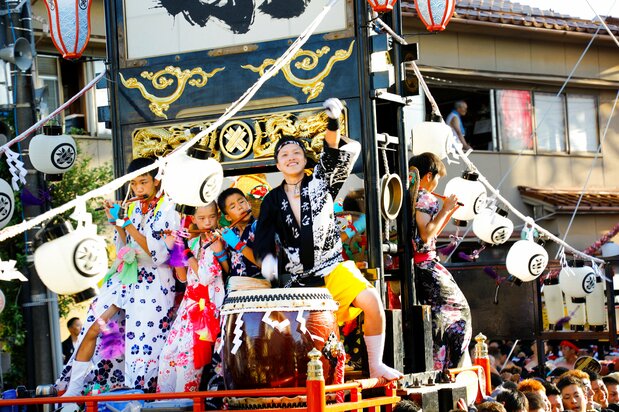 Flutes and drums play a lively festival tune. (© Haga Library)
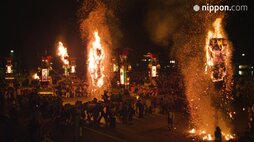
The festival ends with the six floats circling an open space in the town. They are lit simultaneously and lifted up in the air as their bearers break into a boisterous dance. Even so, the bearers’ coordinated actions hint at the solidarity felt in a fishing community.
The January 1, 2024, earthquake caused widespread damage throughout the Noto Peninsula, and only half the number of districts usually holding a festival were able to do so that year. The Issaki Hōtō Matsuri was also scaled back, but offered prayers for the area’s recovery and a bright future.
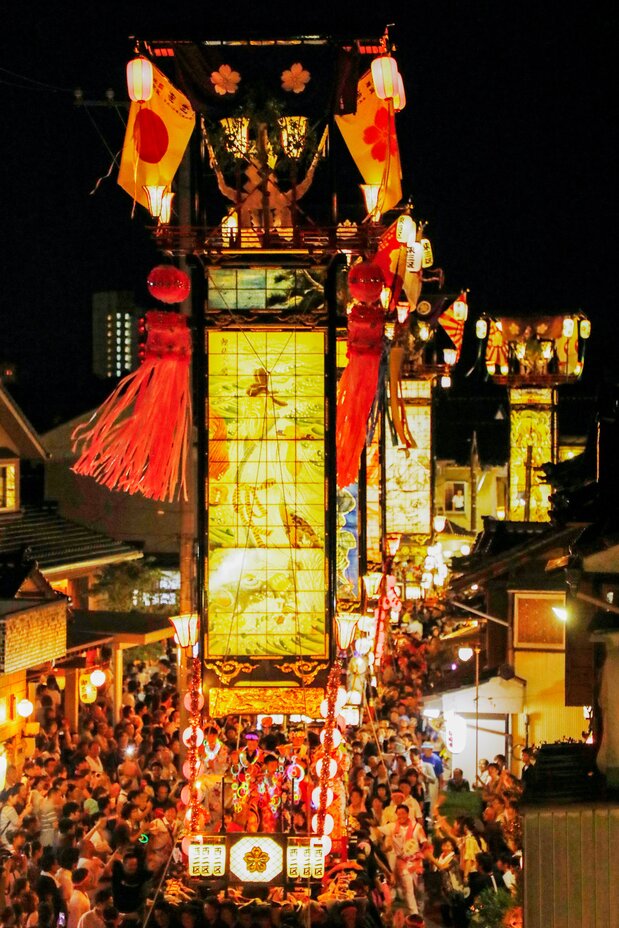 A lantern showing a heroic warrior driving away disaster glows in the night. (© Haga Library)
Yamaga Tōrō Matsuri
(August 15–16, Yamaga, Kumamoto Prefecture)
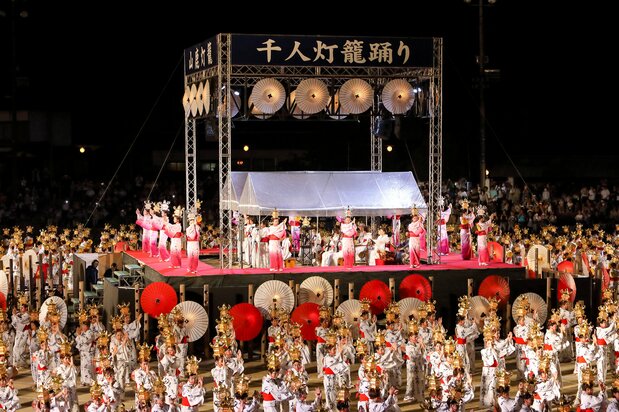 Practice makes perfect: hundreds of women in a synchronized dance. (© Haga Library)
Yamaga, a city in northern Kumamoto Prefecture, has long been a center of traditional washi paper-making. Its lanterns, made of handmade washi glued together and using no wood or metal parts, are also known as a traditional craft.
Legend has it that Yamaga paper lanterns originated some 2,000 years ago, when Emperor Keikō was welcomed by villagers bearing torches. Ōmiya Shrine, which venerates the emperor, was later erected on the site where he had stayed, and lanterns began to be presented as offerings.
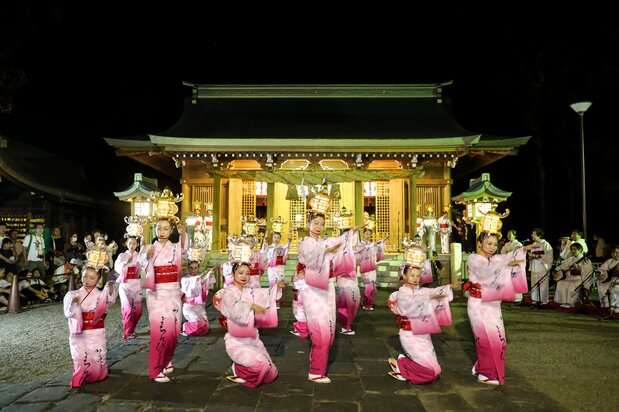 The tōrō odori dance takes place at Ōmiya Shrine and in other parts of the city. (© Haga Library)
At the end of the sixteenth century, Katō Kiyomasa, the lord of Higo Province in what is now Kumamoto, was one of the commanders of Japan’s armed offensive on the Korean Peninsula. Returning to Japan, he brought with him paper makers from the peninsula. Their craft subsequently developed into making lanterns out of washi. Today, each of the shrine parishes creates a tōrō in the shape of a shrine or other structure, which are presented as offerings to Ōmiya Shrine during the festival.
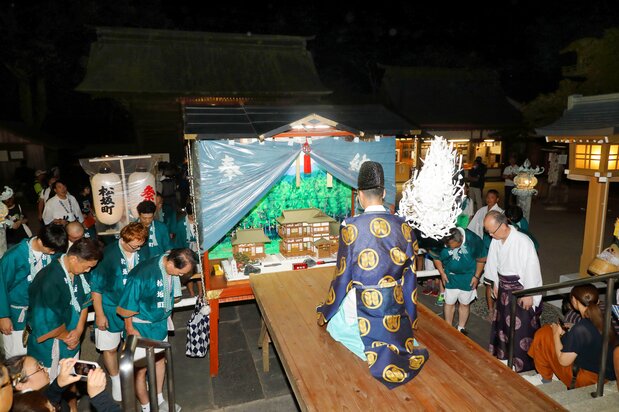 The tōrō created as offerings can be up to 1.5 meters across. (© Haga Library)
The highlight of the festival’s first day is the tōrō odori by women clad in pink yukata, which is performed as an offering to the shrine. These women, members of the Tōrō Dance Preservation Society, practice and appear at events, dancing elegantly to the sound of a bewitching folk tune. The golden lanterns they wear on their heads, composed of six layers of handmade washi, each take three days to make.
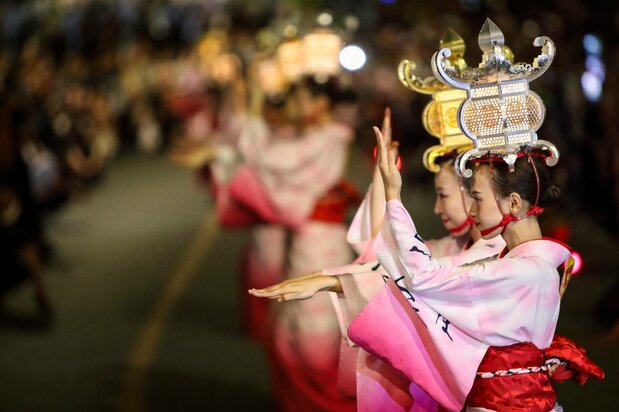 Made of washi, the sparkling gold and silver lanterns each weigh less than 200 grams. (© Haga Library)
The sennin tōrō odori (thousand-person lantern dance) at dusk on the second day is the highlight of the festival. The dancers, clad in yukata and wearing golden lanterns on their heads, perform in a synchronized pattern of overlapping circles, forming a sea of light that creates a dream-like atmosphere.
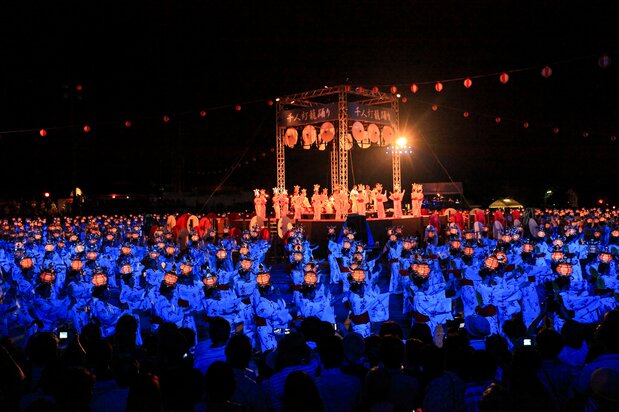 The lantern dance takes place around a yagura elevated stage. (© Haga Library)
(Originally published in Japanese. Dates given are those on which the festivals are usually held. Banner photo: The grand lantern dance is a high point of Kumamoto’s Yamaga Tōrō Matsuri. © Haga Library.)





 Read in other languages