


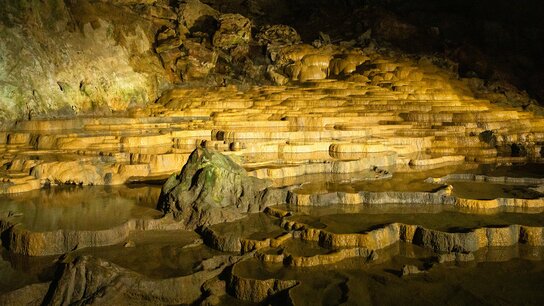
Akiyoshidai, a plateau in Yamaguchi Prefecture, offers enchanting views of natural features formed over hundreds of millions of years—as well as access to the Akiyoshidō, a massive cave complex offering plenty to explore underground as well.
Yamaguchi’s Natural Treasures
Akiyoshidai is a sprawling plateau in rural Mine, Yamaguchi Prefecture, around 300 meters high and dotted with karst limestone formations. Its history goes back some 350 million years. Millenia of coral reefs growing and being covered in sediment resulted in layers of limestone rock, which were pushed up above the surface by tectonic activity. Then, years of rainfall eroded the layers of limestone to form the karst formations that jut from the soil.
Limestone dissolves relatively easily in water, so water seeping through the soil over the centuries has also carved out caves under the plateau, causing collapses and drops in the surface level. The landscape of Akiyoshidai, dotted with these depressions and accented with weathered karst formations, has been designated a special natural monument by the Japanese government.
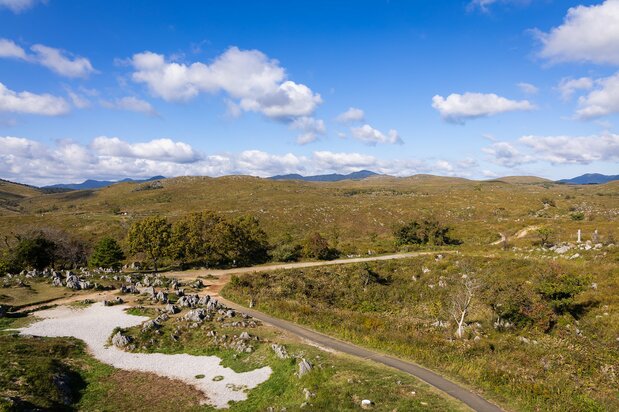
 The view of Akiyoshidai Quasi-national Park from the Karst Observatory deck. (© Nippon.com)
There are over 400 caves in the limestone beneath Akiyoshidai. The largest of them is Akiyoshidō, which is also a designated special natural monument. It is 10.7 kilometers long overall, making it the second longest in Japan after Iwate Prefecture’s Akkadō at 23.7 kilometers. Roughly one kilometer of its length is open to tours, with lighting and walkways, and is one of the most popular sightseeing spots in the prefecture.
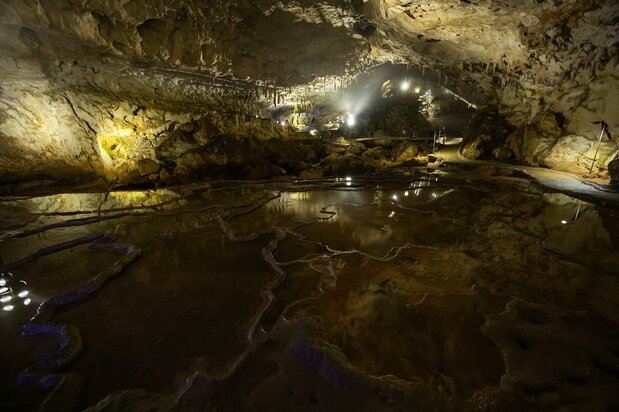 The cave complex has massive open spaces. This photo shows a formation called Chimachida at the bottom of the Senjōjiki cavern, which is 80 meters wide and 175 long. (© Nippon.com)
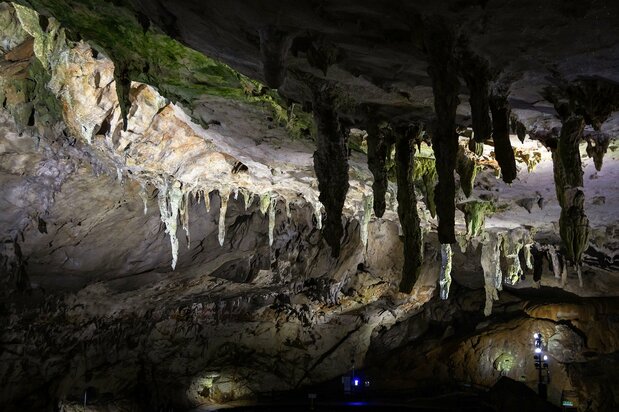 The ceiling above Senjōjiki is covered with countless stalactites, which are called kasazukushi, or “hanging umbrellas.” (© Nippon.com)
Stepping Through to a Massive Cave
The main entrance to Akiyoshidō is at the south end, with another at the northern end called the Kurotaniguchi, and there is an elevator-served entrance toward the middle of the tour course leading to an exit near the Akiyoshidai Karst Observatory. Most visitors buy their tickets at the main entrance, which stands at the end of a lively shopping street lined with souvenir shops, restaurants, and more.
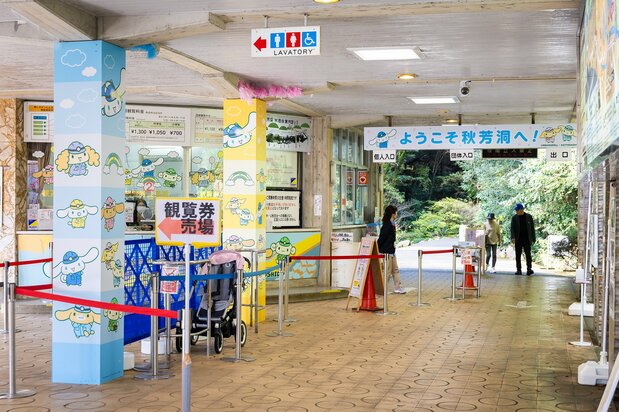 The ticket office at the cave’s main entrance. (© Nippon.com)
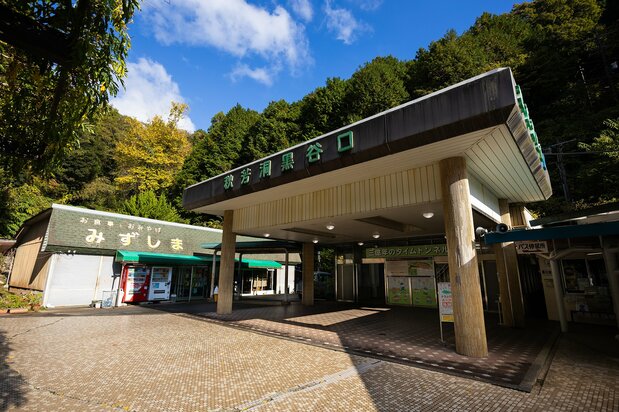 There is a shuttle bus running between the Kurotani Entrance stop, the Akiyoshidai stop near the Karst Observatory deck, and the Akiyoshidō terminal at the main entrance on weekends. It only runs five times a day, so be sure to check times. (© Nippon.com)
The main Akiyoshidō entrance is also a sight worth seeing. There, a covered walkway leads to a 20-meter-tall, 8-meter-wide gap in the rocks where a rushing waterfall pours out, bringing the cave’s underground river to the surface. This is the source of the cave name used until the late Taishō era (1912–26), which was Takiana, or “waterfall hole.”
In 1926, Crown Prince Hirohito (who would become emperor the following year) visited, an occasion marked by a renaming of the complex as Akiyoshidō. It uses the same reading as Akiyoshidai plateau, but a different kanji that some people also read as Shūhōdō. This is reflected in the district name, Shūhōchō, which is a note of caution when using map apps and GPS guides.
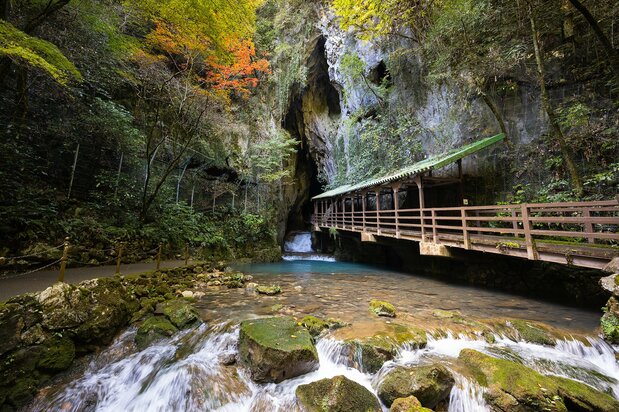 The main entrance to Akiyoshidō is particularly beautiful in the autumn. (© Nippon.com)
Packed with “Must-Sees”
On entering the cave, you are immediately greeted by a space called Aotenjō, the “blue ceiling.” The sun filtering through the gap reflects off the water flowing past, dying the ceiling a pale blue. The tour course leads past a wide variety of beautiful phenomena and formations, filling the roughly hour-long walk with things to see and enjoy.
One spot that seems to particularly charm visitors is the Hyakumaizara, or “one hundred plates.” Limestone dissolved in water creates a lipped formation called rimstone around puddles, resulting in something that looks like a stack of rimmed plates filled with clear water going up a gentle slope. It’s a sight reminiscent of hillside rice paddies in spring. There are in fact over 500 of these spread across the floor of the cave, not just 100.
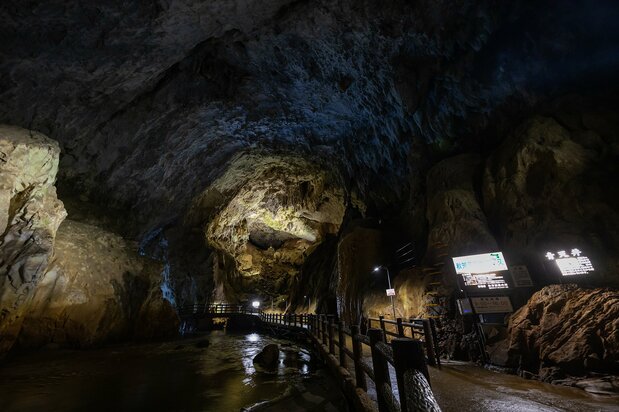 The air inside the cave is a stable 17 degrees Celsius, cool in summer and warm in winter, so it’s best to dress appropriately with layers to add or remove. (© Nippon.com)
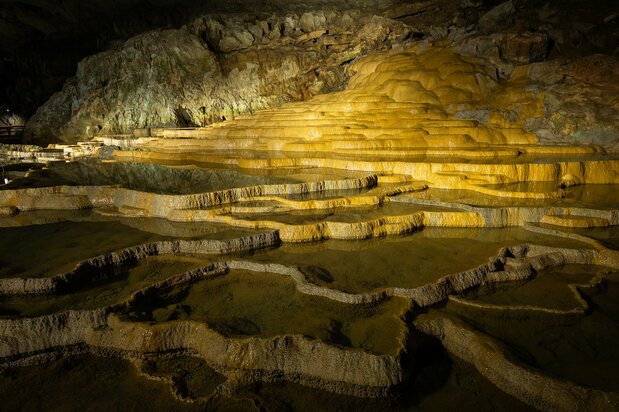 The celebrated Hyakumaizara. (© Nippon.com)
There are also massive pillars and rocks resembling various creatures, with the cave’s most famous sight being perhaps the Koganebashira, the “golden pillar.” It is a massive and beautiful calcareous sinter pillar 15 meters tall and 4 meters across. It can appear like the pillar of a massive underground temple or a frozen waterfall gushing from the ceiling, with an added touch of elegant laciness.
Calcareous sinter, or calc-sinter, is a porous form of limestone that also plays a role in formations like the Sekkaika no Taki (calc-sinter waterfall) and the Kurage Takinobori (jellyfish climbing the waterfall). The limestone dissolved in water droplets deposits little by little over the centuries to create human-like stalagmites with names like Gankutsuō (the cave king) and Maria Kannon, a moniker blending the Mary of Christian tradition and the Buddhist bodhisattva Avalokitesvara.
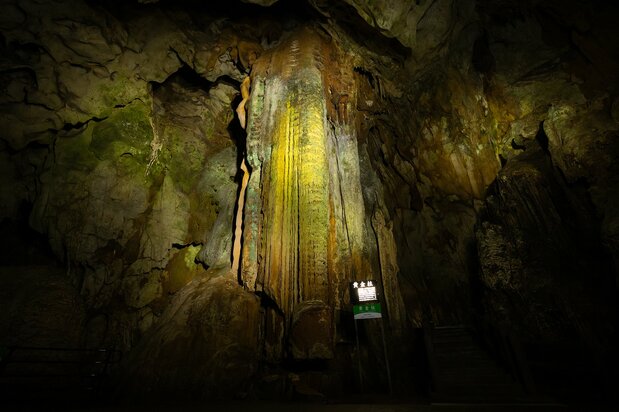 Koganebashira stands just beyond the Senjōjiki chamber. (© Nippon.com)
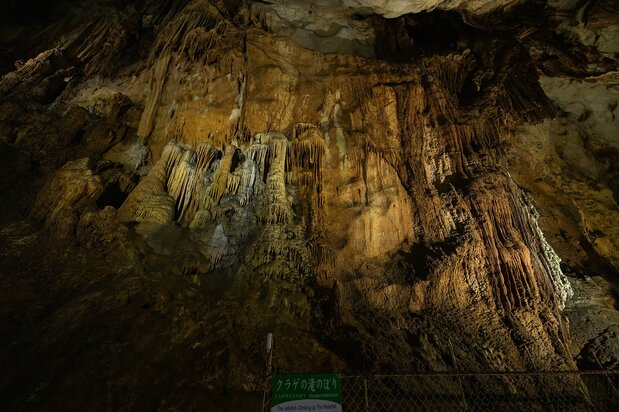 This formation looks like jellyfish swimming up a waterfall. (© Nippon.com)
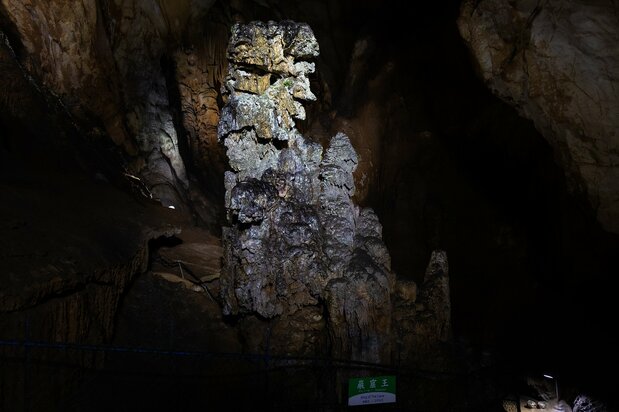 The Gankutsuō, made of several stalagmites blended together, gives off the aura of a spirit watching over the cave. (© Nippon.com)
After enjoying the tour course, we recommend taking the elevator up to Akiyoshidai. A short seven or eight-minute walk to the observation deck is perfect to enjoy the view, and there are great walking courses across the plateau so you can contemplate the hundreds of millions of years of natural history on display.
The Mine Akiyoshidai Geopark Center, or Karstar, next to the observatory has a cafe and a free-to-use rest space inside. There are also rental bicycles and electric carts that many visitors enjoy using to tour the Karst Road running north-south across the plateau.
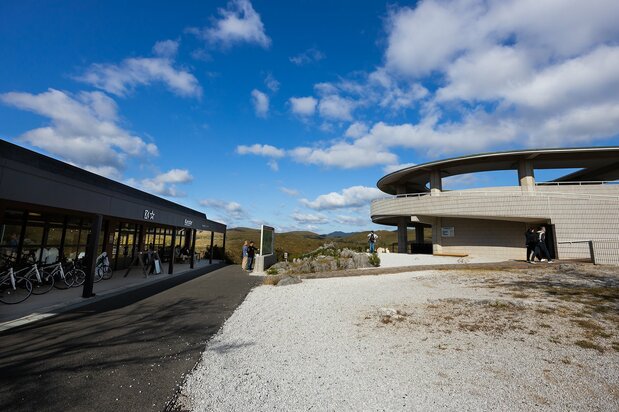 The Karst Observatory is to the right and Karstar is to the left. (© Nippon.com)
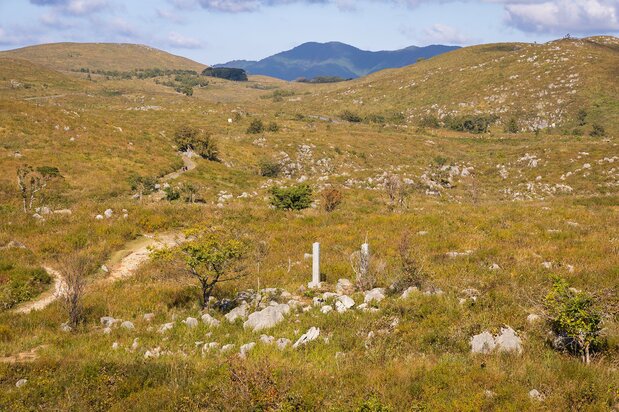 There are five mapped walking courses through the plateau. The shortest is the Karst Observatory Course, at around one hour round-trip. (© Nippon.com)
Special Natural Monument Akiyoshidō Cave
- Location: 3449-1 Akiyoshi, Shūhōchō, Mine, Yamaguchi Prefecture
- Hours: 8:30 am to 6:30 pm (March–November); 8:30 am to 5:30 pm (December–February) Entrance allowed until 1 hour before closing. The Kurotaniguchi and Elevator Entrances are open until 4:30 pm.
- Open every day
- Fees: ¥1,300 (high school students and above); ¥1,050 (junior high school students); ¥700 (elementary school students)
- Access: Approx. 40 minutes by Bōchō Bus from JR Shin-Yamaguchi Station to Akiyoshidō Bus Center
(Originally published in Japanese. Reporting, text, and photos by Nippon.com. Banner photo: Hyakumaizara, Akiyoshidō Cave’s most popular spot. © Nippon.com.)



 Read in other languages