Japan’s Seniors Increasingly Prefer Going Solo
Economy Society Lifestyle- English
- 日本語
- 简体字
- 繁體字
- Français
- Español
- العربية
- Русский
Enjoying Own Company
The Hakuhodo Institute of Life and Living has conducted a survey every ten years since 1986 targeting men and women aged 60–74. In 1986, average life expectancy stood at 80.93 for women and 75.23 for men. According to the most recent data (2024), these figures rose to 87.13 for women and 81.09 for men. At the same time, the social environment has also changed significantly, including the extension of working lives.
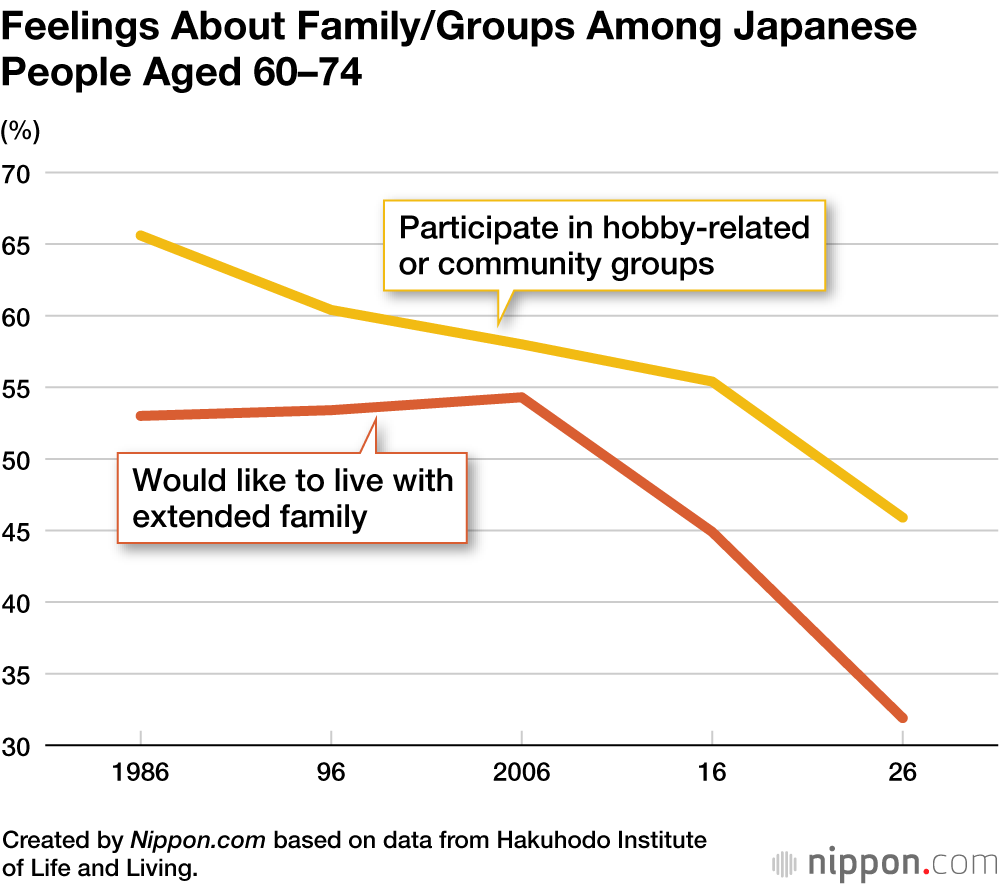
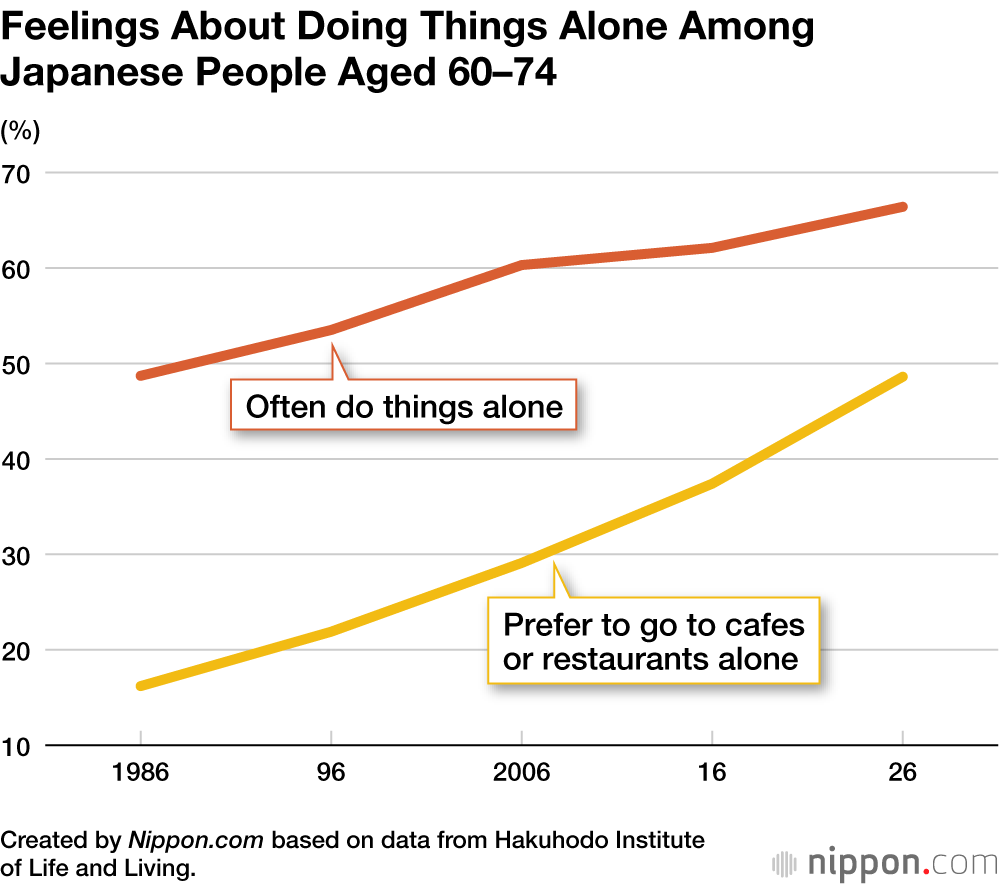
Over the past 40 years, the proportion of survey respondents who said they would like to live with their extended family has fallen by 20.1 percentage points, while the proportion who participate in hobby-related or community groups has declined by 19.7 percentage points. These trends indicate a considerable weakening of connections to groups such as the family or the local community. At the same time, 66.4% of the respondents—or roughly two out of every three—said they spend more of their time alone than with friends; while 48.6% said they prefer to go to restaurants or bars by themselves, which is three times greater than 40 years ago. In short, more and more people want to enjoy life freely at their own pace rather than doing things together with others.
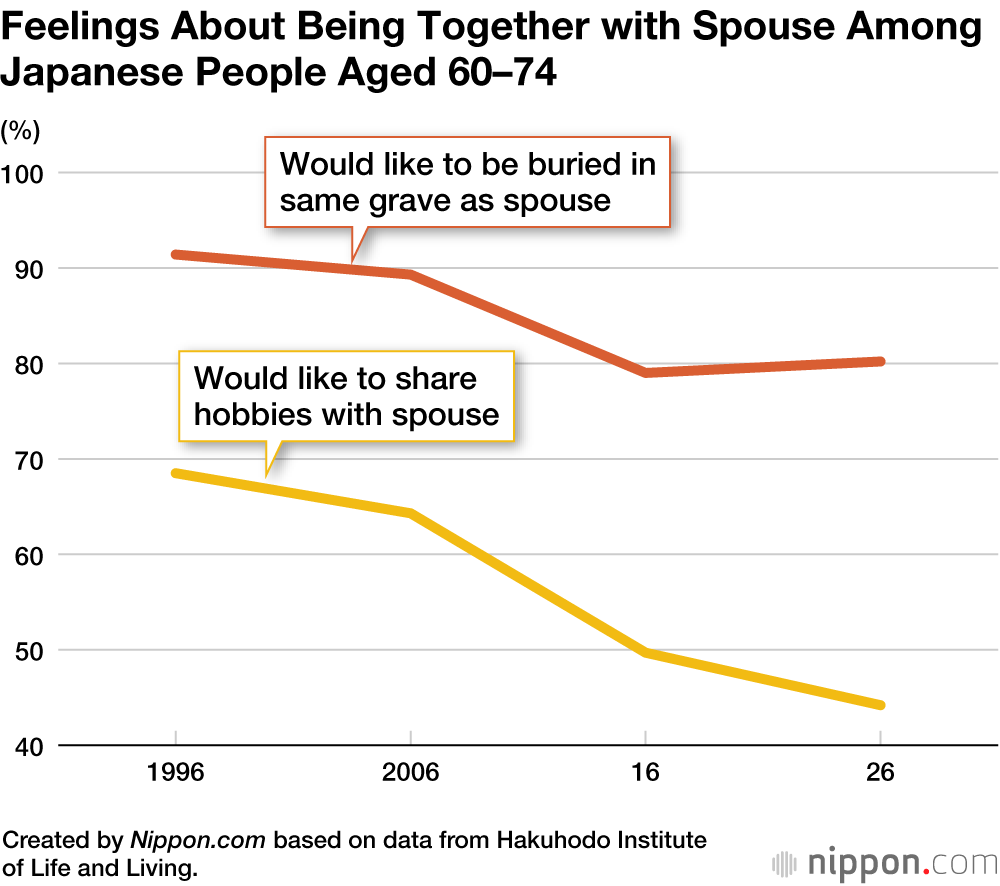
Attitudes toward marriage have also changed significantly (survey questions on this topic were introduced in 1996). Over the past 30 years, the proportion of respondents who said they would like to be buried in the same grave as their spouse has fallen by 21.2 percentage points, while the proportion of those who would like to share common hobbies with their spouse has declined by 24.3 percentage points. The survey also found that 48.3% of women and 30.4% of men are in favor of the idea of sotsukon, or “graduation from marriage”; this is a lifestyle in which couples stay legally married but do not interfere with each other’s lives. The findings suggest a growing emphasis on respecting each other’s individuality rather than always being together.
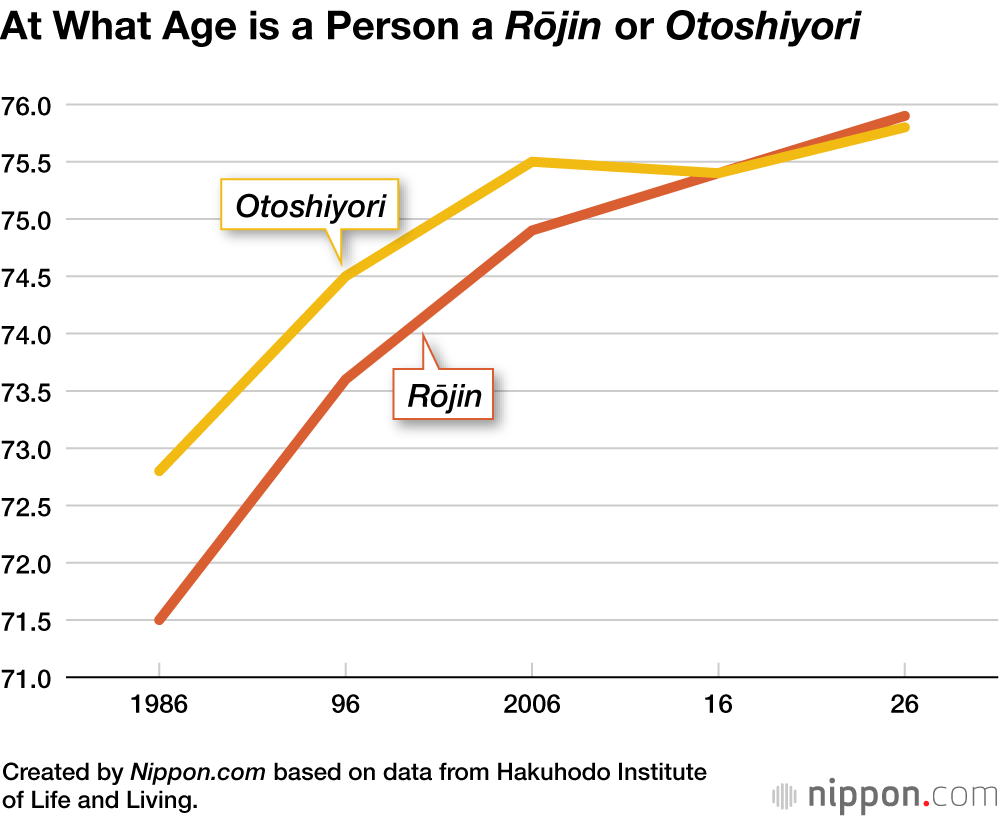
The survey also considered views towards the age at which a person can be considered “old,” expressed in Japanese through words like rōjin and otoshiyori. In 1986, respondents thought a person was a rōjin from the age of 71.5, on average, but by 2026 that age had risen to 75.9. Likewise, the age at which someone was regarded as an otoshiyori increased from 72.8 in 1986 to 75.8 in 2026. Today, it appears that people do not begin to think of themselves as old until they reach their late seventies.
The 2026 survey was conducted between January and February, targeting 700 men and women aged 60 to 74 in the Tokyo metropolitan area.
Data Sources
- Data from survey of Japanese people aged 60 to 74 (Japanese) from Hakuhodo Institute of Life and Living.
(Translated from Japanese. Banner photo © Pixta.)