Survey Finds Young Japanese Women Cautious About Both Thermal and Nuclear Power
Education Economy Environment- English
- 日本語
- 简体字
- 繁體字
- Français
- Español
- العربية
- Русский
Clear Gender Differences in Attitudes
As Japan relies on the Middle East for more than 95% of its crude oil, the current crisis in the region and closure of the Strait of Hormuz have once again exposed the vulnerability of Japan’s energy security. In mid-June, the Nippon Foundation surveyed 1,000 people aged 17 to 19 to explore how young people view various energy issues.
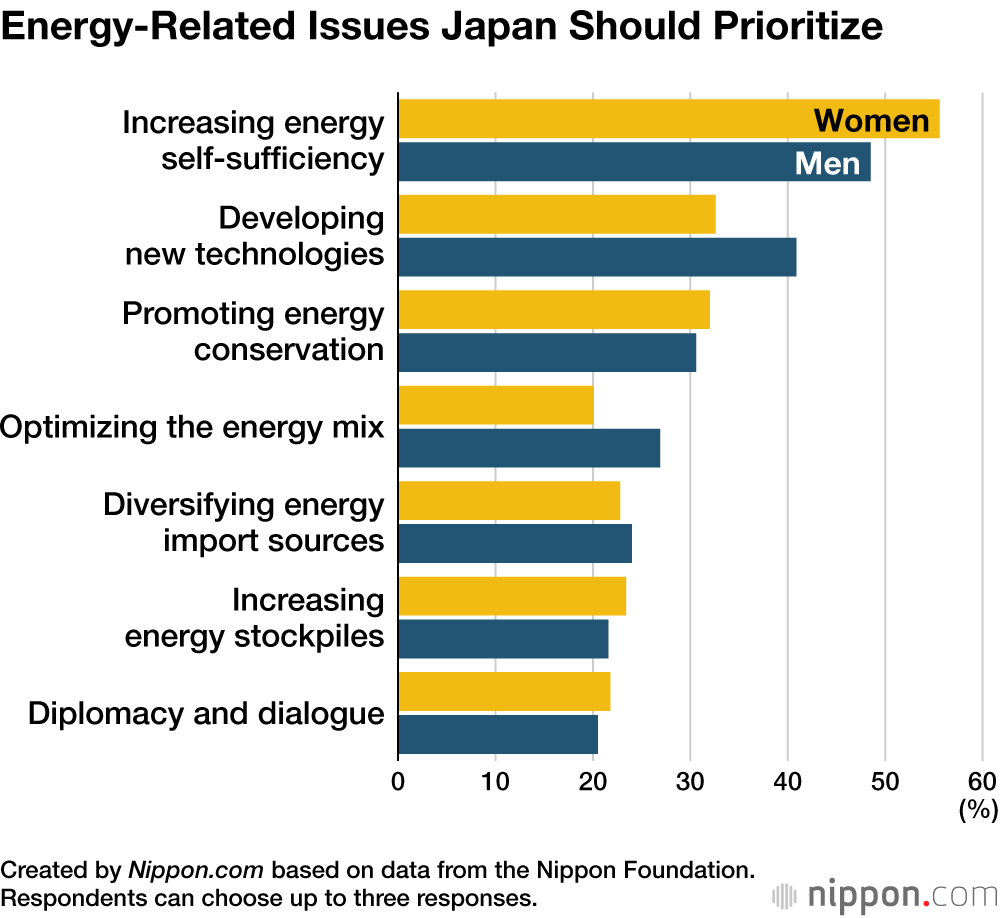
The most common response when asked what Japan should prioritize in addressing energy issues was “increasing energy self-sufficiency.” The figure was particularly high among women, at 55.6%. By contrast, there was a substantial gender gap over the issue of “developing new technologies,” with 32.6% of the women surveyed supporting this option, compared with 40.9% of the men.
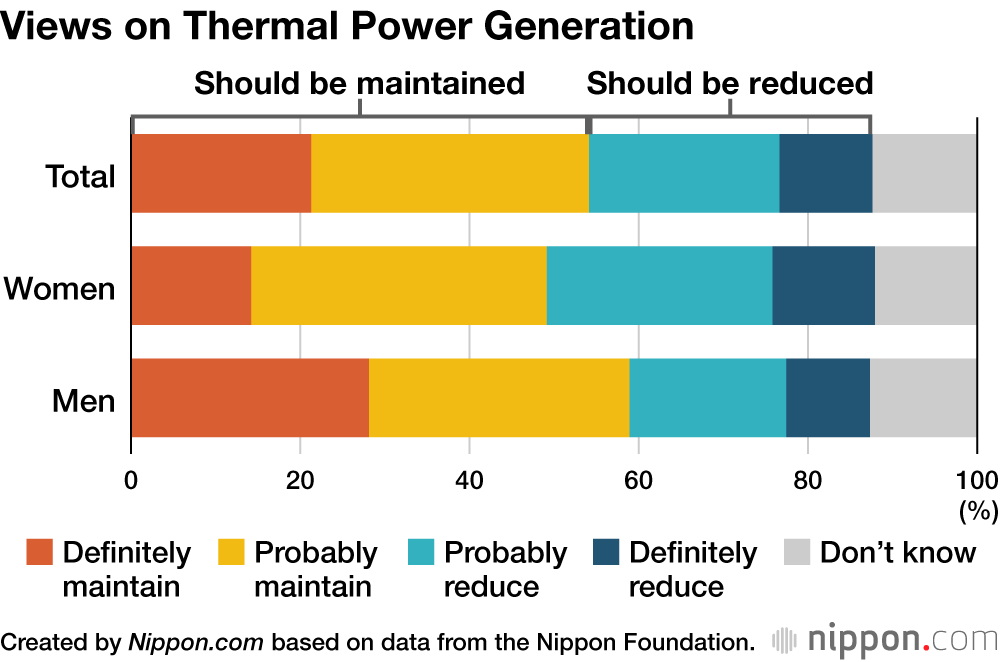
Currently, about 65% of Japan’s electricity is generated from fossil fuels. The survey asked the respondents whether thermal generation should be maintained because it provides a stable supply of electricity or reduced even if this makes the electricity supply less stable. The results show that less than half of women supported maintaining thermal power generation, while nearly 60% of men said it should be maintained.
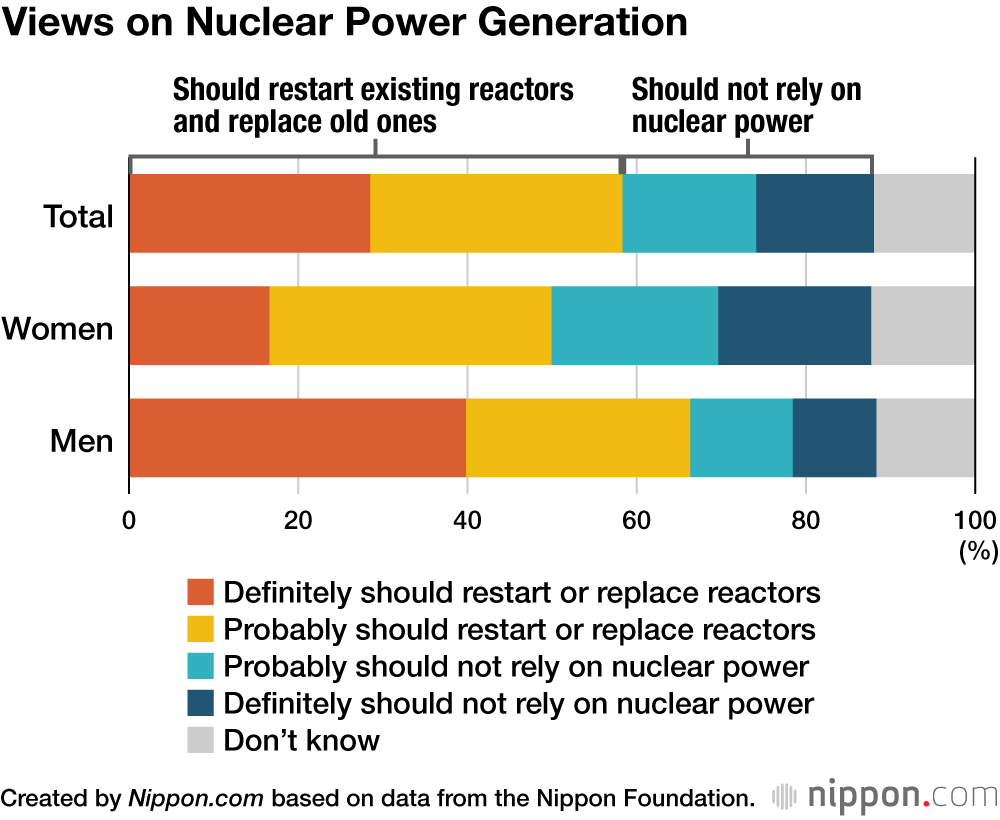
Although nuclear power generation does not emit greenhouse gases, it carries the risk of accidents and requires substantial spending on safety measures. Respondents were asked whether they thought Japan should proceed with restarting nuclear reactors and replacing aging ones or instead not rely on nuclear power. Nearly 70% of men expressed support for using nuclear power, whereas among women the level of support was around 50%, while 37.8% took the more cautious view that Japan should not rely on nuclear power.
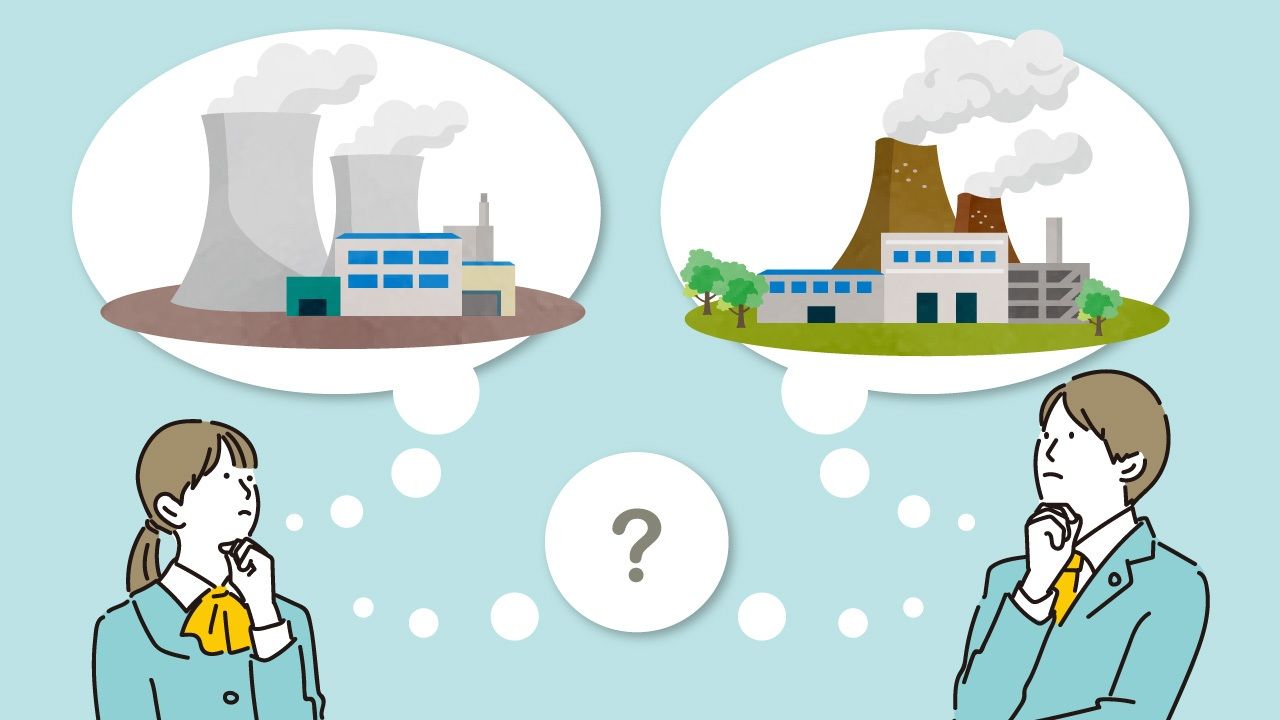
The survey results found that women are more cautious about the use of both thermal power, which contributes to global warming, and nuclear power, which carries the risk of accidents. This raises the question of how Japan should obtain the electricity needed for industry and everyday life.
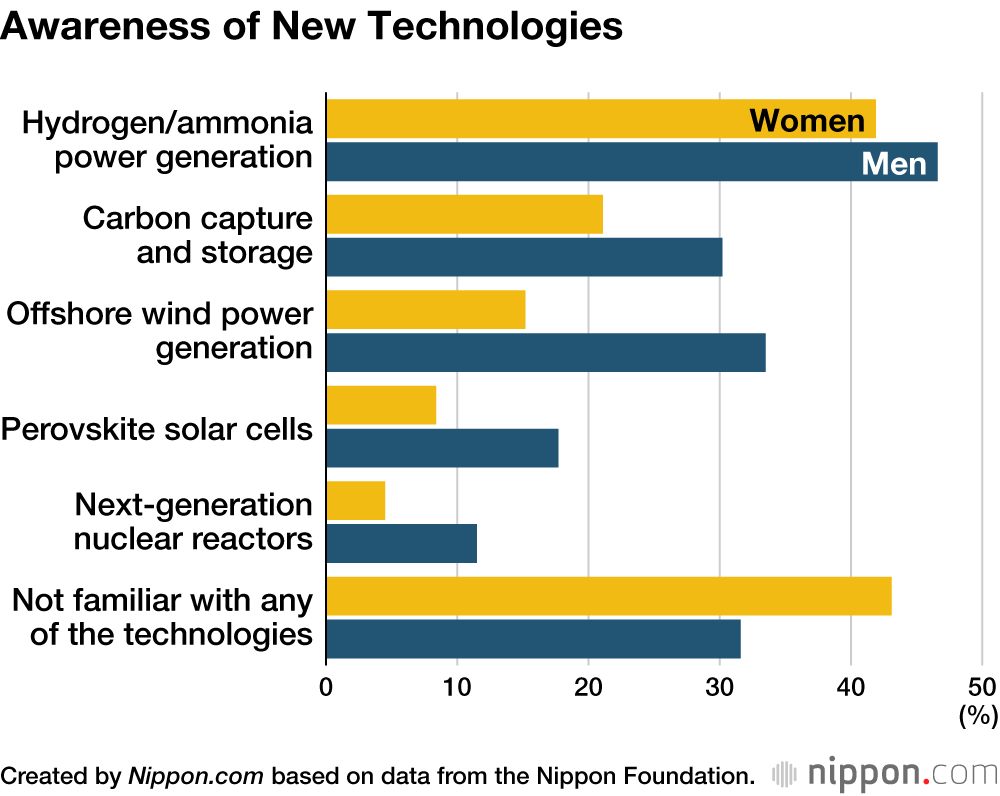
The survey also examined awareness of new technologies that Japan is developing to secure its energy supply. Among both men and women, the technology with the highest level of awareness was hydrogen and ammonia power generation. For every technology mentioned in the survey, the level of awareness was higher among men than women, while more than 40% of women surveyed said they were not familiar with any of the technologies.
Data Sources
-
Data on energy survey targeting people aged 17 to 19 (Japanese) from the Nippon Foundation
(Translated from Japanese. Banner image © Pixta/IllustAC.)