Takaichi’s Numbers Take a Hit: July 2026 Polls Show First Real Damage to Prime Minister’s Popularity
Politics- English
- 日本語
- 简体字
- 繁體字
- Français
- Español
- العربية
- Русский
A Downturn at Last?
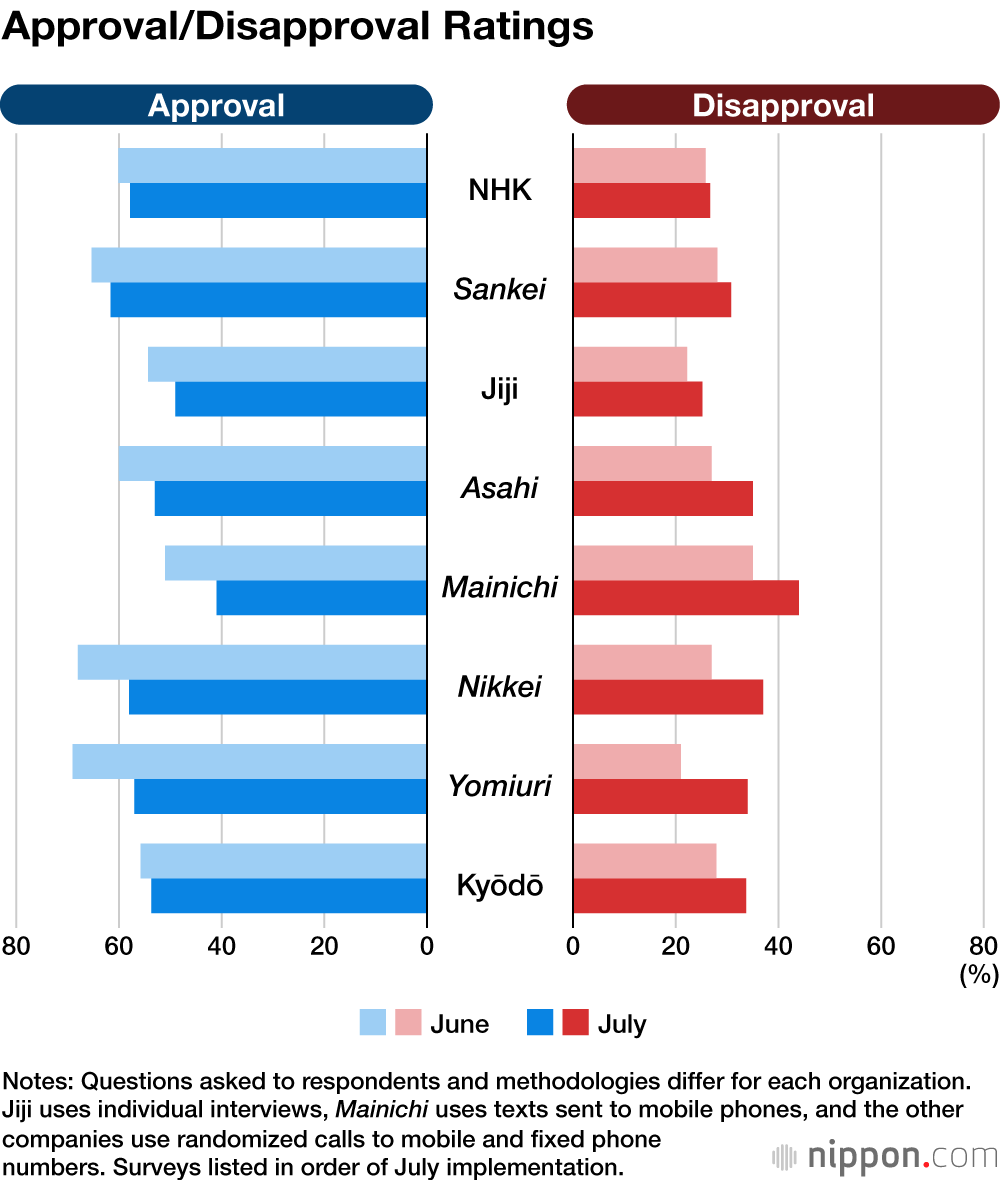
With the survey results in from Japan’s main eight media organizations, Prime Minister Takaichi Sanae is at last looking at a measurably negative impact to her administration’s popularity. Across the board, her approval ratings dropped from the 60% range to the 50% range, with the exception of the Sankei Shimbun poll, which found her support still above 60%, and the Jiji Press and Mainichi Shimbun polls, where her numbers fell below the 50% mark. Mainichi placed her lowest among all the surveys, finding just 41% approval against 44% disapproval—the first time in any media survey for the negative takes among the public to outstrip the positive for her government.
The largest month-on-month plunge in Takaichi’s approval rating came in the Yomiuri Shimbun poll, where it fell 12 points from 69% in June to 57% in July. She also saw 10-point drops in the Nikkei poll, where she ended up at 58%, and the Mainichi 41% figure.
Independent-Leaning Voters Leaving the Fold
Takaichi’s approval rate among self-described independents plummeted by 16 points from June to 36% in the July Nikkei poll, well short of the disapproval rate of 51%. The Yomiuri poll also marked support among independents as falling by 13 points to 41%, lower than the 47% disapproval rate. In its reporting accompanying its poll results, Jiji Press noted that independents are increasingly distancing themselves from Takaichi.
In its survey, the Yomiuri asked respondents whether the prime minister had sufficiently explained key legislation and policies, including her Liberal Democratic Party’s amendments to the Imperial House Law. Their response was clear, with 62% saying no, more than double the 29% who thought the explanations had been sufficient. The Kyōdō News poll, meanwhile, found 57.5% of respondents agreeing that the Takaichi administration has been heavy-handed in its approach to Diet proceedings, and fully 66.9% stating that debate over legislation to designate a backup capital for Japan in times of emergency had been insufficient.
Regarding rising consumer prices, another key area of focus for the electorate, 57% of respondents to the Asahi Shimbun poll noted their disapproval of the administration’s handling of economic conditions. The Sankei poll, meanwhile, found a measure of support for Takaichi’s concept of slashing the consumption tax rate on food items from 8% to 1% for a limited period, with the most common response, selected by 43% of respondents, being that this measure “would be acceptable if implemented quickly.”
Considerable Drop from the Administration’s Launch
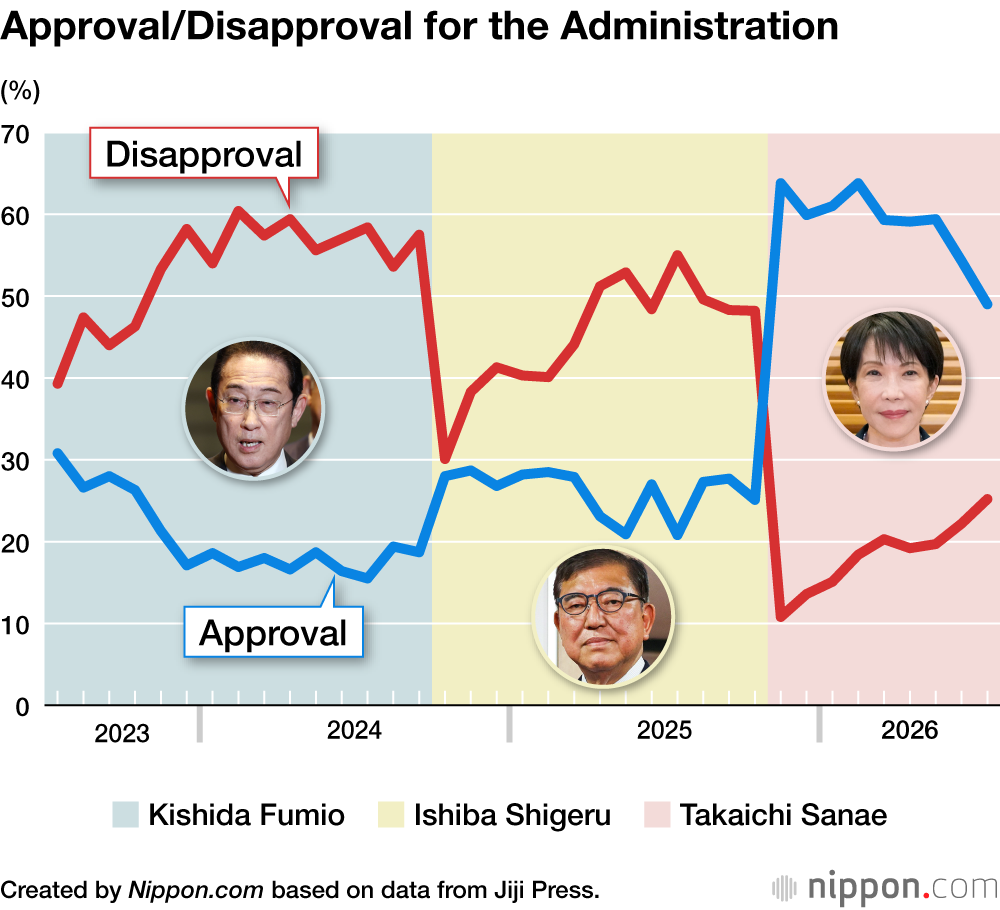
Looking at the Jiji survey results over time shows that the July approval numbers for Takaichi have fallen 14.8 points from their high of 63.8%, attained in November 2025 and February 2026.
Despite this drop over time, though, Takaichi’s approval rating remains heads and shoulders above the 20.8% marked by her predecessor, Prime Minister Ishiba Shigeru, in July 2025 as he approached the end months of his term. Her disapproval rating, too, is 20 points or more lower than Ishiba’s was. Despite Takaichi’s tribulations, her support remains relatively strong.

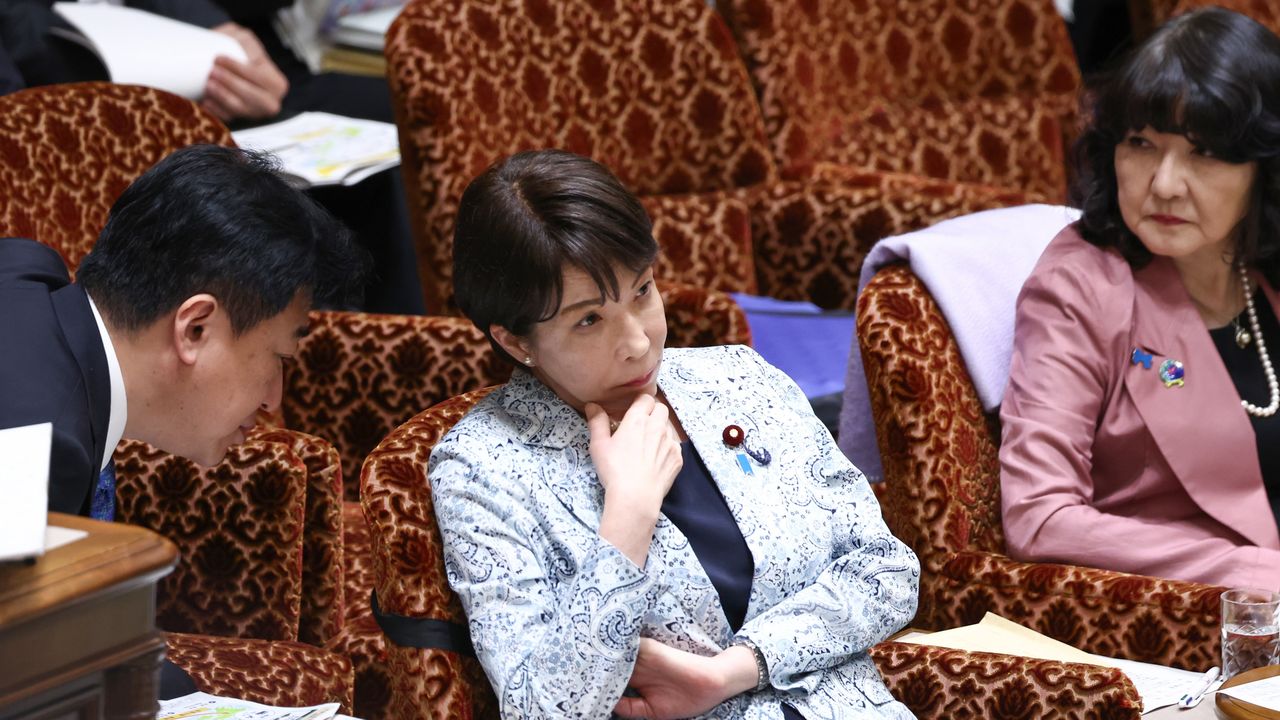
(Originally published in Japanese on July 31, 2026. Banner photo: Prime Minister Takaichi Sanae during Diet proceedings on July 17 is flanked by Chief Cabinet Secretary Kihara Minoru, at left, and Minister of Finance Katayama Satsuki. © Jiji.)