Kanagawa Soccer Team Takes a New Field: University Squad Moves Into Elderly Yokohama Community
Society- English
- 日本語
- 简体字
- 繁體字
- Français
- Español
- العربية
- Русский
Young and Old Come Together
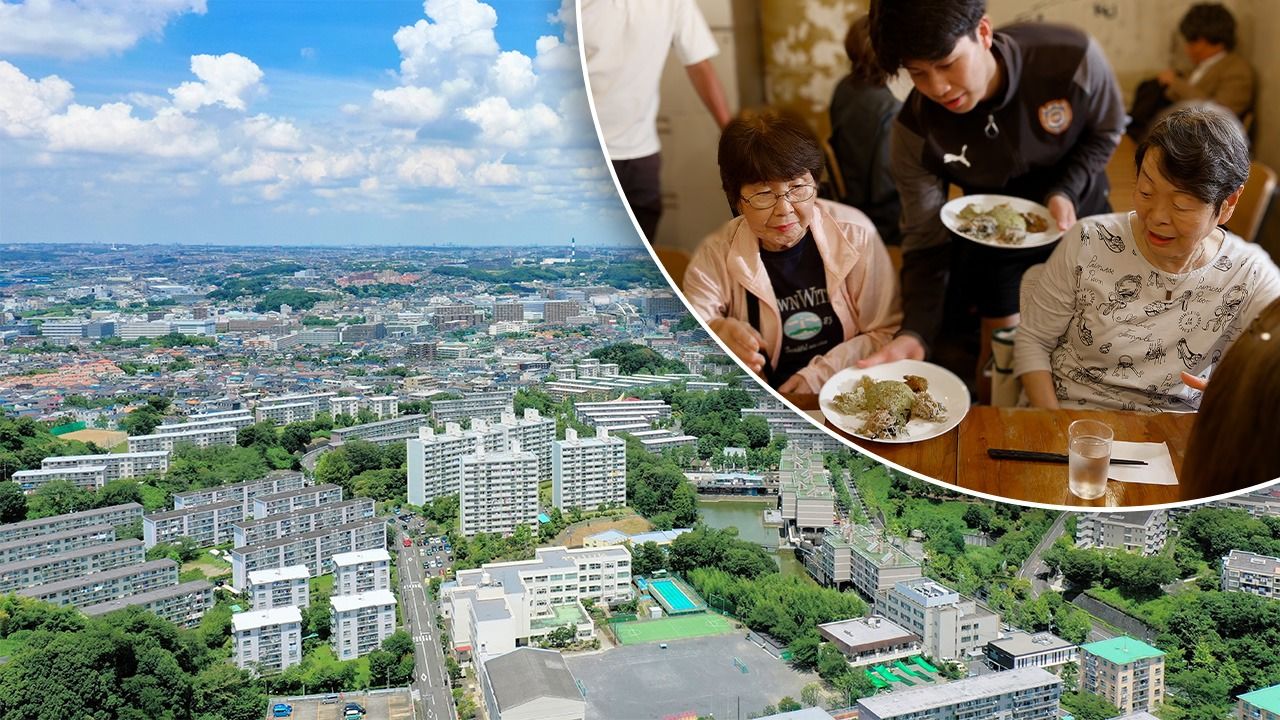
Takeyama Danchi sits on a hilltop, a 10-minute bus ride from Kamoi Station, on the JR Yokohama Line. In the center of the housing, is Takeyama Central, a modern, glass-walled sporting facility intended to boost users’ health and prevent the need for nursing care. It opened in 2025 on a site left vacant after a bank closed its branch there.
It is staffed by professional instructors and members of the Kanagawa University soccer team. Students also work at the reception, and the elderly residents seem to delight in chatting with them, congratulating them on their side’s win as they thank them for their help at the facility.
It’s no surprise that the residents know how the game went—dozens of them attended the recent final match of the Kantō university soccer league to cheer on their favorite team.
One resident teases a tanned first-timer from the soccer team: “Oh, are you a newcomer? Look how suntanned you already are!”
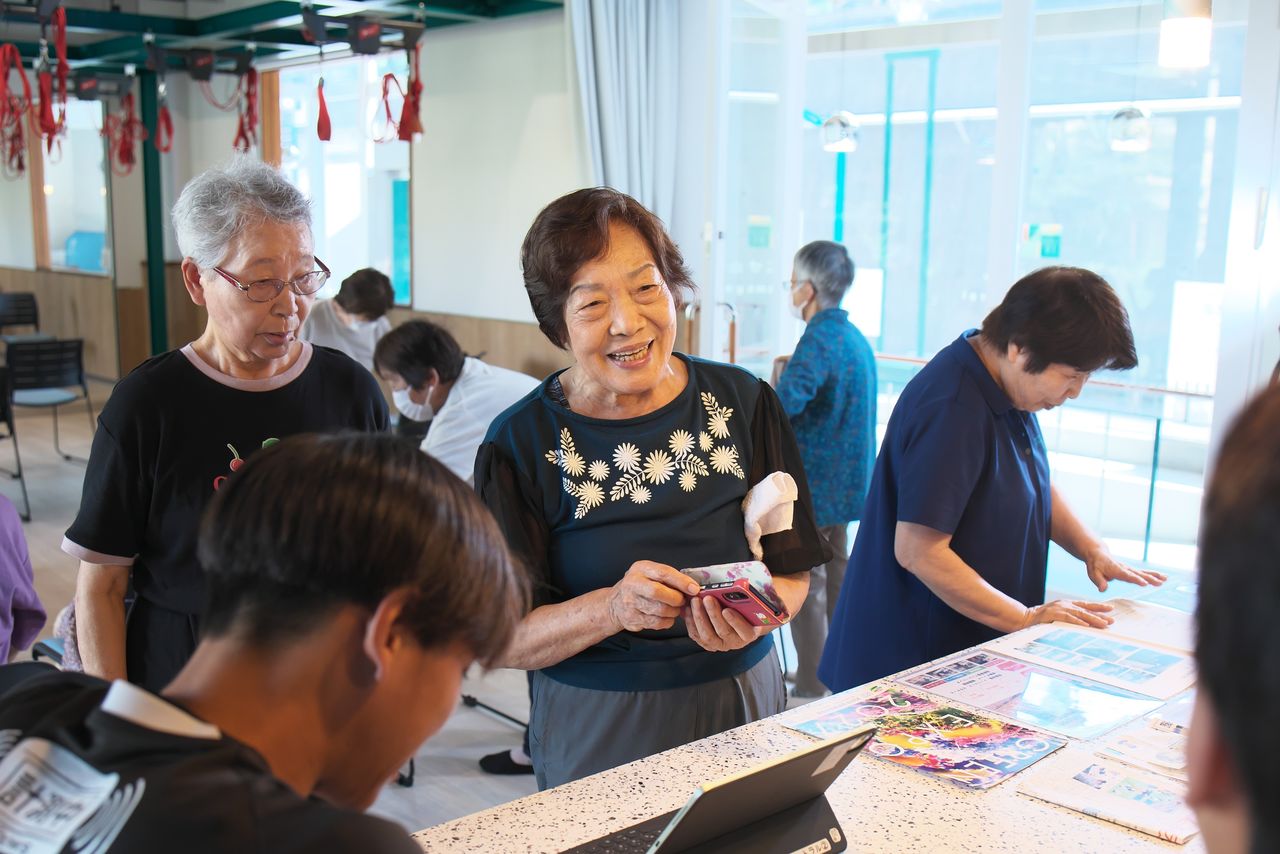
Takeyama Central members exchange banter with soccer players working at the reception. (© Nomura Kazuyuki)
On the day we visited, the calisthenics class was at full capacity, with 35 participants, 90% of whom were women. It was lively with chatter even before the class began. The participants practice abdominal breathing, move their arms and legs gently, and stretch from side to side to train their autonomic nerves. It is not simply a place for social interaction—participants motivate themselves by measuring improvements to their blood-vessel age, muscle gain, and functional ability with the center’s state-of-the-art equipment. Membership costs ¥4,400 per month, and some keen users visit almost every day.
Being operated by a NPO, Takeyama Central is slightly more affordable than private clubs, but this does not make it especially affordable for those living on a pension. Nevertheless, even some residents who tend to stay at home are making the effort to train there, no doubt partly thanks to the appeal of the energetic soccer players. In just over a year, the center has attracted a membership of over 440 from among the 6,200 danchi residents.
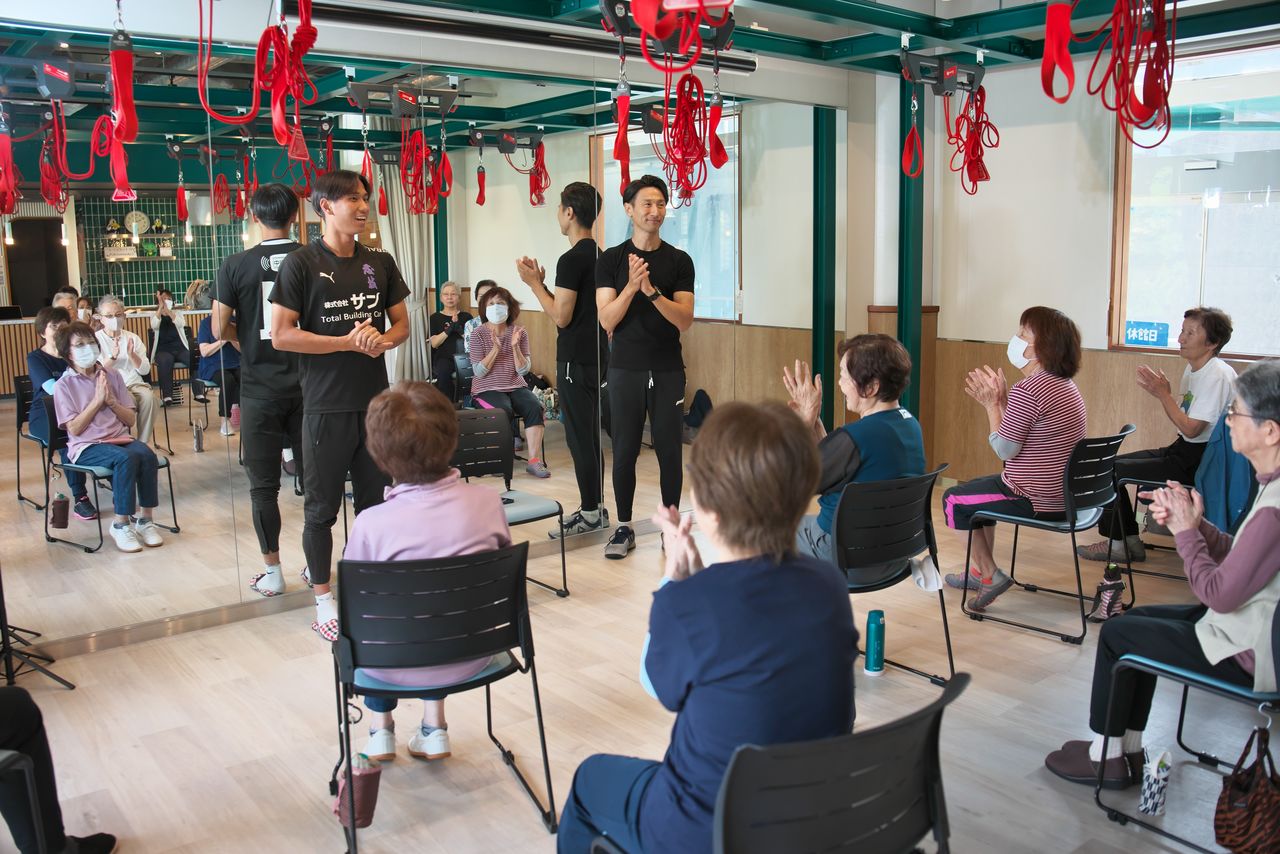
A calisthenics class. Soccer team vice-captain Umigai Shunsuke is on the left. (© Nomura Kazuyuki)
Around 60 members of the soccer team pay rent to stay in the danchi, living three to an apartment, dormitory-style. Their interaction with residents is not limited to the training facility and dining hall. They naturally greet neighbors in passing, join in festivals and other neighborhood association activities, give smartphone user classes, and tutor children. In this way, they have become an integral part of the community. This year, the Takeyama Danchi project received an award from Yokohama City for community building. But what was the initial motivation for the project?
The Danchi Then and Now
Takeyama Danchi was developed from 1968 to 1972 by the Kanagawa Prefectural Housing Supply Corporation. During the period of rapid economic growth, the corporation built danchi after danchi to support the burgeoning population, many of whom commuted to Tokyo or worked at factories closer to home. Takeyama is one of the largest, with 121 apartment blocks spread over 45 hectares. Five separate bus stops service the sprawling site, with transportation services shuttling residents to and from their homes there.
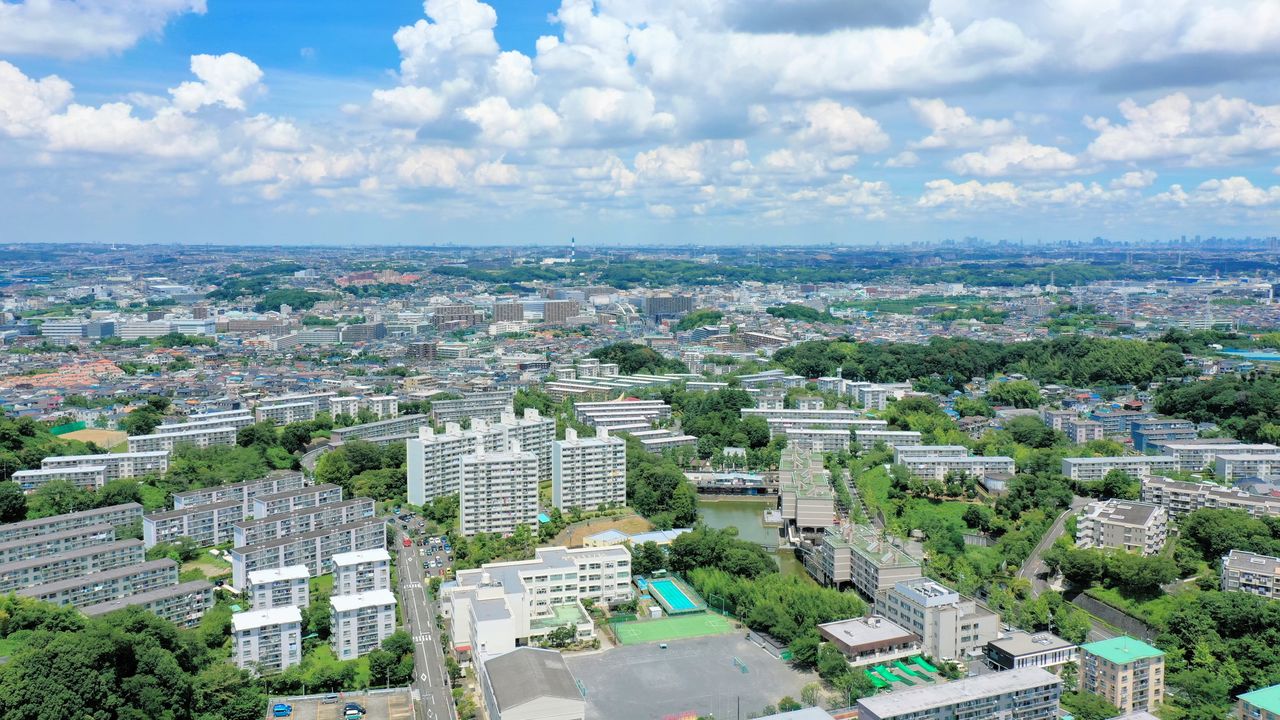
A view of the Takeyama Danchi (Courtesy Kanagawa Prefectural Housing Supply Corporation)
But now, half a century after the complex went up, 47% of its residents are aged over 65. Children have grown up and moved out, and the number of residents has dropped 37% from its peak of 9,800 in 1995. Health problems are becoming more noticeable, as is the weakening sense of community. There are even cases of residents passing away without anyone noticing.
Takahashi Akemi, the chair of the neighborhood association, says: “When I first moved here, there was a sense among young residents that we would build a community together. We were creating something from scratch. There was even friendly rivalry between neighborhoods in the danchi to stage the best festival. But now, with so many elderly residents, many people are leaving the association—sometimes entire apartment blocks—and people are becoming increasingly distant.”
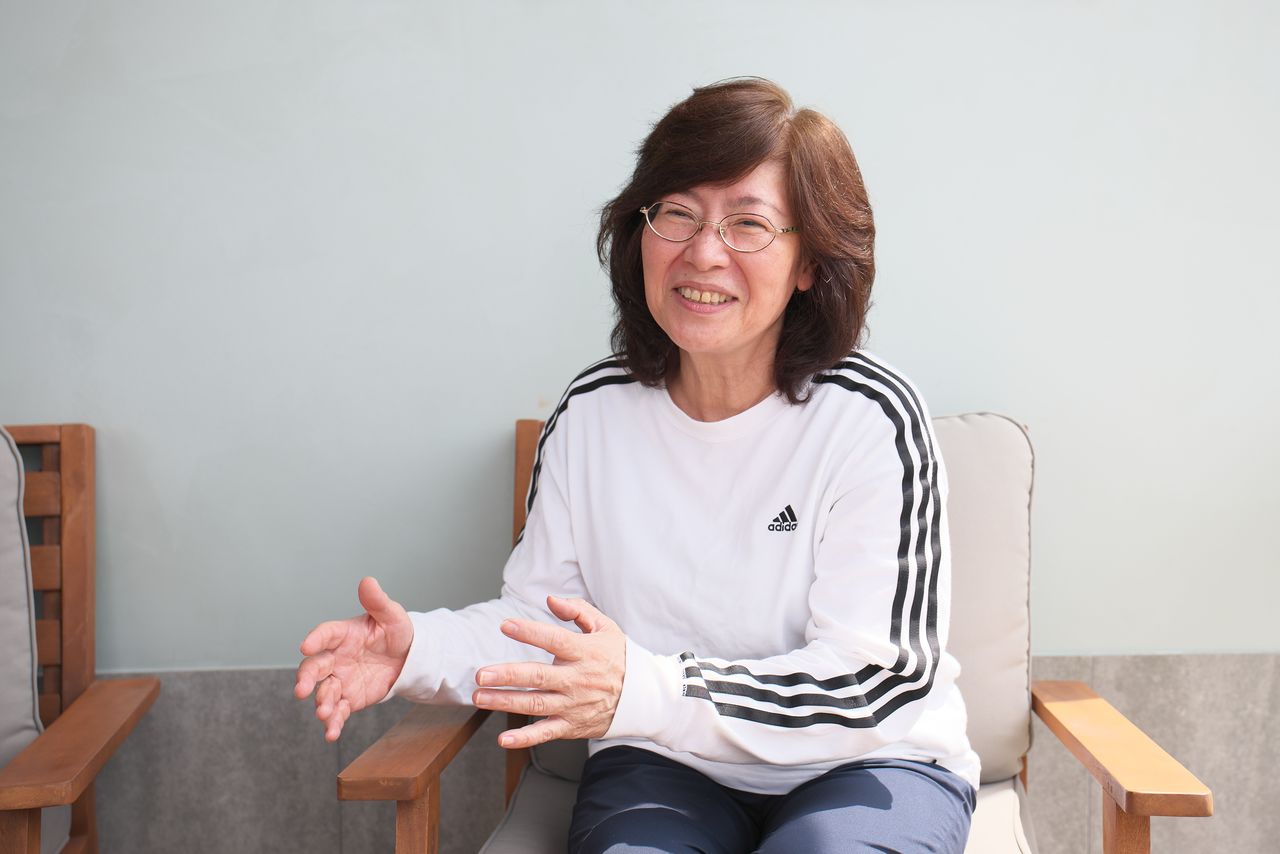
Takahashi Akemi of the Takeyama neighborhood association praises the students for making the danchi a brighter place. (© Nomura Kazuyuki)
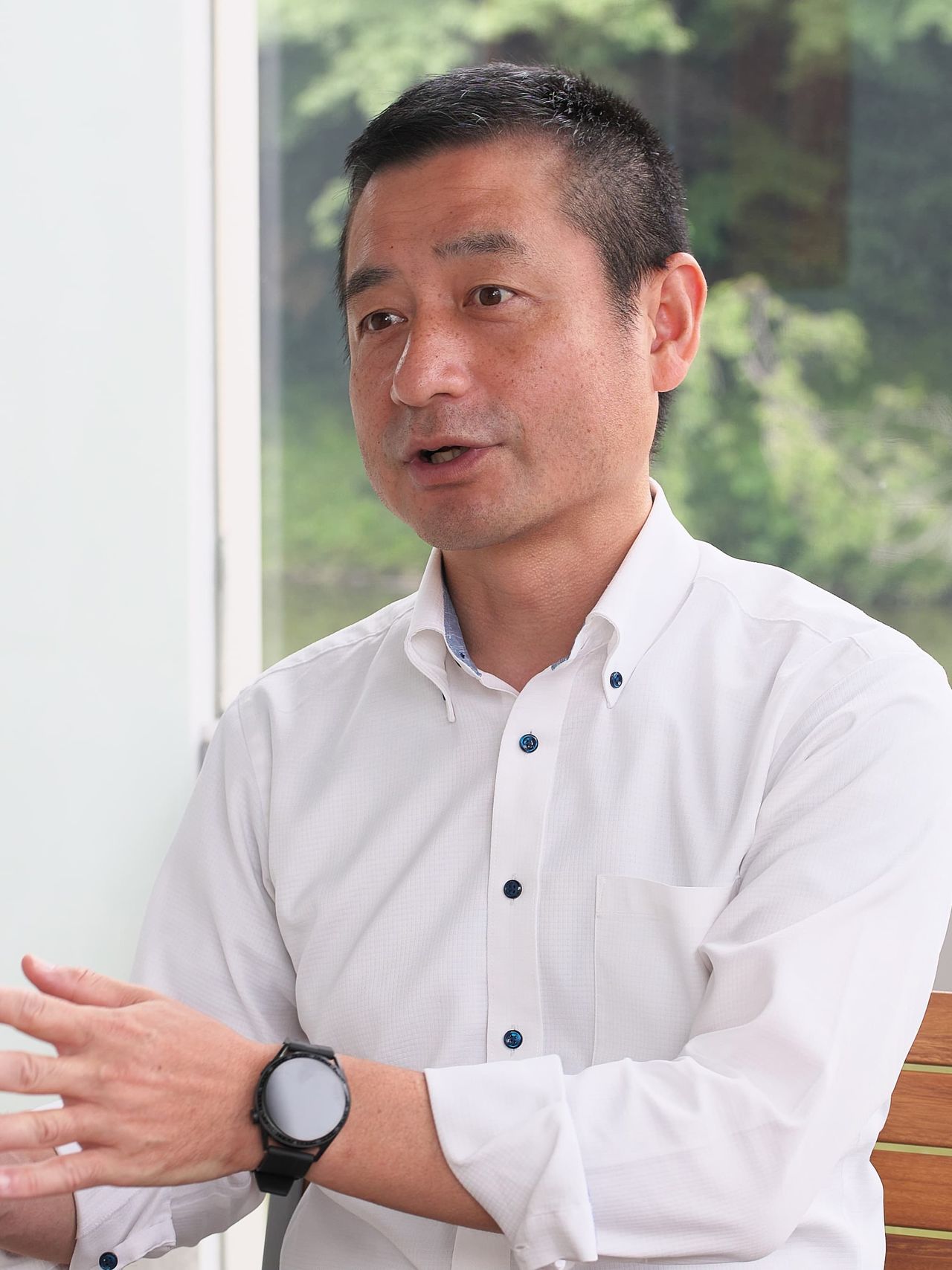
Mizukami Kōji of Kanagawa Prefectural Housing Supply Corporation. (© Nomura Kazuyuki)
Concerned residents formed a group in 2018 to plan for the future of the danchi, and many ideas were put forward, but nothing came to fruition. Meanwhile, with the era of fresh demand for housing complexes having come to its end, those working at the Housing Supply Corporation began questioning its purpose. Mizukami Kōji, section chief in operations and planning for the corporation, explains their new goal of “danchi renewal.” “The danchi serves as a safety net for the elderly. I want us to tackle issues that private operators would never act on.”
Concerned residents formed a group in 2018 to plan for the future of the danchi, and many ideas were put forward, but nothing came to fruition. Meanwhile, with the era of fresh demand for housing complexes having come to its end, those working at the Housing Supply Corporation began questioning its purpose. Mizukami Kōji, section chief in operations and planning for the corporation, explains their new goal of “danchi renewal.” “The danchi serves as a safety net for the elderly. I want us to tackle issues that private operators would never act on.”
Making Students a Part of the Community
Around the same time, Ōmori Yūzaburō, coach of the Kanagawa University soccer team, was looking for ways to have students engage with social problems. He was introduced to Mizukami through a mutual friend, and the pair hit it off immediately. Talks progressed rapidly, and in 2020, the prefecture signed an agreement with the university. Members of the soccer team moved into the danchi, and establishment of the training center and dining hall created opportunities for them to interact with other residents.
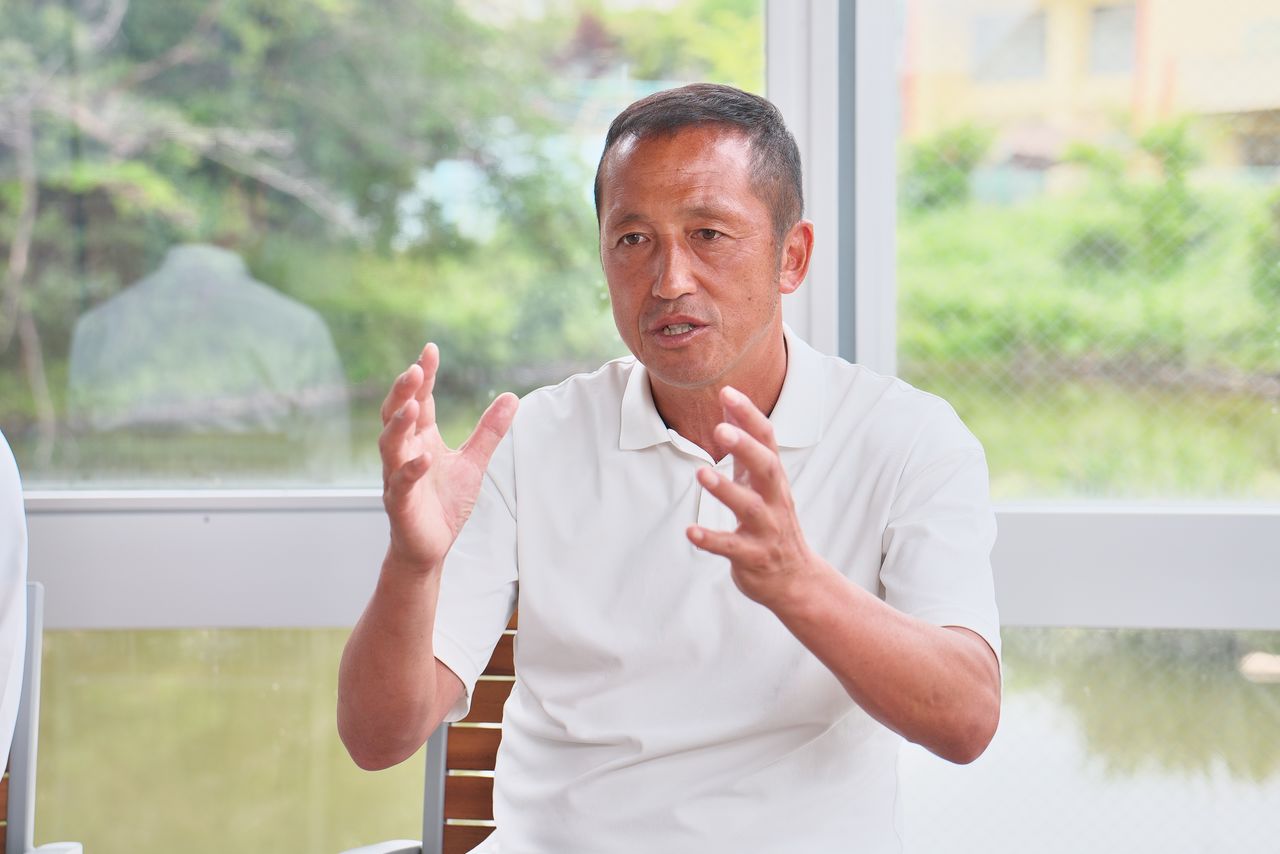
Ōmori believes that “Winning is important, but it isn’t everything.” (© Nomura Kazuyuki)
“There’s evidence that soccer does not develop one’s humanity,” states a concerned Ōmori. This seems like an odd statement coming from the coach of a successful team that has sent several players on to join Japan’s top J. League.
“When players are driven only to excel as athletes and to make it to the pros, they can lose sight of the need to collaborate with their teammates. They’re focused on being the best on the pitch and see nothing beyond competition, leaving their characters underdeveloped. Winning is important, but it isn’t everything.” Realizing the danger of students becoming completely absorbed in sport, Ōmori is emphatic in his desire to see them take part in society.
His belief is that empathy and communication skills, necessary traits for an athlete, can be learned through community work. The danchi is facing challenges in its aging population and rise in one-person households, but he sees it as a fresh “field” for learning. “It can be a site for learning how to live together and cooperate. The experience they gain will serve them even after they graduate.”
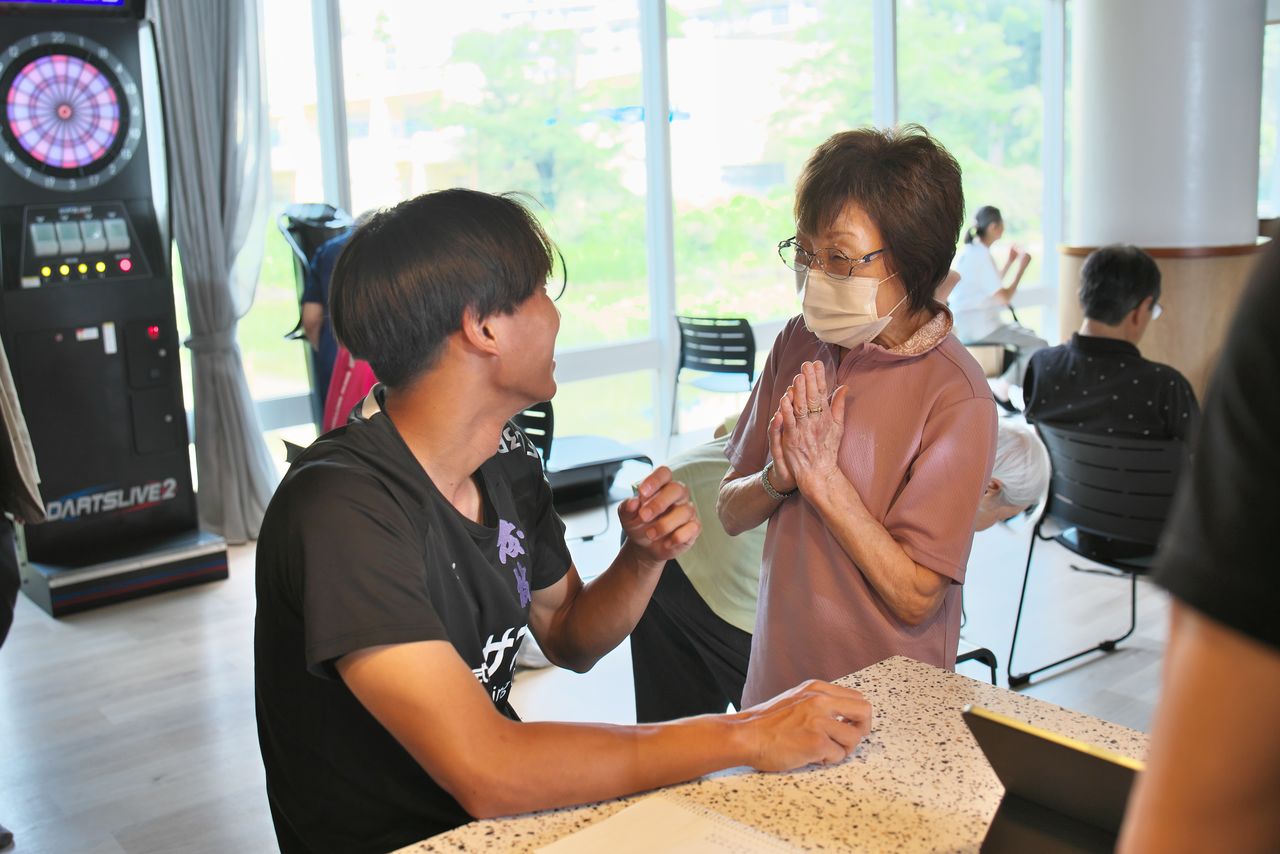
Vice-captain Umigai Shunsuke is congratulated on his team’s recent victory. (© Nomura Kazuyuki)
A Place that Feels Like a Hometown
Players from across the country aspire to enter Kanagawa University and join its renowned soccer team. But how do the members feel about the coach’s passion to get them involved in things other than soccer?
Hoshikawa Yoshihiro of the neighborhood association recalls: “Initially, many players complained about being made to help with cleaning around the danchi.” He encouraged them to be involved in the activities of the association to avoid becoming alienated. During the COVID-19 pandemic, the players could not go to classes in person, and tended to shut themselves away from others, but gradually they began to mingle with the community. By 2023, when team members from all four years of school were at last present at the danchi, Takeyama had become firmly embedded in their concept of their overall schooling at Kanagawa University.
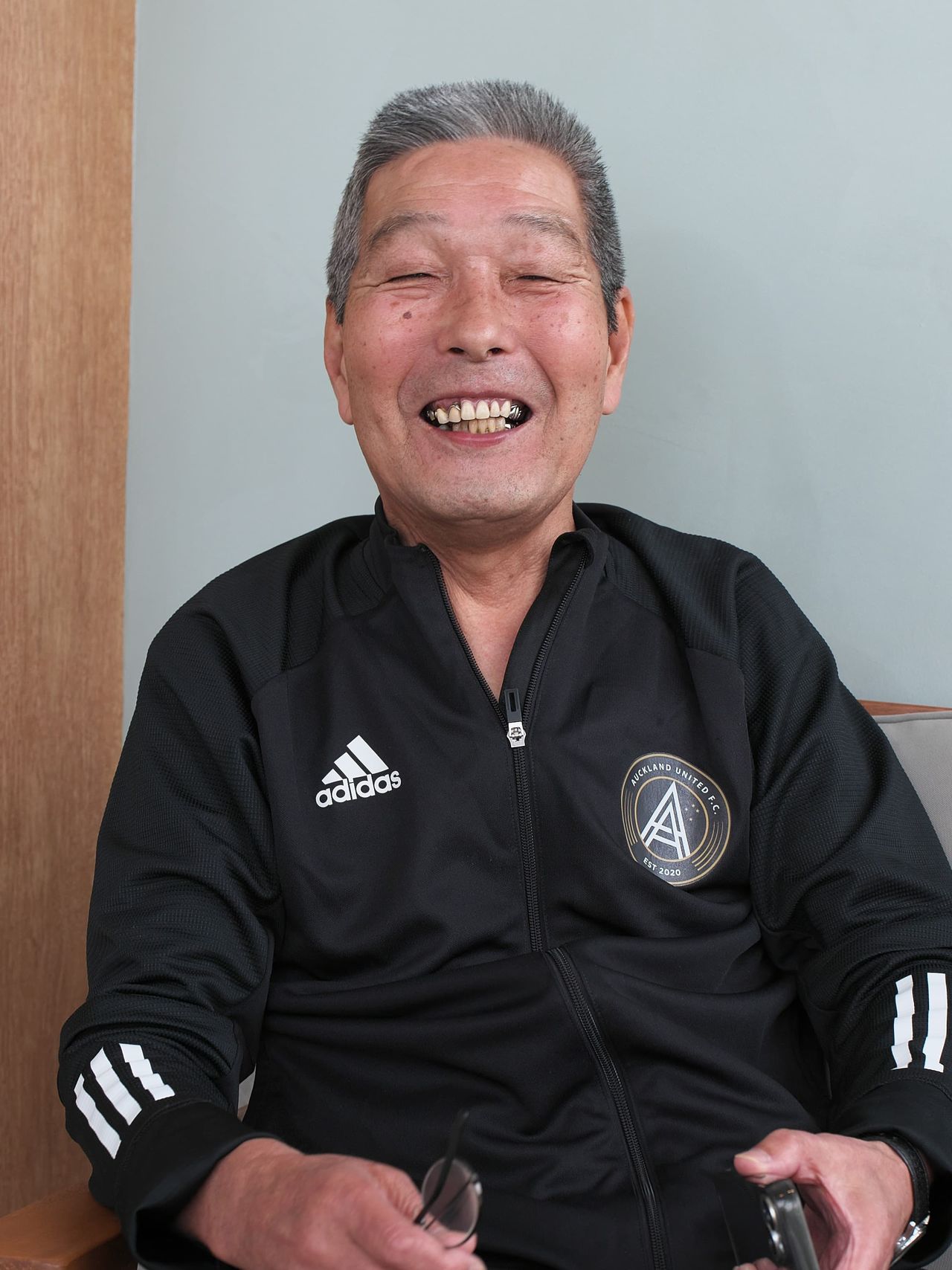
Hoshikawa Yoshihiro of the Takeyama neighborhood association. (© Nomura Kazuyuki)
The team’s vice-captain Umigai Shunsuke moved into the danchi as a freshman that year. He says one of the reasons he chose Kanagawa University was his interest in the danchi project. Some of the team members fail to see the relevance to soccer of working with the elderly, and drop out of the activities, but Umigai is adamant that “regardless of whether I become a professional player or join the workforce, I wanted to become a better person.”
His main involvement is supporting elderly residents through the sports center. It has made him realize he is not simply giving but also receiving. Residents attend matches to support the team. “When we win, they get so emotional, they seem more pleased than we are.” Sometimes now residents bring him food they have cooked—“I seem to have made too much, so why don’t you have some?” To Umigai, Takeyama is starting to feel like his “hometown.”
Conversation with the elderly people has improved his communication skills, which also helps him as a team player. According to Umigai, “Now I want to do more than just improve myself. I want to give something back to this community.” Umigai and the others enjoy being part of the danchi activities, and there is no sense of their being “forced” to. This is how they have found acceptance and empathy in the community.
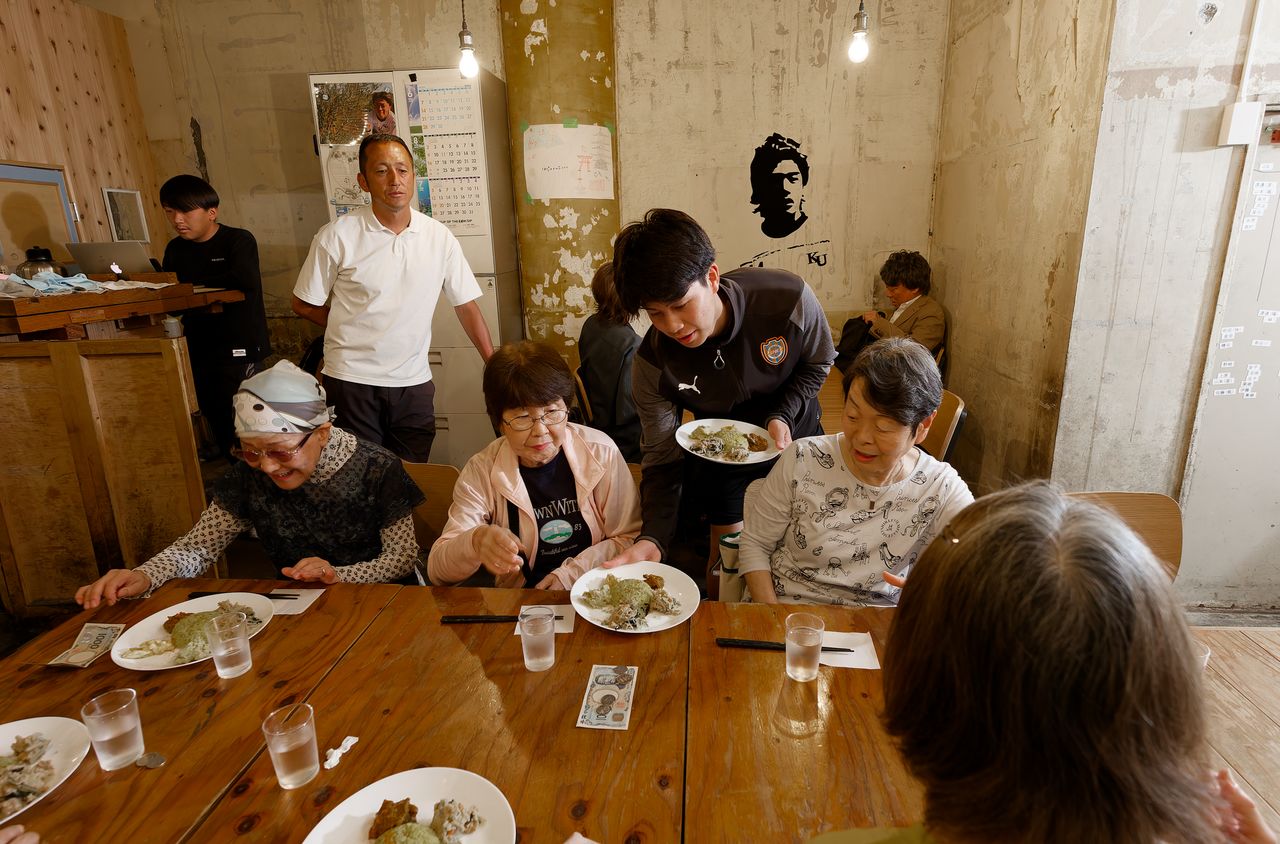
Students serve the meals at the Takeyama Kitchen dining hall. They grow many of the vegetables themselves at a nearby farm. (© Nomura Kazuyuki)
Takahashi, of the neighborhood committee, states: “The danchi has become livelier. These days, we often don’t even know who our neighbors are. But now the residents talk about the young team members, and it brings them together. It hasn’t happened overnight, but I can see things changing gradually.”
(Originally published in Japanese. Banner photo: © Kanagawa Prefectural Housing Supply Corporation, Nomura Kazuyuki.)