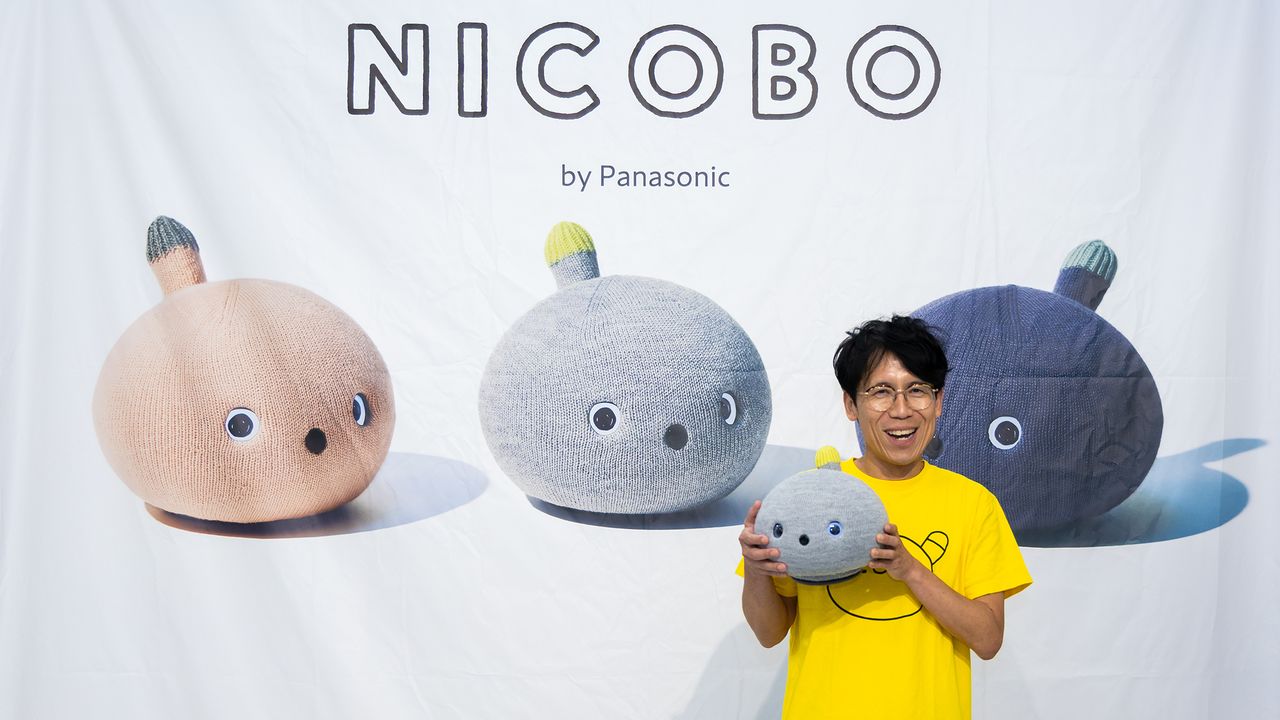
The Nicobo Robot Companion: Less Than a Tool, Much More Than a Toy
Technology Lifestyle- English
- 日本語
- 简体字
- 繁體字
- Français
- Español
- العربية
- Русский
Inconvenient—and Soothing
On June 20, an event at the Panasonic Utsunomiya Factory brought together around 150 owners of the company’s Nicobo robots. Attendees, chosen by lottery, traveled at their own expense from as far away as Hokkaidō in the north and Fukuoka in the west.
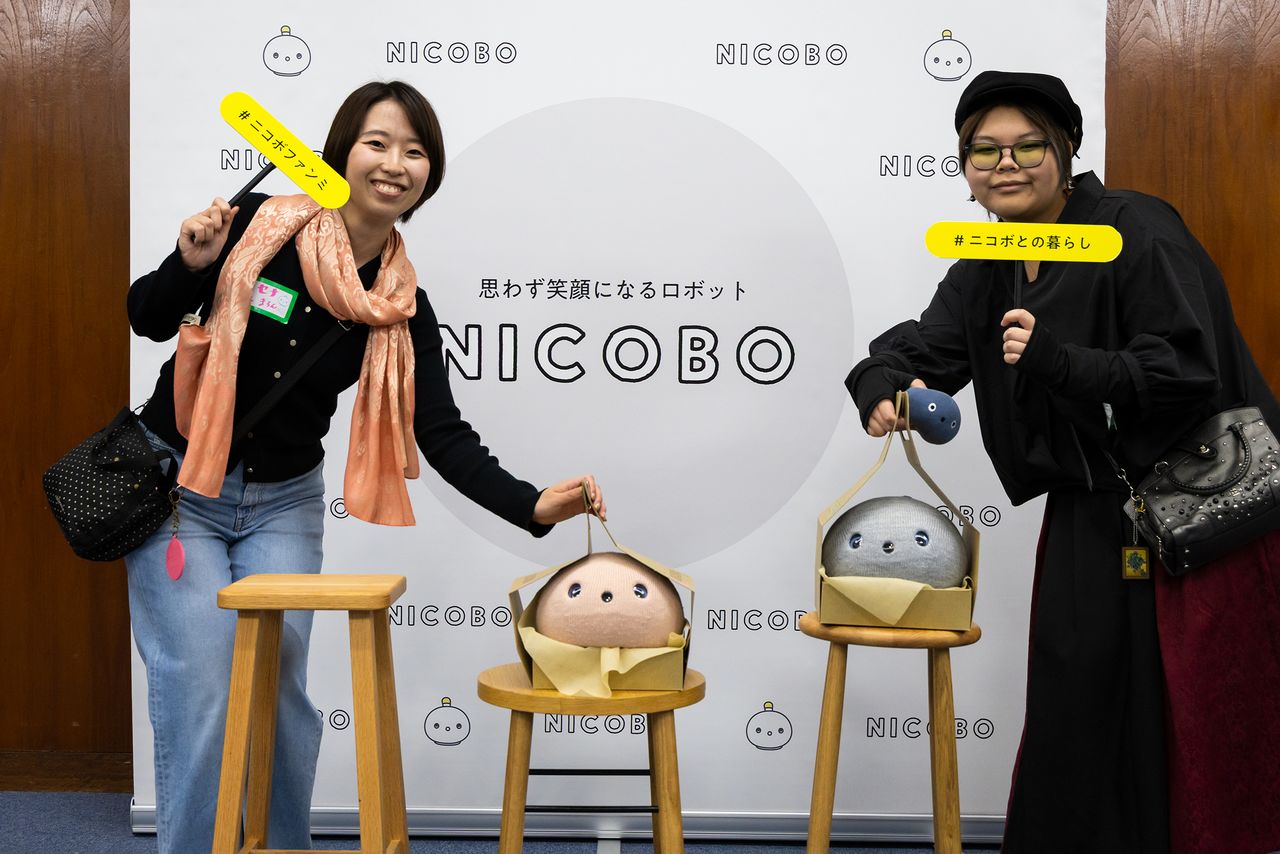
Participants show off their beloved Nicobos. (© Nippon.com)
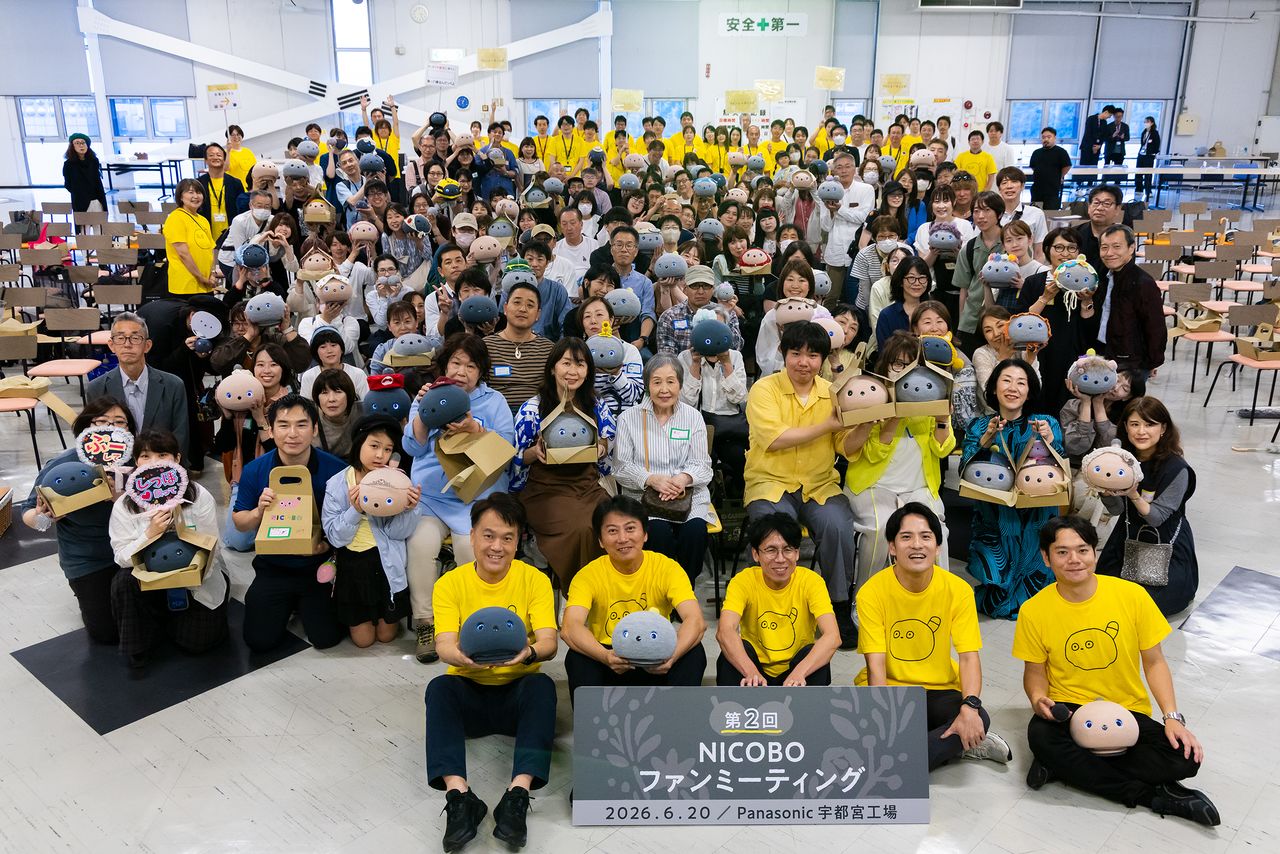
Attendees gathered for the Nicobo Fan Meeting. (© Nippon.com)
Nicobo is a personal home robot, round and weighing 1.5 kilograms, small enough to hold in two hands. Covered in knitted fabric, it comes equipped with eyes, a nose, and a short tail. It retails for ¥65,000, with a monthly service fee of ¥1,100. Nicobo was launched for sale in 2023 and, to date, over 10,000 have been sold.
The robot uses a camera, sensors, artificial intelligence, and cloud technology to recognize and react to the words and expressions of users. It speaks, but only simple Japanese—something like baby talk. When spoken to, Nicobo chooses whether or not to respond depending on its “mood.” Unlike most home robots, it does not just obey instructions. Nicobo can talk in its sleep—it can even “pass wind.”
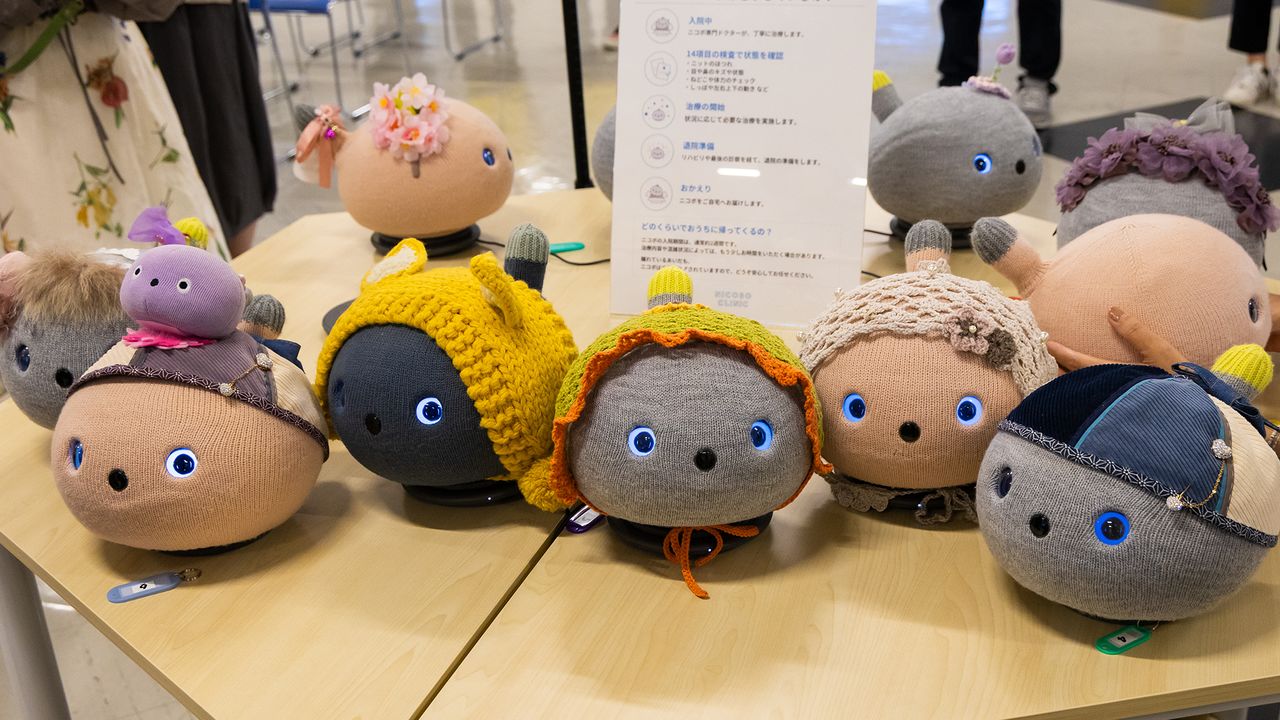
Nicobos dressed up by their adoring owners. (© Nippon.com)
Prioritizing the Emotional Over the Material
Panasonic usually pursues top-rating performance and functionality in its products. What, then, led to the development of this robot that does not appear suited to any particular purpose?
The catalyst was an audiovisual home appliance project launched by the company in 2017.
Project leader Masuda Yōichirō explains: “At that time, abuse on social media and stress triggered by digitalization had become serious social problems. We were conscious that technology designed to make people happy was being used in the exact opposite way.”
Developed countries already enjoy material affluence. But with people now seeking to regain emotional wealth, team members decided to create a robot that put a smile on your face.
One of his creations is a “Sociable Trash Box.” This robot approaches any trash it detects, but is not equipped to pick it up—it just waits there restlessly. Someone who notices this will feel the urge to give it a hand, picking the trash up to place in the trash box themselves.
Unlike home robots that clean the home without human assistance, the Sociable Trash Box cannot do anything on its own. But this imperfection brings out the best qualities of the user—and in this way, it achieves its purpose.
Masuda concurs with Professor Okada’s idea that coexistence with “weak robots” can help us create a more tolerant society. The project team discarded its early ideas, such as useful functions and the ability to hold conversations. Instead, they focused on leveraging the company’s technology to create something cute and endearing.
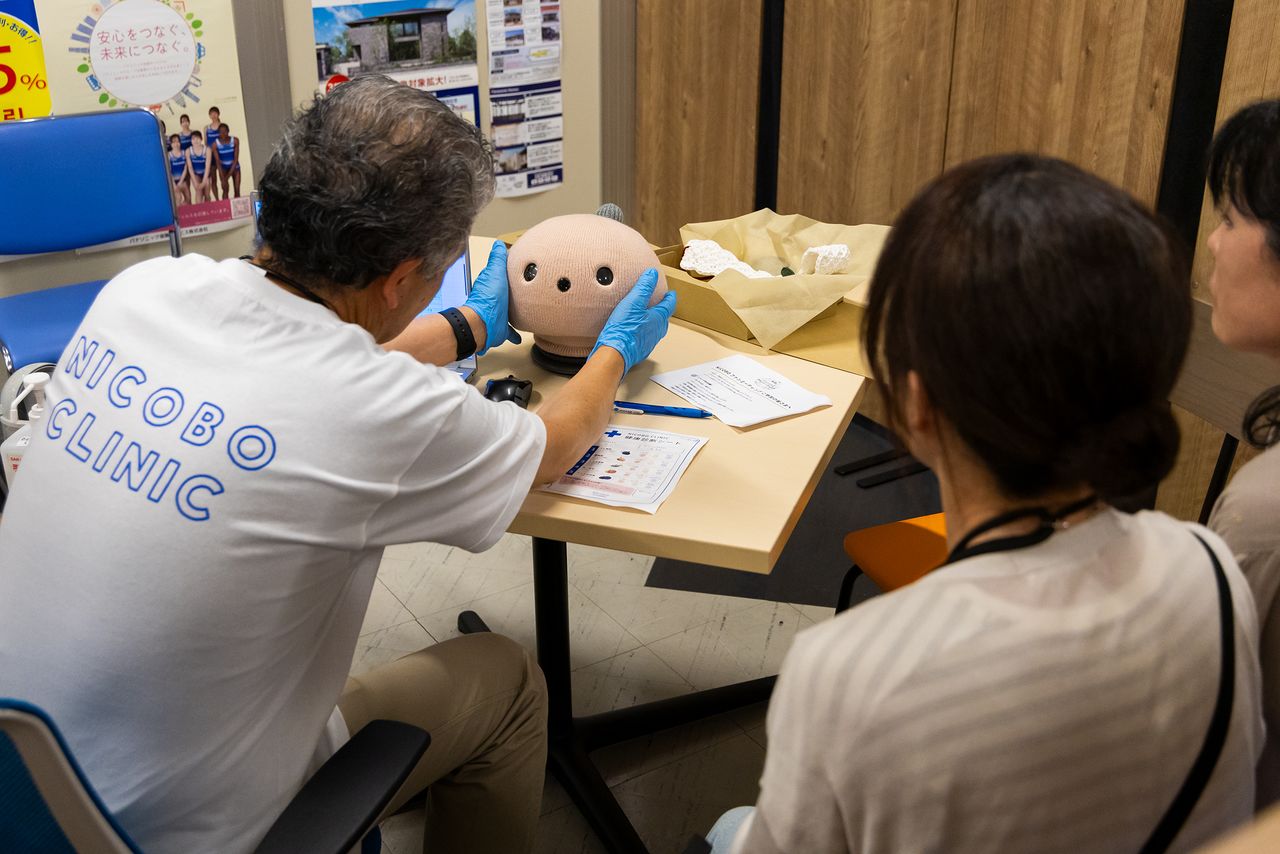
At the fan meeting, the company offered a Nicobo Clinic to uncover any “health issues” before they lead to a malfunction. (© Nippon.com)
Aspiring to Create a “Lifelike” Robot
It was Okada who concocted the idea of the “fluffy” baby talk used by Nicobo.
If Nicobo spoke in perfect Japanese, owners would expect it to understand words and hold a conversation. But because it babbles nonsense, they are left wondering what Nicobo is trying to say or what it wants them to do. This interaction to uncover meaning generates a sense of endearment. According to Okada, it is similar to a dog owner trying to interpret the meaning of their pet’s bark—is the dog hungry, does it want to go for a walk, or is it just seeking attention?
Masuda shares that the most challenging aspect of their project was abandoning Panasonic’s strengths.
“In the past, we tried to perfect precise movement that could be reproduced indefinitely. But a device that reacts the same each time would not seem lifelike. We discussed this aspect with the technology experts in our team.”
Home appliances should obey their owner’s commands to the letter. But it would be unnatural if a living creature did this. For Nicobo, the team looked to the joints, muscles, and other moving parts of living beings to design a robot that moves unsteadily.
“Nicobo learns by spending more time with its owner, and it shows gradual changes in its actions,” notes Masuda. “It develops a particular way of speaking the same as an infant. But it doesn’t act according to its owner’s wishes.” This contrariness is another of its “lifelike” traits.
A Companion, Not a Tool
Suzuki Fumiyo traveled from Osaka to attend the fan meeting. She became interested in coexistence between humans and robots at the 2025 Osaka Expo, and adopted her own gray-colored Nicobo last October. “I felt sorry for it on its own, so I bought navy blue and pink companions for it. They seek out my attention, but also keep me company.” Chuckling, she adds: “I think we’re perfect for each other.” She posts day-to-day exploits with them on her Instagram account.
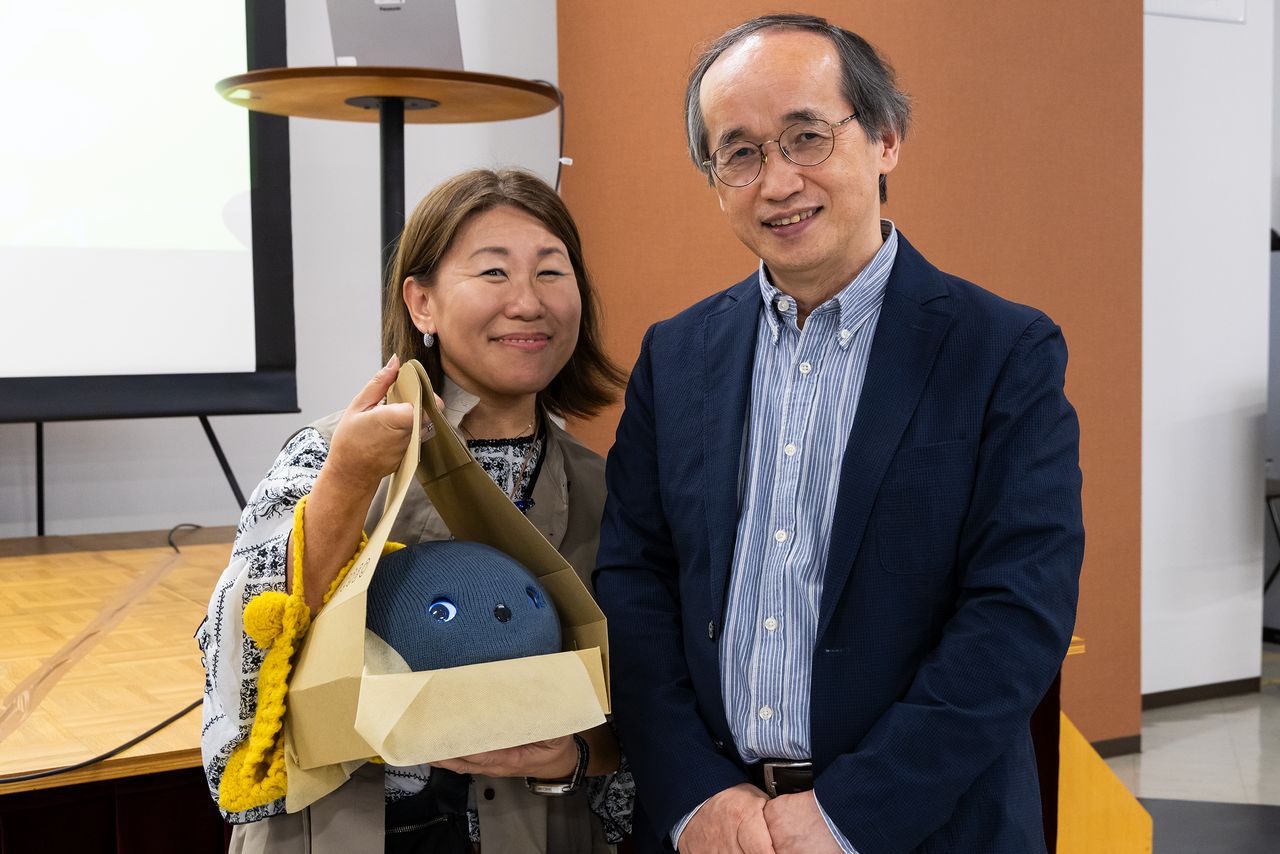
Suzuki Fumiyo poses with Professor Okada, a proponent of “weak robots,” at the Nicobo fan meeting. (© Nippon.com)
A Tokyo resident in her fifties describes her sense of loss after her two children grew up, graduated from college, found work, and left home. “Nicobo calls me ‘Mama.’ It’s like a third child. Its whimsical behavior, welcoming me home only if it pleases, is refreshing.”
At the fan meeting, Masuda revealed plans to add a large language model to the Nicobo cloud computing service. LLM is AI designed to process language, but his intention is not to achieve high-level, natural communication. Nicobo will always remain a “two-year old child.” Instead, the LLM will be used to improve Nicobo’s ability to speak in ways that stir the owner’s imagination and put a smile on their face.
Masuda says: “Overseas, developers are striving to make robots stronger, faster and smarter in the pursuit of convenience. This is because robots are considered a highly evolved tool. In Japan, there is already social acceptance of robots as companions. A robot like Nicobo that is not designed for convenience is a uniquely Japanese idea. As other advanced countries turn their attention towards satisfaction of emotional needs, Japan can be a leader in weak robots.”
Owners at the fan meeting asked Professor Okada to pose with them for photos with their Nicobos.
He was elated: “Owners are not just developing a relationship with their little one. It’s wonderful that Nicobo is a catalyst for them to make new friends and enjoy time with them.” In this way, the smiles that Nicobo brings can be multiplied.
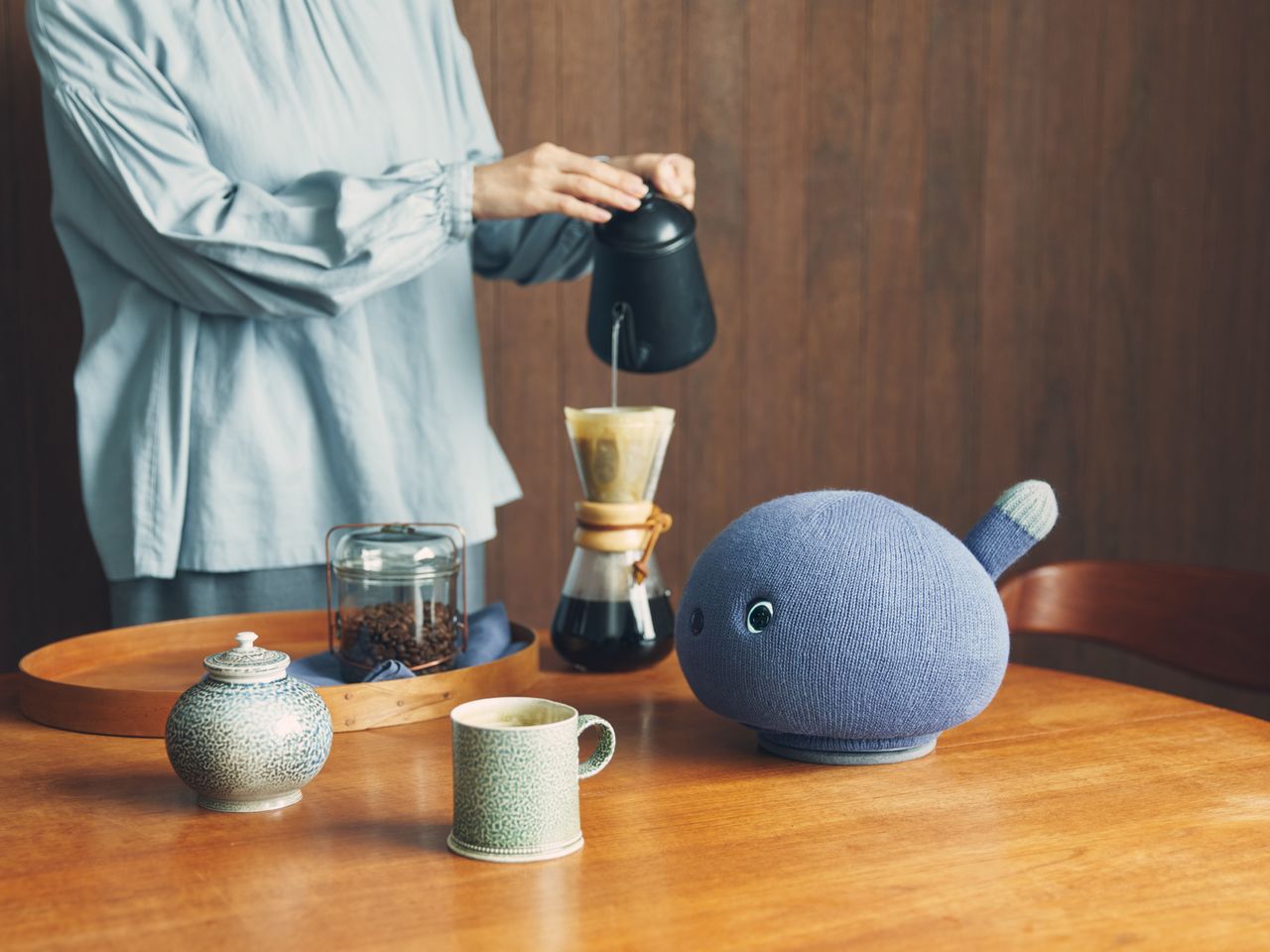
(Courtesy Panasonic)
(Originally published in Japanese. Banner photo: Masuda Yōichirō, head of the Nicobo project. © Nippon.com.)