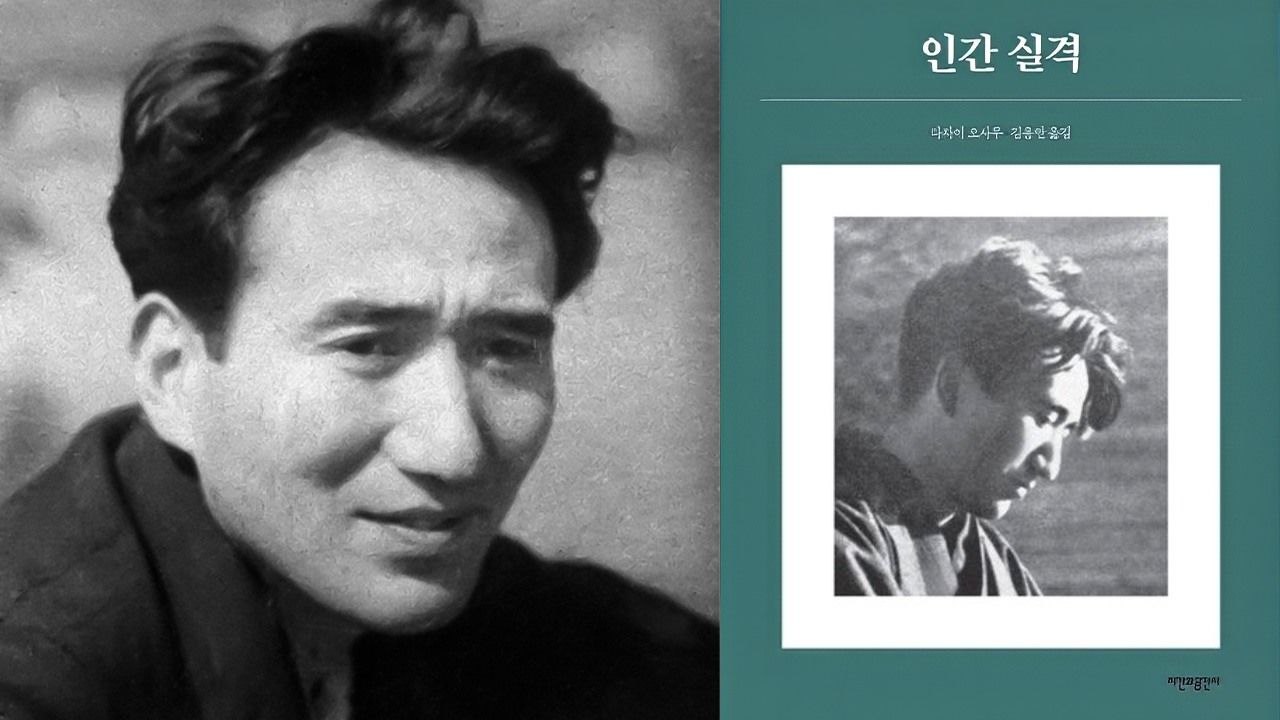
How Dazai Osamu’s “No Longer Human” Became a Bestseller in South Korea
Books Culture World- English
- 日本語
- 简体字
- 繁體字
- Français
- Español
- العربية
- Русский
A Spike in Sales
A South Korean translation of Dazai Osamu’s classic work No Longer Human has reached its 142nd reprinting, having sold more than 600,000 copies, according to a representative from the publisher Minumsa. When it initially released the book as part of a world literature series in 2004, the publisher did not anticipate a hit or even any sales growth, and was reportedly stunned by a rapid spike in sales from 2021. The sudden popularity is seen as an unprecedented event in the South Korean publishing world.
When first published, the translation met with little enthusiasm. Instead of being hailed as a classic, it was blasted as a depressing story in which the protagonist passes aimless days and leads an unproductive, dark, and decadent life.
However, in the last few years, No Longer Human has become widely popular among young Korean readers. My own new Korean translation was published this May. I would like to consider why the novel has become a bestseller, based on the profile of its readers, and the appeal of the book itself.
A Life of Competition
In South Korea, there has recently been much focus on the “20/30 cohort,” referring to people in their twenties and thirties. More than just a generation, they are viewed as a social phenomenon.
Members of the 20/30 generation were born after South Korea achieved prosperity, but while they have not experienced poverty, they have had to endure relentless competition from a young age. Despite their high level of education and skills, as they became adults when the economy entered a period of slow growth, the job outlook is bleak.
Rather than saving for the future, many prioritize the present moment based on the spirit of YOLO, “you only live once.” If they have a job, they do not see it as where they will remain for the rest of their career. Instead, it is a place for self-fulfillment and earning a living, and as they do not intend to devote their lives to their jobs, work-life balance is extremely important to them. While they are seen as smart, older generations may criticize the 20/30 cohort as lacking in a “hungry spirit.”
Once they get hooked on something, however, they can show a frightening level of dedication. While they do not waste time on gatherings that they find meaningless, they are ready to pour their energy into personal growth and improvement. Now that lifetime employment is a thing of the past, their ability is all that they can rely on, and they put all their effort into establishing a strong sense of self.
This can be seen in the 20/30 generation’s enthusiastic purchase and enjoyment of new books and literary works. According to statistics from the Ministry of Culture, Sports, and Tourism, this generation accounts for 40%–45% of book purchases in the Korean market, and 60%–70% of ebooks.
The popularity of No Longer Human was fueled by the 2019 release of the Human Lost anime inspired by the book and a 2021 South Korean drama with the same title as Dazai’s book. Widespread sharing on social media and YouTube also contributed to its rise to bestseller status in 2021.
Shared Suffering
How did No Longer Human capture the hearts of the 20/30 generation?
Some women in their twenties and thirties face an unspoken pressure to keep a smile on their face at all times in their workplaces or suppress their true feelings when talking to customers. At risk of burnout, they feel the burden of always presenting the upbeat persona that society demands. For them, the painful clown act put on by Ōba Yōzō, the protagonist of No Longer Human, strikes a powerful chord.
In reviews, there are comments like, “It was like someone had scanned what I was thinking—it gave me shivers,” and, “I saw myself in the character, alienated from society, and headed for lonely self-destruction.”
For some readers, Yōzō’s apathy, fatigue, self-consciousness, despair, disillusionment, and alienation form a vivid mental landscape. Some likely empathize with him. Yōzō’s aimless wandering, dissipation, suicide attempts, and drug use seem to be a way for readers to let out their frustrations and distract themselves from their own problems. This is why they keep reading to the end with bated breath.
Other comments include, “I realized I wasn’t the only one who was suffering,” and “In the novel, Yōzō isn’t like some lifeless, stuffed stranger—he’s a close friend beside me who I can confide in, vent my anger with, and connect to.”
In reactions like, “I can’t bear to see how delicate and fragile Yōzō is,” one can sense pity for him on his path to self-destruction, and even a maternal, protective instinct.
Popular in English Too
No Longer Human has also been translated into English a number of times. It is relatively short, and its straightforward, confessional style may appeal to Western readers. Those who feel weighed down by social expectations seem to empathize with the frank psychological portrayal of the protagonist and his pitiful clowning.
Horror manga adaptations of the novel by Itō Junji and Furuya Usamaru, and the massive success of manga and anime Bungō Stray Dogs, in which Dazai Osamu is the lead character, helped raise the profile of No Longer Human among English readers. It can now be considered a cult classic in the English-speaking world.
A Sad Clown
The novel is considered easy to read and straight-talking, and its title has a powerful impact. The original Japanese title Ningen shikkaku combines the words “human” and “disqualified,” for a fundamental theme that everyone is ready to consider. At the same time, readers feel like the book is reading their thoughts. It piques their curiosity and heightens their interest.
But the central appeal remains the protagonist’s buffoonery. This is clear from comments like, “My heart broke at Yōzō’s clownish antics” and “I was gripped by Yōzō’s clown act and the process of its unravelling.” His behavior can be read as an explosive act of defiance by an individual unable to fit into society, who had previously only wilted and sunk into despair.
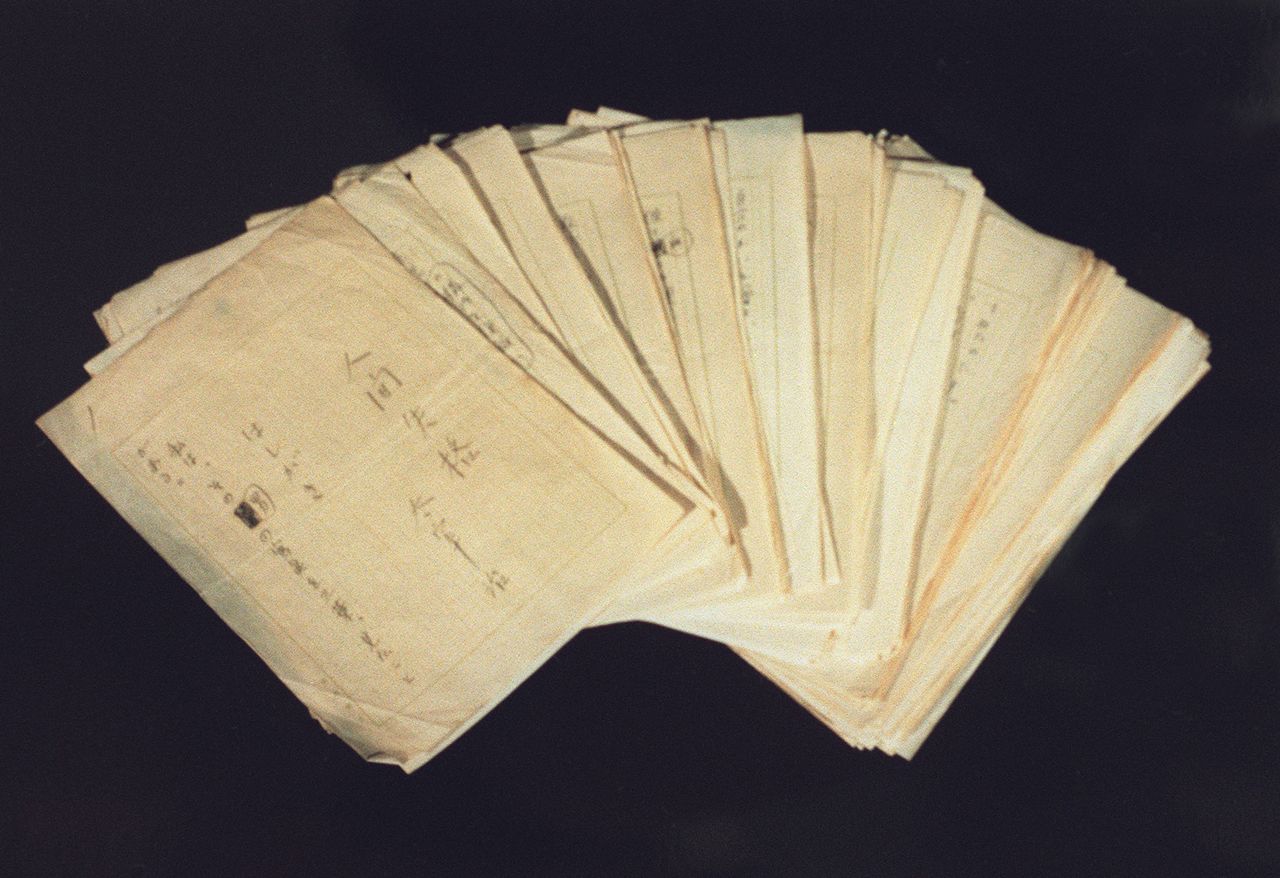
Dazai Osamu’s manuscript for No Longer Human on display at Shinchōsha in Shinjuku, Tokyo. (© Jiji)
Yōzō’s behavior is depicted as swinging between contrasts: fitting in and standing out, stasis and motion, erasure and visibility, passivity and taking control. Sometimes he switches between roles in an instant. It is this unexpectedness that provides the reader with the thrills of a suspense novel. Also, while other characters wear masks to hide their hypocrisy, Yōzō’s conceals his false wickedness, based on his deliberate errors.
Really a Failure?
Some readers try to find a deeper meaning between the lines, as in the following comment. “Yōzō says that he’s no longer human, but has he really failed as a human? I feel really doubtful about that.”
A person who has lived in an extremely pure way declares himself to be no longer human. This provokes various questions, such as how should we define the hypocrites around him? And how many of us possess true human integrity?
The statement of being “no longer human” looks like a declaration, but it may be a question posed to the reader. By leaving room for different interpretations, the narrative encourages readers to think, which is the aesthetic of the novel.
In the novel, Yōzō says (in the translation by Juliet Winters Carpenter), “What confounds me is the spectacle of human beings who exude purity, happiness, and serenity while engaged in deception, or who are confident in their ability to do so.”
He says that people confound him, but he shows sharp insight into their true nature. Irony lies between the lines of his sighing over the difficulty, as his insight hides beneath an outer layer of bafflement.
Yōzō says that acting the clown was his “final way of asking humans for love,” but it could also be seen as a way of seeking his own love. The audience for his clowning could extend from the people around him to the novel’s readers, so that the whole book itself is a clownish gesture.
There is another hidden metaphor in the text. In the first part, when Yōzō is talking about his childhood in the prewar period, he describes how people criticize a rally by his father’s political party while they are outside going home, but then they stop by his house and flatter his father with expressions of delight, saying that the event was “a grand success.” Given that the book was published in 1948, this scene echoes the dramatic U-turns seen when former advocates of militarism suddenly began shouting for democracy after the war was over. This movement between social satire and introspection is another aspect of the novel’s distinct aesthetic and is part of what makes it a masterpiece.
Rather than being an “exotic” work defined by its Japanese origins, this is a classic of outsider literature that asks how people should live in society, and I think this is the reason it is so widely read around the world.
- Dazai Osamu’s Ningen shikkaku has been translated into English as No Longer Human by Donald Keene and Juliet Winters Carpenter, and as A Shameful Life by Mark Gibeau.
(Originally published in Japanese on July 22, 2026. Banner photo: Dazai Osamu [© Kyōdō] and a Korean version of No Longer Human [© Kim Yong-an].)