-
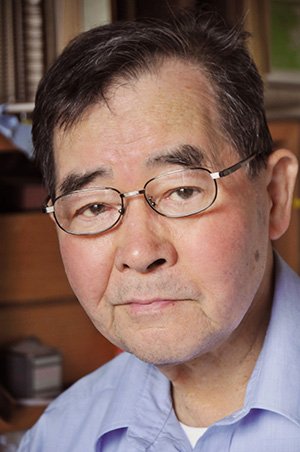
Ōsaka HiromichiBorn in 1937. After graduating from the fine arts department of Tokyo Gakugei University, worked as a junior high school art teacher. In 1980, he was commissioned by the Imperial Household Agency to recreate several treasures from the collection of the Shōsō-in treasure house at the Tōdai-ji temple in Nara. In 1984, he retired from teaching to concentrate on his craft on a full-time basis. He has won numerous awards and decorations for his work, culminating in his recognition as a Living National Treasure in 1997.
-
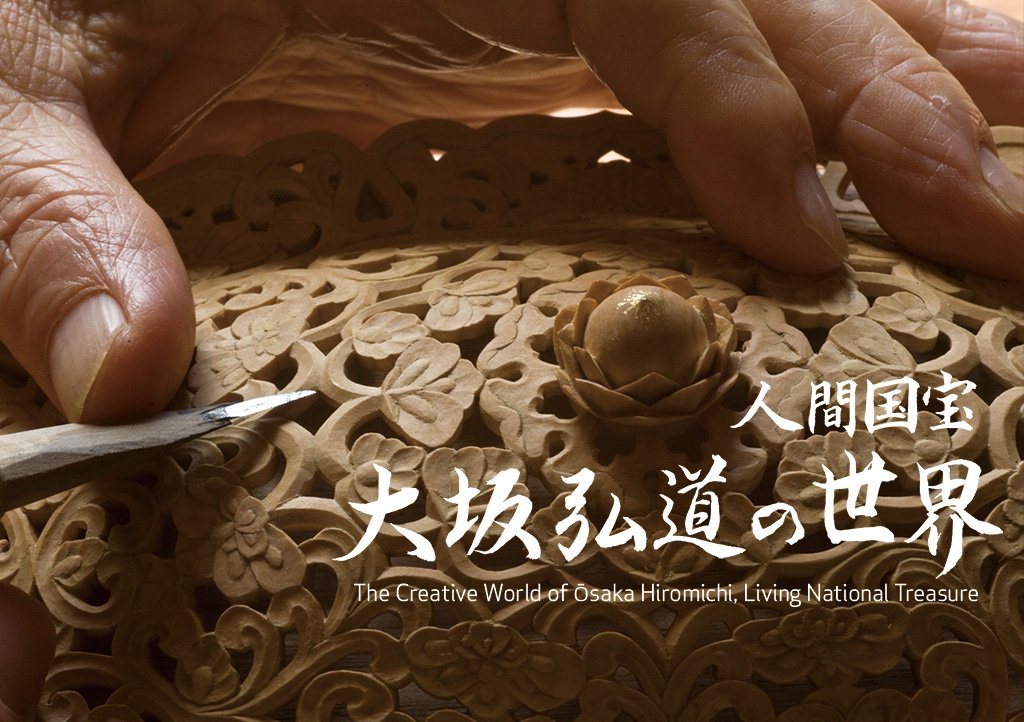
The Creative World of Ōsaka Hiromichi, Living National Treasure
-
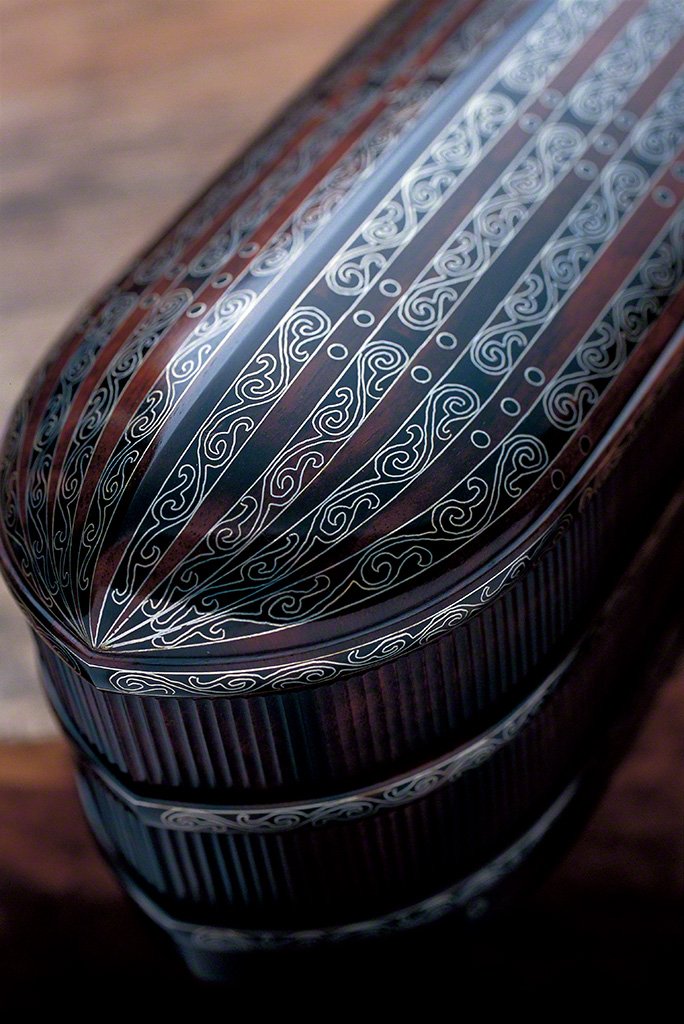
Box for writing brush with inlaid scrolling floral design (1994). Tin inlay on black persimmon wood.
-
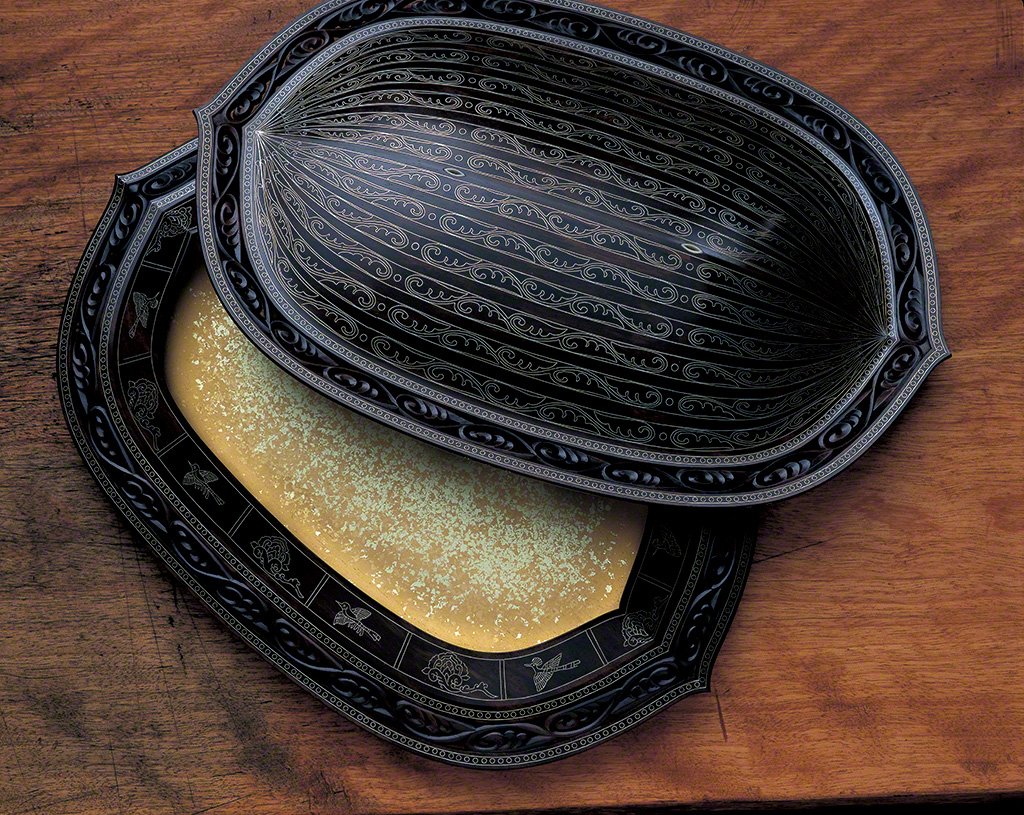
Lotus-petal shaped covered container with an inlaid lattice of arabesque-style patterns (1999). Black persimmon wood inlaid with tin. Opening the lid reveals a vibrant world of gold leaf.
-
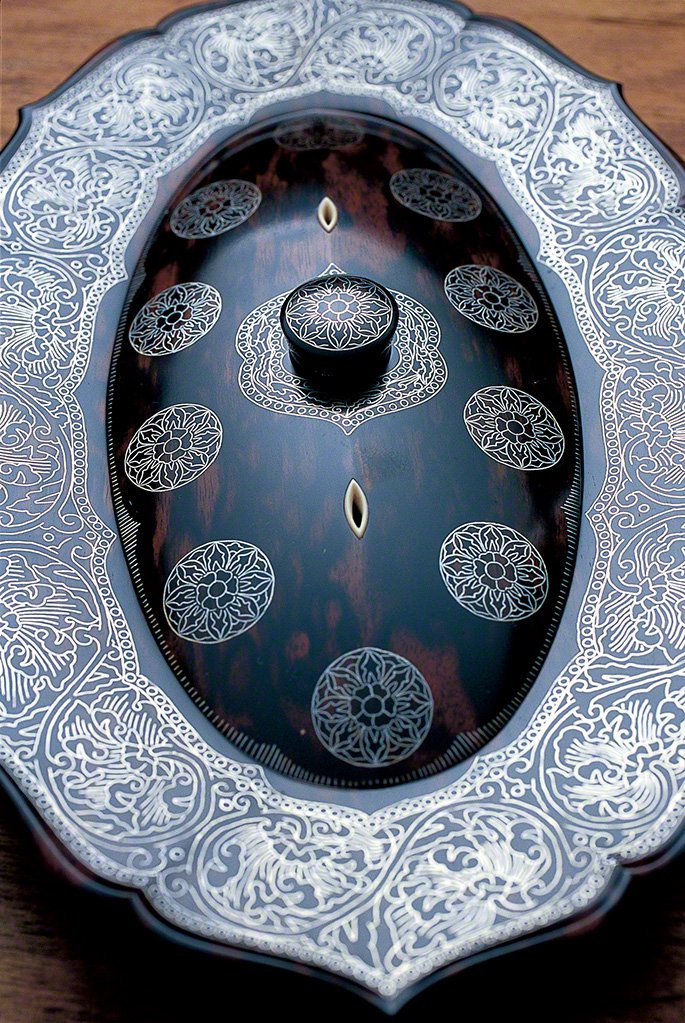
Container with an inlaid hōsōge floral design (2002). Tin inlaid on a surface of black persimmon wood. Hōsōge is a type of arabesque that was popular during the Nara (710– 794) and Heian (794–1185) periods.
-
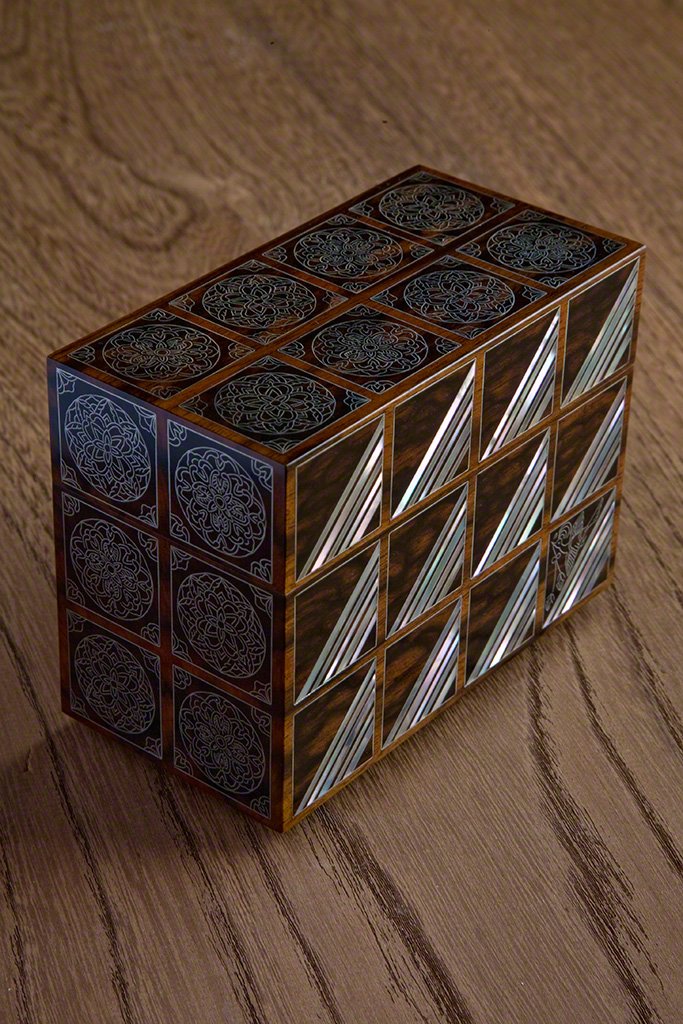
Incense box inalid with raden and tin (2010). Tin and various shells inlaid on a surface of black persimmon wood. The piece has a beguiling luster, which changes subtly depending on the viewer’s perspective.
-
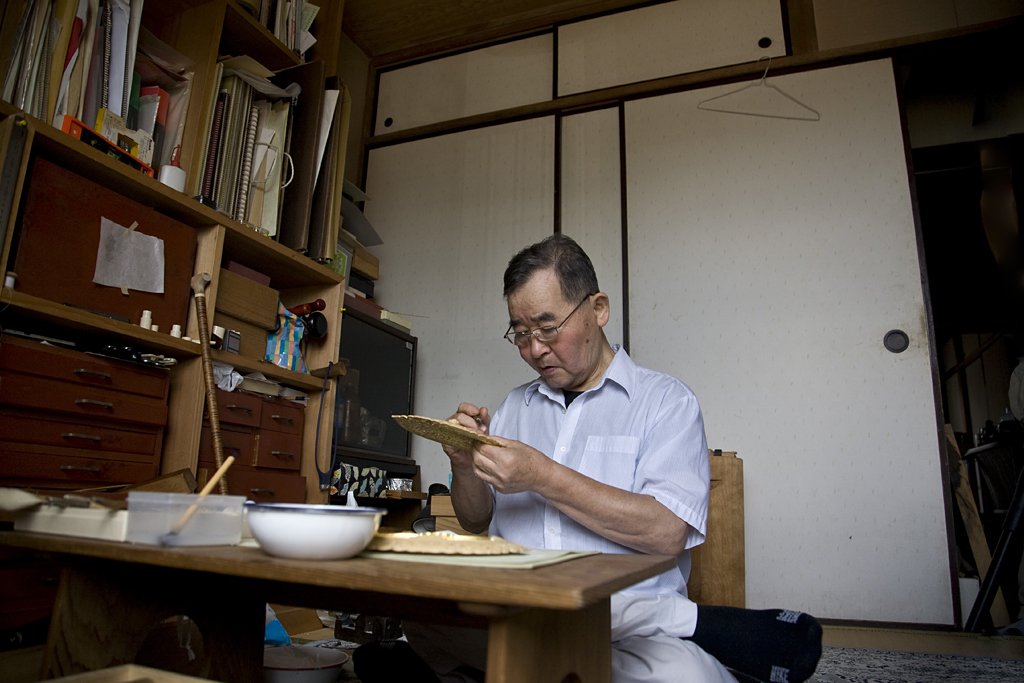
Ōsaka Hiromichi in his studio at home. Ōsaka says he is never happier than when he is absorbed in his work.
-
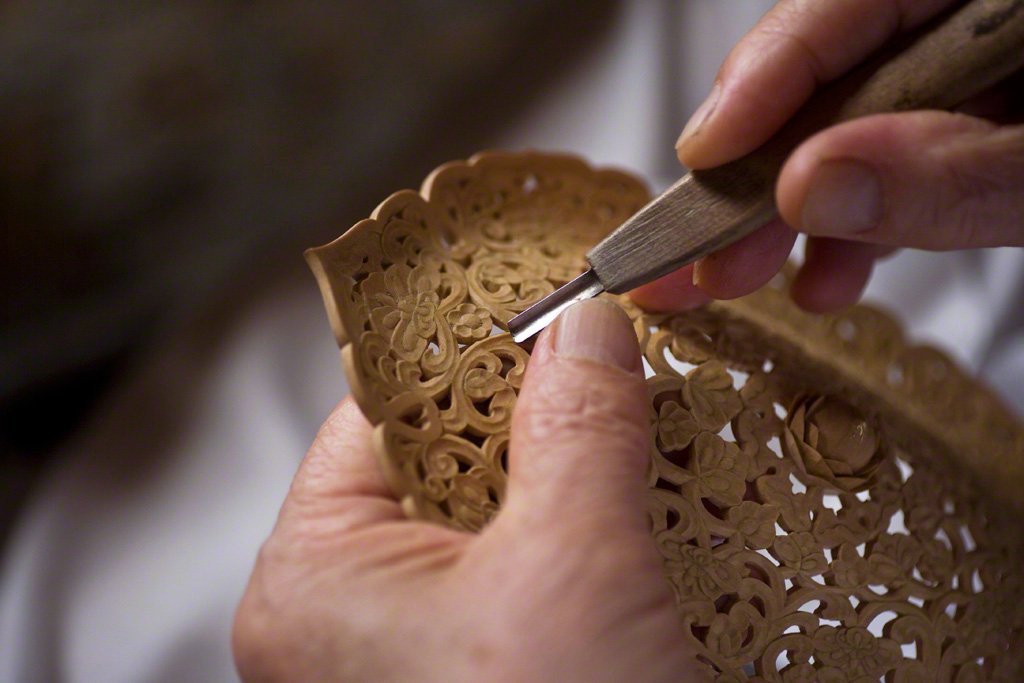
After carving the lattice, Ōsaka uses a small tool to smooth out the surface of the wood.
-
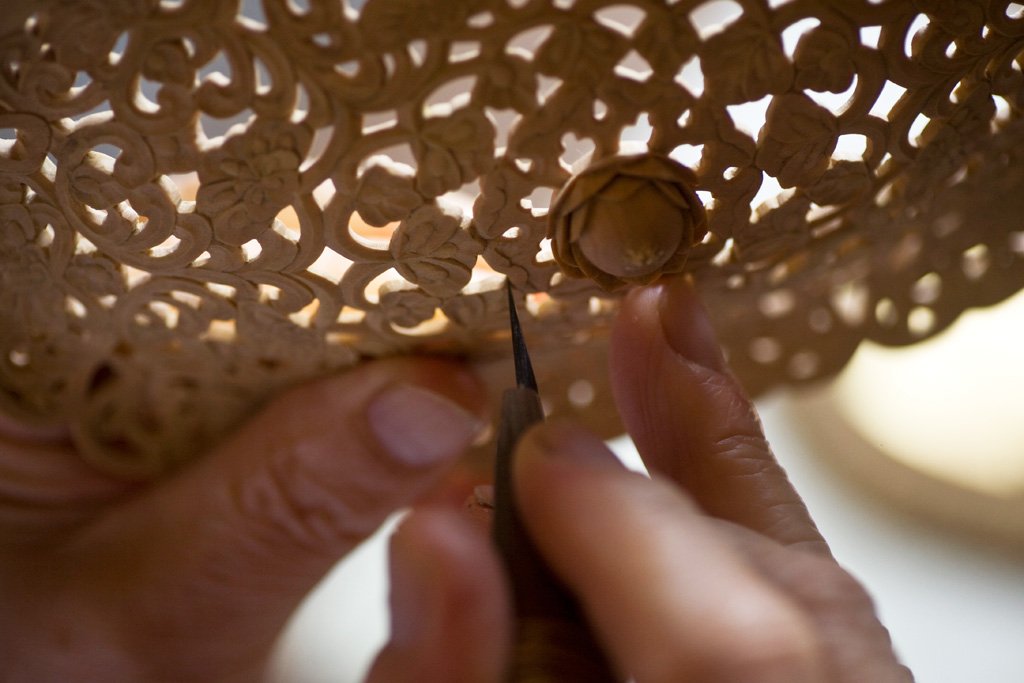
When carving a piece from a single piece of wood, the slightest mistake can been disastrous. Ōsaka needs to make sure he gets everything absolutely right every step of the way.
-
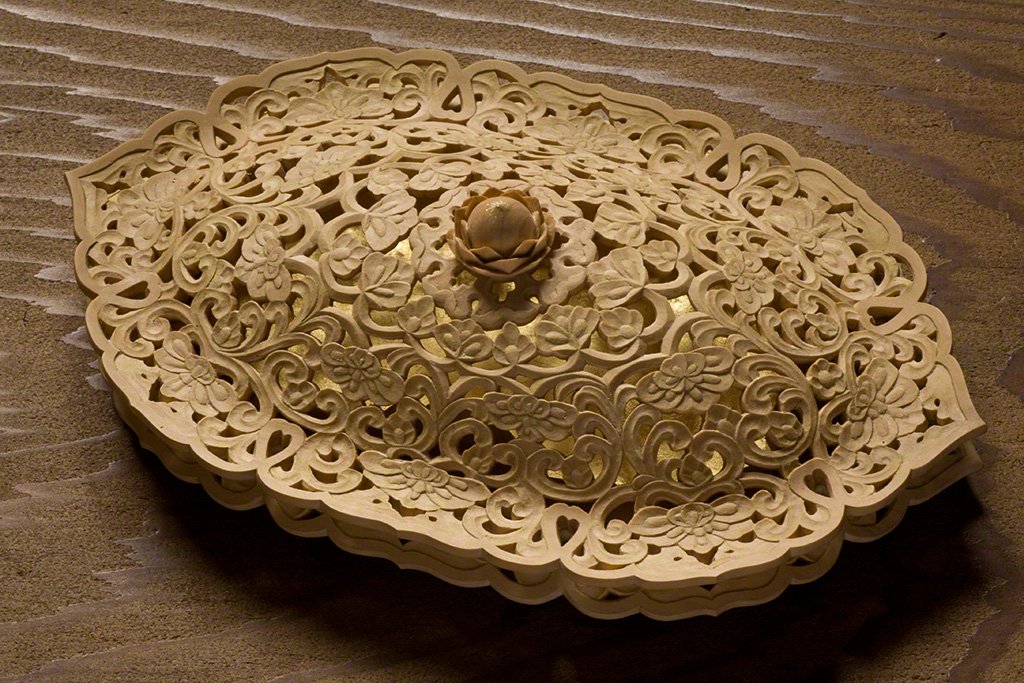
Boxwood incense container with filigreed latticework and hōsōge-style arabesque patterns (2011). This is Ōsaka’s most recent piece.
-
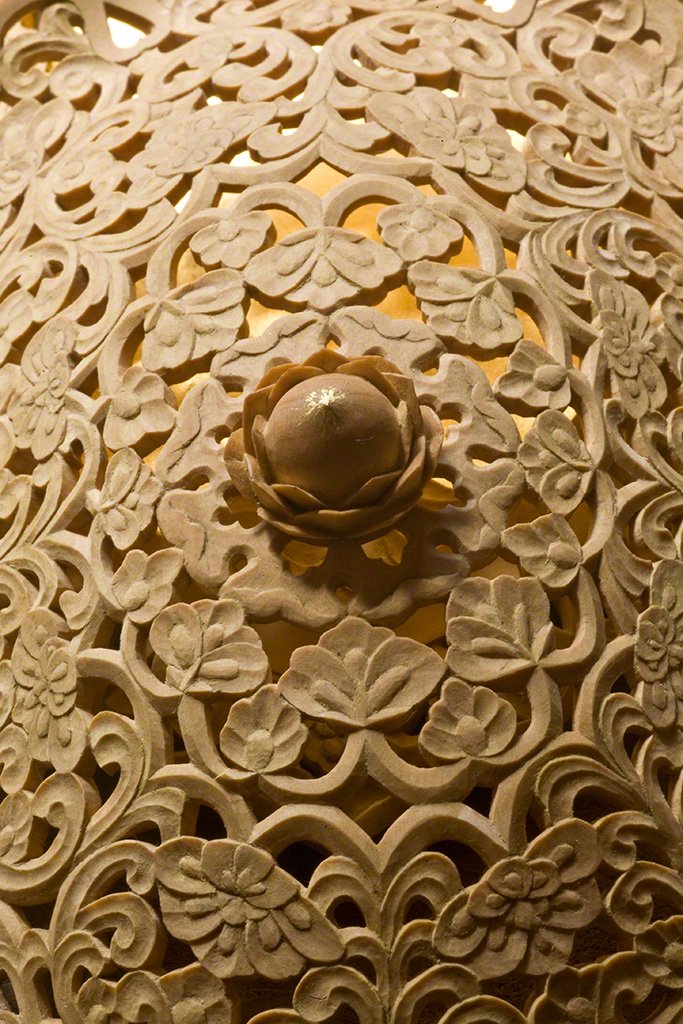
The lotus-flower design on the lid is carved out of a single piece of wood. The beauty of the minute details is breathtaking.
-
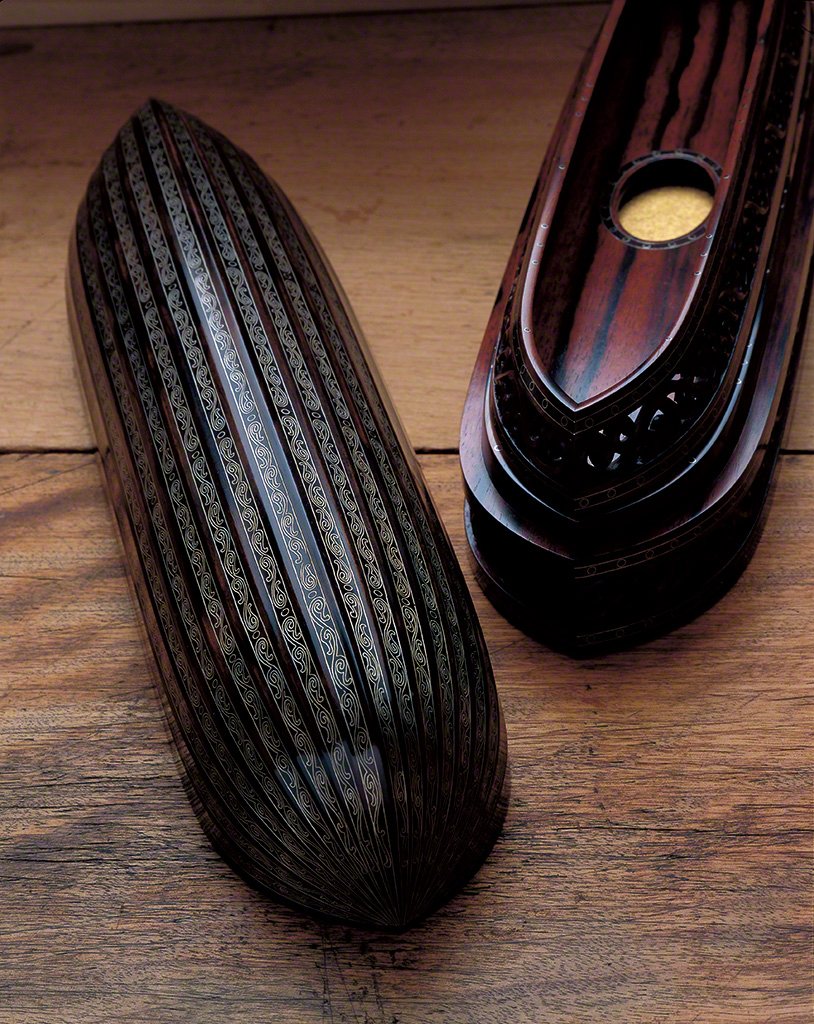
Writing brush box inlaid with arabesque-style patterns (1997). Tin inlay on black persimmon wood.
-
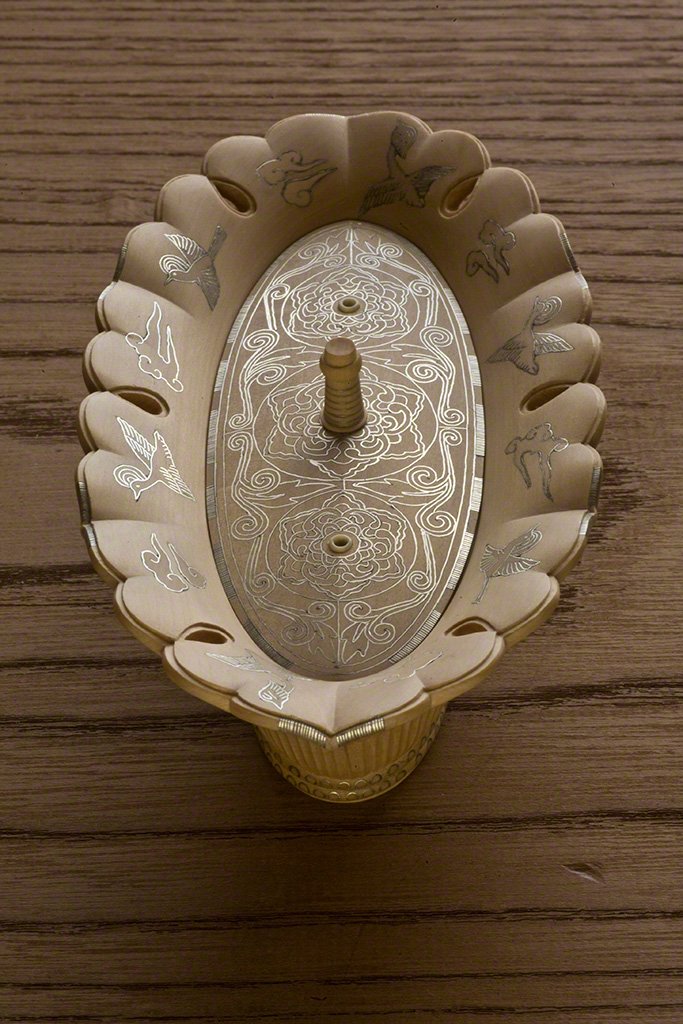
Floral incense container made from boxwood inlaid with tin (2009).
-
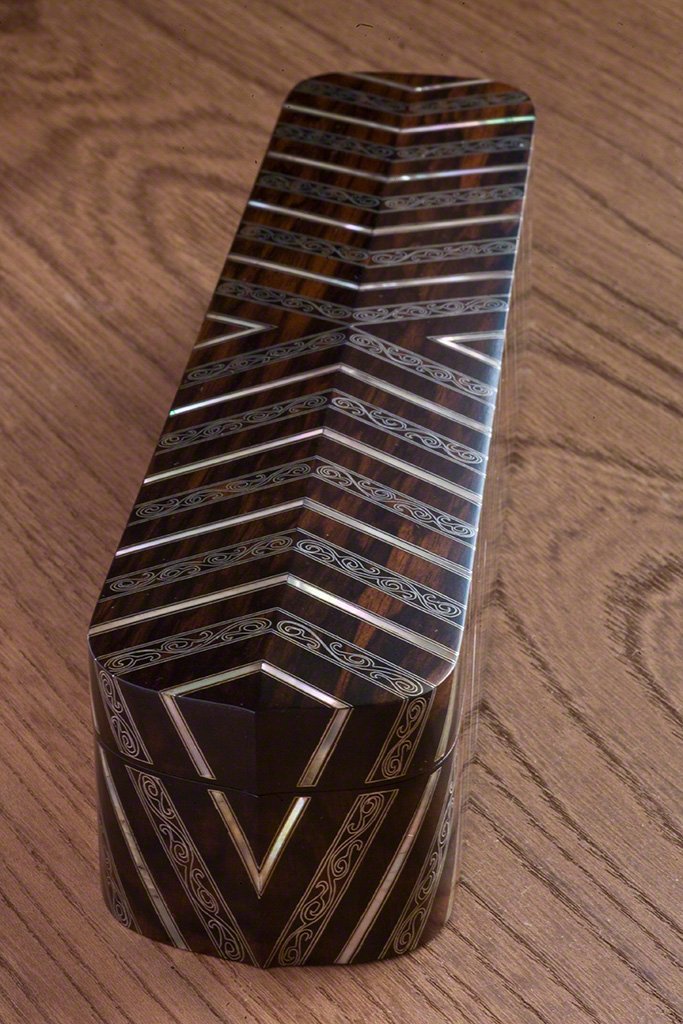
Raden incense box with inlaid arabesque-style patterns (2009). This piece features a base of black persimmon inlaid with tin and marbled turban shell. The straight lines of the inlaid shells immediately give the work a contemporary feel.
-
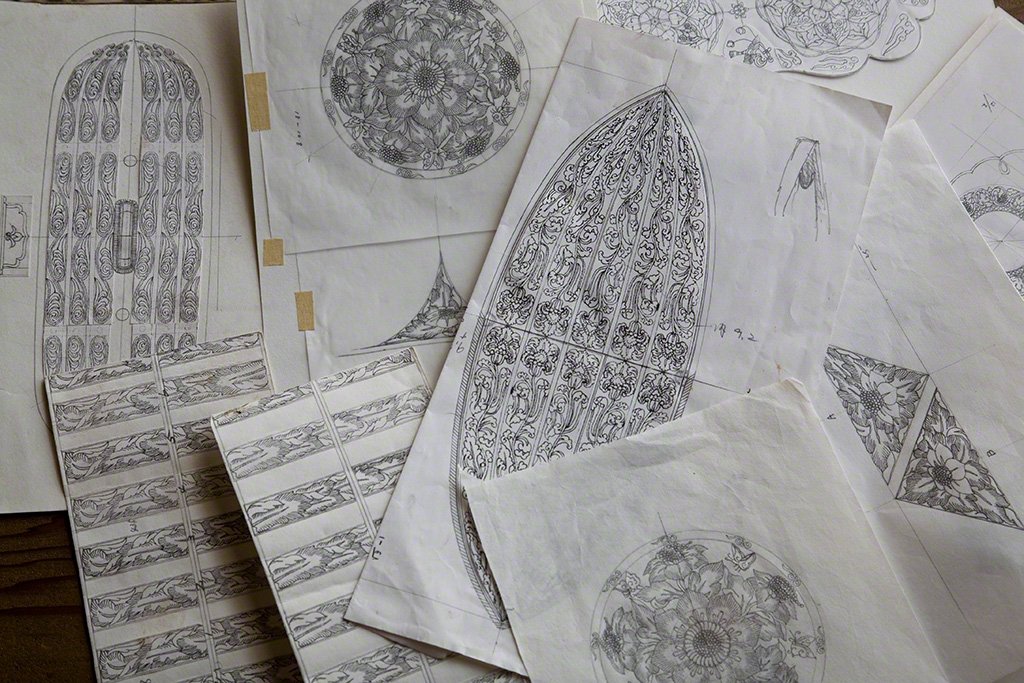
Design sketches. Ōsaka’s detailed sketches guide him during the painstaking carving stage of his work.
-
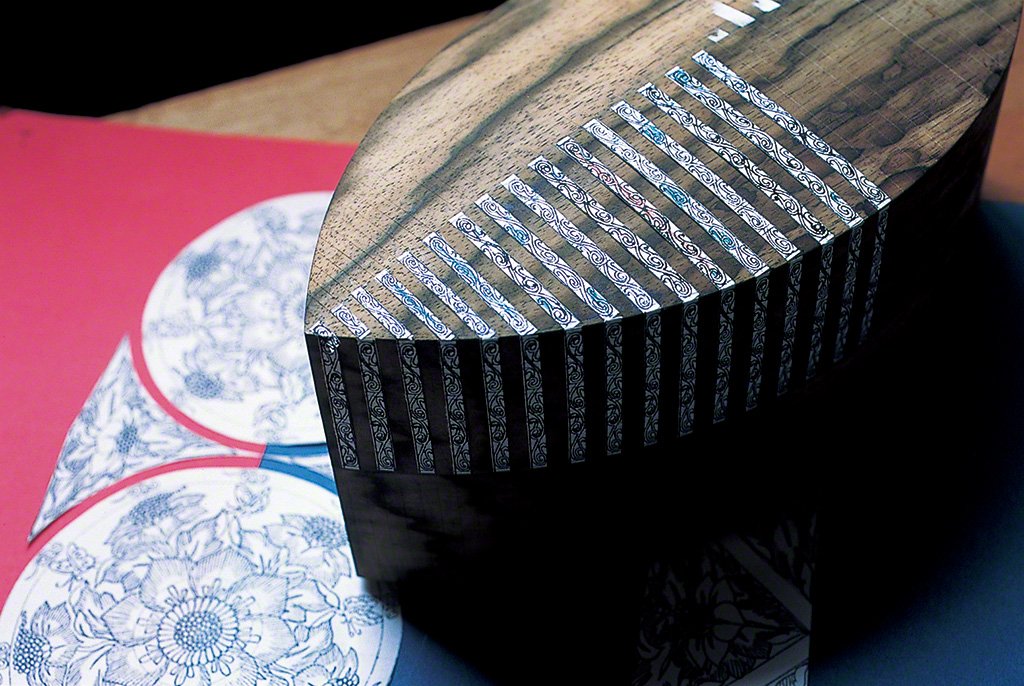
A work in progress: Ōsaka’s own funerary urn (kotsubako). For this piece, completed in 2003, Ōsaka used an alternating inlay of tin and gold to create an intricate arabesque pattern.
-
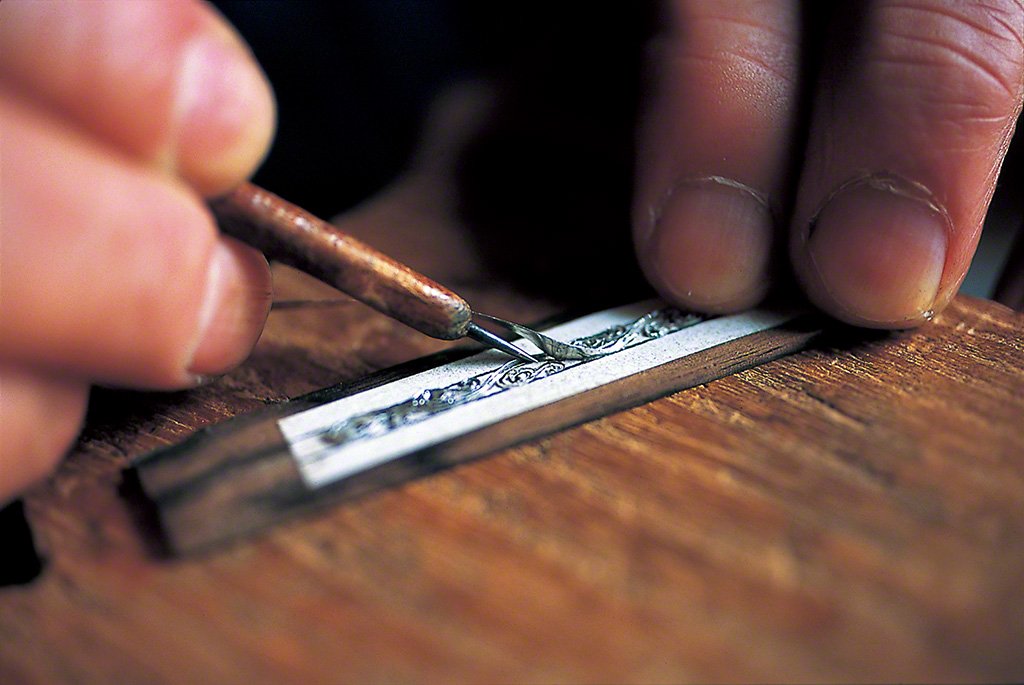
Ōsaka inserts the tin inlay into a piece of wood that will be incorporated into a design. This work requires remarkable precision—down to one tenth of a millimeter. These strips of wood are the building blocks of Ōsaka’s artistic vision.
-
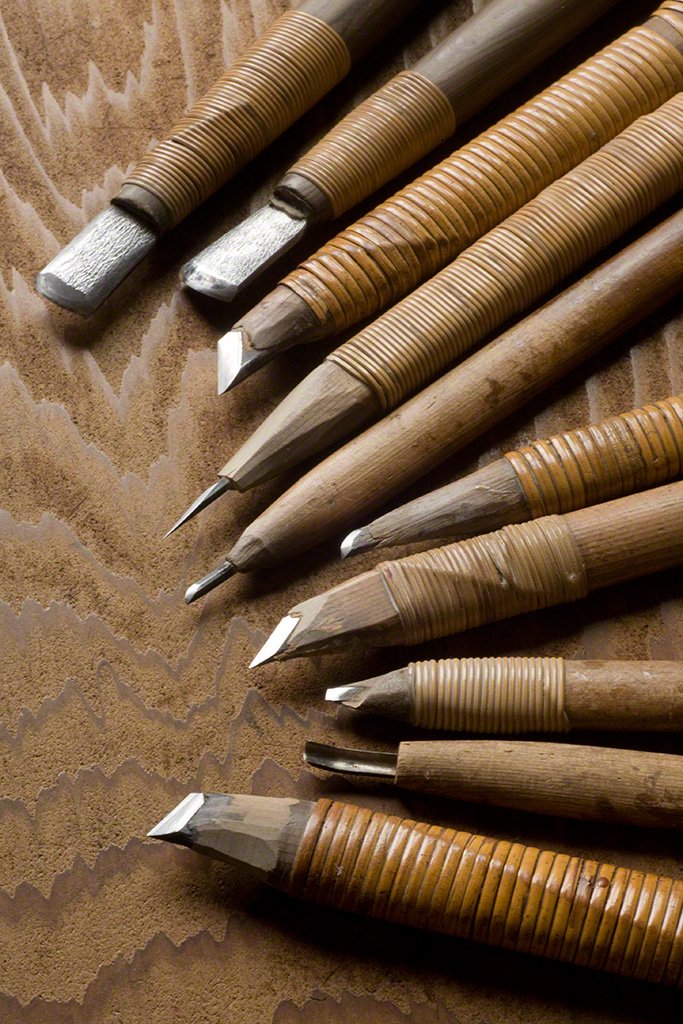
Some of Ōsaka’s tools.
-
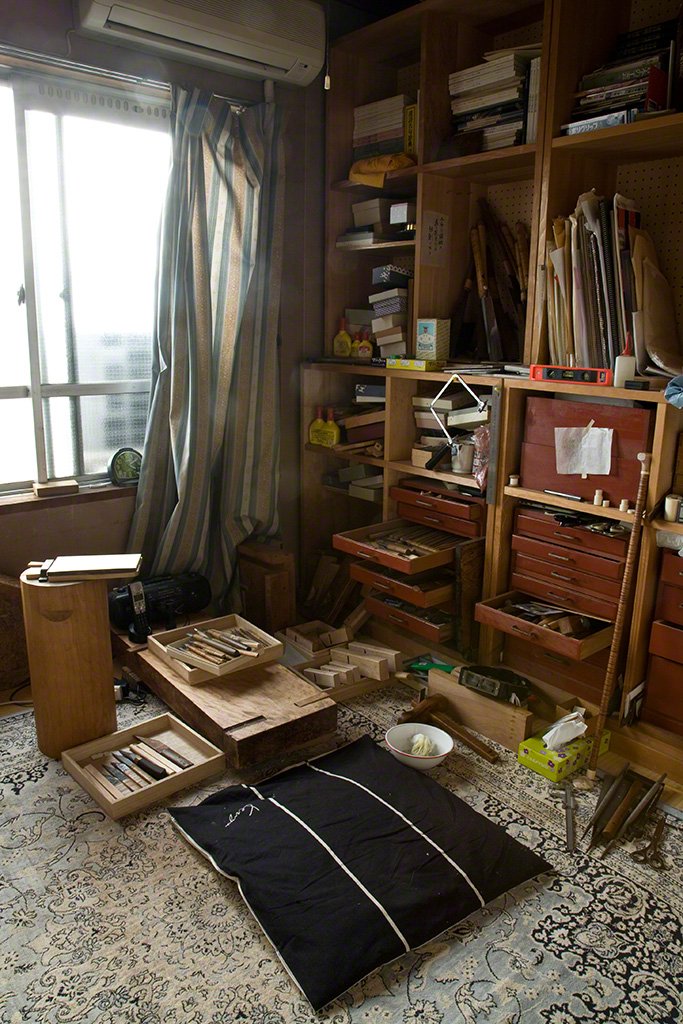
Ōsaka’s workspace in his apartment in Nakamurabashi, Tokyo.


 Read in other languages