-
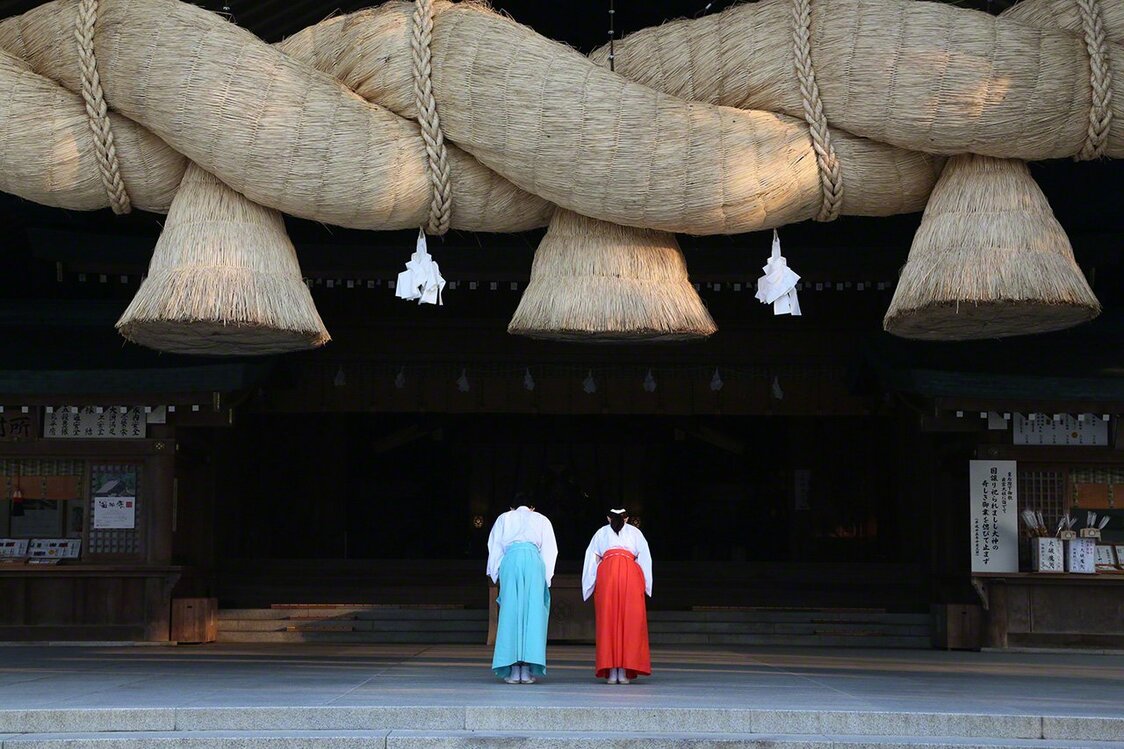
This huge shimenawa rope is the most famous symbol of the Izumo Shrine.
-
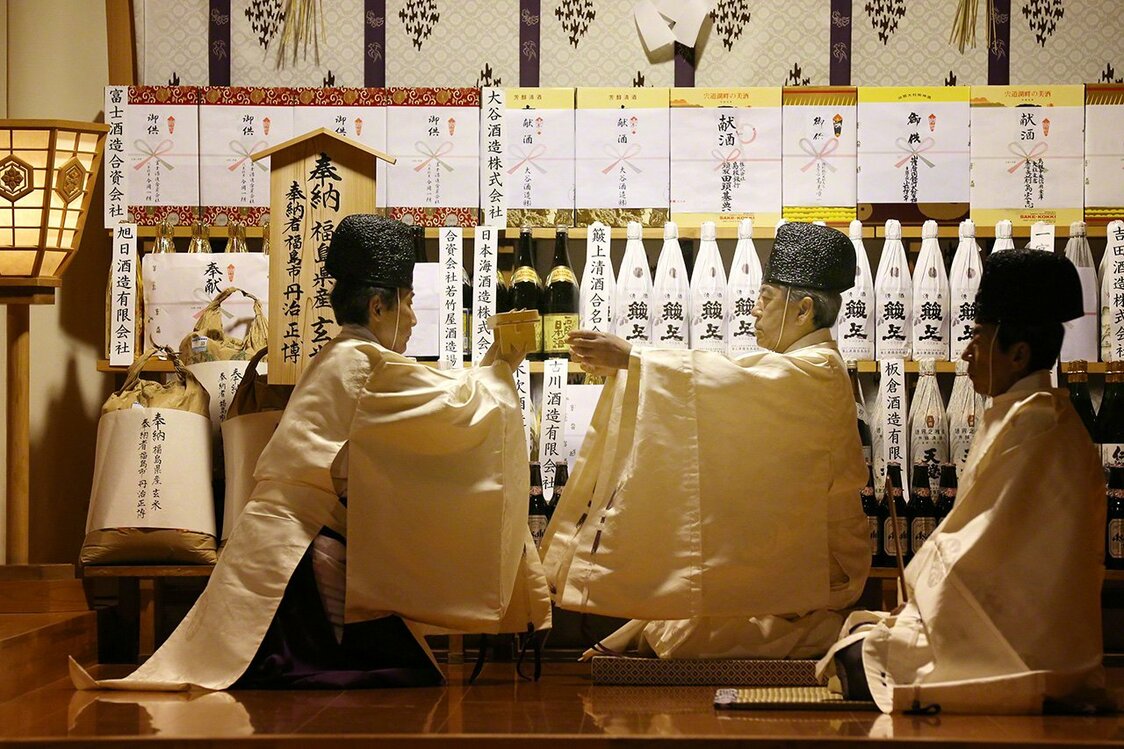
The Ōharae (great purification) ceremony takes place on New Year’s Eve as a way of exorcising the sins and impurities of the previous year.
-
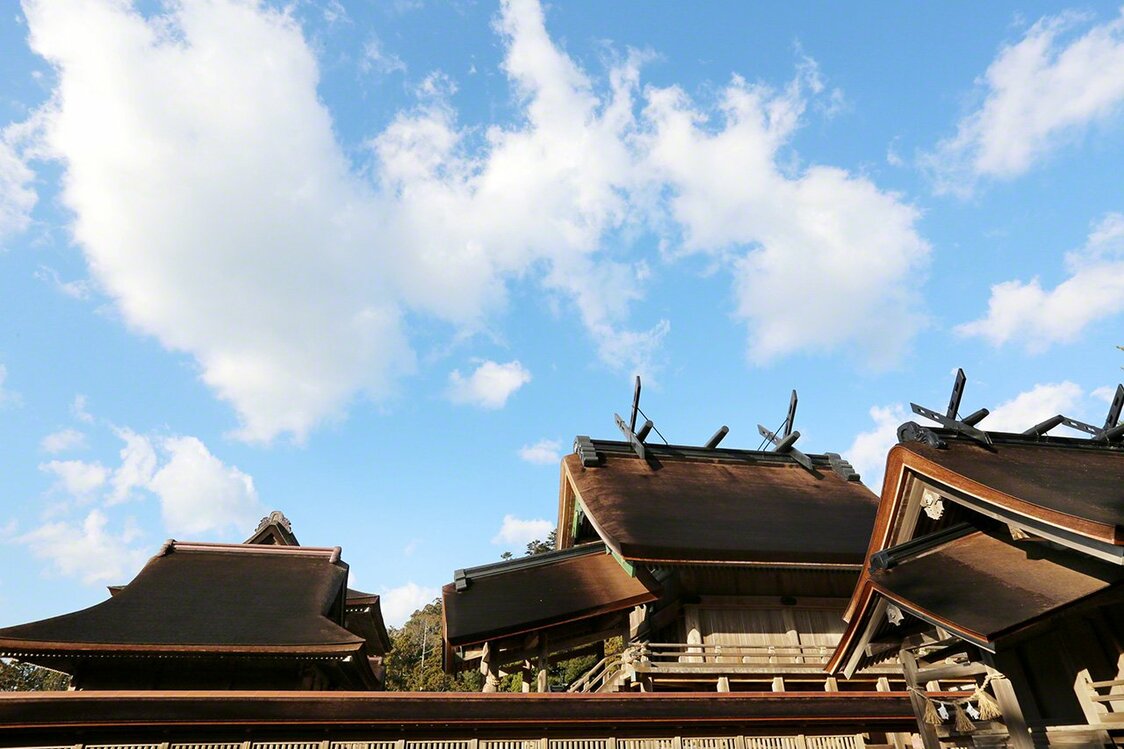
The new shrine buildings. The structures are completely rebuilt every 60 years.
-
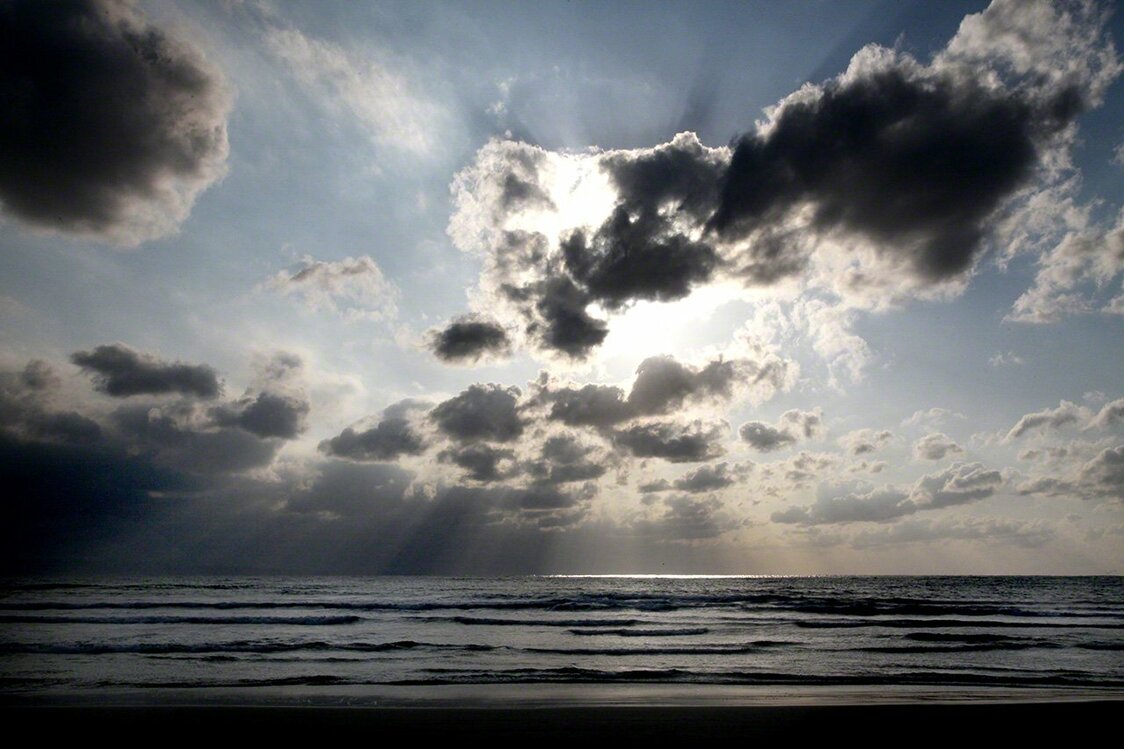
A view from the beach at Inasa no hama, an important site in Japanese myth.
-

A procession of priests makes its way along the pine-lined pathway. The prayer hall is in the background.
-
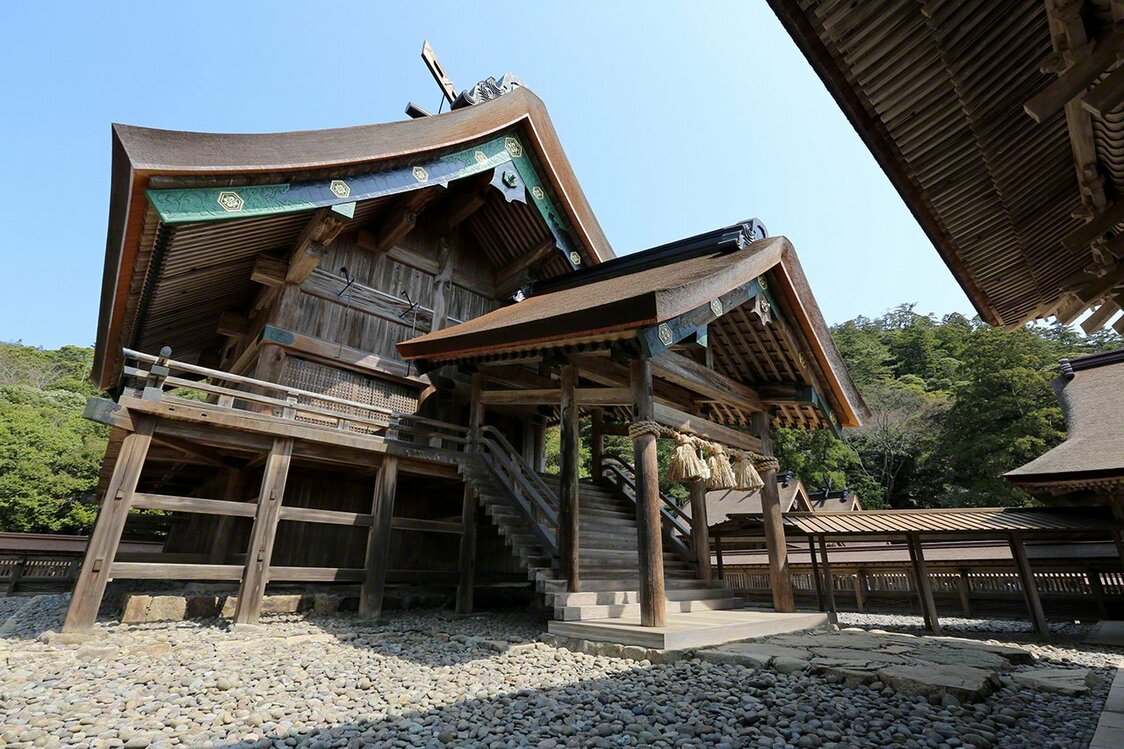
The main shrine building is built in the oldest style of religious architecture in Japan, known as “taisha-zukuri.”
-
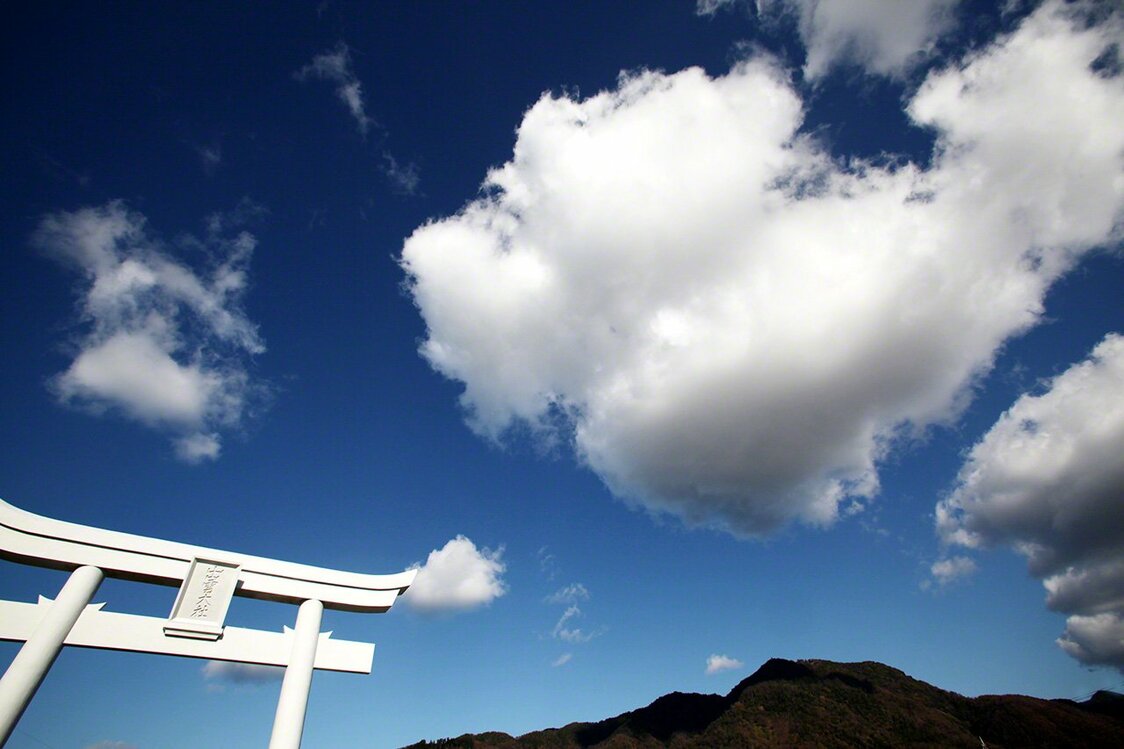
The Ichino torii gate, with Mt. Misen rising up behind the shrine.
-
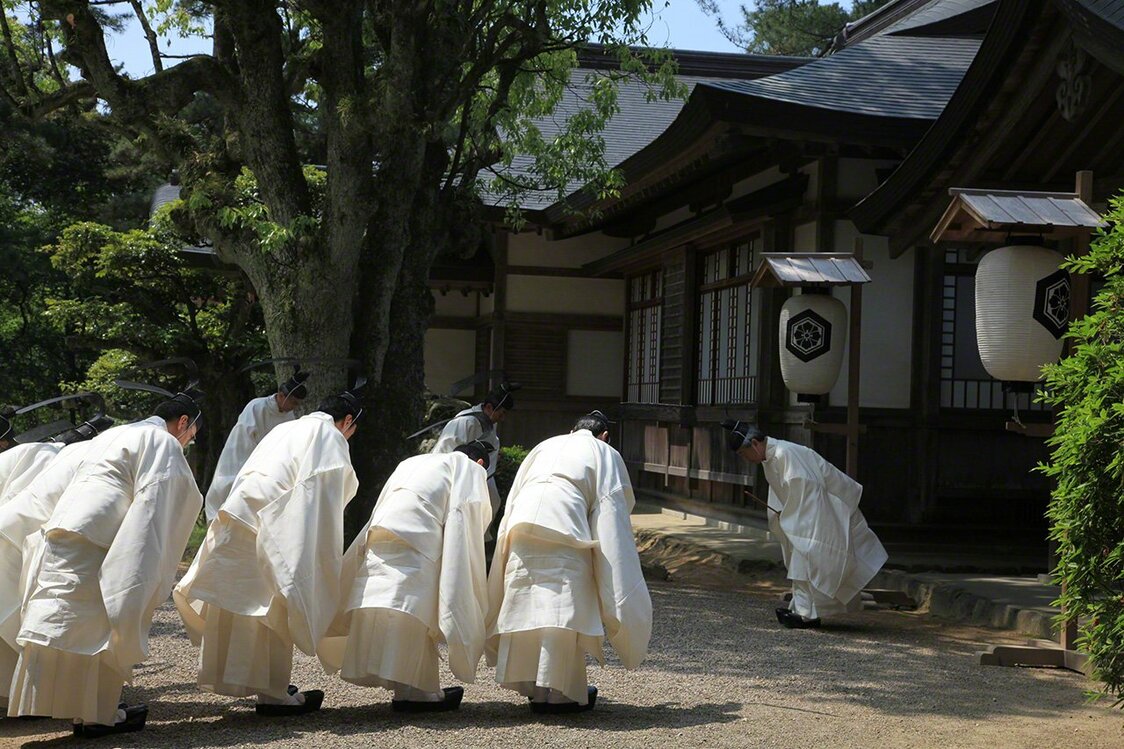
Priests bow in greeting before a shrine ceremony.
-
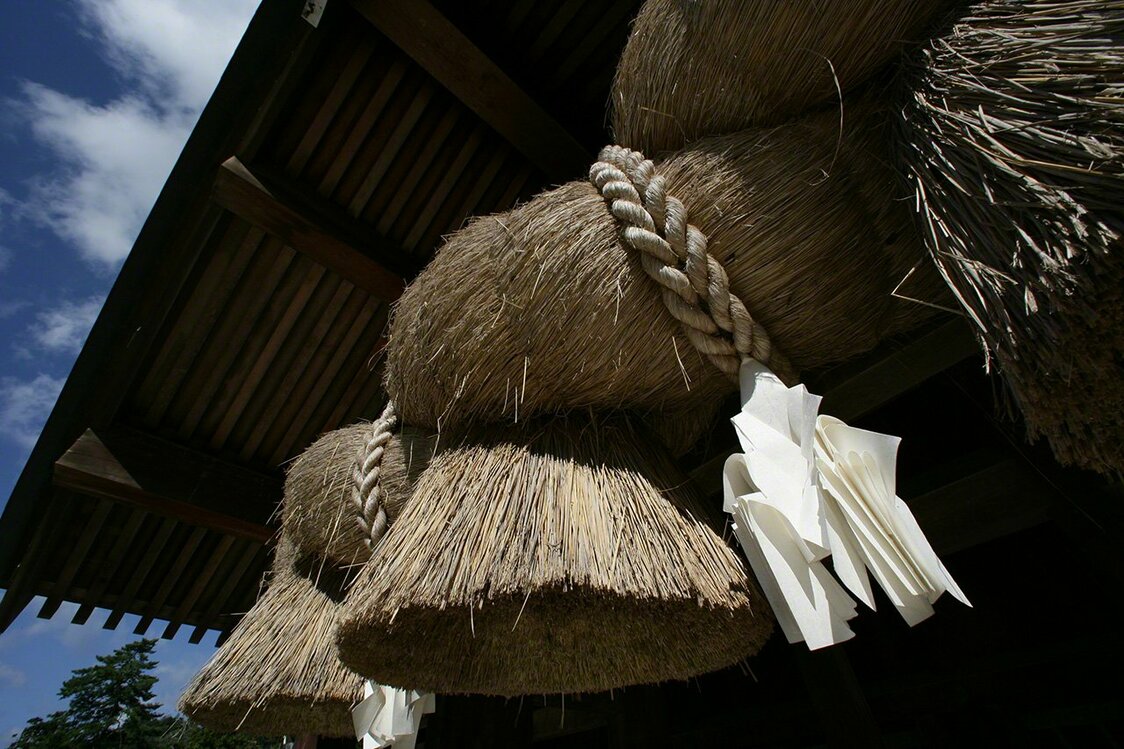
The shimenawa rope represents the dividing line between the mundane world and the realm of the kami.
-
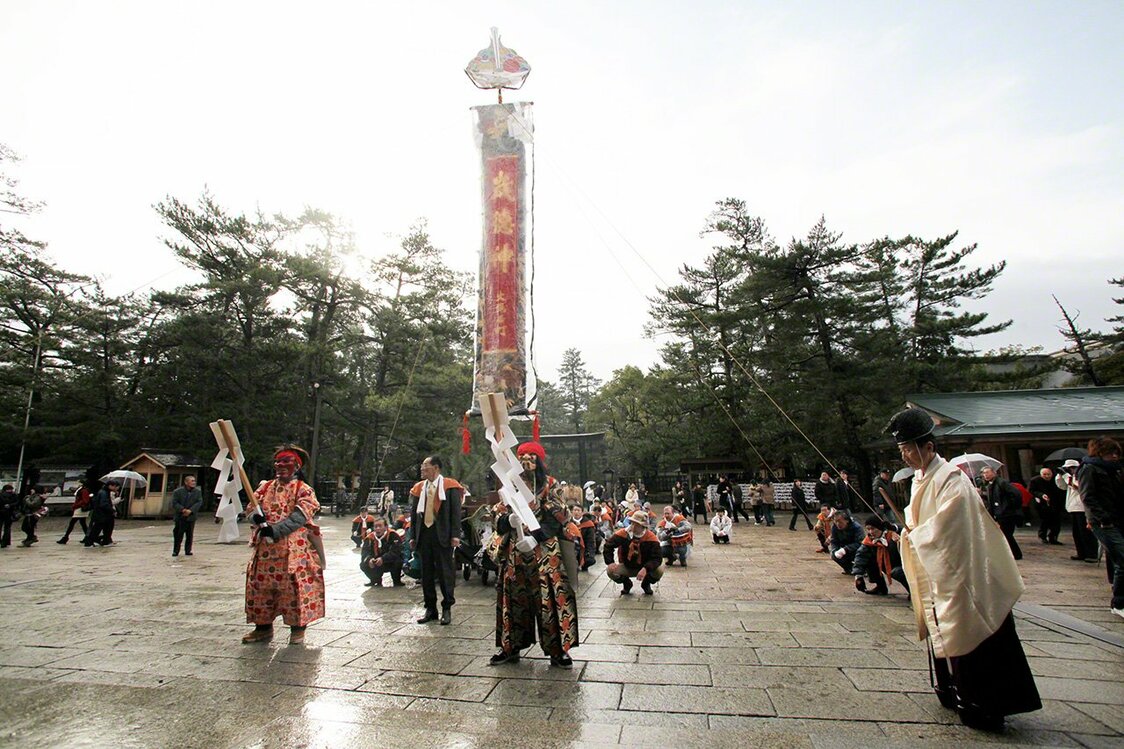
A traditional ceremony performed each January 3 to pray for good fortune in the coming year.
-
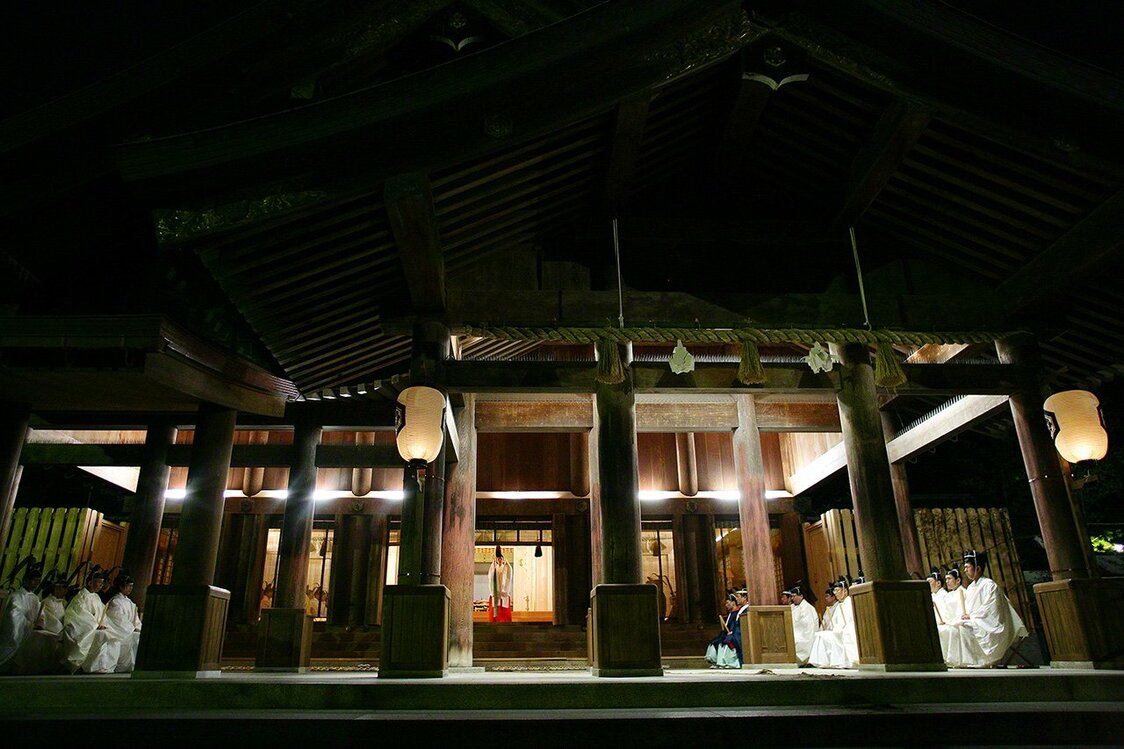
This is where miko shrine maidens perform dances of thanksgiving and prayer to the gods.
-
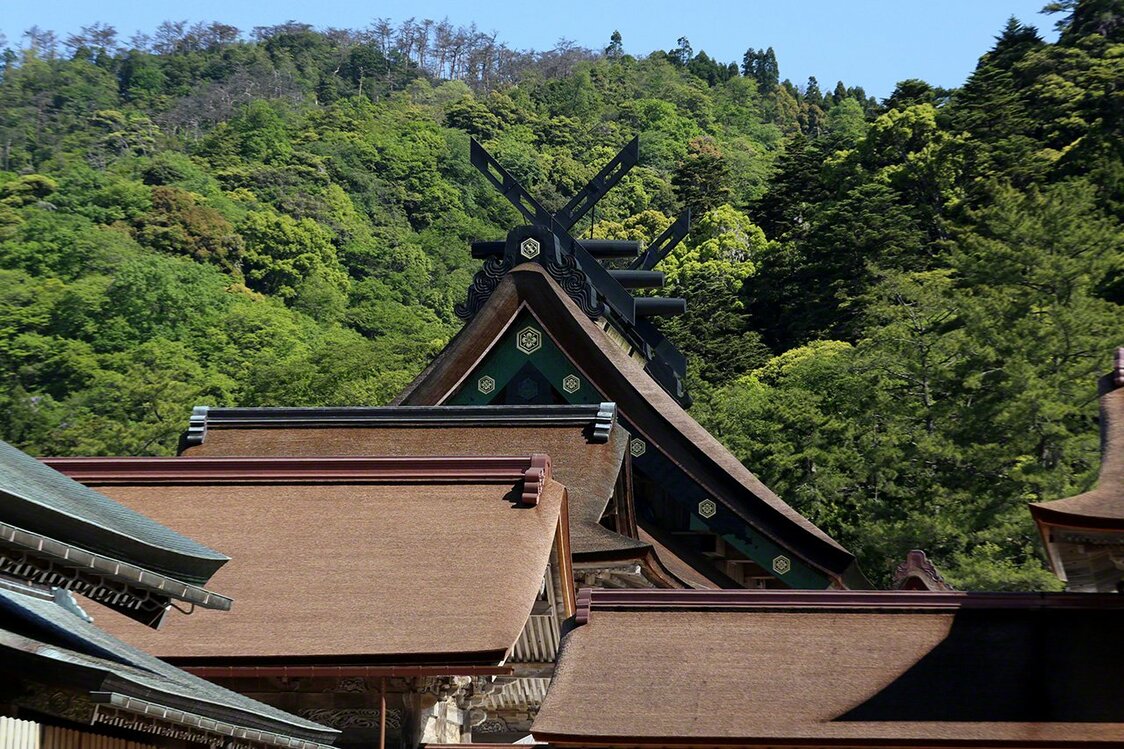
The resplendent roofs of the new buildings, surrounded by spring foliage.
-
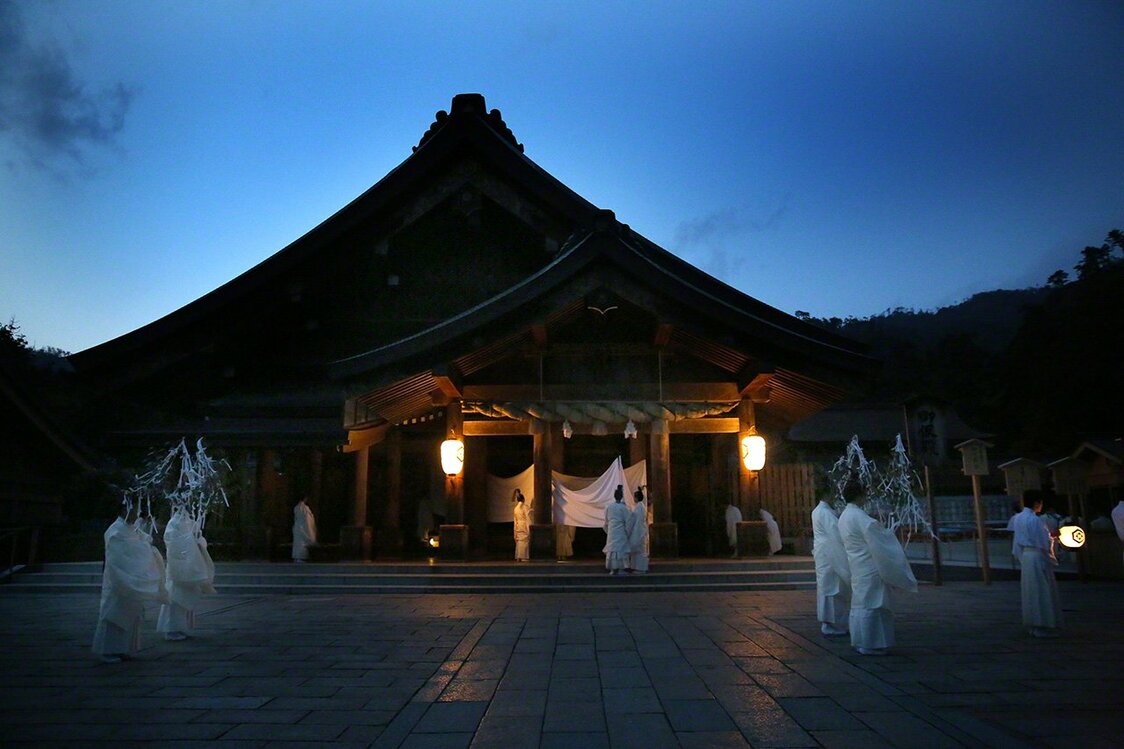
The shrine deity is returned to the shrine after rebuilding, accompanied by the solemn sounds of flutes and drums.
-
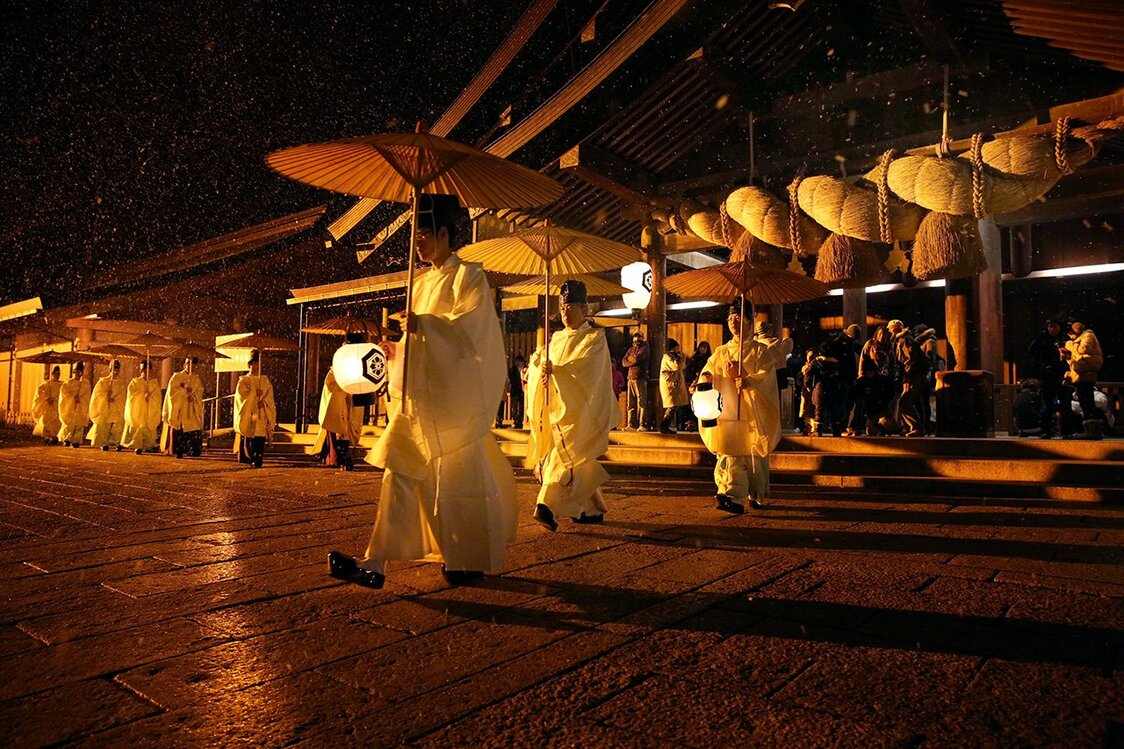
Priests in procession to the prayer hall, paper parasols and lanterns in hand.
-
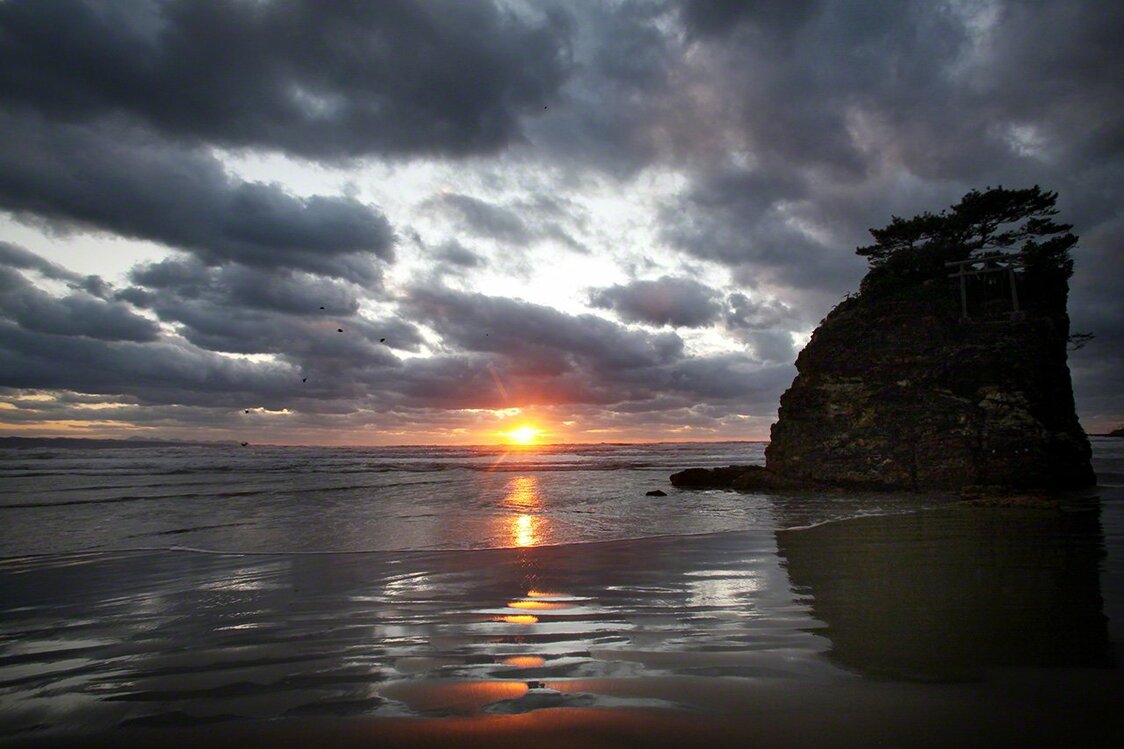
Nightfall over Benten-jima, in the center of Inasa-no-hama beach.


 Read in other languages