Cafés at Tokyo’s Traditional Folk Houses
Café Hakkakutō: A Coffee Milk Break in Keiō University’s Historic Library
Guideto Japan
Food and Drink Architecture- English
- 日本語
- 简体字
- 繁體字
- Français
- Español
- العربية
- Русский
Quality Time in a University Library
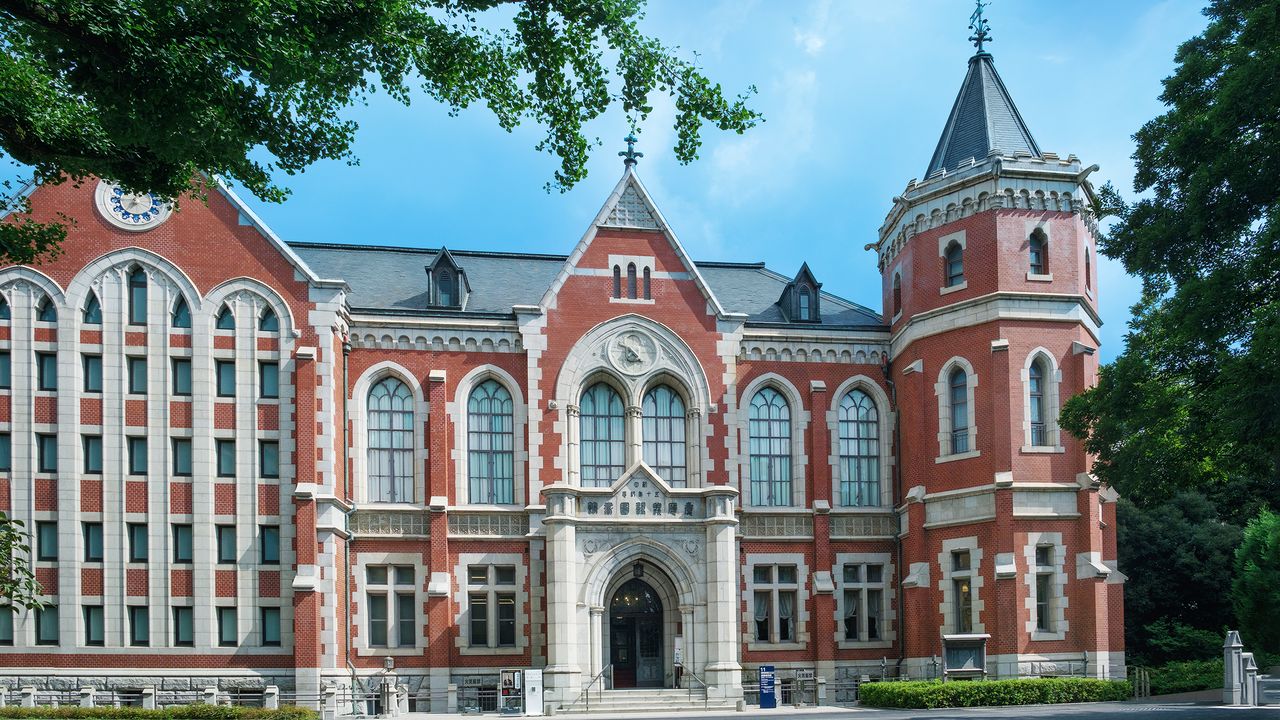
On Keiō University’s Mita Campus, not far from the renowned Great Ginkgo Tree, stands a red brick building with early twentieth-century architecture that has seen it designated an important cultural property. This is the Old Library, and today it is a symbol of Keiō as a whole. Inside the Old Library, however, the first aroma to reach the nose is not ink or paper—it’s coffee. Café Hakkakutō, housed inside the library building, is a cozy and comforting space open to all visitors. I decided to spend some quality time there and let my imagination run free amid living history.
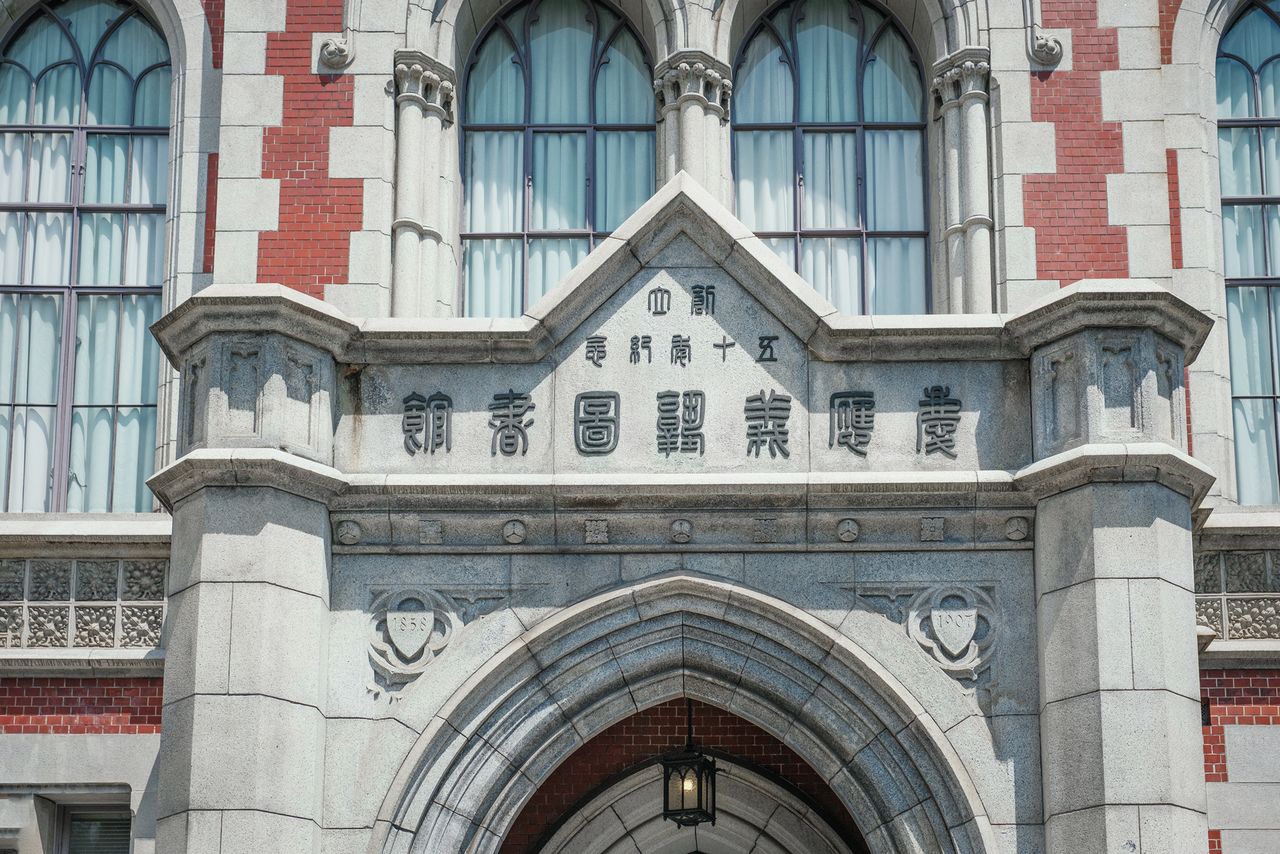
The imposing facade is a mosaic of red brick and granite. Designers Sone Tatsuzō and Chūjō Seiichirō both studied under English architect Josiah Condor. (© Kawaguchi Yōko)
A Tale Written in Stained Glass
The Old Library is a Gothic Revival building completed in 1912 to mark the university’s fiftieth anniversary. Its design is sheer skyward-soaring verticality—appropriately enough for a library building, where scholars strive to reach new heights of academic insight.
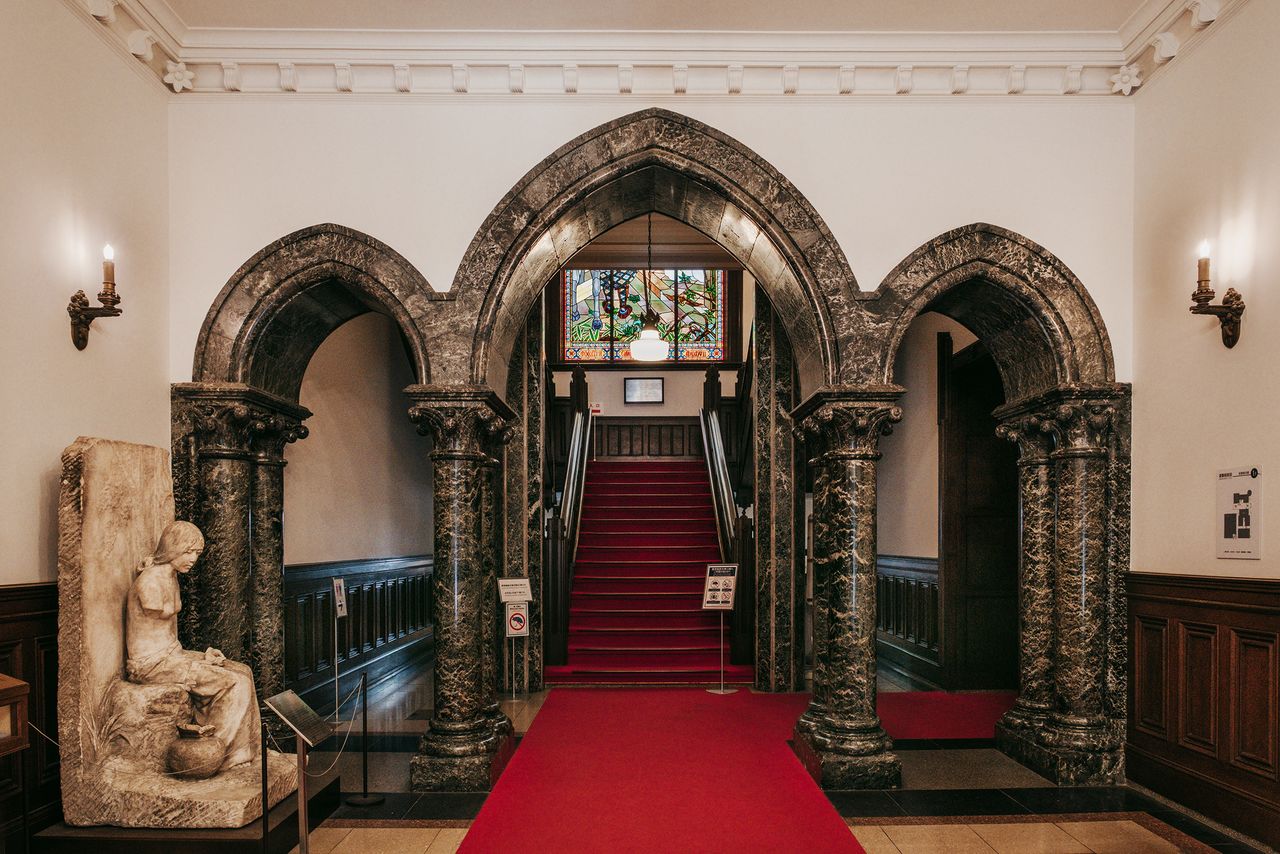
The entrance hall on the ground floor. The marble sculpture of a woman on the left is Tekona, a 1909 work by Kitamura Shikai. (© Kawaguchi Yōko)
A staircase beyond the entrance hall ascends to the Fukuzawa Yukichi Memorial Keiō History Museum on the second floor. The landing partway up is adorned with a magnificent stained-glass window. This window was the creation of Ogawa Sanchi, a pioneer of stained glass in Japan, but the original was almost completely destroyed by the fires that raged after the bombing of Tokyo’s Yamanote region in May 1945.
A Symbol of Recovery
The Old Library is an important spiritual symbol for Keiō University, and the work of reconstruction began soon after the war’s conclusion, no doubt inspiring many faced with the task of rebuilding amid the city’s ashes. The initial replacement of the stained-glass window, however, was made using plain, transparent glass only, and this temporary solution stayed in place for 30 years.
Finally, one man rose to the immense challenge of recreating the original work: Ōtake Ryūzō, a former apprentice of Ogawa himself. Ōtake was 77 years old when he resolved to complete this task, and remained devoted to this goal for several years thereafter. Sadly, when the recreated window in vivid stained glass was finally unveiled in October 1974, Ōtake was not among the thrilled crowd. He had passed on just two months earlier.
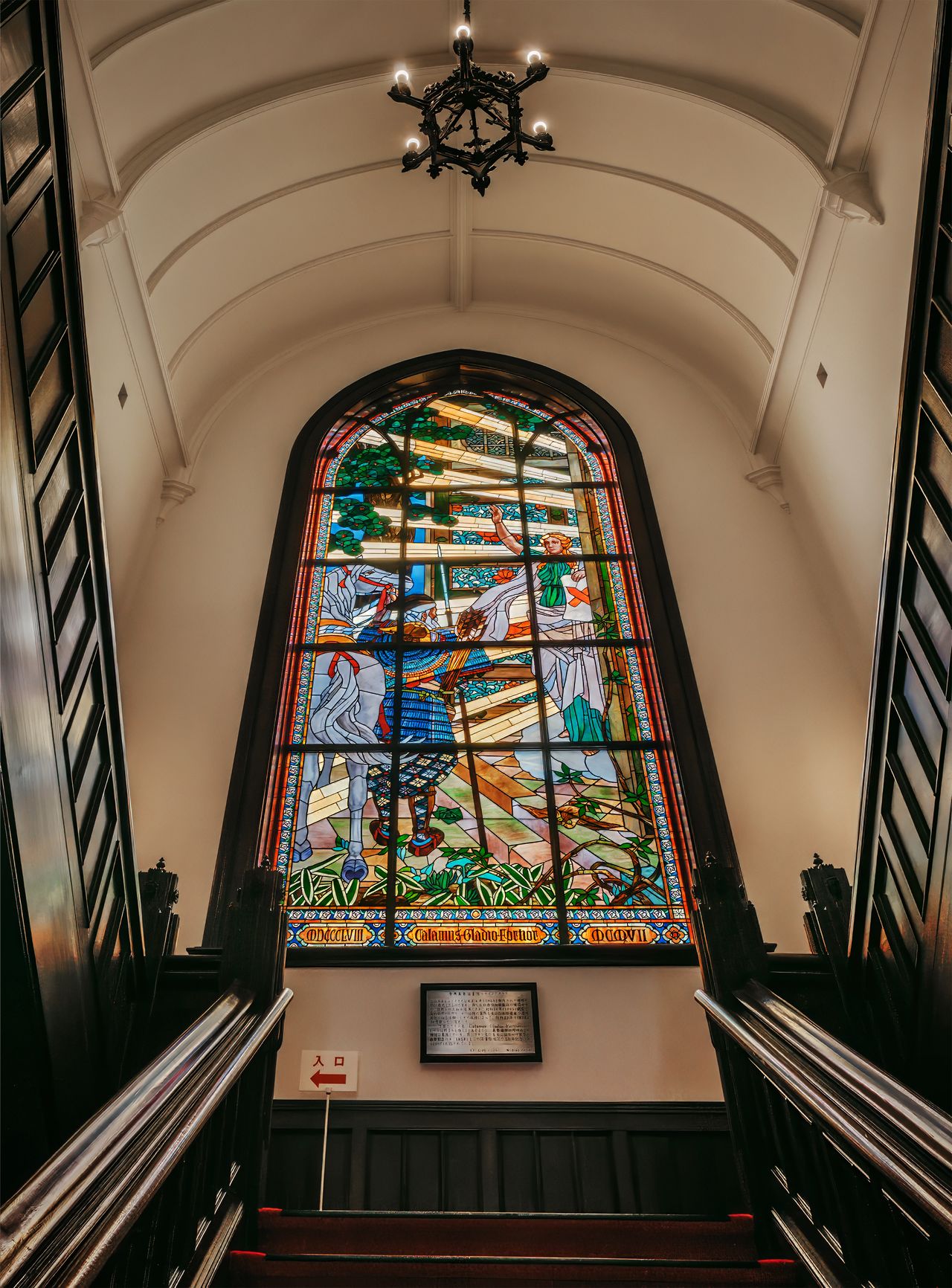
The original artwork was by Wada Eisaku. This stained-glass rendition glows with the passion and dedication of both Ogawa and his disciple Ōtake. (© Kawaguchi Yōko)
The bottom of the window bears the Latin motto Calamus Gladio Fortior—“The Pen is Mightier than the Sword.” The image shows an armored warrior, symbolizing feudal society, descending from his horse to welcome the goddess of civilization, who bears an image of two crossed pens—also a symbol of Keiō itself. This is said to symbolize the intellectual spirit of the university’s founder Fukuzawa Yukichi, who refused to be bound by the conventions or customs of the past.
Fukuzawa Yukichi on the Menu
In 2021, the Old Library reopened after a new round of renovations with two new features: the Fukuzawa Yukichi Memorial Keiō History Museum on the second floor, and a café just to the right of the entrance hall on the first.
The café is a classical space with German Thonet chairs arranged around octagonal tables that echo the eight-sided plan of the Hakkakutō tower. Other octagonal motifs are arranged with subtle elegance around the room, from the ceiling to the yosegi-zaiku parquet flooring.
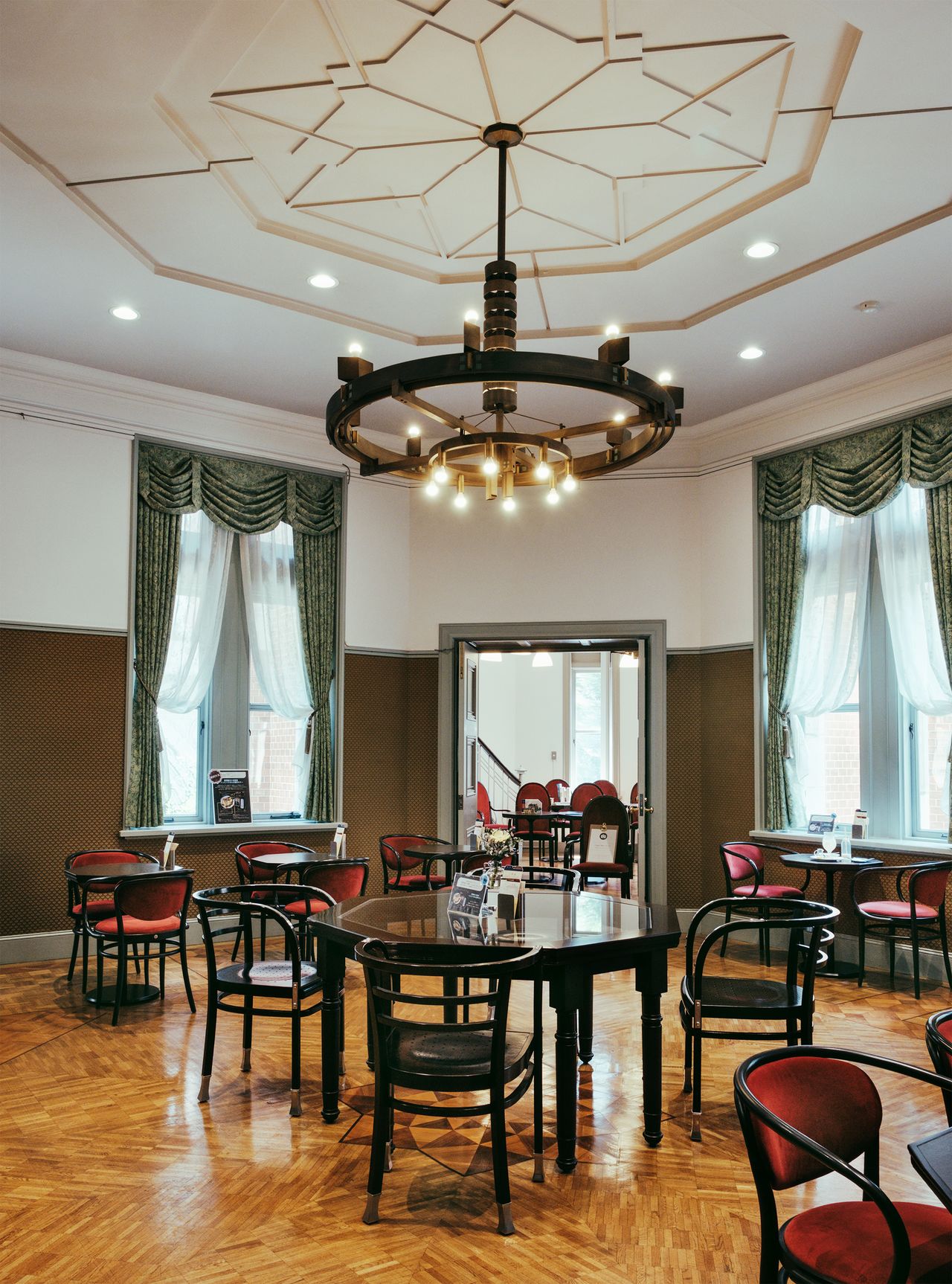
Inside the café. The tables were made in 2020 by Mitsukoshi Seisakusho, the same company that provided furniture for the Tekigaisō Gallery Café at the former residence of Prime Minister Konoe Fumimaro in Ogikubo. (© Kawaguchi Yōko)
Beyond the café is the interior of the Hakkakutō itself. Initially used as a reading room for newspapers and magazines, after the war it served as the library office until 1982, when it was repurposed as a gallery during a major renovation. This renovation was handled by architect Maki Fumihiko.
Today the Hakkakutō houses a first-floor art space where all visitors are welcome. The second and higher floors are no longer open, but the very top floor was once called the Gepparō or “Tower of the Moon and Waves,” and reportedly had views of Shinagawa and the open sea beyond illuminated by moonlight. What did those Keiō students of old think as they gazed down from the tower?
An Encouragement of Coffee Milk
The café’s history remains alive in its menu. It was created with the central goal of sharing the unique appeal of the space itself, resulting in a lineup that fuses historical essence and contemporary seasonal appeal.
When I visited, I opted for the Hakkakutō coffee milk, made with coffee beans roasted by Kabuki in Taitō; the canelé of the month, using ingredients then in season; and a seasonal cream soda.
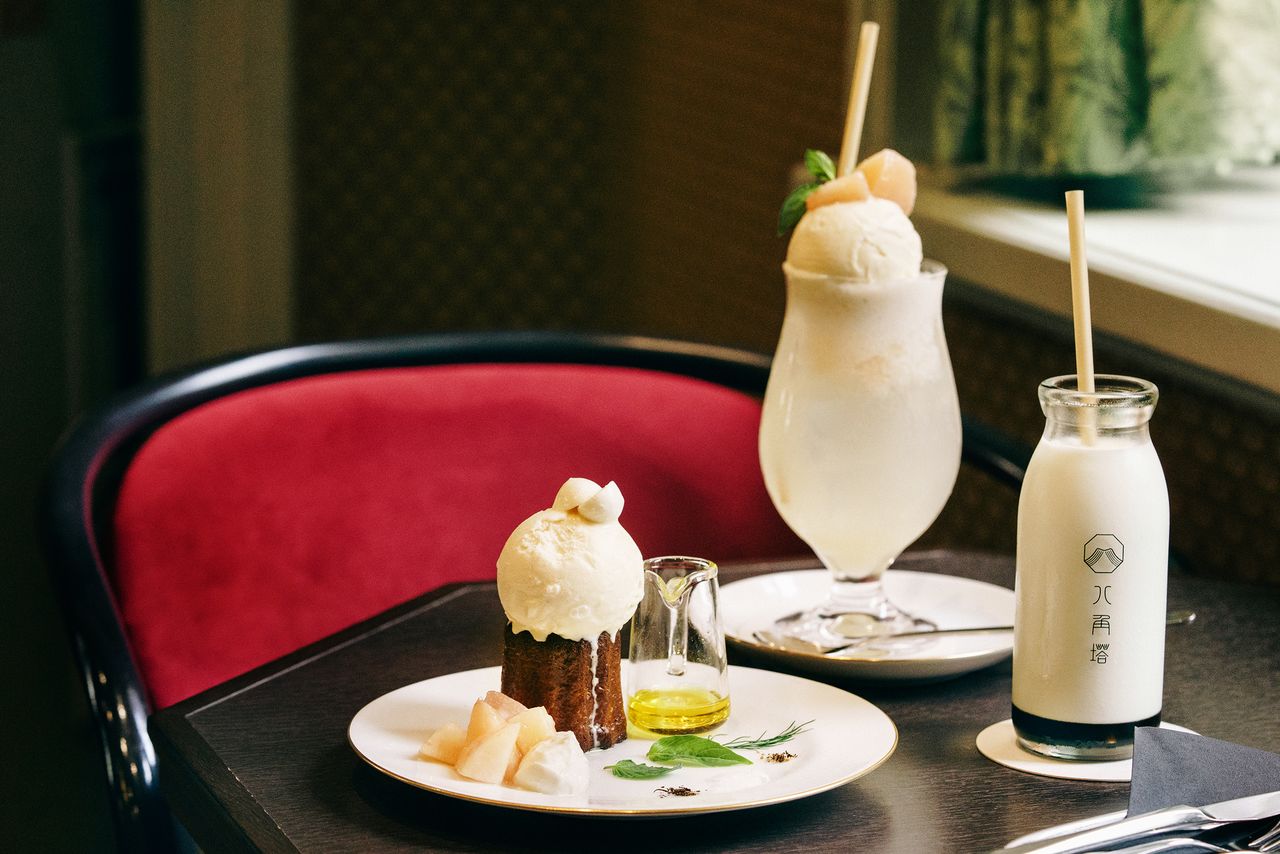
A seasonally peachy canelé and cream soda, plus Hakkakutō Coffee Milk. (© Kawaguchi Yōko)
After contracting typhus at the age of 37, Fukuzawa adopted milk as a regular drink for nourishment and strength. Among his writings extolling the benefits of dairy, he once described it as “especially flavorsome” when mixed with strong coffee.
Hakkakutō Coffee Milk is based on that episode. Served in a vessel shaped like the traditional milk bottle, it arrives at the table still divided into two layers. An “especially flavorsome” treat, just as Fukuzawa promised.
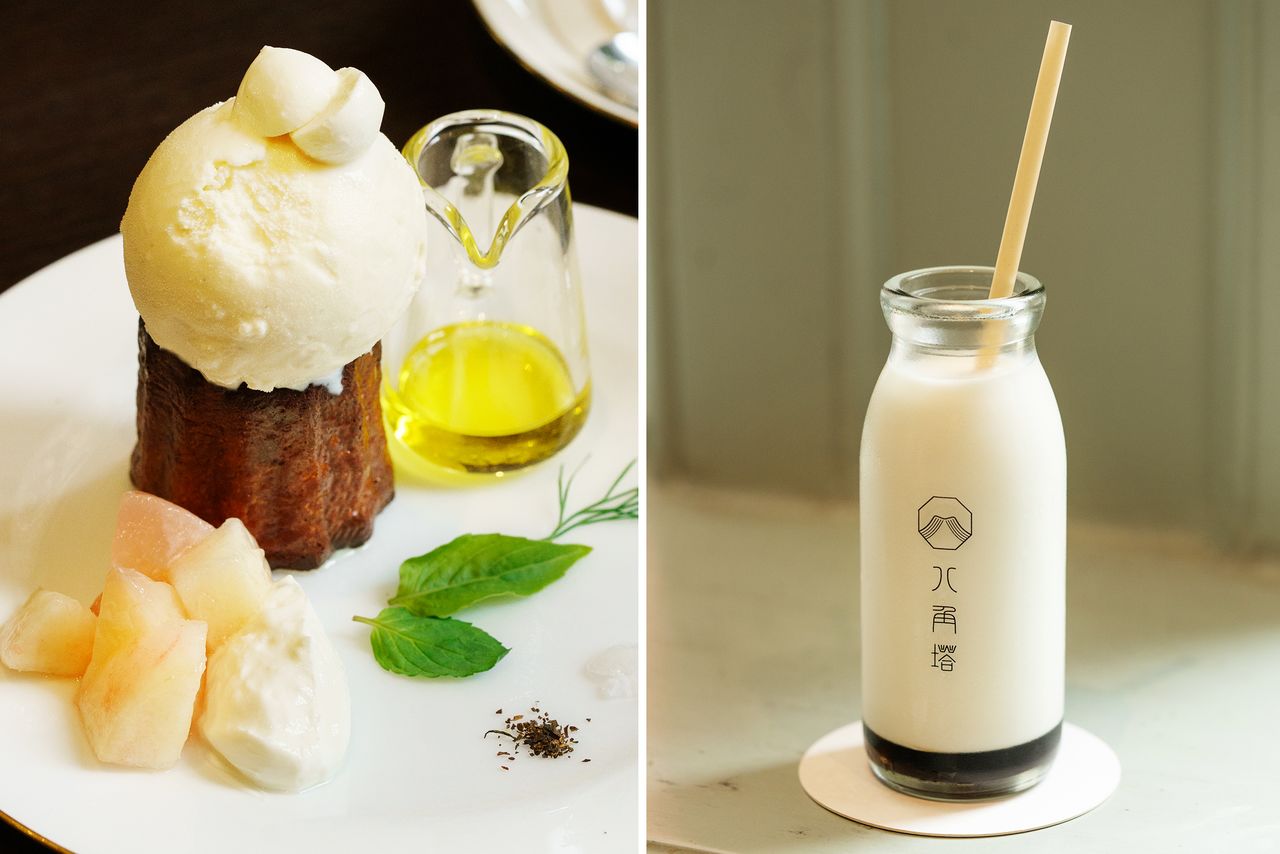
At left, the peachy canelé, and at right, the coffee milk, for which bottles are actually custom-made by Ōkawa Glass. The logo combines the kanji for “eight” (八) with an image of an open book. It also resembles Mt. Fuji. (© Kawaguchi Yōko)
The richly seasonal canelé and cream soda, on the other hand, both make use of ingredients then at their ripest. I visited in prime peach season, so peaches were the star. The canelé is the brainchild of Yamaguchi Jun’ichi of popular Kyoto café Here Kyoto. From my very first bite into the chewy pastry, I was engulfed in rum and rich vanilla bliss.
Peaches were not the only ingredient enhancing the canelé experience. There was also dill, basil, mint, Earl Gray tea leaves, moshio salt, black pepper, and olive oil. Add a generous, melting scoop of vanilla ice atop the canelé itself, and you have a veritable kaleidoscope of a dessert, with a thousand faces to show.
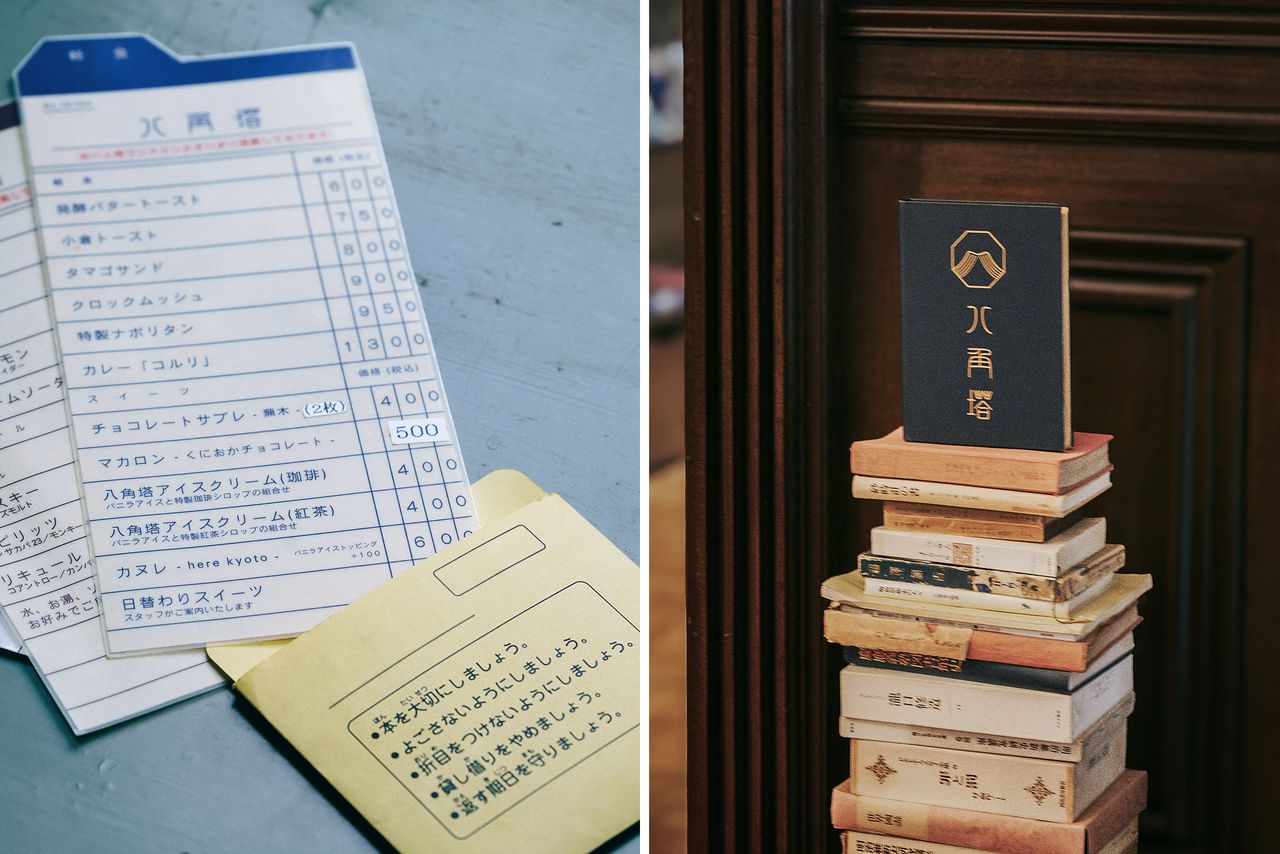
Left: The menu design evokes traditional library cards. Right: The café entrance is marked by a stack of reading material. (© Kawaguchi Yōko)
“Along with teachers and former students, our patrons include people from all walks of life,” explained one staff member. “Sometimes we serve high school students determined to enter Keiō, and on other occasions we welcome alumni or alumnae visiting again with children or parents. We do our best to offer a menu that will linger in memory, so that everyone who visits can enjoy quality time here.”
As the building is an important cultural property, the kitchen facilities do have their limitations. If you are determined to try a particular menu item, it is best to make a reservation by phone and arrive with plenty of time to spare. Café Hakkakutō is not the kind of space where things should be rushed.
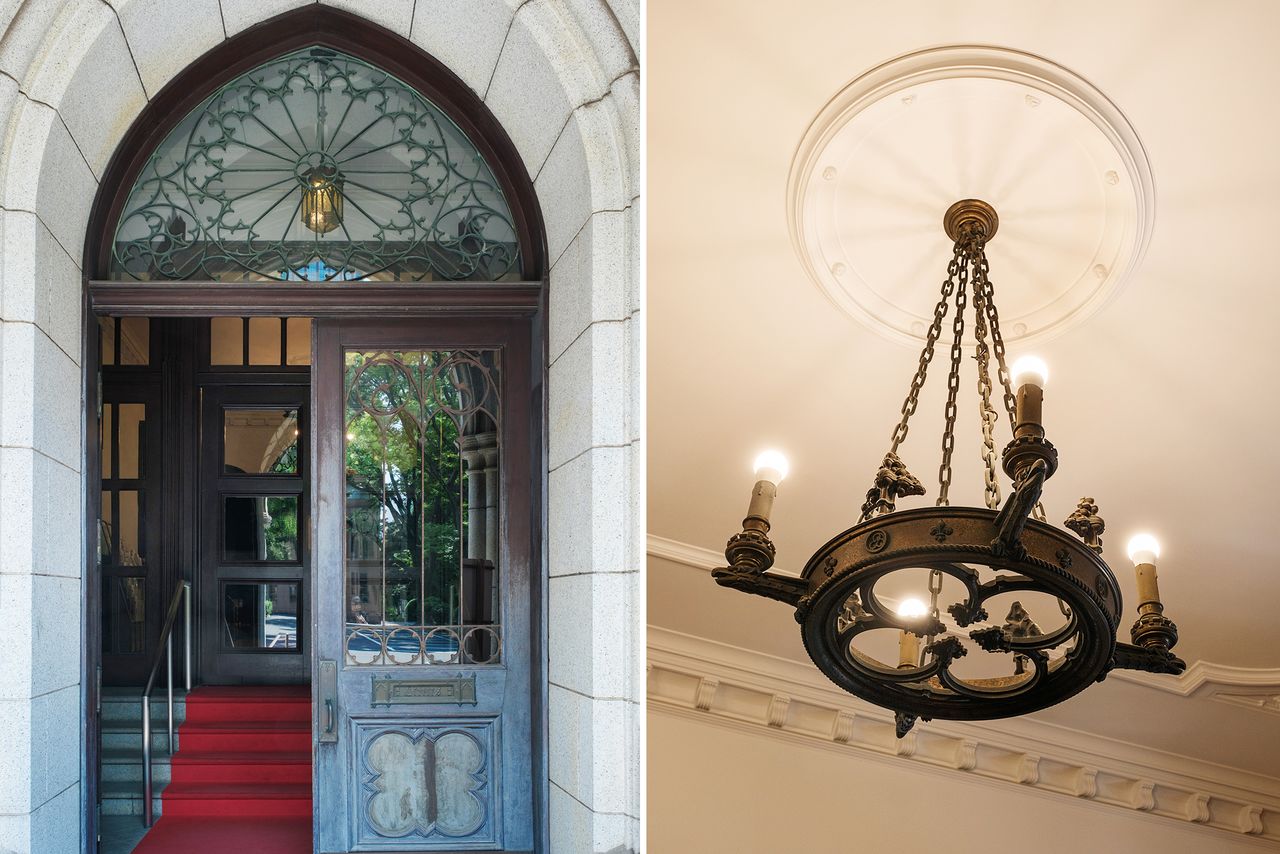
The rich appointments of the Old Library’s main entrance. (© Kawaguchi Yōko)
In September and October, the café décor and menu will both be updated to reflect the changing ingredients available. Come late autumn, the view from the window will be dyed gold by the leaves on the campus’s ginkgo trees. I hear the sight of those leaves falling is truly magical.
Café Hakkakutō
- Address: 1F Old Library, Keiō University Mita Campus, 2-15-45 Mita, Minato-ku, Tokyo
- Hours: 10:00 am–2:00 pm (last order 1:30 pm); 3:00 pm–6:00 pm (last order 5:30 pm)
- Closed: Sundays, public holidays, and university holidays
- Access: 8 minutes’ walk from the Tamachi Station (JR Yamanote Line), the Mita Station (Tōei Mita & Asakusa Lines), and the Akabanebashi Station (Tōei Ōedo Line)
- Website: Instagram (@cafehakkakuto)
(Originally published in Japanese on September 3, 2026. Banner photo: The Old Library at Keiō University, containing Café Hakkakutō.)