Japan’s “Mogami” Platform and Its Crucial Role in Fostering Strategic Partnerships
Politics- English
- 日本語
- 简体字
- 繁體字
- Français
- Español
- العربية
- Русский
Australia’s New “Japanese” Frigate
Early this year a senior Japanese official involved in crafting the Takaichi Sanae administration’s defense policy made the following remark in a private setting:
Japan’s defense has rested 95% on its own effort and the Japan-US alliance. As the credibility of United States’ commitments to its allies becomes increasingly uncertain, Japan must further strengthen its own defense capabilities while placing greater emphasis on security cooperation with like-minded partners.
This statement is revealing. It suggests that Japan is not simply responding to geopolitical uncertainty by investing more in its defense forces but also by pursuing enhanced cooperation with nations that share similar strategic concerns regarding regional stability and alliance reliability.
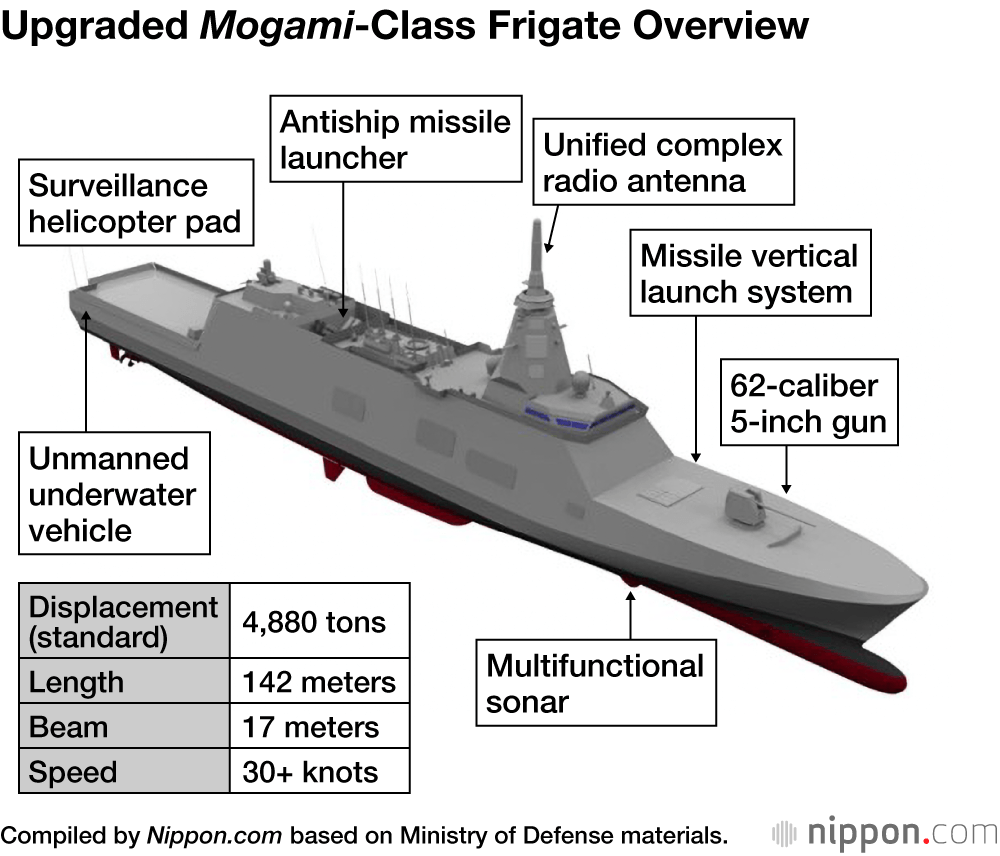
The Mogami-class frigate has become a central instrument of Tokyo’s strategic outreach to these countries. Multimission, stealthy, relatively affordable, and with reduced crewing requirements, the platform also maintains interoperability with the US Navy. In August 2025, the upgraded version of the Mogami class was selected as the Royal Australian Navy’s next general-purpose frigate, beating competing designs from Germany, South Korea, and Spain. The decision attracted considerable attention both in Japan and abroad, as it marked Japan’s first approved transfer of lethal defense equipment overseas following the relaxation of the Three Principles on Transfer of Defense Equipment and Technology.
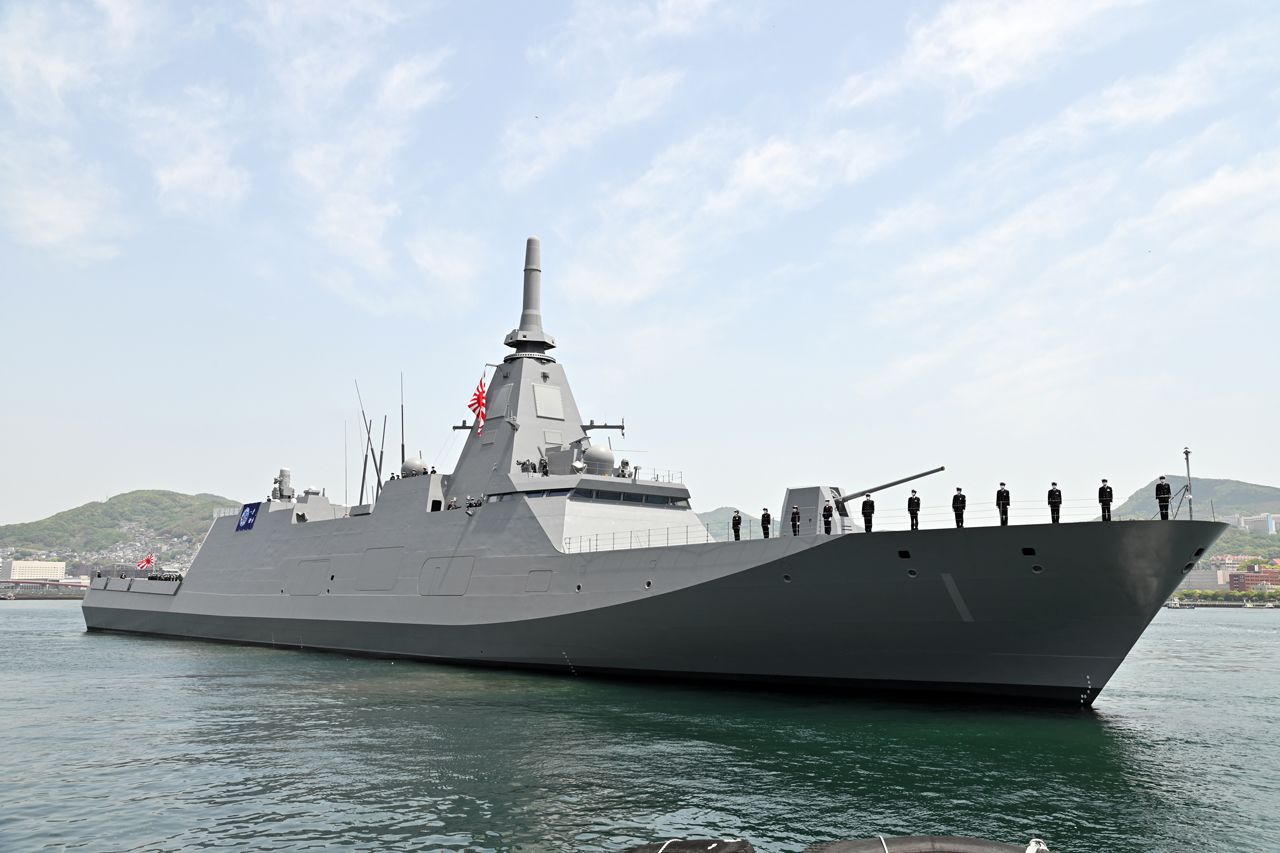
The Original Mogami frigate (FFM-1). (Courtesy Maritime Self-Defense Force)
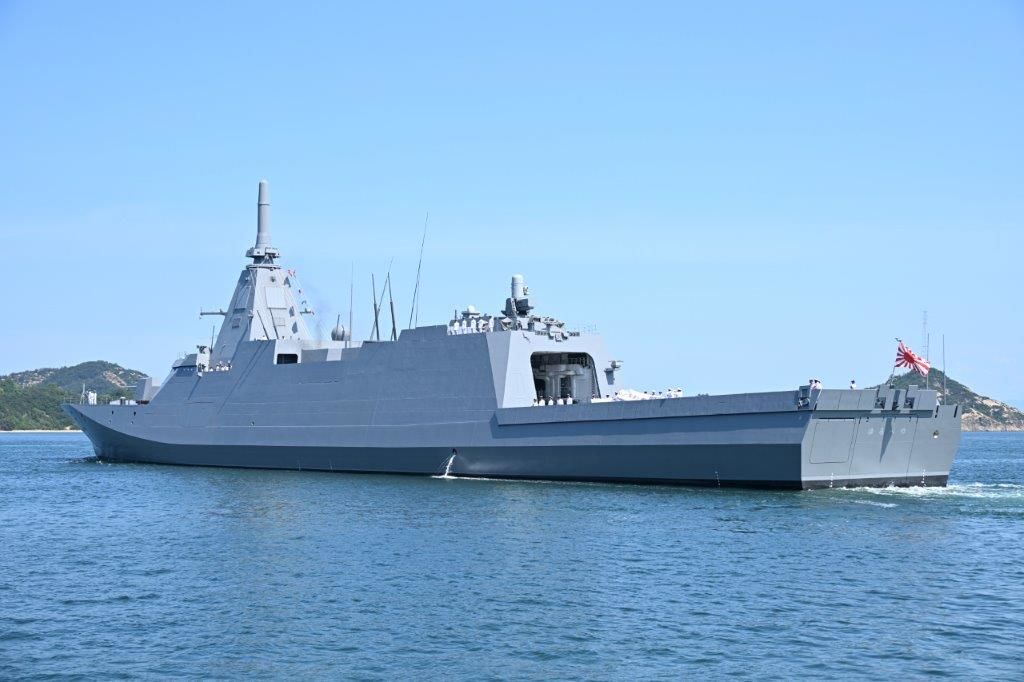
The Yubetsu (FFM-8), a Mogami-class frigate. (Courtesy Maritime Self-Defense Force)
Yet the significance of the Mogami class extends beyond its merits as a warship or its role as a symbol of the transformation of Japan’s defense industrial policy. A closer look at its development and procurement, as well as its operational use, reveals that the Mogami class itself is deeply intertwined with Japan’s cooperation with like-minded partners. It is a class of warship that can play an important role in enabling Japan to strengthen its own defense capabilities with limited resources while simultaneously expanding defense cooperation with its partners.
Driven by Gray-Zone Challenges
The Mogami class was planned under Japan’s 2013 National Defense Program Guidelines, which placed greater emphasis on responding to gray-zone contingencies. Amid rising cases of piracy and China’s expanding maritime presence, the government sought to strengthen deterrence by increasing the Maritime Self-Defense Force’s peacetime activities, including joint exercises, patrols, and continuous surveillance.
This would inevitably increase the MSDF’s workload. At that time, however, the MSDF did not possess enough vessels to sustain these operations at the required tempo. The solution was to reduce the number of specialized minesweepers unsuitable for such peacetime presence missions and instead replace them with frigates that could conduct countermine operations when necessary while also keeping costs under control. This led to the development of the multimission Mogami-class concept.
However, Japan’s defense priorities began to shift even before construction of the Mogami class started. The 2018 NDPG continued to emphasize gray-zone contingencies but placed greater weight on preparing for high-intensity conflict. This shift became even more pronounced with the adoption of Japan’s three strategic documents in 2022. As a result, the Mogami class was increasingly expected to possess capabilities suited not only to peacetime missions but also to high-intensity warfare. The original plan to build 22 Mogami-class vessels was therefore curtailed to 12 ships, and in 2023 the government announced that it would instead procure 12 more capable upgraded versions.
Lessons Learned in Australia
While Japan’s immediate defense needs drove the development of the platform, the design characteristics of the Mogami class also owed much to experience gained through international defense engagement. One particularly important change was the adoption of a competitive proposal process, used by the MSDF for the first time in the procurement of the Mogami class.
Several factors contributed to this change in Tokyo’s approach to procurement, but the most significant was the experience gained from Japan’s unsuccessful 2015 bid to provide Sōryū-class submarines to Australia. Rather than issuing fixed specifications for its next generation submarine platform in advance, Australia’s Project SEA 1000 required potential bidders to submit comprehensive proposals covering submarine design, program management, and the entire construction framework, including how their proposals would contribute to Australia’s shipbuilding industry.
The MSDF recognized the significance of this procurement approach and subsequently adopted it for the Mogami and its upgraded evolution. Clearly defense engagement with like-minded partners had a significant impact on Tokyo’s approach to procurement.
Without this change in the procurement approach, the Mogami class would likely not enjoy the high regard it has earned both at home and abroad. Previously, the MSDF had relied on a general competitive bidding process where the government fixed the required performance specifications and basic design for a desired platform in advance, leaving shipbuilders to compete primarily on price. This approach left little room for companies to incorporate their own proprietary technologies, propose design innovations, or offer alternative ways to fulfill requirements.
The competitive proposal process, by contrast, incentivized companies to submit more innovative proposals. For example, Mitsubishi Heavy Industries, which ultimately won the Mogami selection process, incorporated radar technology and stealth design expertise cultivated in the aerospace sector and experience in system integration technology accumulated through rocket development. The high degree of automation designed to reduce crewing requirements and the innovative panoramic combat information center were also products of the innovation stimulated by this selection process.
Ultimately, the experience gained from the unsuccessful attempt to provide submarines to Australia transformed Tokyo’s approach to frigate procurement, contributed to the development of a more capable platform, and improved Japan’s overall defense outcomes. The upgraded Mogami, itself a natural extension of this shift in procurement process, helped Japan prevail in Australia’s frigate competition.
Sustaining International Cooperation
The Mogami class, which emerged partly from Japan’s experience in defense cooperation with like-minded partners, also helps the MSDF to sustain cooperation with those countries despite its limited personnel and fleet resources.
Two primary responsibilities shape the MSDF’s day-to-day operations. First, it conducts peacetime presence operations such as surveillance, patrols, and multilateral training to deter adversaries’ gray-zone activities. Second, it must ensure that sufficient capabilities are available to fight a high-intensity conflict in defense of Japan. Although such a conflict remains relatively unlikely, its consequences would be catastrophic, especially if the MSDF were unprepared for warfighting and had focused only on peacetime missions. The MSDF must therefore balance its limited budgetary, personnel, fleet, and time resources while simultaneously fulfilling both missions.
Naval exercises with other countries and overseas deployments aimed at deterring gray-zone activities are strategically valuable, but they also create a challenge for this delicate operational balance. Over the past decade, the MSDF has deployed vessels overseas with increasing regularity across the Indo-Pacific, including for exercises around Australia. These deployments can sometimes last more than six months, meaning that both the vessels and their crews are not available for preparation for a high-intensity conflict.
The Mogami class offers a potential solution to this trade-off. Although compact, Mogami-class vessels can sustain themselves at sea for the extended periods during overseas deployments, as they are less dependent on replenishment ships. They can also operate with a smaller crew during peacetime operations, thereby mitigating to some degree the impact of recruitment difficulties on MSDF personnel resourcing. The large number of sisterships to be produced for domestic needs alone (24 hulls including both the original and upgraded version) is also expected to drive efficiencies and cost savings in training, resupply, and maintenance.
By assigning more of these missions to the Mogami class, the MSDF can devote a greater share of its high-end surface combatants, including Aegis destroyers, to prioritize training and exercises focused on the defense of Japan. In fact, this division of roles is clearly reflected in the recent reorganization of MSDF operational command: the Mogami-class ships were integrated into the Patrol and Defense Group with offshore patrol vessel and guided-missile patrol boats to provide maritime domain awareness, coastal protection, and rapid response rather than integrated into the Surface Warfare Groups focused on high-end combat.
Without the introduction of substantial numbers of Mogami-class frigates, the MSDF would likely have faced far greater difficulty managing the trade-off between peacetime cooperation with like-minded partners and preparedness for high-intensity conflict. Although smaller crew sizes can increase individual workloads, the vessel’s operational profile suggests that they help the MSDF use limited personnel and vessels more efficiently, sustaining peacetime presence and partner cooperation while preserving readiness for higher-intensity contingencies.
Empowering Like-Minded Navies
The Mogami class could also help alleviate some of the structural challenges facing the navies of Japan’s like-minded partners. The Royal Australian Navy, which plans to acquire 11 upgraded versions, has faced two major challenges in particular.
The first is its limited ability to translate defense spending and other resources efficiently into naval capability due to constraints on its shipbuilding capacity. Australia retains a domestic capacity to build warships, but programs such as the Hunter-class frigate have demonstrated the substantial cost and time required to do so. By contrast, the Mogami class was designed from the outset with affordability in mind. Although the acquisition cost of the upgraded Mogami class has increased, it is still expected to be less on life-cycle costs. Its relatively short construction time also means that resources invested in the program can be converted into operational naval capability more quickly.
Second, the RAN also faces severe personnel shortages. As noted above, however, the upgraded Mogami can be operated with a smaller crew than conventional frigates, allowing the RAN to deploy more vessels despite personnel constraints. These challenges are also shared by the Royal New Zealand Navy, which has also expressed interest in the upgraded Mogami as it considers options for replacing its own frigates.
The Mogami class may not be the right option for all of Japan’s like-minded partners. However, it offers a viable solution for countries that need to expand their naval capacity and capabilities while facing recruitment challenges and shipbuilding constraints. Tokyo’s provision of these vessels would not only strengthen bilateral defense ties, but also help Japan and its partners collectively address structural constraints on naval deterrence. Ultimately, the wider adoption of the Mogami class across the Indo-Pacific could enhance deterrence and stability throughout the region, rather than merely supporting the defense of individual countries.
The Future of Japan’s Strategic Defense Cooperation
Going forward, cooperation with like-minded partners will continue to grow in importance within Japan’s defense policy. Indeed, it will become increasingly difficult to envision Japan’s national defense without such cooperation. In this context, the Mogami class is a potentially powerful tool for advancing defense cooperation and fulfilling security policy objectives.
The compact Mogami class lacks the full warfighting capabilities of a tier-one surface combatant. Yet, its value in regional defense cooperation should not be underestimated: It enables sustained training, sustained presence operations, and day-to-day cooperation between the MSDF and the navies of like-minded partners. As the US commitment in the region becomes increasingly uncertain, the Mogami class may play a vital role in enabling Japan and its Indo-Pacific partners to complement one another’s capabilities and build a more collective form of deterrence.
In this sense, the Mogami class is therefore more than a frigate. Its strategic value extends beyond the combat capabilities of any individual ship. It provides a platform for linking Japan’s own defense capabilities with those of like-minded partners and translating them into a broader regional deterrent.
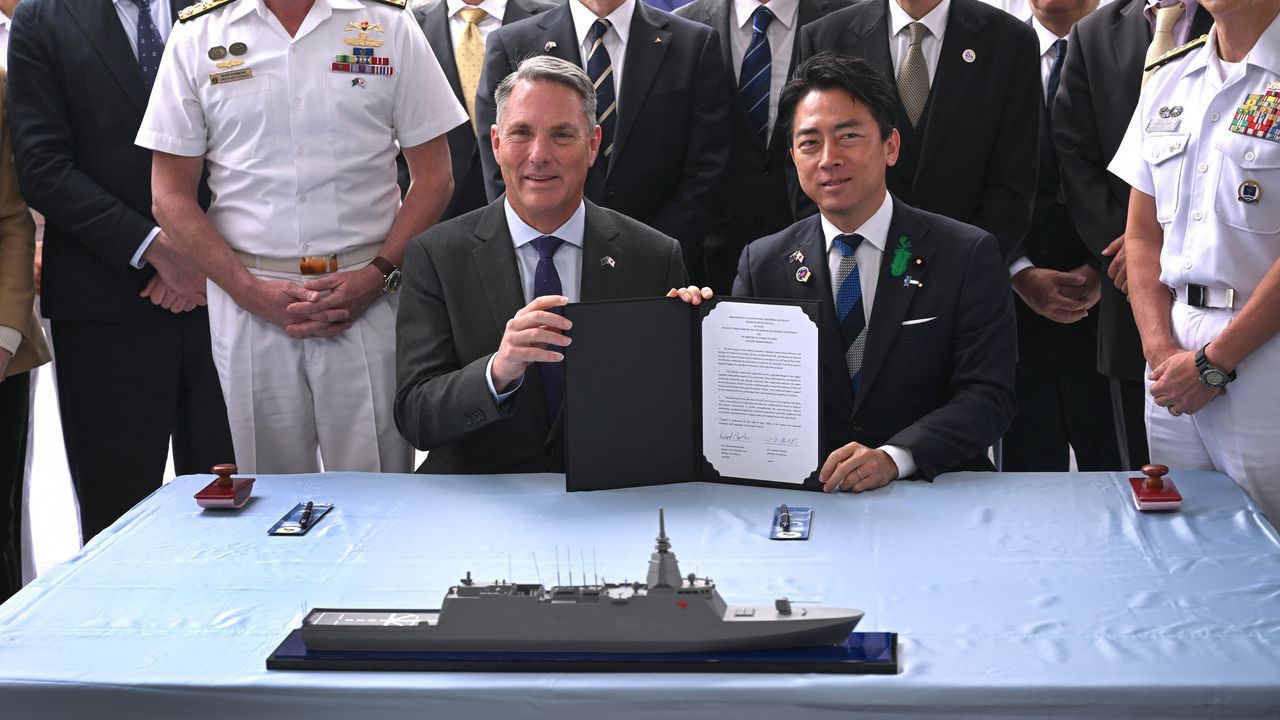
(Originally published in Japanese. Banner photo: Japanese Defense Minister Koizumi Shinjirō, at right, signing a memorandum of understanding with Australian Deputy Prime Minister and Minister of Defense Richard Marles, at left in the front row, in Melbourne regarding the export of Mogami-class destroyers, April 18, 2026. © AFP/Jiji.)