Japan Shifts to Proactive Cyberdefense: An Interview with Policymaker Taira Masaaki
Politics Technology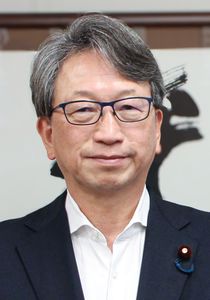
Taira Masaaki
Member of the House of Representatives and chair of the Liberal Democratic Party’s Headquarters for National Cybersecurity Strategy. Born in Tokyo in 1967. Graduated from Waseda University, Faculty of Law. Ran his family’s fruit and vegetable wholesale business before turning to politics. Elected to the House of Representatives for the first time in 2005 and subsequently reelected seven times. Has served as minister for digital transformation and state minister in charge of cybersecurity.
- English
- 日本語
- 简体字
- 繁體字
- Français
- Español
- العربية
- Русский
AI as the Linchpin of National Security
TAKENAKA HARUKATA The US government sent shockwaves around the globe last June when it temporarily ordered the artificial intelligence firm Anthropic to suspend global access to its newly released AI models, Fable 5 and Mythos 5, citing national security risks. The rapid development of AI is raising concerns about ever more sophisticated cyberattacks at the same time that it’s playing an increasingly vital role in our national security, from satellite image analysis to military simulations.
TAIRA MASAAKI If a blockade stops oil shipments passing through the Strait of Hormuz, oil-importing countries are still good for a few months. But if the US government orders Fable 5 taken offline, access stops immediately. Cutting-edge AI models are becoming the lifeline of national security. This is the world we’re living in now, and we need to figure out how to diversify risk and secure our autonomy given this reality.
TAKENAKA With the goal of autonomy in mind, some are urging Japan to aim for “sovereign AI,” developing our very own homegrown AI models instead of relying on foreign systems. On the other hand, the Liberal Democratic Party’s AI White Paper 2.0, released this past May, argues that Japan should focus on its strengths instead of trying to build a 100 percent homegrown AI system from the bottom up. As deputy chair of the project team that drew up those recommendations, can you explain your viewpoint in greater detail?
TAIRA The idea of homegrown, made-in-Japan AI is very appealing politically. But let’s look at what goes into the AI systems that are actually functioning. They require highly advanced semiconductors, such as graphics processing units and central processing units, which in turn require rare metals and rare earths. They require data centers, cloud computing services, foundation models, applications, and so forth. So, we need to think objectively about what a purely homegrown AI model would actually entail.
With this in mind, one point we’ve stressed is the need to allocate resources to ensure that other countries can’t seize control of our choke points. To those who say, Let’s do everything domestically, we wanted to send a message that this is something that requires more careful thought. Another point we wanted to emphasize is that Japanese companies have almost no chance of winning in a head-to-head battle with massive foundation models like Google’s Gemini.
But there are other ways in which Japan can make itself indispensable and develop homegrown technology of critical importance to national security. Rather than focusing on LLMs [large language models], we’re proposing a strategy of channeling our resources—public and private in close partnership—into the development of VLA [vision-language-action] foundation models to support the kind of physical AI technology needed for applications like robots, drones, and autonomous driving. Another promising field is vertical AI, models that specialize in fields like medicine and use real-time data acquired from sensors, as opposed to information previously published on the Internet. These are areas that play to Japan’s strengths.

Taira Masaaki, former minister for cybersecurity. (© Nippon.com)
Toward a Made-in-Japan Palantir
TAIRA In terms of defense policy, we have to make some decisions about our use of Palantir(*1). Our view is that Japan has no choice but to utilize it, inasmuch that our security arrangements with the United States envision joint military operations. But we don’t think it’s a good idea for Japan to rely exclusively on Palantir. That’s why we’ve recommended developing a kind of made-in-Japan Palantir that is as close to sovereign AI as possible. This is AI designed specifically for the security sector, so it’s not the same thing as developing a massive all-purpose LLM.
In the fields of national security and intelligence, we’re still quite committed to developing made-in-Japan AI. We draw a distinction there. We’re not about to do battle in areas where we have no prospect of winning, but there are several paths to niche dominance at our disposal, and that’s where we want to focus our efforts.
The dilemma of the “reverse information paradox“ has been attracting a lot of attention lately. The idea is that while customers are paying hefty fees for the use of all-purpose generative AI, the information that they can input is limited for security reasons. At the same time, clients are sharing their own data each time they use the model. This seems like an unsustainable state of affairs. So, instead of using cutting-edge, all-purpose AI models for everything, we’re going to start seeing a division of labor between those all-purpose LLMs and more focused alternatives, such as domestically geared models and those that can be used in a closed environment. If the demand for vertical AI geared to specialized fields grows, that’s an area where Japan can hope to compete.
In terms of defense, Australia recently ordered a number of warships from Japan, and we’ve had inquiries from New Zealand and the Philippines as well. In light of this trend, it seems to me that there’s bound to be global demand for a made-in-Japan Palantir that’s secure and doesn’t leak data, even if some of the high-end specifications are a little less advanced.
Collaborating with Start-ups
TAKENAKA Drone warfare has taken center stage in hot spots like Ukraine and Iran. Drones equipped with AI capabilities, including image recognition, can even pilot themselves and attack their targets autonomously, in the event that radio signals are jammed. How might Japan use AI to develop its own innovative weaponry?
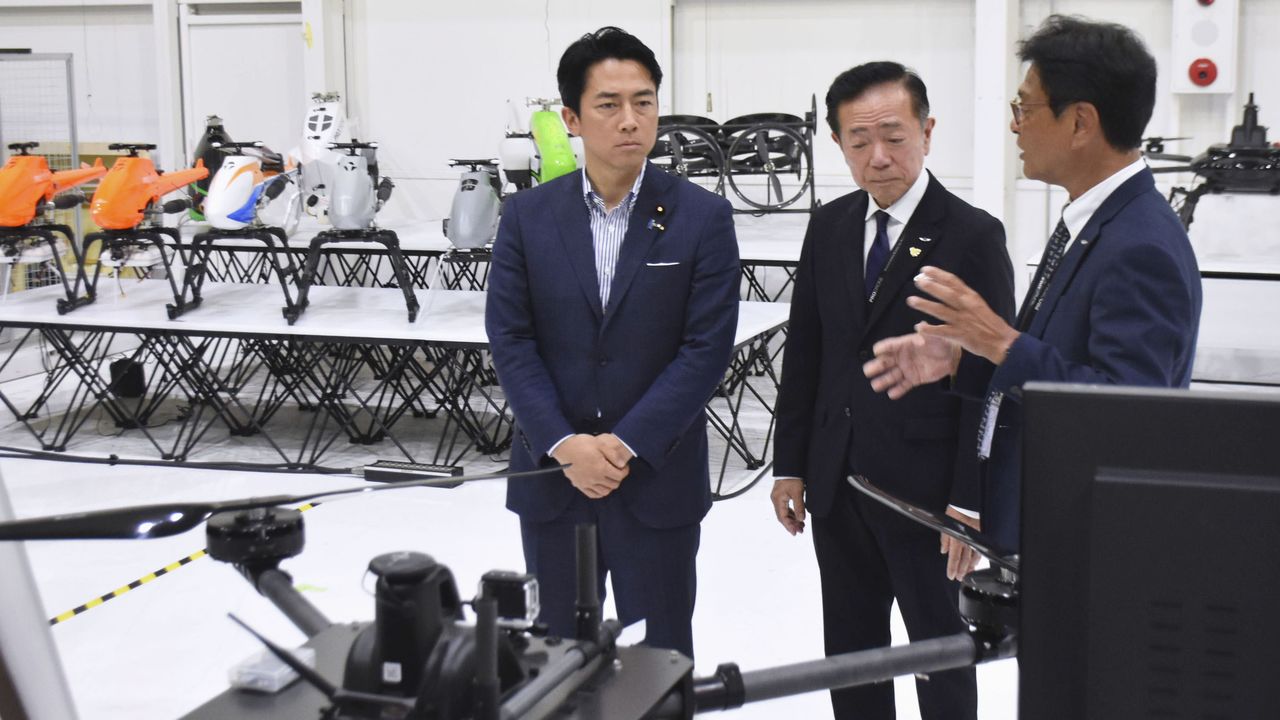
TAIRA I don’t know enough about weapons technology to answer that question in any detail. But I can tell you that Defense Minister Koizumi [Shinjirō] is actively promoting the adoption of autonomous drones and robots while facilitating tie-ups with private AI startups.
Until now, only major corporations have done business directly with the Ministry of Defense; smaller companies and startups participated solely in the capacity of subcontractors. But as I understand it, Defense Minister Koizumi is working hard to build an ecosystem in which smaller companies and startups can discuss their innovative ideas directly with the Defense Ministry.

Taira Masaaki (left) and Takenaka Harukata, chair of the Nippon.com Editorial Planning Committee. (© Nippon.com)
Sea Change in Cyberdefense
TAKENAKA In May 2025, as state minister in charge of cybersecurity, you enacted the Cyber Response Capability Enhancement Act, which legislated a strategic shift toward active cyberdefense. Can you fill us in on the background?
TAIRA The war in Ukraine has involved some intense battles in cyberspace. It seems that prior to launching its invasion in 2022, Russia had stealthily infiltrated the server of the Ukrainian Railways with a view to taking control of the system at a time of its own choosing. Thanks to tech support from Britain and the United States, the incursion was discovered and preemptively neutralized. That proactive response allowed refugees from Ukraine to flee to neighboring countries via railway when the hostilities began.
In 2023, Japan was hit by a cyberattack that brought logistics to a standstill at the port of Nagoya. At first we thought it was a ransomware attack, but further investigation indicated that it was the work of hackers employed by a foreign power. There have been all kinds of attacks since then—against airlines, financial institutions, and so forth. The new law allows the police or the Self-Defense Forces to identify and neutralize servers that pose a threat before the attack is carried out.
This was a legislative challenge, given Japan’s existing privacy laws. The actual content of communications remains off limits. Instead, the new cyberdefense targets machine-generated commands and other metadata to get a handle on the nature of the sender and server. Comparison of such metadata with fragments of communications from known hacker groups, including information provided by partner countries, can provide clues as to whether the activity is suspicious or not.
Let’s say we’re trying to defend a power company’s critical server from cyberattacks. If suspicious machine data is found on the power company’s server, and we uncover evidence of tampering, then the police or SDF can access the malicious server, no matter where in the world it’s located, and alter the settings or delete software so as to neutralize its ability to launch a cyberattack.
A Legitimate Exercise of Police Power
TAKENAKA Could we say, then, that the new law permits Japan, in effect, to launch a preemptive cyberattack in the event that there’s an imminent threat to critical infrastructure, such as power plants, airports, or railways? That’s considered a legitimate exercise of police power under the current law?
TAIRA We don’t regard such a response as a preemptive attack. Besides, it doesn’t entail the use of force.
The technique of stealthily infiltrating a critical infrastructure system so as to take it over at a later point is called a “living off the land” attack, and it’s on its way to becoming a mainstream stratagem. We’re facing a cyber crisis that we can’t hope to control if we stick to the old approach of acting only after an incident has occurred. Unless we neutralize the perpetrator as soon as evidence of a threat is detected, the consequences could be devastating. So, we see this as a legitimate exercise of police power.
TAKENAKA I would think such a response would require some pretty advanced technological know-how. How well are the police and the SDF equipped at this point?
TAIRA We’re still at the stage of building our capabilities, so we’ll be working closely with our security partners, other like-minded countries, and private tech firms.
One important point to note is that we’re already able, on our own, to identify and analyze machine data in communications that pass through Japan en route from one foreign country to another. That’s of great value to our security partners. Japan is East Asia’s primary connectivity hub, which makes us a key location from the standpoint of regional intelligence gathering. The Five Eyes security alliance [US, UK, Canada, Australia, and New Zealand] utilizes exactly these kinds of digital communications, and geographically speaking, Japan is in a perfect position to complement their coverage. In this context as well, Japan’s shift to an active cyberdefense footing has major implications for global security.
(Originally published in Japanese based on an August 3, 2026, interview. Banner photo: Defense Minister Koizumi Shinjirō, left, inspecting an industrial drone factory in Nagoya, May 20, 2026. © Kyōdō.)
(*1) ^ Palantir Technologies, a major data analysis and AI platform provider used by the US military.—Ed.