The Nose Knows: Aroma Is Key to the Full Wagyū Experience
Food and Drink Guide to Japan- English
- 日本語
- 简体字
- 繁體字
- Français
- Español
- العربية
- Русский
Marbling Helps Keep it Tender
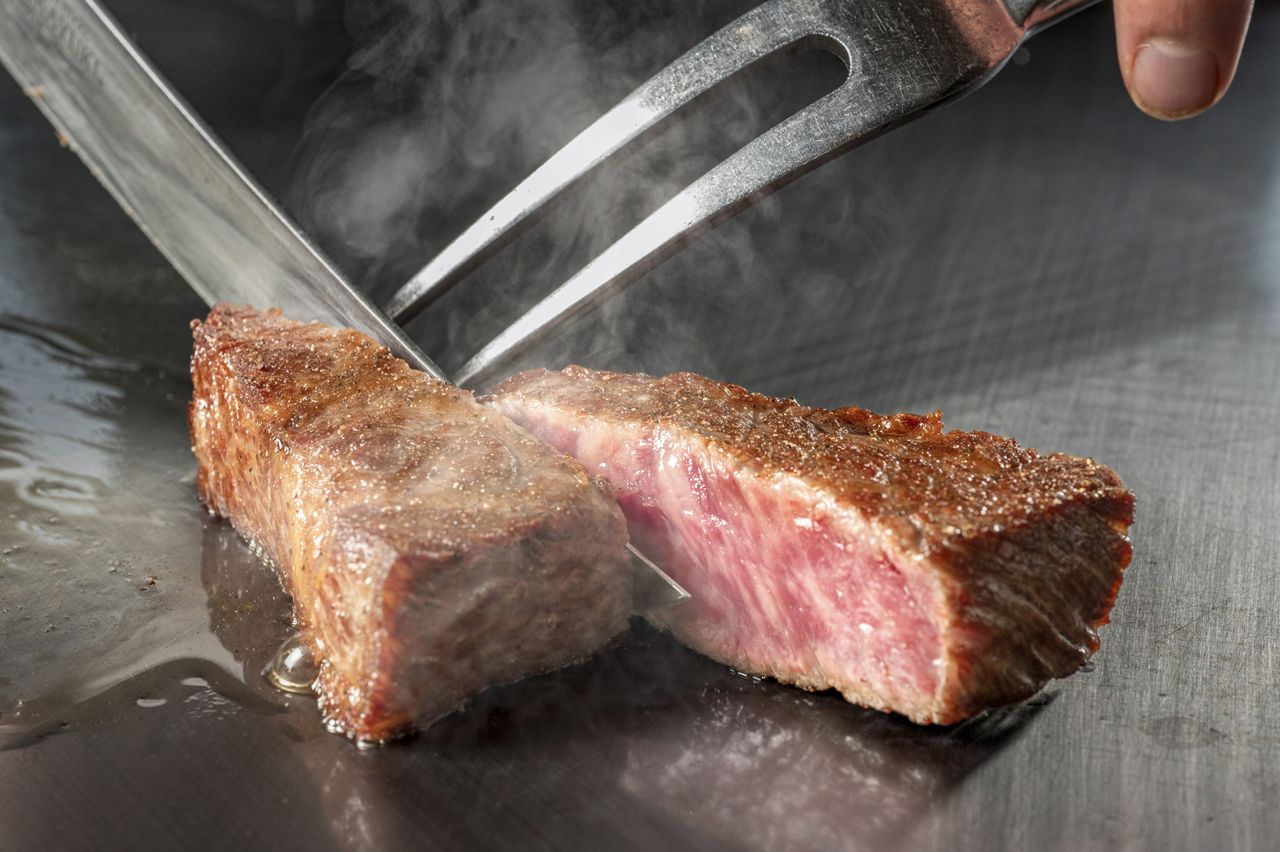
The defining characteristic of Japan’s famed wagyū beef is, of course, its intense marbling, known as shimofuri. Lean red meat tends to toughen up on cooking, but the delicate lacing of fat between wagyū’s red meat fibers heads off any chewy toughness. And that melted fat helps spread the meat’s rich flavor across your palate with every bite, elevating the juicy sensation.
I’m sure many readers think that this tender, juicy mouthfeel is the real appeal behind wagyū.
(© PhotoAC)
Aroma the Key to It All
Personally, I’m convinced that aroma is the source of 70%–80% of food’s deliciousness. When you cook wagyū beef, it releases a unique aroma that foreign-bred beef simply cannot copy, and I feel that has an enormous impact on its enjoyment.
If you can get your hands on some quality wagyū, there is something I would like you to try. Cook up a piece, pinch your nose shut, and take a bite. You’ll know you are eating meat, but I doubt you’ll feel that special pleasure and excitement that wagyū should bring. When you open your nose, though, you’ll immediately know it’s wagyū. More than just the taste on the tongue, we perceive flavor, and truly enjoy it, from that aroma.
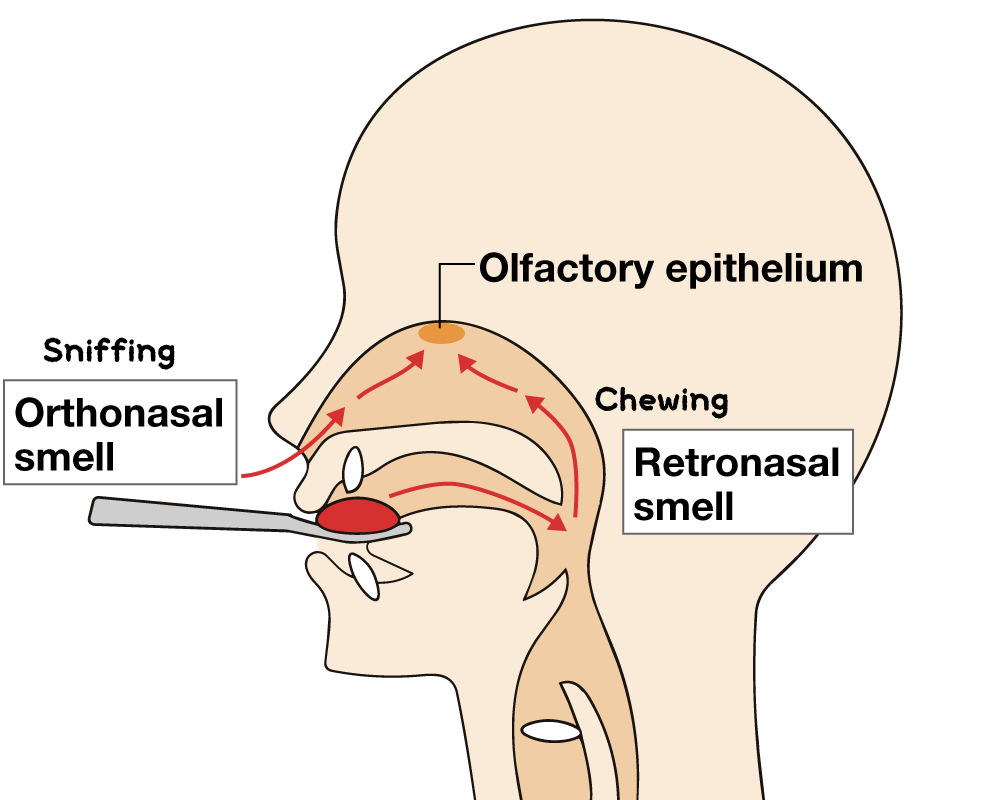
We recognize smells via the olfactory epithelium, the membrane lining the upper surface of our nostrils.
The reason our mouth starts watering when a piece of meat hits a hot griddle, and that sizzling sound starts, is that receptors on the olfactory epithelium pick up the aroma of sugars binding with amino acids under heat. The aromas picked up from outside are known as “orthonasal smell” or “sniffing smell.” This is what most people mean by the “scent” of something.
(© IllustAC)
But the truth is, we also sense aroma after placing food in the mouth. When we chew food, breathing out carries aromatic molecules from the mouth up through the back of the nasal passages to the olfactory epithelium. This is known as “retronasal smell,” the “chewing” or “mouth” smell.
When you pinch your nose while eating, the lack of wagyū sensation is all down to the mouth-based aromatics failing to reach the olfactory epithelium.
Sweet Aromatics Released from Wagyū Fat
So, what exactly is the wagyū aroma? When comparing the aromatic compounds of Australian beef, which is primarily lean red meat, and wagyū, we find that the latter is rich in compounds called lactones. These aromatics are often found in peaches or coconuts, and induce perceptions of sweetness. Wagyū beef fat is rich in oleic acid, which transforms into lactones under heat. The perception of sweetness when eating wagyū is influenced by these aromatics. Of course, this meat aroma consists of more than just lactones; it has multiple layers, including buttery lactic notes, as well as green notes reminiscent of lush forests.
Humans naturally associate sweetness with a general sense of deliciousness, so it might well be that people enjoy wagyū as much as they do in large part to that sweet aroma.
So, we perceive the tenderness and juiciness of wagyū with our tongues, and perceive the wagyū aroma as it passes from the mouth through the nasal passages, and these combine to create the complete sensation of deliciousness. Wagyū beef fat plays a vital role in all three of these elements.
Mom Was Right: Chew Your Food!
The flavor compounds contained in the red meat, like glutamic acid or inosinic acid, increase during low-temperature aging after butchering, and help enhance the perception of wagyū aroma. The real skill of butcher shop owners or chefs can be seen in how many days they let the meat mature and how they manage temperature and humidity during that period.
Wagyū beef is known for being so tender it melts in your mouth, so many people only chew once or twice before swallowing. But what a waste! If you can, please try chewing at least 10 times. That gives you a chance to really savor the special wagyū aroma and meaty taste. And in place of salt, try sprinkling a bit of monosodium-glutamate-based flavor enhancer. That will bring out the wagyū aroma even more, and also help reduce salt intake.
(Originally published in Japanese, based on an interview by Yamada Michiko. Banner photo: © PhotoAC.)